
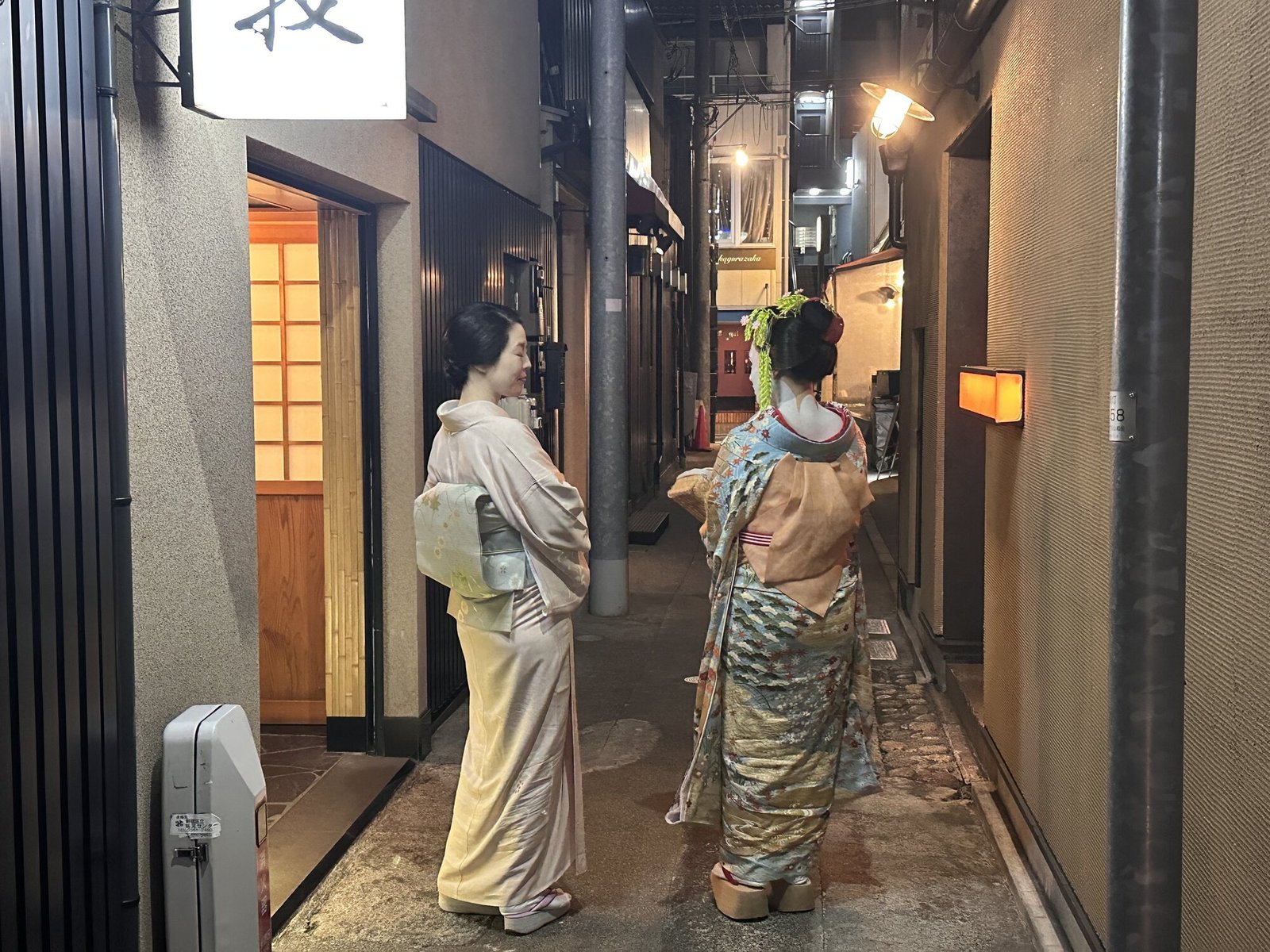
Wabunka’s private geisha dinner at Ryotei Maki is one of the most impressive cultural experiences in Japan that I have attended. I recommend it if meeting geisha in a private room is something you have genuinely dreamed about and you can comfortably afford a very expensive evening.
The private meal, conversation, dance, live music, and games give you much more time with the performers than a short public show. The price is also high enough that I would not recommend it for casual curiosity. A shorter group or stage experience may be a better use of your money if you mainly want an introduction to geisha culture.
Some links on YavaJapan are affiliate links. If you book or buy through them, I may earn a small commission at no extra cost to you. It helps support the site, and I only link to places, stays, and experiences I genuinely think are worth recommending.
A Short Note on Geisha in Tokyo
Kyoto is much more famous for geisha, but Tokyo has its own active tradition. The city’s six historic geisha districts are Shimbashi, Akasaka, Kagurazaka, Asakusa, Yoshicho, and Mukojima. Kagurazaka once had a large geisha community and still has a small number of working geisha and traditional restaurants. Ryotei Maki is a ryotei (traditional high-end Japanese restaurant) in this part of Tokyo, established about 50 years ago.
My Visit Was a Video Shoot, Not a Normal Booking
I work with Wabunka as part of my job in the Japan travel industry, and I attended this dinner free of charge while helping to produce a promotional video for Wabunka. I was there primarily for the shoot. We repeated some scenes for the camera, so the evening did not follow the uninterrupted pace that a normal guest would experience. You can watch the video here:
I can describe the room I entered, the food I ate, the performance I watched, the conversation, and the games we played. I cannot review the exact timing or order of a standard booking from personal experience. I have used Wabunka’s current itinerary for those practical details below and kept it separate from my own account.
Wabunka is a Japan-based website for international travelers booking private cultural experiences and experiential stays. Its experiences are for your own party rather than a mixed group, and an interpreter joins when language support is needed. This dinner shows why that format can work so well: conversation is a central part of the evening, not a brief extra after a performance.
At a Glance
| Detail | What to Know |
|---|---|
| Location | Ryotei Maki, Kagurazaka, Tokyo |
| Duration | 120 min |
| Group | Private for 1-8 guests; a two-person minimum charge applies |
| Dinner | Seasonal multi-course kaiseki meal included; drinks cost extra |
| Entertainment | Hangyoku dance, jikata shamisen and singing, conversation, games, and photos |
| Language | English-speaking interpreter included |
| Price | Very high; check the current quote because it varies by date, group size, and options |
| Best for | A serious interest in geisha culture, a special occasion, or a comfortable premium budget |
| Booking | View the private Ryotei Maki dinner on Wabunka |
What Happens During a Normal Ryotei Maki Dinner
For a standard booking, you meet the interpreter outside Ryotei Maki 15 minutes before the start and enter together. The 120-minute experience is completely private for your party. Bookings can be made for one to eight guests, although a solo guest still pays the minimum charge for two people.
During the evening, you have a seasonal kaiseki dinner, conversation with the performers, dance by a hangyoku, and live shamisen music and singing from a jikata. Traditional banquet games and commemorative photos are also included. The order can change, and the individual performers may differ from the people in my video.
The meal and interpreter are included, while drinks cost extra. Wabunka asks guests to wear business-casual clothes and socks, and to avoid shorts, T-shirts, and revealing clothing. You can send dietary restrictions when making the booking.
Entering Ryotei Maki
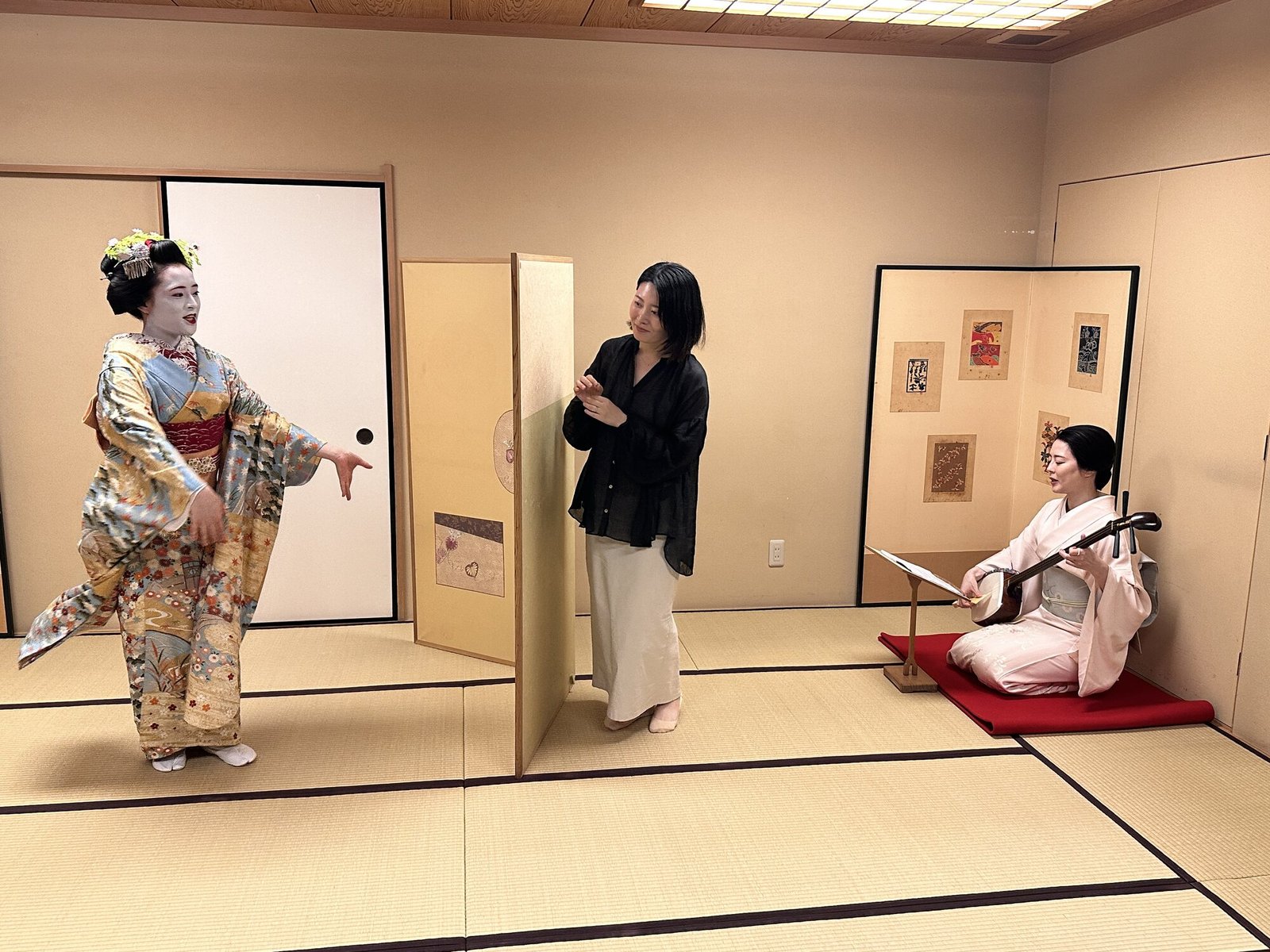
After years living in Tokyo, I had often passed traditional buildings and wondered what happened behind their doors. Entering Ryotei Maki answered some of that curiosity. The interior was unmistakably Japanese, but what stayed with me was how the room was actually used rather than any decorative detail.
We sat in a large tatami room with a long table and a broad open area beside it. At first, the empty floor looked almost oversized. Once the dance and games began, its purpose was obvious: the performers could move properly, and everyone could gather for the games without changing rooms.
The way everyone spoke, moved, served the meal, and guided us through the evening showed a great deal of training. The manners were formal, but the people hosting us knew how to keep the room comfortable. That combination made it easier to settle in even though the surroundings were unfamiliar.
The Performance and Conversation
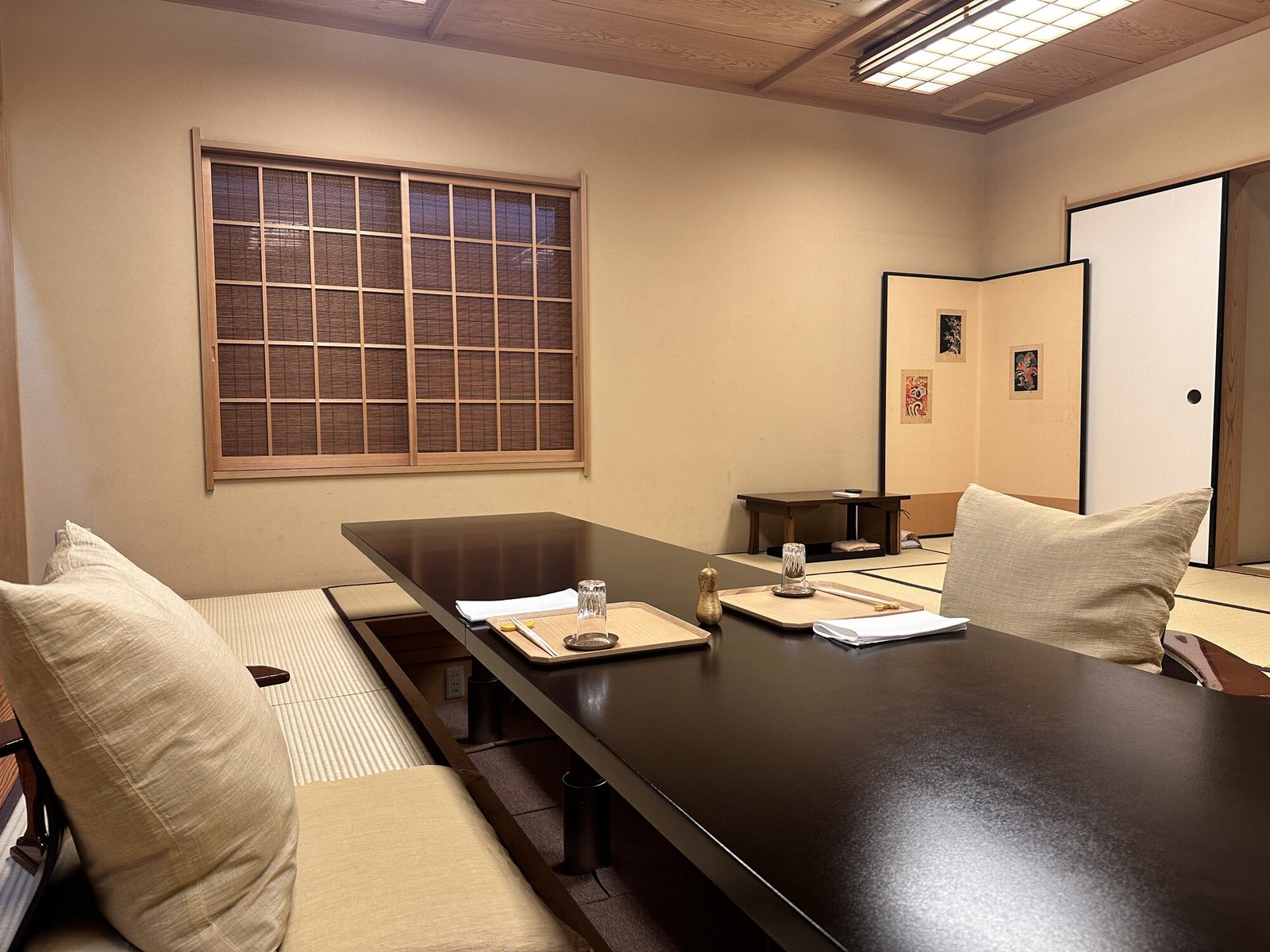
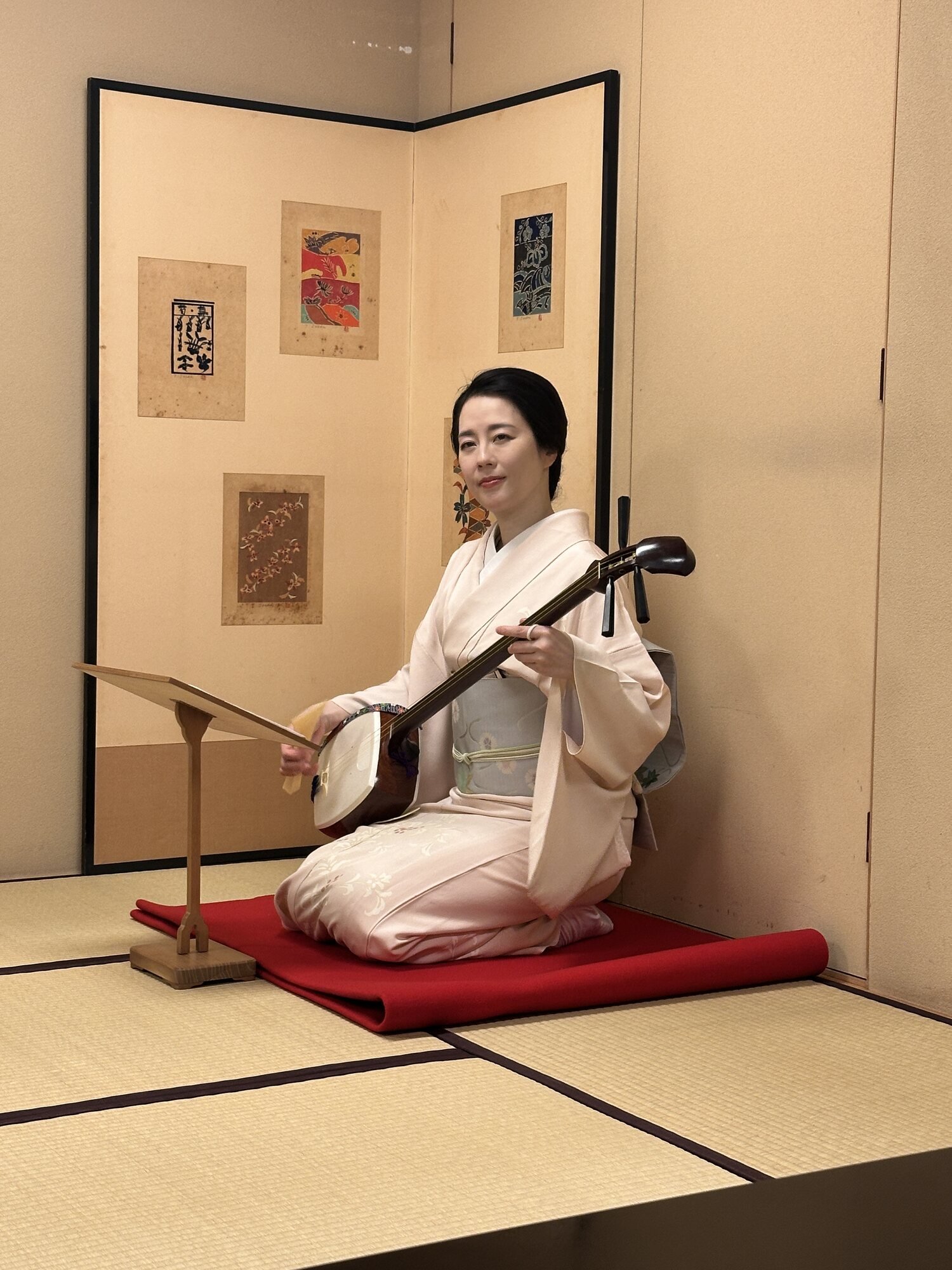
A hangyoku is an apprentice geisha in Tokyo, roughly the Tokyo counterpart to a maiko in Kyoto. A jikata is the geisha responsible for the musical accompaniment, including shamisen and singing. These are the terms to expect in Tokyo; Kyoto geisha dinners use different local terminology.
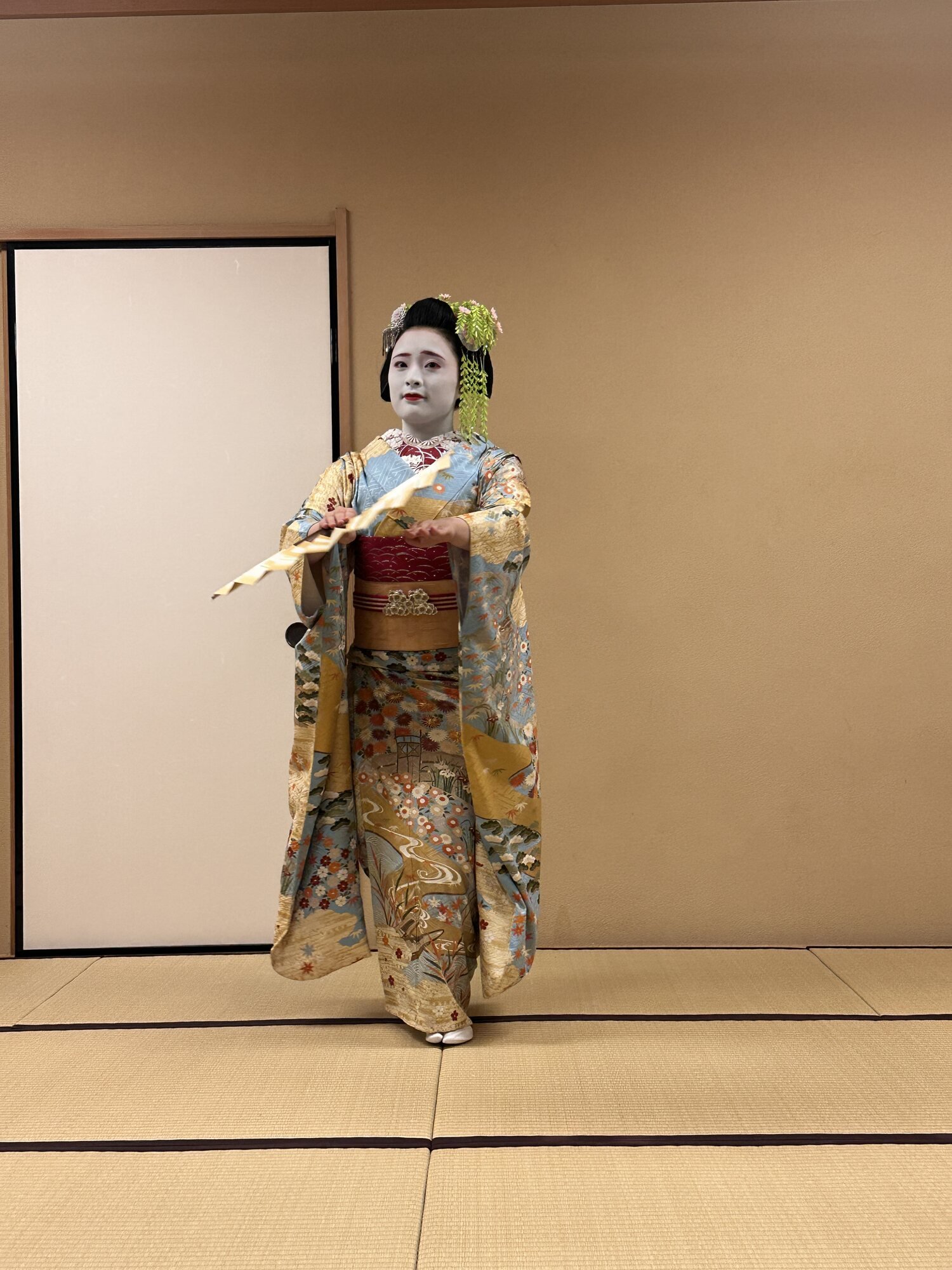
Watching the dance from only a few steps away was completely different from seeing the same art on a stage. I could follow the small changes in expression and movement, while the live shamisen and singing filled the room without amplification. The performance was elegant and highly controlled, but the private distance was what made it hold my attention.
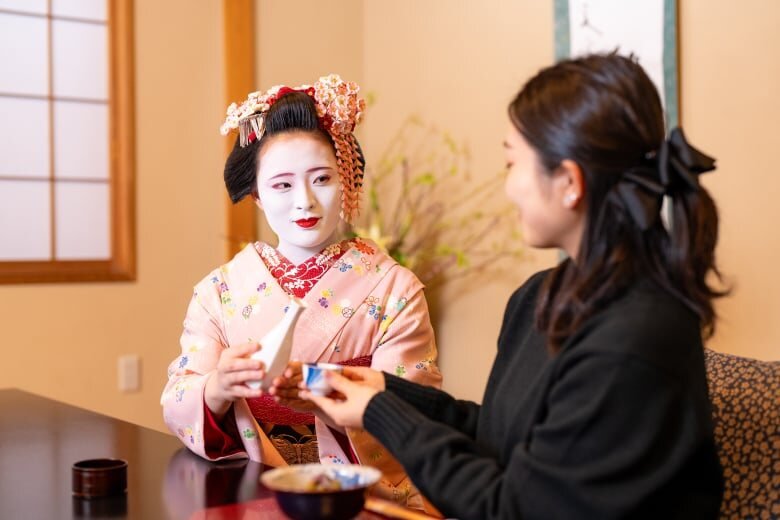
Conversation added just as much as the performance. Before the visit, I wondered whether sitting together in such a formal place might become awkward when we ran out of questions. The interpreter translated detailed questions and responses, helped both sides understand each other, and kept the conversation moving naturally. We could ask about the performers’ work and daily lives instead of relying on a short prepared explanation.
This direct exchange is one of the main reasons to consider the private format. You are spending a full evening in the same room, so you have enough time to become comfortable before the games begin.
The Kaiseki Dinner and Ozashiki Games
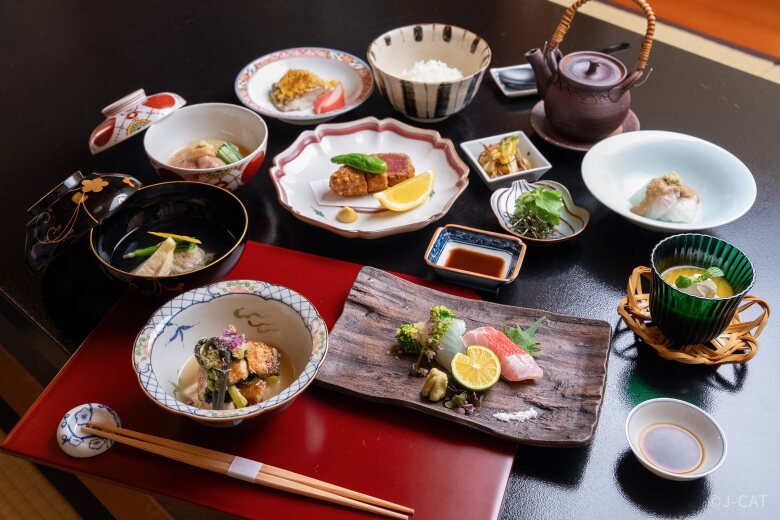
The meal during my visit was very good. It was seasonal, carefully prepared, and high quality, but it was also relatively light. I could enjoy several courses without reaching the games feeling too full. The exact dishes change with the ingredients available, so your meal will probably differ from the one shown in the video.
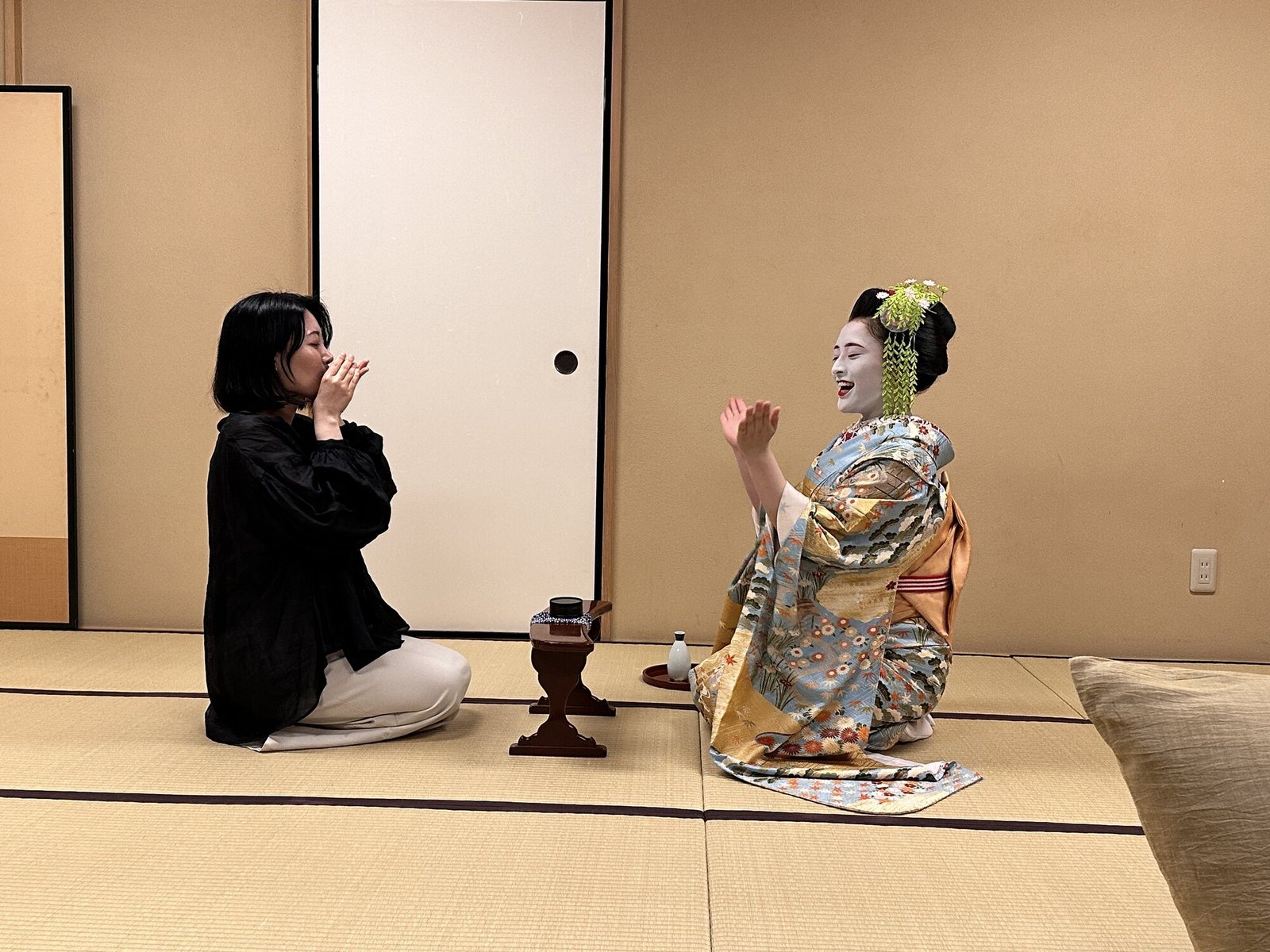
After dinner and conversation, we played ozashiki-asobi (traditional banquet games), which are often played as drinking games. The best-known was Konpira Fune Fune. Two players move in time with a song, using a small cup-shaped prop placed between them. When the prop is on the table, you use an open palm. When the other player removes it, you answer with a closed fist. Using the wrong hand shape or falling behind the song costs you the round, and traditionally, the loser takes a drink.
I do think the drinking forfeit makes the game even more fun once everyone has eaten and started talking. If you do not drink alcohol, you can use a non-alcoholic drink and still join in. The rules sound easy until the song speeds up and the other player changes the prop before you have time to think.
I learned very quickly that geisha are extremely difficult to beat. They have played these games so many times that the movements appear effortless, while I was concentrating hard just to choose between an open hand and a fist. The difference was funny rather than intimidating. Because we had already eaten and talked together, the games gave everyone permission to laugh and made the formal room much more relaxed.
Is the Ryotei Maki Geisha Dinner Worth It?
Yes. If meeting geisha in a private setting is something you have dreamed about, I honestly do not think you can do much better than this. You have the room to your own group, watch the arts from only a few steps away, speak directly through an interpreter, share a full meal, and play games together inside a working ryotei.
I have joined dozens of cultural experiences in Japan, and very few have given me this level of private access and personal interaction. I cannot judge the normal pacing because our filming interrupted the flow, but every part I did experience—the room, food, performance, conversation, and games—was excellent. I came away understanding why an evening like this costs so much.
The standard booking follows the broad format that local patrons experience at a ryotei, with interpreter support and photos added for international guests. This gives international travelers access to the full evening while making sure they can take part in the conversation rather than watching from the side.
The price remains very high, of course. A shorter stage or group format makes more sense if you only have a general interest in geisha culture. The Ryotei Maki dinner is for someone who wants the full evening and is ready to make it one of the major experiences of the trip.
If this is something you have wanted to do for years and your budget allows it, I recommend it without hesitation. Check the current Wabunka quote before deciding because the price varies by group size, date, and options.
Comments are closed.