
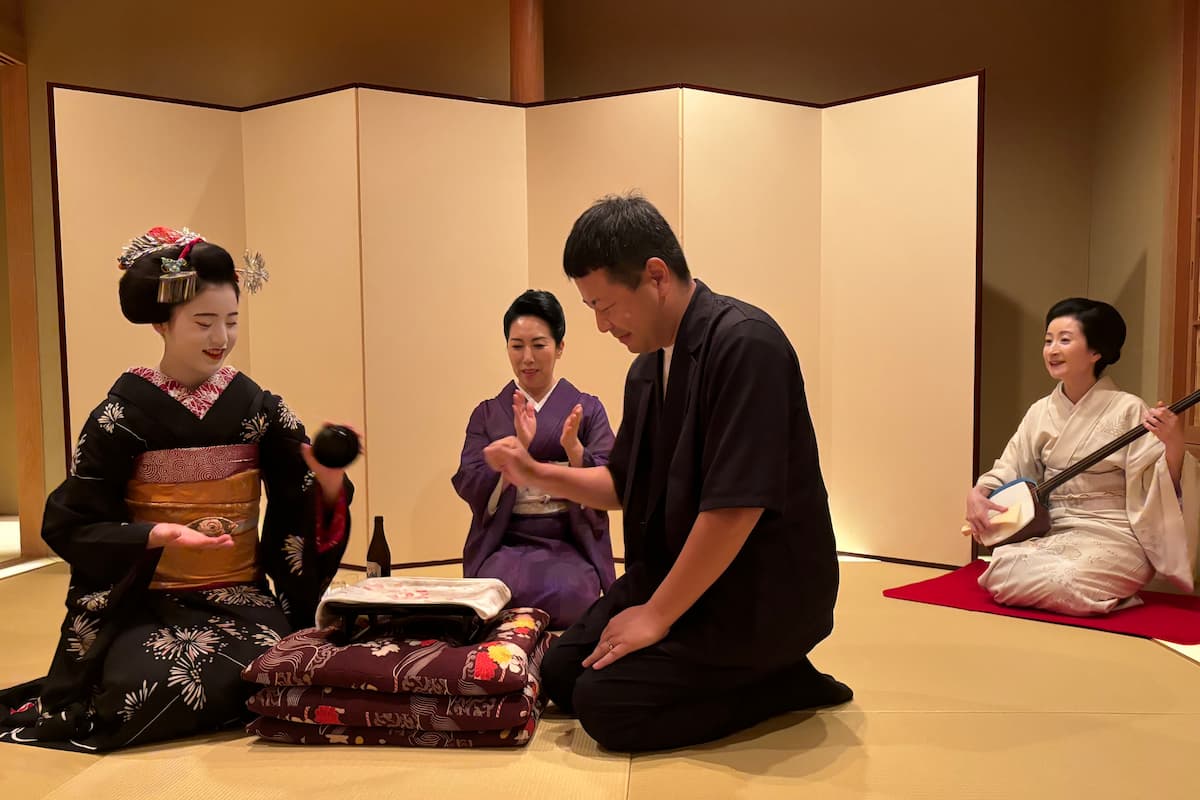
I’d seen geisha passing by in Kyoto’s streets before, and I’d often wondered about their lives. I was curious about why they’d chosen that profession and what their days were like when they weren’t entertaining guests. There was a lot I wanted to ask them if I ever had the opportunity.
That opportunity came through Wabunka, who arranged a private dinner at Ochaya Man, a traditional teahouse in Kyoto’s Gion Higashi district. I went with friends, excited to meet our hosts but a little nervous about my Japanese. I also had doubts about the price of an evening like this. What followed was much more relaxed and fun than I’d imagined, and became one of the most memorable evenings I’ve had in Japan.
Some links on YavaJapan are affiliate links. If you book or buy through them, I may earn a small commission at no extra cost to you. It helps support the site, and I only link to places, stays, and experiences I genuinely think are worth recommending.
I’ve worked with Wabunka and joined several of their experiences, including this dinner.
How I Arranged the Dinner
In Kyoto, geisha are called geiko, and their apprentices are called maiko. Our dinner would include one of each. They entertain guests at ochaya (traditional teahouses), where bookings usually require an introduction, so this wasn’t something I could arrange like an ordinary restaurant reservation.
I attended through Wabunka, a website for private cultural experiences and stays in Japan. They work with Japanese hosts to arrange visits for international travelers, with only your own party taking part. I’d already enjoyed their kintsugi workshop in Tokyo, where I tried repairing broken pottery, and had been impressed by their guides. For this dinner, an English-speaking guide would join us to interpret the conversation, which was reassuring given my limited Japanese.
Arriving at Ochaya Man
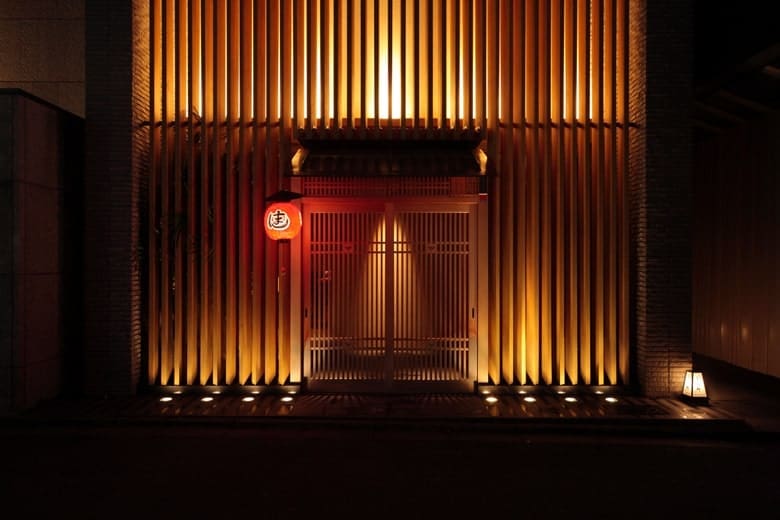
Ochaya Man is in Gion Higashi, one of Kyoto’s five geisha districts. The teahouse’s wooden exterior and warm lighting were beautiful, and I was excited to finally see inside a place like this. Selina, our guide and interpreter, was already waiting outside when I arrived.
Before we went in, she explained the traditions of ozashiki (banquets with geiko and maiko entertainment) and what to expect. She was kind and knowledgeable, and I felt well looked after before we’d even gone inside.
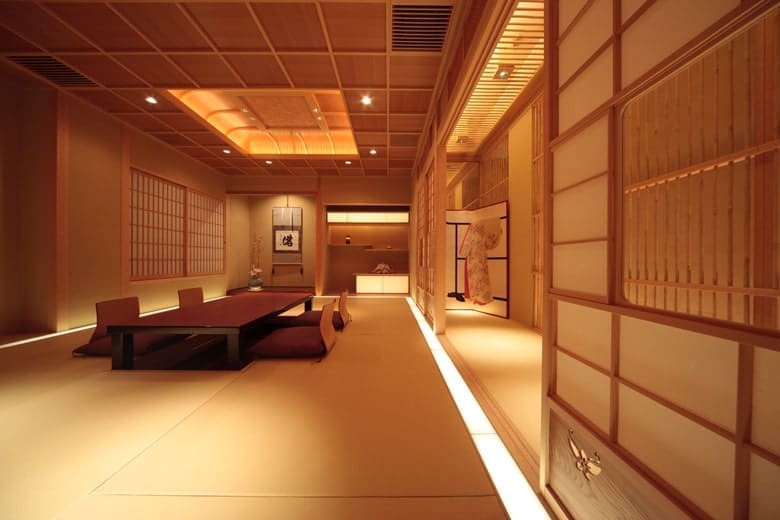
Upstairs, we were shown into a private room with tatami (woven floor mats) and a low table. I’m really not flexible, so I was a little worried about spending the evening sitting cross-legged or kneeling on the floor. I was very relieved to find a recessed space beneath the table for our legs. I could sit comfortably and enjoy dinner without constantly trying to find a better position.
As we settled in, Selina helped us order drinks. Then Masaki, our geiko, and Masane, our maiko, came in to greet us. Both belonged to Ochaya Man, run by its fourth-generation proprietress, Masami Ueyanagi. They were so warm and welcoming that the room quickly felt much less formal than I’d imagined.
Talking with Masaki and Masane
Sitting with Masaki and Masane, I could see the details of their kimono and makeup up close and hear their voices. As we started chatting, I finally got to ask about their lives.
I had so many questions. I wanted to know why they’d chosen this profession, what their days were like outside appointments, and how they imagined their work changing in the coming decades. We also talked about the growing number of visitors to Kyoto. Being able to ask them directly was a pleasure, especially after being curious about their lives for so long.
Selina translated throughout, and I was impressed by how easily the conversation flowed. My Japanese wasn’t fluent enough for those discussions on my own, but with her help I could follow what Masaki and Masane were saying and keep asking questions.
The Kaiseki Dinner
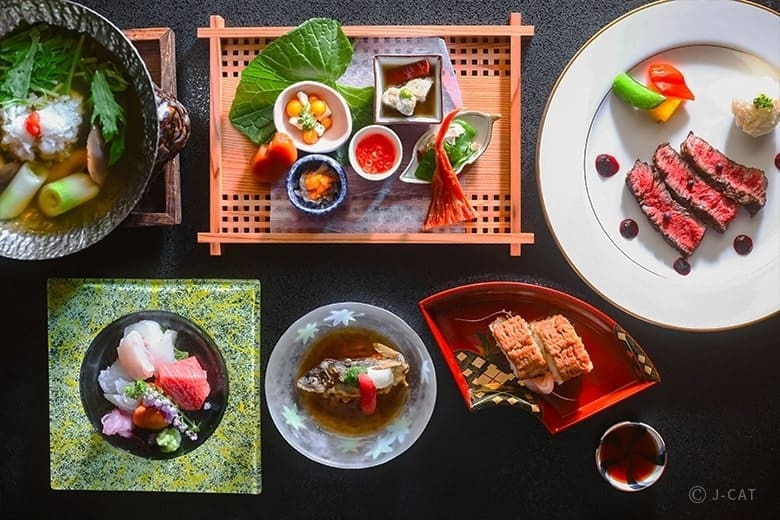
While we were chatting, our kaiseki dinner (a Japanese multicourse meal) began to arrive from the teahouse’s own kitchen. The food was exceptional, and each dish was beautifully arranged. I loved being able to enjoy such a good meal while continuing our conversation with Masaki and Masane.
The chef was also wonderfully accommodating. One of my companions asked for an alternative to raw fish at the last minute, and they brought out tempura for that course instead. Between the food, Selina’s help, and Masaki and Masane looking after us, I felt very well cared for.
Dance Performances and Games
Partway through dinner, Masane performed a traditional dance while Masaki accompanied her on the shamisen (a three-stringed Japanese instrument). I loved watching them perform together. From so close, I could see the precision of Masane’s movements while listening to Masaki play, and the whole performance felt very special in that private room.
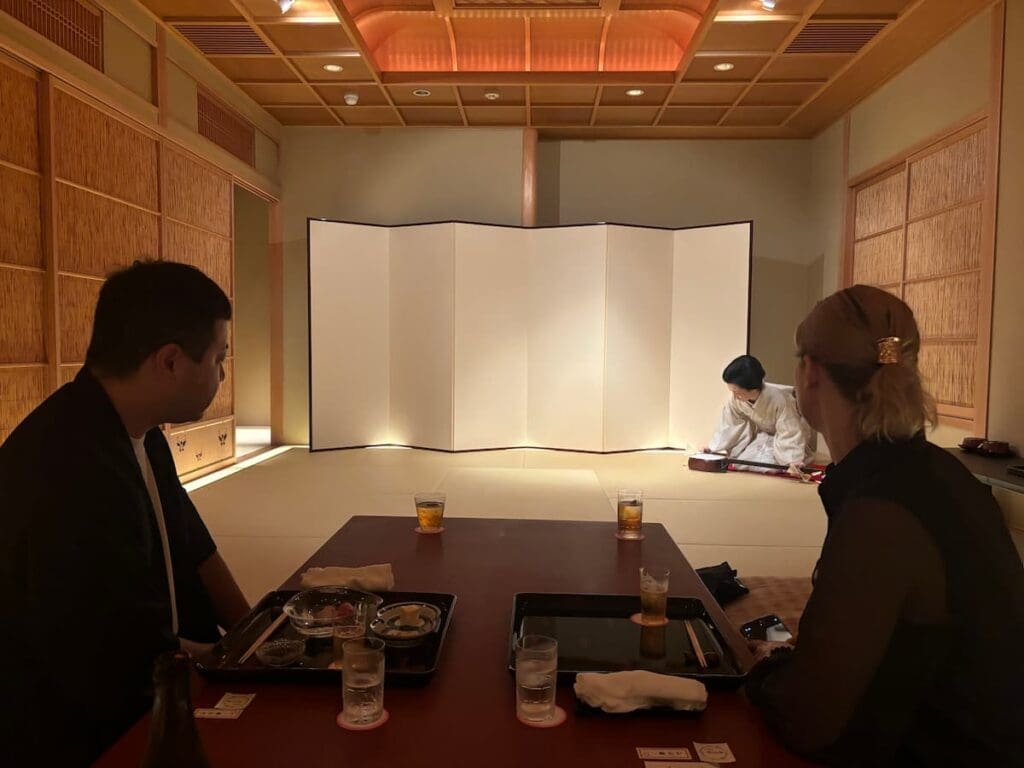
After the performance came ozashiki asobi (traditional party games). We played Konpira Funefune, a hand game played in time with a song, and Toratora, which is similar to rock-paper-scissors. I was surprised by just how much fun these simple games were, especially with Masaki and Masane keeping everyone involved.
I’m quite introverted, but by then I’d completely forgotten my nerves and was happily joining in. A few drinks probably helped too. They were unlimited on my visit, and Masaki and Masane kept refilling my cup as soon as it was empty. They made it so easy to relax that the evening went by much faster than I’d expected.
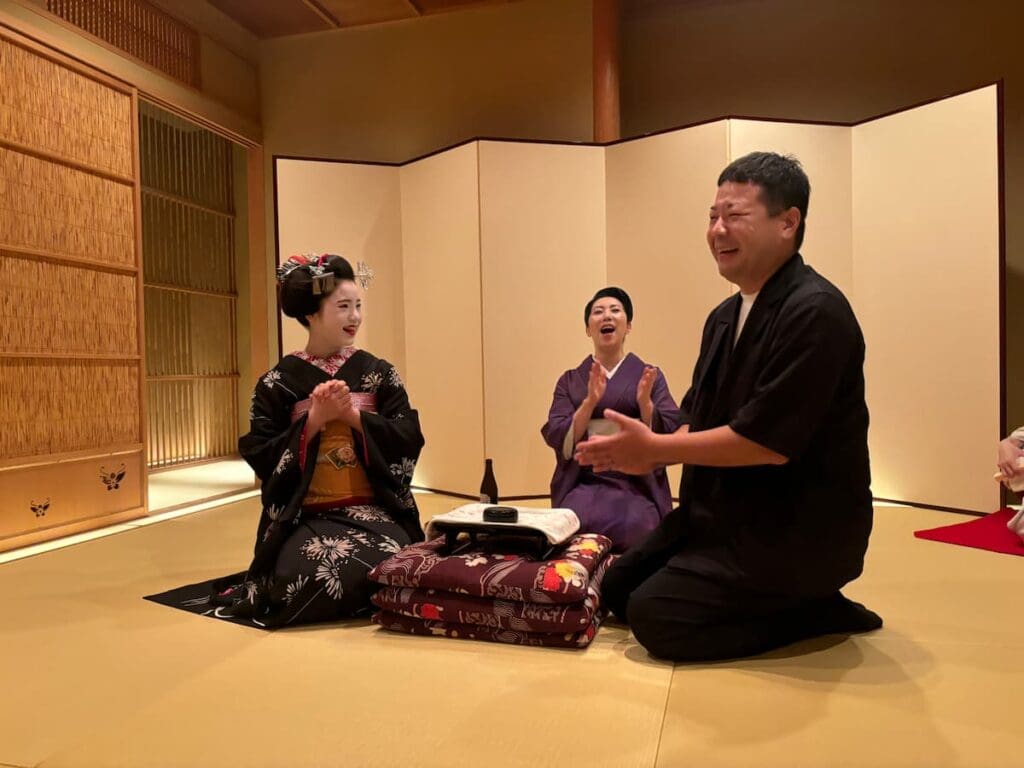
After one last chat, it was time to say goodbye to Masaki and Masane. My friends and I were all delighted with the evening, and we kept talking about it as we walked a few streets with Selina. We still had a few questions for her before parting ways and heading back to our hotel.
Is a Private Geisha Dinner Worth It?
For me, it was absolutely worth it. If you can comfortably afford it, or meeting geiko and maiko is something you’ve dreamed of and saved for, I highly recommend the private dinner.
I loved having time to talk with Masaki and Masane throughout the evening. We could ask about their lives, chat over dinner, and join the games, with Selina helping us understand each other. That time together is a large part of what made the dinner so memorable for me.
That said, this is still a very expensive experience, and I wouldn’t recommend it to everyone, especially if you’re traveling on a tight budget. For other ways to spend time with a geiko or maiko, my Kyoto geisha guide includes private tea experiences and guided visits with conversation. The length of the visit, group size, and time with your hosts vary, so compare those details as well as the price.
Other Ways to Meet Geisha in Kyoto
For a private visit without dinner, I recommend the maiko tea experience at Umeno. Alongside a maiko’s dance, conversation, a game, and tea and sweets, you’ll visit the dressing room with Yuko Nakaji, the future proprietress. That chance to see where the maiko prepare makes it a particularly good choice if you’re curious about their daily lives and work.
The visit lasts 1 hour 30 minutes and takes place in Kamishichiken, another of Kyoto’s geisha districts, at a different teahouse from my dinner. It’s still expensive, although the starting price is lower than the dinner’s. Compare the total for your group for both experiences before deciding.
Booking the Dinner and Preparing for Your Visit
The dinner at Ochaya Man lasts 2 hours, with 1 to 10 guests in your private party. Check the price for your group and dates before making a request, as this is an expensive experience even when you’re sharing it with others.
I recommend checking availability early and having several possible dates. If you choose a date marked Request Booking, the host needs to review your request before confirming the reservation. Cancellations aren’t accepted after booking, so be sure the date works with the rest of your trip. You also can’t request specific geiko or maiko, which means you may meet different hosts from mine.
Send any dietary requirements when booking so the kitchen can confirm what it can prepare. They kindly made a last-minute change for us, but arranging it beforehand gives them time to plan. It’s also worth checking the drinks included with dinner, since some selections aren’t included.
Comments are closed.