
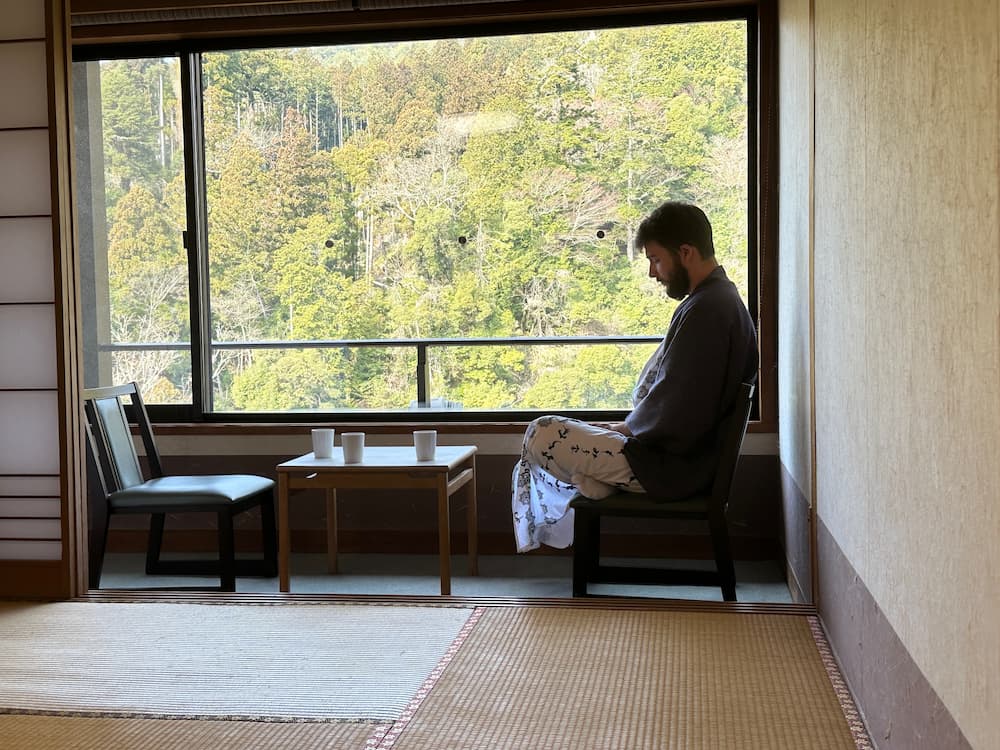
Kyoto can be a very good place for one ryokan (traditional Japanese inn) night, especially if this is your first Japan trip and Kyoto is already on your itinerary. You do not need to add another travel day to Hakone, Kinosaki, or a mountain onsen (hot spring) town just to have a traditional inn night.
But Kyoto is not the best place for every ryokan stay. If the thing you really want is natural hot springs, outdoor baths, mountain views, and a slower retreat day, central Kyoto may not match the image in your head. Kyoto city ryokan are usually better for meals, service, architecture, and one night in an old inn.
My recommendation is simple: book a Kyoto ryokan if you can check in around mid-afternoon, eat dinner there, enjoy the room or bath, sleep there, and have breakfast without rushing out. If you will arrive late, skip dinner, leave early, and spend most of the evening outside, a normal Kyoto hotel will probably make more sense.
For broader ryokan etiquette and what to expect, read my guide to staying in a ryokan in Japan. For Kyoto, start by deciding what kind of night you want.
- At a Glance
- Quick Comparison: Which Kyoto Ryokan Type Should You Choose?
- Should You Stay in a Ryokan in Kyoto?
- How to Choose the Right Kyoto Ryokan Type
- Best Classic Historic Kyoto Ryokan
- Best Kyoto Ryokan for Japanese Cuisine
- Best Modern Ryokan for Comfort
- Best Kyoto Ryokan for Baths
- Best Stay Near Kyoto if You Want Mountains, Forest, and Onsen
- Best Kyoto Townhouse Stay Instead of a Ryokan
- Booking Tips Before You Choose
- Final Recommendation by Traveler Type
- FAQ
- Is One Night in a Kyoto Ryokan Enough?
- Are Kyoto Ryokan Real Onsen?
- What Is the Difference Between a Private Bath and a Private Onsen?
- Should I Book Dinner and Breakfast at a Kyoto Ryokan?
- Can I Stay in a Kyoto Ryokan if I Do Not Want to Sleep on a Futon?
- Is a Machiya Stay the Same as a Ryokan?
- Is Kyoto Better Than Hakone or Kinosaki for a Ryokan Night?
Some links on YavaJapan are affiliate links. If you book or buy through them, I may earn a small commission at no extra cost to you. It helps support the site, and I only link to places, stays, and experiences I genuinely think are worth recommending.
At a Glance
- Best high-end classic Kyoto ryokan: Hiiragiya or Sumiya Ryokan if you want a high-end heritage inn and you can give it the evening.
- Best traditional ryokan with easier booking: Seikoro Ryokan if you want a classic Kyoto inn with clearer English information and some comfort flexibility.
- Best if meals are your priority: Yuzuya Ryokan if dinner, breakfast, Gion, and Yasaka Shrine are the parts you care about most.
- Best if you want more comfort: Nazuna Kyoto Nijo-jo if you want beds, private bath space, and a more modern room.
- Best if baths are your priority: Kadensho Arashiyama if you want several baths more than a small old inn.
- Best nearby nature stay: Sumiya Kiho-an in Yunohana Onsen / Kameoka if you want one quieter night outside central Kyoto, with hot springs as a bonus.
- Best if you want a Kyoto townhouse instead: Nishijin Fujita if you want a private machiya (traditional Kyoto townhouse) rather than full ryokan meals and service.
Quick Comparison: Which Kyoto Ryokan Type Should You Choose?
| Stay Type | Best For | My Recommendations | Meals | Baths | Beds / Futons | Typical Price | Watch Out For |
|---|---|---|---|---|---|---|---|
| Classic historic Kyoto ryokan | One expensive, traditional Kyoto night where you stay in for dinner and breakfast | Hiiragiya, Sumiya Ryokan, Seikoro | Dinner and breakfast are usually central | Traditional baths; not usually natural onsen | Futons are common; some rooms have beds | High to very high | Poor value if you arrive late or skip meals |
| Small ryokan for meals | Travelers who care most about dinner, breakfast, and staying near Gion or Yasaka Shrine | Yuzuya Ryokan | The meal is a major reason to book | Usually about the room bath, not hot-spring water | Rooms vary | Mid-high to high | Skip if you do not enjoy Japanese meals |
| Modern style ryokan | People who want ryokan mood with beds and private bath comfort | Nazuna Kyoto Nijo-jo | Meals depend on the rate | Private open-air or semi-open-air baths, not always hot-spring water | Beds or mixed rooms | High | Less traditional than a classic ryokan |
| Larger ryokan-hotel | Travelers who care most about baths or private bathing in Kyoto | Kadensho Arashiyama | Resort-style meal plans | Natural Arashiyama Onsen in one bath area, plus private baths | More hotel-like range | Mid-high to high | Larger property, not intimate heritage ryokan |
| Nearby nature stay | Travelers who want a slower night outside central Kyoto, with hot springs as a bonus | Sumiya Kiho-an | Half-board-style retreat plans | Real hot-spring baths, including some rooms with open-air hot-spring baths | Varies by room | Mid-high to high | Outside central Kyoto |
| Unique high-end stay near Kyoto | A private historic property with a guided tour | Yoshida Sanso | Breakfast included on Wabunka; dinner is available as an add-on | Not a hot-spring resort stay | Room types vary | Very high | Better as a special stay than a normal Kyoto base |
| Kyoto townhouse stay | Privacy, architecture, space, and a traditional Kyoto house | Nishijin Fujita | Depends on the Wabunka add-ons you choose | Usually a private house bath | Often futons or house-style sleeping | High, but per-group pricing can vary | Not a ryokan |
Use the table to choose the kind of stay first. When people search for the best ryokan in Kyoto, they often look at individual properties too early. It is easier to first decide whether you want to prioritize a classic and historic ryokan or a more modern one, a small local one or a larger hotel-style ryokan, one famous for its cuisine, or private baths and onsen, a ryokan in the city or in the nature, or a private townhouse.
Check the map below to see where each ryokan is located in Kyoto:
Should You Stay in a Ryokan in Kyoto?
I think Kyoto is a good place for a ryokan night when Kyoto is already on your itinerary. Most first-time Japan trips already include the city, so you can add one special night without giving up another day to reach a separate onsen town.
Kyoto also works better than Tokyo for this kind of stay. The city has old inns, traditional architecture, Kyoto-style meals, and evening areas where a ryokan night connects naturally with the rest of the trip.
Time is the part people underestimate. A ryokan stay includes the room, staff service, dinner, breakfast, bath time, and the chance to slow down for the evening. If you check in at 19:00, eat outside, and leave before breakfast, you have removed a lot of what you paid for.
One night is enough for most travelers if you protect that night. If it is your first Kyoto night, arrive earlier in the day, send luggage ahead or store it at the station if needed, check in around 15:00, and keep the evening free. If it is your last Kyoto night, treat it the same way: finish the busy sightseeing earlier, move your luggage before check-in if needed, eat at the ryokan, enjoy the bath or room, and leave the next morning after breakfast.
Choose a normal Kyoto hotel instead if you mainly need a base for temple visits, restaurants, nightlife, day trips, and early starts. My where to stay in Kyoto guide is better for that decision.
Kyoto Ryokan vs Hakone, Kinosaki, Nagano, or Miyajima
Choose Kyoto if you want convenience, traditional city atmosphere, and one special night without changing the route too much. This works especially well on a classic first-time Japan itinerary where Kyoto is already part of the plan.
Choose Hakone, Kinosaki, Nagano, Miyajima, or another ryokan destination if what you want most is hot springs, natural surroundings, larger baths, or a slower retreat day. Kyoto can give you a very good ryokan night, but I would not book a central Kyoto ryokan if you are mainly paying for baths and landscape.
For nearby alternatives, Nara and Miyajima can also work well depending on your itinerary. I have separate guides to ryokan in Nara and ryokan in Miyajima if you are deciding where to place one traditional stay. If private onsen is your biggest priority, my Nagano ryokan with private onsen guide may be closer to what you imagined.
How to Choose the Right Kyoto Ryokan Type
Start with the kind of place you actually want to stay in, not the neighborhood.
For a normal hotel in Kyoto, location is usually one of the first things to decide. For a ryokan, location still affects your day, but the stay itself carries more weight. You are usually booking it for one special night, not for five nights of efficient sightseeing.
Look at the photos and ask yourself a simple question: do I actually want to spend an evening here? Some ryokan are old and formal, some are small and warm, some are polished and modern, and some are closer to large ryokan-hotels. The room, building, garden, view, and overall atmosphere usually tell you more than the fact that a place calls itself a ryokan.
Budget still matters, of course, because Kyoto ryokan prices can climb quickly. But once a stay is inside your budget, do not choose it only because it is a ryokan. Choose it because the place itself looks like somewhere you want to slow down for the night.
After that, look at meals. Many ryokan stays are built around dinner and breakfast. If you do not like Japanese food, have a long restaurant list in Kyoto, or dislike fixed meal times, be careful. A ryokan dinner is often one of the reasons the stay costs what it does.
Then look at bathing. Decide whether you want an in-room bath, a reservable family bath, a shared public bath, a view, or actual hot-spring water. Once you know that, the ryokan descriptions become much easier to read.
Then look at bedding. Traditional ryokan often use futons on tatami mat flooring. That can be perfectly comfortable for some travelers and difficult for others. If you already know sleeping close to the floor will be a problem, choose a stay with Western beds or a more modern room.
Finally, think about service. A small classic ryokan, a larger ryokan-hotel, a private machiya, and a nearby nature stay all give you a different night. They can all be good, but they are not interchangeable.
Best Classic Historic Kyoto Ryokan
Choose this type when you want the ryokan itself to be the main memory of the night. You are paying for heritage, service, meals, and the rare chance to stay somewhere with a long Kyoto story.
I would only book this type of ryokan if you can arrive early and keep the evening clear. If you want to rush through dinner and go back out for a packed night, this is probably the wrong use of a high-end Kyoto ryokan.
For baths, expect a city ryokan rather than an onsen resort. Many classic Kyoto ryokan are not built around natural hot-spring water. The room, meal, staff, and building are usually the real reason to book.
Hiiragiya
Hiiragiya would be my top recommendation if you want a high-end, iconic Kyoto ryokan. It dates back to 1818, and its old wing is a registered tangible cultural property. This is not the place to book if you just want somewhere convenient to sleep.
Book Hiiragiya for a formal, high-end, traditional Kyoto stay with in-room meals and careful service. Skip it if you mainly want natural onsen, a flexible sightseeing base, or a lower-cost ryokan night.
I recommend booking Hiiragiya on Wabunka if you want the stay handled as a complete overnight experience, with dinner and breakfast included. Wabunka is a site for private cultural experiences and special stays in Japan.
Sumiya Ryokan
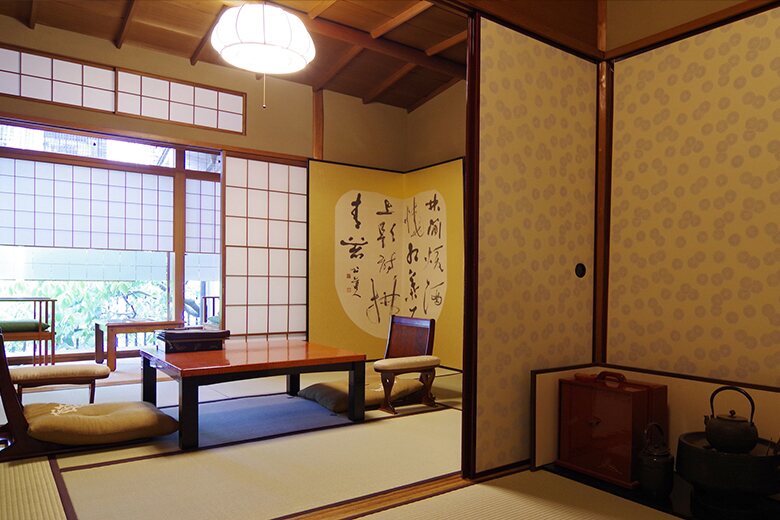
Sumiya Ryokan is another strong classic Kyoto stay, especially if tea culture is part of what draws you to Kyoto. Book it when you want the ryokan night to include a more personal cultural moment alongside the room, bath, and meal.
Meals and timing are central at Sumiya. Check-in starts from 15:00, and guests are asked to contact the ryokan if arriving after 18:00 because of dinner preparation. That detail tells you a lot about how to use the stay properly.
I recommend booking Sumiya on Wabunka if the private tea experience is what interests you. The stay includes time with the ryokan’s proprietress or her successor, so tea culture becomes part of the night instead of a separate activity.
Seikoro Ryokan
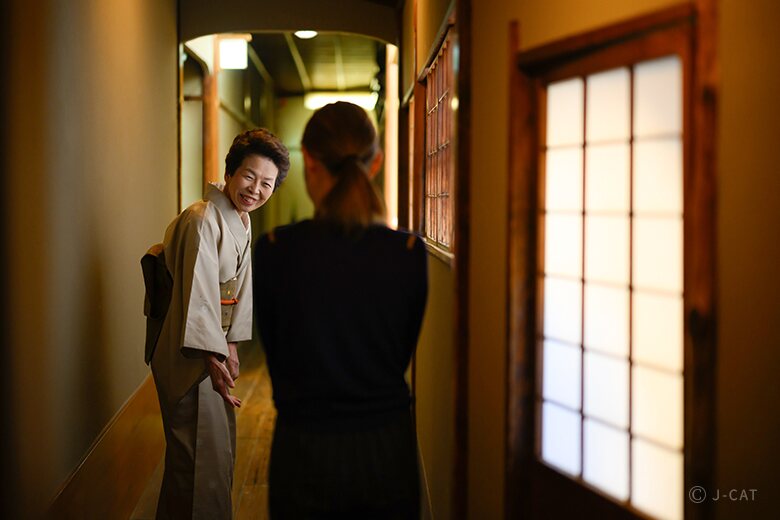
Choose Seikoro if you want a classic Kyoto ryokan but do not want the stress of the most famous luxury inns. It is easier for many first-time travelers to understand and book.
You still get in-room wooden baths, traditional rooms, and clearer English information, with some room-style flexibility. It is a good middle ground if you want a real ryokan night without the most formal luxury experience.
Treat Seikoro as a traditional bath stay with artificial mineral baths, not as a natural hot-spring ryokan.
If you want easier booking, keep Seikoro high on your list.
Best Kyoto Ryokan for Japanese Cuisine
Food is one of the parts people miss when they picture a ryokan night. Many travelers imagine the room, tatami mats, bath, and old building first. Then they arrive and realize dinner and breakfast take up a big part of the stay.
If you like Japanese food and want dinner at the ryokan, this is great. If you were hoping to eat at restaurants in Gion, skip breakfast, or avoid a long Japanese dinner, book a hotel instead.
Yuzuya Ryokan
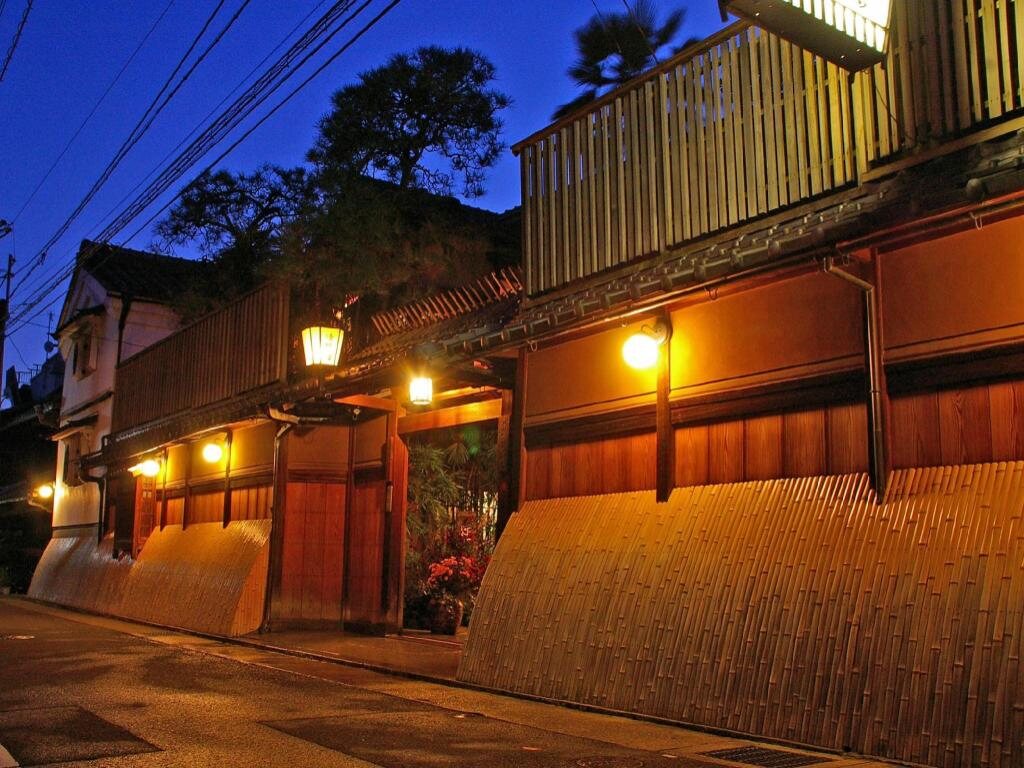
Choose Yuzuya Ryokan if you want the ryokan night to revolve around dinner, breakfast, Gion, and Yasaka Shrine. It is a small inn, and the first-floor restaurant is a big part of why you would book it.
Skip Yuzuya if you mainly want hot-spring water. The yuzu cypress bath is part of the inn’s Kyoto character, but this is not the place I would choose for an onsen night.
Book Yuzuya for a Kyoto evening built around dinner, breakfast, and a traditional inn right by Yasaka Shrine. Skip it if you are unsure about Japanese meals or if you want a more flexible restaurant night.
Izuyasu
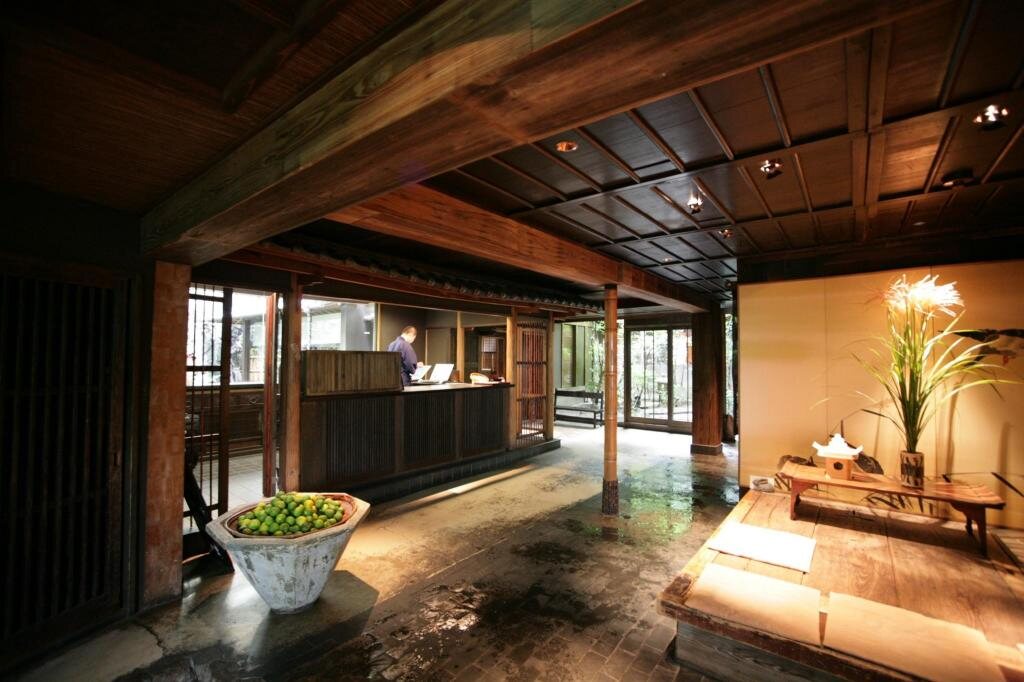
Use Izuyasu only if Kyoto Station convenience is important. It is a traditional inn with a long history and a strong focus on food, but most travelers should look at Yuzuya, Hiiragiya, Sumiya, or Seikoro first.
Izuyasu is most useful when you want traditional food and a ryokan-style night near Kyoto Station, especially before an early train or a long travel day. It is less useful if you are imagining Gion, Higashiyama, or one of Kyoto’s famous heritage inns.
Best Modern Ryokan for Comfort
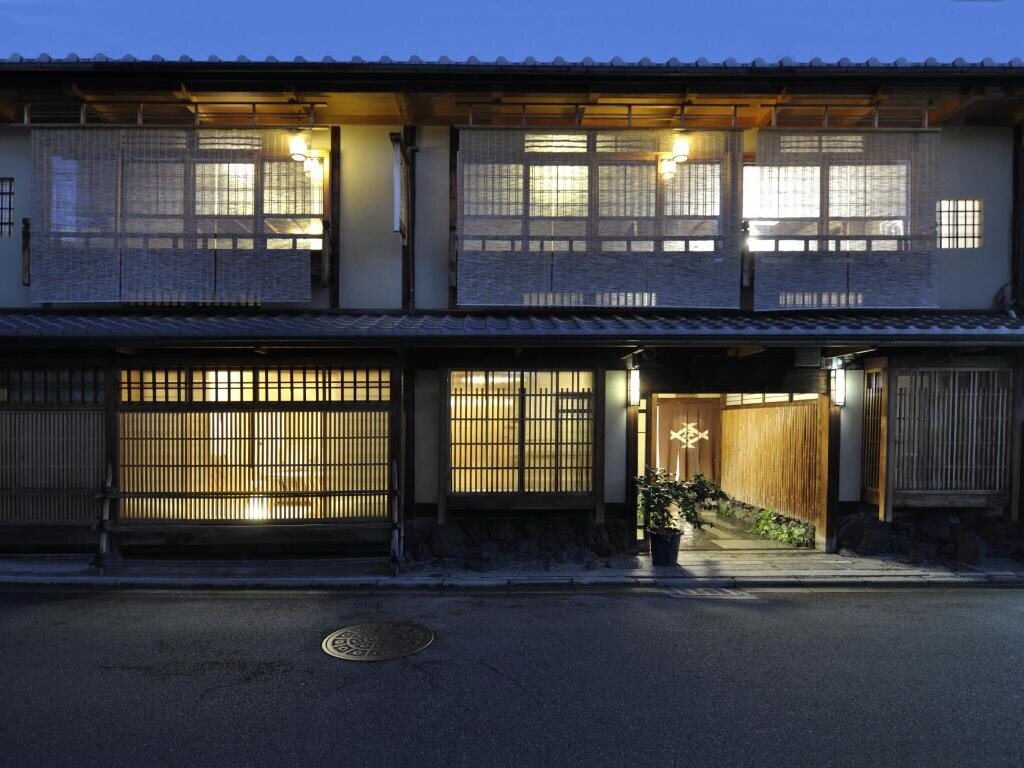
If you like the idea of a ryokan but are nervous about futons, shared baths, old buildings, or very formal service, look at this style of stay.
For many first-time travelers, comfort is what makes the night work. A ryokan-style stay where you actually sleep well is better than a more traditional ryokan that leaves you tired the next morning.
Nazuna Kyoto Nijo-jo
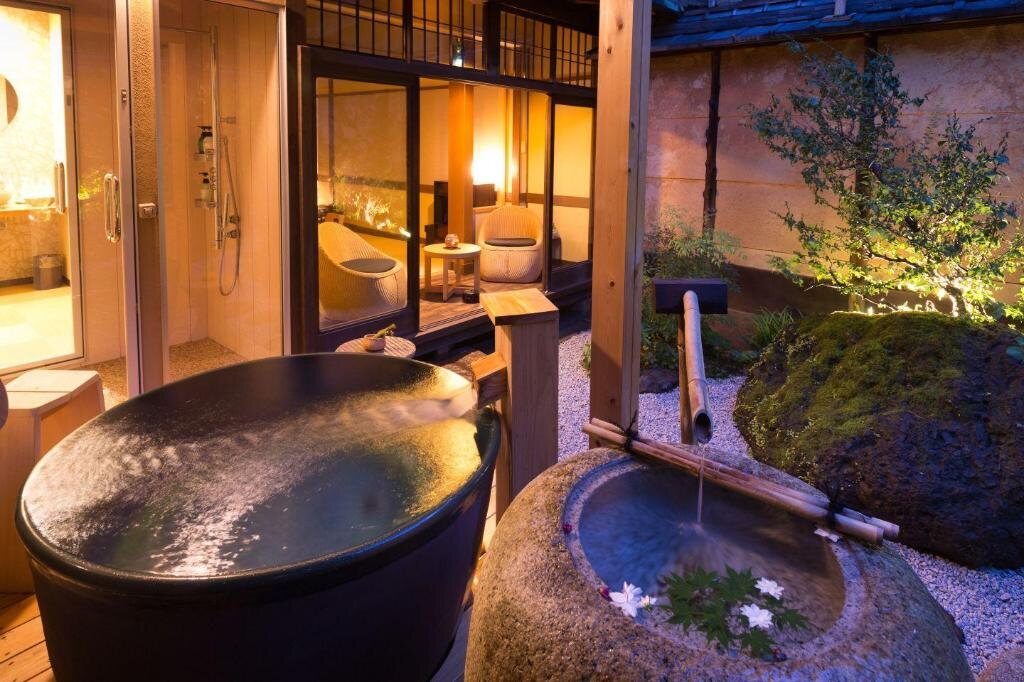
Choose Nazuna Kyoto Nijo-jo if comfort comes first. It is a tea-themed ryokan in a traditional Kyoto townhouse, with five suites, private open-air or semi-open-air baths, Simmons beds, and Kyoto-made futons.
I would describe it as a luxury Kyoto townhouse stay with ryokan touches, not a very old traditional inn. Choose Nazuna if you want a traditional Kyoto look with a more modern, private, bed-friendly room.
Book it if you want a private bath but do not specifically need natural hot-spring water. I also like it for couples or older travelers who want some ryokan atmosphere but worry about sleeping entirely on futon.
Meals depend on the rate you choose. Nazuna lists breakfast hours and dinner time slots, but some rates are room-only.
If You Want a Real Ryokan With a Bed: Reconsider Seikoro
If Nazuna sounds too modern but you still need bed comfort, go back to Seikoro and compare room types carefully. It may suit you better if you want a more traditional ryokan while avoiding a fully futon-only room.
Best Kyoto Ryokan for Baths
If you are searching for a Kyoto ryokan because you want a good bath, start with the basics: in-room or shared, private or public, open-air or indoor, view or no view. Natural hot-spring water is a nice extra in Kyoto, but privacy, size, and comfort are usually more important.
For central Kyoto, many excellent ryokan are not hot-spring destinations. If you care a lot about baths, choose a larger ryokan-hotel or a stay outside the city instead of a small heritage city ryokan.
Kadensho Arashiyama
Choose Kadensho Arashiyama if you want bath variety inside Kyoto. It has natural Arashiyama Onsen in the indoor stone bath and five private bath houses. It is also in Arashiyama, so the night is less city-center and more west-Kyoto.
Kadensho is much larger than a classic city ryokan. It is closer to an onsen resort, which can be exactly right if you want several baths and Arashiyama convenience.
The indoor stone bath uses natural Arashiyama Onsen, while the open-air bath does not. Most travelers will judge the bath by privacy, comfort, and view, but the water source is important if you specifically want onsen.
Book Kadensho for bath variety and Arashiyama convenience, not for old-city ryokan intimacy.
Best Stay Near Kyoto if You Want Mountains, Forest, and Onsen
Sometimes the best move is to leave central Kyoto for one night. Hot-spring water is a nice part of that, but the bigger point is getting out of the city and spending the night somewhere with more nature around you, whether that means mountains, forest, a valley, or a quieter onsen area.
These stays are not normal Kyoto sightseeing bases. Treat them as the main plan for the night. If hot springs are the whole point of the trip, I would look at a real onsen town instead. If you want one quieter night near Kyoto, this kind of stay can work well.
Sumiya Kiho-an
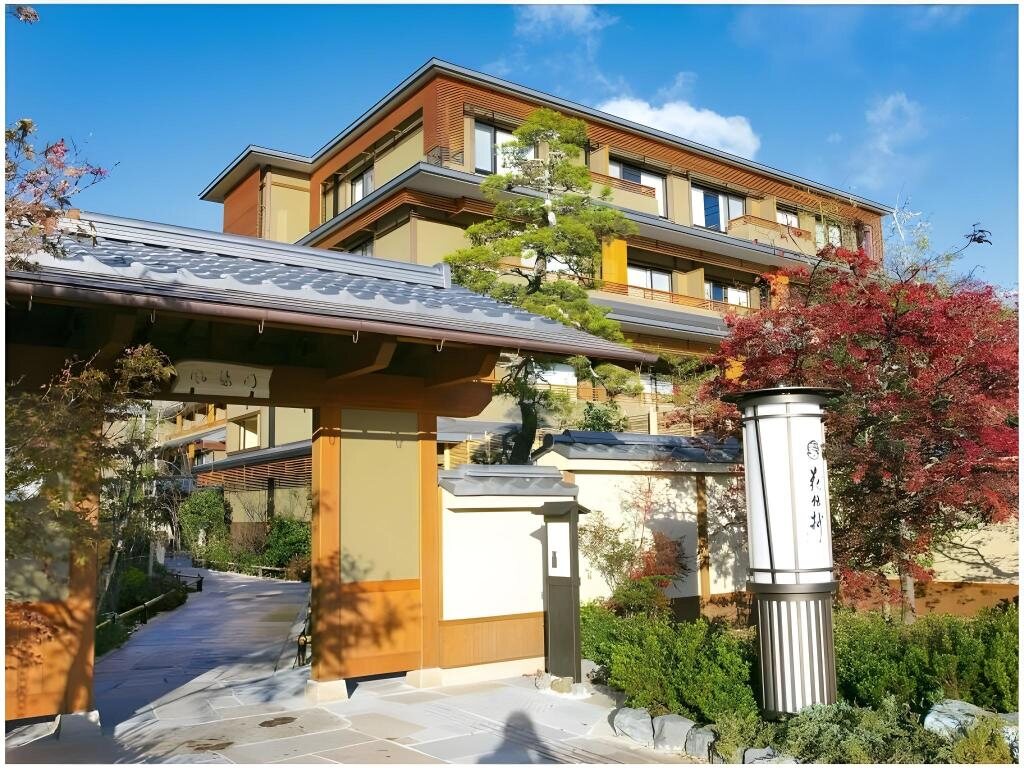
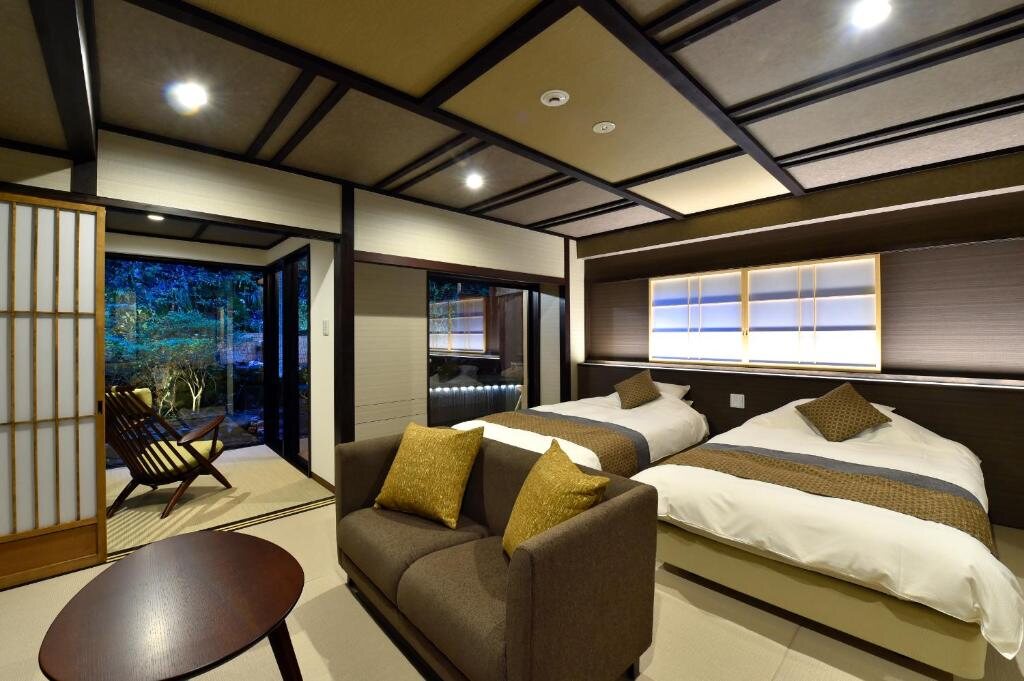
Choose Sumiya Kiho-an if you want a quieter ryokan night outside central Kyoto, with nature around you and onsen as a bonus. It is in Yunohana Onsen in Kameoka, with real hot-spring bath options, including some rooms with open-air hot-spring baths.
Choose this over a central Kyoto ryokan if you want a slower night away from the city. You give up some convenience, but you get much closer to the mountain-and-ryokan image many travelers have in mind.
Do not use it as a normal Kyoto base. Use it as one separate night near Kyoto, with enough time to arrive, eat, bathe, and leave the next morning without turning it into a rushed transfer.
Yoshida Sanso
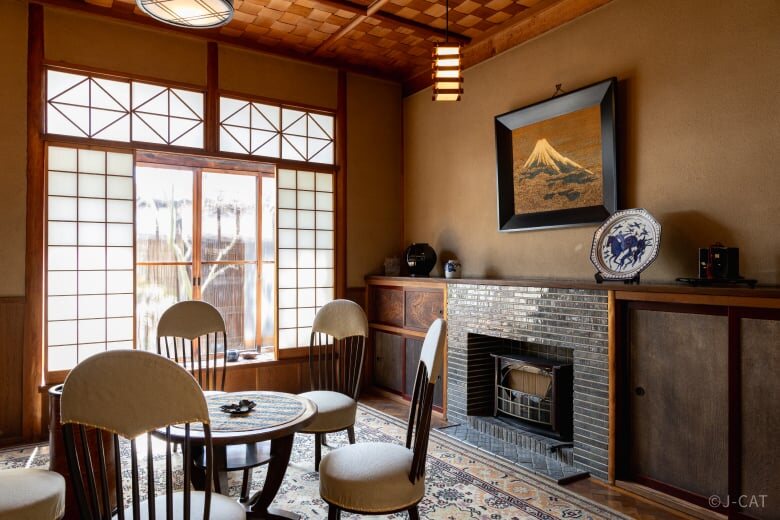
Yoshida Sanso is different again. It is more private and high-end than a normal hotel, but it is not an onsen-town retreat. Consider it if you want a slower stay near Yoshida-yama, with more privacy and history than a standard city hotel.
On Wabunka, Yoshida Sanso includes breakfast and a private guided tour of the property, with dinner available as an add-on.
The guided tour helps you understand the property instead of just sleeping in a beautiful room.
Choose Yoshida Sanso if you want a special stay with privacy and history, and you are willing to plan the evening around the property.
Best Kyoto Townhouse Stay Instead of a Ryokan
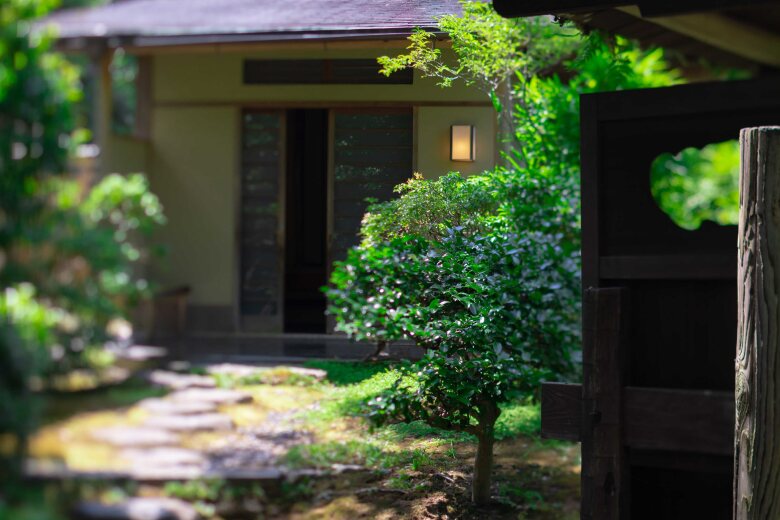
A Kyoto townhouse works well if you realize you may not need a ryokan at all. If what you really want is a traditional Kyoto house, a machiya can be better.
A machiya stay gives you architecture, privacy, space, and a night inside a Kyoto townhouse. It usually does not give you the same dinner, breakfast, staff service, or bathing as a ryokan. Keep this part of your planning simple: choose it when you want the house itself more than the inn service.
Nishijin Fujita
Choose Nishijin Fujita if you want privacy, space, and a traditional Kyoto house more than ryokan service. It is a one-group-per-day townhouse stay in Nishijin, inside a cultural property, with optional cultural add-ons through Wabunka.
Book it if your real wish is privacy and a Kyoto house experience. It is especially interesting for a family or small group that wants space and more privacy than a ryokan room.
On Wabunka, Nishijin Fujita can include optional cultural elements such as traditional parlor games with geisha or maiko (apprentice geisha), tea ceremony, kimono, or a facility tour. Add those if you want a private cultural experience as part of the stay.
Book it for privacy, space, and the house itself, not for a full ryokan dinner and staff service.
Booking Tips Before You Choose
Protect the check-in day. For a one-night ryokan stay, try to check in around 15:00. This gives you time to see the room, settle in, use the bath, eat dinner, and actually enjoy what you paid for.
Treat dinner as part of the price. If you do not want Japanese dinner or breakfast, a normal hotel may be better. You can still add a separate Kyoto cultural experience, such as a tea ceremony in Kyoto.
Know what kind of bath you are getting. If the bath is one of the reasons you are booking, look at the practical points first: in-room or shared, private or public, open-air or indoor, view or no view. Hot-spring water is worth checking too, but in Kyoto it should usually be one part of the decision, not the whole decision.
Confirm the bedding before you pay. Many ryokan still use futons, and some room types differ within the same property. If futon sleeping worries you, prioritize Nazuna, specific Seikoro room types, or another stay that clearly offers beds.
Check meal timing and arrival rules. Some ryokan need to know if you arrive after a certain time because dinner preparation depends on it. This is especially important if you are coming from another city that day.
Use clear English booking support when it helps. If this is your first ryokan, clearer English information can reduce stress around meals, check-in, luggage, and bath etiquette.
Know when a townhouse works better. A machiya can be a wonderful Kyoto stay, but it is different from a ryokan. Book it if you want a house, privacy, and flexible time, not if you mainly want formal ryokan meals and service.
Keep special Kyoto evenings realistic. If you also want a geisha dinner, tea ceremony, or long restaurant night, do not stack everything onto the same ryokan evening. For that kind of planning, my guides to geisha in Kyoto and a private geisha dinner in Kyoto may help you decide which experience belongs on which night.
Final Recommendation by Traveler Type
If you want the high-end classic Kyoto ryokan, start with Hiiragiya or Sumiya Ryokan. Choose this kind of stay only if you can afford it and give it the evening it deserves.
If you want a more practical traditional ryokan, start with Seikoro. It is easier for many first-timers while still giving you a traditional inn experience.
If dinner, breakfast, and the Gion evening are the point, look at Yuzuya. If station convenience is more useful than the older east-side Kyoto location, keep Izuyasu in mind as a compact alternative.
If you want beds, privacy, and a smoother first ryokan-style night, start with Nazuna Kyoto Nijo-jo.
If you care a lot about the bath, start with Kadensho Arashiyama. If you want a quieter night outside the city with onsen as a bonus, look toward Sumiya Kiho-an.
If you want a slower, high-end stay with more privacy and history, look at Yoshida Sanso on Wabunka. If you want a traditional Kyoto house rather than a ryokan, start with Nishijin Fujita.
And if your Kyoto plans are full of restaurants, late nights, early trains, and long sightseeing days, book a normal hotel instead. A good Kyoto hotel is not a lesser choice. It may simply work better for your trip. Start with my where to stay in Kyoto guide or, if you are still choosing where to base yourself in the Kyoto-Osaka region, my Kyoto vs Osaka guide.
FAQ
Is One Night in a Kyoto Ryokan Enough?
Yes, one night is enough for most travelers if you check in early and keep the evening free. It works poorly if you arrive late, skip dinner, and leave early the next morning.
Are Kyoto Ryokan Real Onsen?
Some Kyoto-area stays have natural hot-spring water, especially outside central Kyoto or in areas such as Arashiyama and Yunohana Onsen. Many central Kyoto ryokan are traditional inns without natural onsen. If hot-spring water is important to you, look for the bath type on the room or plan page.
What Is the Difference Between a Private Bath and a Private Onsen?
A private bath means you can bathe privately. Onsen means natural hot-spring water. A property should say clearly when a private bath uses onsen water.
Should I Book Dinner and Breakfast at a Kyoto Ryokan?
Usually, yes. Dinner and breakfast are often a major part of the ryokan stay. If you do not want Japanese meals or fixed meal times, a hotel plus a separate Kyoto dinner may be a better choice.
Can I Stay in a Kyoto Ryokan if I Do Not Want to Sleep on a Futon?
Yes, but choose carefully. Look for Western-bed rooms, Japanese-Western rooms, or modern ryokan-style stays such as Nazuna Kyoto Nijo-jo. Check the exact room type, even within the same ryokan.
Is a Machiya Stay the Same as a Ryokan?
No. A machiya stay is usually a traditional Kyoto townhouse stay. It can be private, beautiful, and memorable, but it normally does not have the same meal, bath, and staff-service structure as a ryokan.
Is Kyoto Better Than Hakone or Kinosaki for a Ryokan Night?
Kyoto is better if you want convenience and a traditional city stay without adding another travel leg. Hakone, Kinosaki, and other onsen destinations are usually better if hot springs and retreat time are what you care about most.
Comments are closed.