

If seeing geisha is something you’d enjoy but isn’t a major interest, I recommend booking a public show. It’s an easy, less expensive way to watch a performance. Gion Corner includes several Japanese performing arts, while Gion Kagai Art Museum offers a shorter dance alongside its exhibits. If you’re visiting in April, I suggest checking Miyako Odori.
If you have a strong interest in geisha culture and this is something you’re really looking forward to, I recommend a private experience. My first recommendation is Maiko Tea and Entertainment at Umeno, where you can watch a dance, talk with your hosts over tea, and visit the dressing room. It’s expensive, but the time to ask questions and learn about their lives is why I recommend it when your interest goes beyond watching a show.
In Kyoto, geisha are called geiko, and the apprentices training to become geiko are called maiko. They perform traditional dance and music and entertain guests through conversation and games. Many visitor experiences feature a maiko, so check who’s included if meeting a fully trained geiko is important to you.
Some links on YavaJapan are affiliate links. If you book or buy through them, I may earn a small commission at no extra cost to you. It helps support the site, and I only link to places, stays, and experiences I genuinely think are worth recommending.
At a Glance
- An evening show: Gion Corner includes maiko dance within a program of traditional arts.
- A short daytime performance: Gion Kagai Art Museum. Buy the dance ticket as well as museum admission.
- An April visit: Miyako Odori, performed by Gion Kobu’s geiko and maiko.
- My first private recommendation: Maiko Tea and Entertainment at Umeno, with conversation over tea and a dressing-room visit.
- A private meal with entertainment: Fortune Garden Kyoto, with a private room and maiko dance and games.
- Seeing someone in the street: Possible in Gion, but never guaranteed. Enjoy the neighborhood and keep your distance from anyone traveling to an appointment.
The map below shows the venues and areas covered throughout this guide, including Gion, Kamishichiken, and Arashiyama.
Some pins show an approximate area. Use the meeting point in your booking confirmation when going to an experience.
Seeing Geisha in Gion
If you’re hoping to see geisha in the streets of Kyoto, I’d say Gion is probably your best chance, especially in the late afternoon or evening. It’s the neighborhood around Yasaka Shrine, east of the Kamo River.
Geiko and maiko sometimes walk through the area on their way to appointments, so you may come across one while exploring. But there’s no public schedule. You could spend the whole evening in Gion without seeing anyone, which is why I recommend booking a performance if this is something you’re looking forward to.
If you do see a geiko or maiko, remember that she’s usually on her way to work. Give her room to pass, keep walking, and avoid stopping or following her for a photo. Kyoto’s Gion visitor guidance asks visitors to respect private property and refrain from unauthorized photography. Follow the signs at individual streets and entrances; some private roads are closed to visitors.
An evening walk here can still be lovely. Think of seeing a geiko or maiko as a possible bonus while visiting Gion, rather than the reason to spend hours waiting on one street.
Public Geisha Shows in Kyoto
If you’re curious about geisha and would enjoy seeing a dance, a public performance is an easy, less expensive option. The two venues below offer quite different visits, even though they’re both in the Gion Kobu theater complex.
Gion Corner
I recommend Gion Corner if you’d enjoy seeing several traditional arts in one evening. Maiko dance is part of a program that also includes music, flower arranging, tea preparation, and theater. The dance is only one part of the show, so this suits you best if you’re curious about the other performances too.
Allow about 1 hour. Standard adult admission is ¥5,500, with performances normally starting at 18:00 and 19:00. The winter program differs, and there are closure dates, so check the calendar before choosing an evening. You can reserve seats online; same-day tickets depend on availability.
Gion Kagai Art Museum
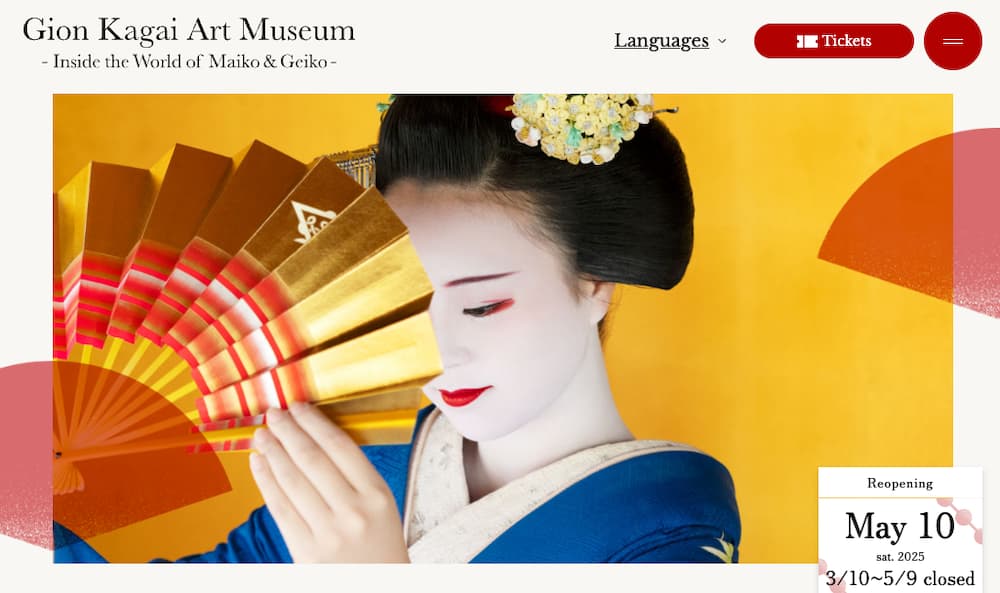
At Gion Kagai Art Museum, you can see kimono, hair ornaments, and other objects used by geiko and maiko, then attend a 15-minute dance performance. I suggest this if you’d prefer a short visit focused on their work and clothing.
Museum admission is ¥1,500 per adult, and the dance performance costs an additional ¥1,600. That makes ¥3,100 per adult for both. Buying museum admission alone won’t get you into the performance. Separate photo sessions are also offered; photography during the dance isn’t permitted.
Check opening dates before planning a visit, especially in spring: the museum lists a closure from mid-March to early May, as well as other closure days. The dance and photo sessions are upstairs, with no elevator.
Geisha Walking Tours and Tea Experiences
If you’d like to ask questions or have a photo together, I suggest booking an experience that includes time with a maiko or geiko. Read the inclusions carefully: a walk around a geisha district can be interesting, but the neighborhood’s name alone doesn’t mean you’ll meet a performer.
Meet a Maiko with a Gion Walking Tour
This Gion walking tour on Viator combines a guided walk with a visit to an ochaya, a traditional teahouse where geiko and maiko entertain guests. The experience includes dance, conversation, questions, and a photo session with a maiko.
I recommend it if you’d enjoy learning about the neighborhood before meeting someone who works there. The full tour takes about 3 hours. A show-only option is also listed, so check which version you’re selecting if you want the walk included.
Geisha Dinner and Gion Cultural Walk
The Geisha Dinner and Gion Cultural Walk on GetYourGuide combines a guided walk with a meal, entertainment, and time to talk with a geiko or maiko. It lasts about 3 hours and includes kaiseki, a Japanese meal served in a series of seasonal courses.
This is worth comparing if you want dinner arranged as part of the evening. There are group and private options, so check the one you book. The listing also specifies a minimum of four participants for the tour to operate and a refund if that minimum isn’t reached.
Maikoya’s Maiko Tea Ceremony and Show
Maikoya’s tea ceremony and show is a shorter option, lasting about 45 minutes. It combines tea ceremony with a performance and an opportunity for photos afterward. I suggest it if you’d like to meet a maiko without setting aside a whole evening.
You need to reserve in advance, and children must be at least 7 years old. If your main interest is learning about tea, compare this with the dedicated tea ceremony experiences in Kyoto before deciding.
Private Geisha Experiences in Kyoto
If geisha culture is one of your main interests, I strongly recommend considering a private experience. Having the room and your hosts to yourselves gives you more freedom to ask questions and enjoy the conversation. I think that can justify spending more for a honeymoon, anniversary, or a trip you’ve been planning for years.
The experiences below are available through Wabunka, a Japan-based company that develops private cultural experiences with Japanese hosts and venues. Many of its arrangements are available only through Wabunka, and these four experiences include an English-speaking guide to help you communicate. The booking is for your own party, so you won’t share it with unrelated travelers.
I’ve worked with Wabunka and joined several of their experiences. I often recommend them for this kind of visit because of the hosts they work with and the time you get to spend together.
Maiko Tea and Entertainment at Umeno
Maiko Tea and Entertainment at Umeno is my first recommendation for a private geisha experience in Kyoto. It’s in Kamishichiken, Kyoto’s oldest geisha district, in the northwest of the city.
During the 90-minute visit, you’ll watch a maiko dance, have tea and sweets, play a traditional game, and hear about the culture from Umeno’s future proprietress. The visit also includes access to the dressing room, which gives you a chance to see part of the preparation behind the performances.
This is the private experience I suggest if you’re especially interested in maiko training, clothing, and daily life. It’s also a good alternative to dinner if you’d prefer tea and sweets to a full meal, though it’s still an expensive experience.
Fortune Garden Kyoto
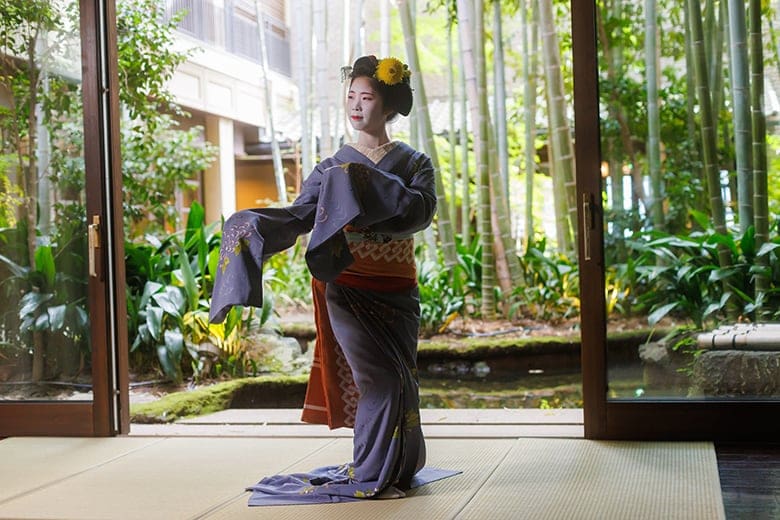
Fortune Garden Kyoto is another option I recommend if you want a private meal with maiko entertainment. You have a private dining room overlooking a bamboo garden, with a dance performance and traditional party games as part of the visit.
The experience lasts 2 hours and can be arranged for lunch or dinner. It’s a restaurant setting, so I particularly recommend it if the meal and time together are the main reasons you’re booking. For a visit inside a traditional ochaya, look at Umeno or the Gion dinner below.
It’s an expensive outing that I recommend for a special occasion, especially if you’d enjoy combining the entertainment with lunch or dinner in a private room.
A Private Ochaya Dinner in Gion
The private dinner at Ochaya Man takes place in Gion Higashi, one of Kyoto’s five geisha districts. It includes Japanese food, maiko dance accompanied by a geiko playing the shamisen, a three-stringed instrument, plus conversation and traditional games.
I recommend this if you specifically want an evening in a traditional ochaya. Allow 2 hours. My private geisha dinner in Kyoto guide explains the experience in more detail if you’re considering it.
Geisha Entertainment at Arashiyama Kumahiko
At Arashiyama Kumahiko, you have a private kaiseki dinner with geisha entertainment near Togetsukyo Bridge, in western Kyoto. The experience lasts 2 hours 30 minutes and includes dance and musical entertainment.
I suggest considering it if you’re already planning to spend the afternoon in Arashiyama and want to stay for dinner. Leave time to get to the restaurant after sightseeing, and check the journey back to your hotel before choosing the evening.
For any of these private visits, check availability early and read the cancellation terms before paying. Wabunka currently lists all four as non-cancellable after booking. If one particular experience is important to you, I suggest checking it before filling your Kyoto days with other reservations. My guide to what to book in advance for Japan explains how I prioritize these bookings.
Seasonal Geisha Performances
Kyoto’s geisha districts hold public dance performances at particular times of year. I recommend checking whether one coincides with your trip before booking a regular show, especially if you’d like to see a larger production devoted to geiko and maiko performance.
Miyako Odori in April
If you’re visiting Kyoto in April, Miyako Odori is the first performance I suggest checking. The geiko and maiko of Gion Kobu perform at the Gion Kobu Kaburenjo theater, with the season normally running from April 1 to April 30.
It’s a public ticketed performance, so you can attend without an introduction to a teahouse. I strongly recommend choosing this over spending an evening hoping to see someone in Gion. Check the official site for the program and ticket release details for your travel year.
Other Seasonal Dance Performances
If your trip falls outside April, there are other performances to consider. These are the usual periods; confirm the exact dates and venue before booking. If you’re traveling with children, check admission ages too, as they differ by show.
| Performance | Usual Period | Who Performs |
|---|---|---|
| Kitano Odori | March to early April | Kamishichiken’s geiko and maiko |
| Kyo Odori | Early to mid-April | Miyagawacho’s geiko and maiko |
| Kamogawa Odori | May 1-24 | Pontocho’s geiko and maiko |
| Miyako no Nigiwai | Usually late June | Performers from all five Kyoto geisha districts |
| Gion Odori | November 1-10 | Gion Higashi’s geiko and maiko |
Miyako no Nigiwai is especially interesting if you’d like to see the different districts perform in the same production. Its short run makes it harder to fit into a trip than the month-long Miyako Odori season.
Setsubun, Gion Matsuri, and Hassaku
At Yasaka Shrine’s Setsubun celebrations in early February, geiko and maiko take part in dance offerings and bean throwing. This is a public event you can attend as part of a shrine visit. Check the shrine’s schedule for the dates and performance times that year.
Gion Matsuri takes place throughout July, with its main float processions on July 17 and 24. It’s a major Kyoto festival with many events, rather than a dedicated geisha performance. I suggest choosing the festival activities you want to see and checking the program for any geiko or maiko appearances.
On August 1, Hassaku is the custom of making formal visits to thank teachers and teahouses. It’s an interesting part of the districts’ working year, but these are professional visits. The Kyoto geisha districts’ cultural foundation asks visitors to refrain from street photography because it disturbs residents and people passing through. I recommend a ticketed performance if you want time to watch or photograph a geiko or maiko with permission.
Which Geisha Experience Should You Choose?
If you’d enjoy seeing a performance but don’t have a strong interest in geisha culture, I recommend Gion Corner, or Miyako Odori if your visit falls in April. If you’d prefer a short daytime dance, check the museum’s performance tickets.
If this is a major interest and you can comfortably afford a private experience, my first recommendation is Maiko Tea and Entertainment at Umeno. For a private meal with maiko entertainment, I also recommend Fortune Garden Kyoto.
You can also meet geisha in Tokyo. My review of a private dinner at Ryotei Maki covers that experience. And if you’re still deciding between geisha, tea, crafts, and other activities, my guide to cultural experiences in Japan can help you choose what you’d enjoy most.
Comments are closed.