

I recommend 2 nights in Takayama for the old town, local food, and a walk through the temples or an outing nearby. The old town is easy to explore on foot, with wooden merchant houses, breweries, and food shops close together. You can spend much of the day walking between them, stopping for a tasting or something to eat along the way.
You can see the central sights with 1 night, but a second night gives you more time to enjoy those stops without having to catch an onward train that afternoon. You’ll also have another morning at the markets and more time for meals, including a Hida beef dinner. Takayama is popular with tourists, and the main streets get busy during the day, so staying overnight lets you walk around before the shops open or after many visitors have left.
Some links on YavaJapan are affiliate links. If you book or buy through them, I may earn a small commission at no extra cost to you. It helps support the site, and I only link to places, stays, and experiences I genuinely think are worth recommending.
At a Glance
- How long: 1 night for the central sights, 2 nights for more time in town and one nearby outing, or 3 nights for a mountain day as well.
- Where to stay: I recommend Sanmachi Suji, the main old-town streets, and the Miyagawa River for walking around town. For station access and rooftop baths, choose Takayama Ouan.
- A stay to spend more on: Taniya, a private townhouse stay connected to the Kusakabe Folk Crafts Museum.
- Start with: Sanmachi, Takayama Jinya, a morning market, and a Hida beef meal. Add the Higashiyama temple walk or Hida Folk Village according to your interests.
- Day trips: Shirakawa-go for thatched farmhouses, Hida-Furukawa for a smaller town, or Kamikochi and the Shinhotaka Ropeway for the mountains.
- Getting there: From Tokyo, take the bullet train to Nagoya, then the Limited Express Hida. If you’re also visiting Kanazawa, check my Kanazawa, Takayama, and Shirakawa-go itinerary.
How Many Nights to Spend in Takayama
With 2 nights, you could arrive in the afternoon and explore Sanmachi before dinner, then spend the next morning at the markets and historic houses. That leaves the afternoon for the Higashiyama temple walk or Hida Folk Village, with another morning available before you leave. If you’d rather visit a nearby town or village, you can use the full day for that and see Takayama on either side.
With 1 night, try to arrive by early afternoon. You could visit Takayama Jinya and the old town that day, then see the morning markets before your onward train or bus. Hida Folk Village is possible if your departure is later, but a full mountain day would leave very little time for Takayama itself.
I suggest 3 nights if you want a full day in Kamikochi or Okuhida, the hot-spring area in the mountains east of Takayama, as well as time in town. The extra night is also useful for a longer cultural experience or an afternoon at your accommodation, without having to shorten the rest of your visit.
A day trip from Nagoya is possible, though you’ll spend a large part of the day on the train. From Tokyo, I don’t recommend traveling there and back just for a few hours in Sanmachi. If your time in Japan is limited, decide how much of your Tokyo or Kyoto stay you’re willing to give up for Takayama. My guide to where to go in Japan can help with that choice.
Where to Stay in Takayama
Near Sanmachi Suji and the Miyagawa River
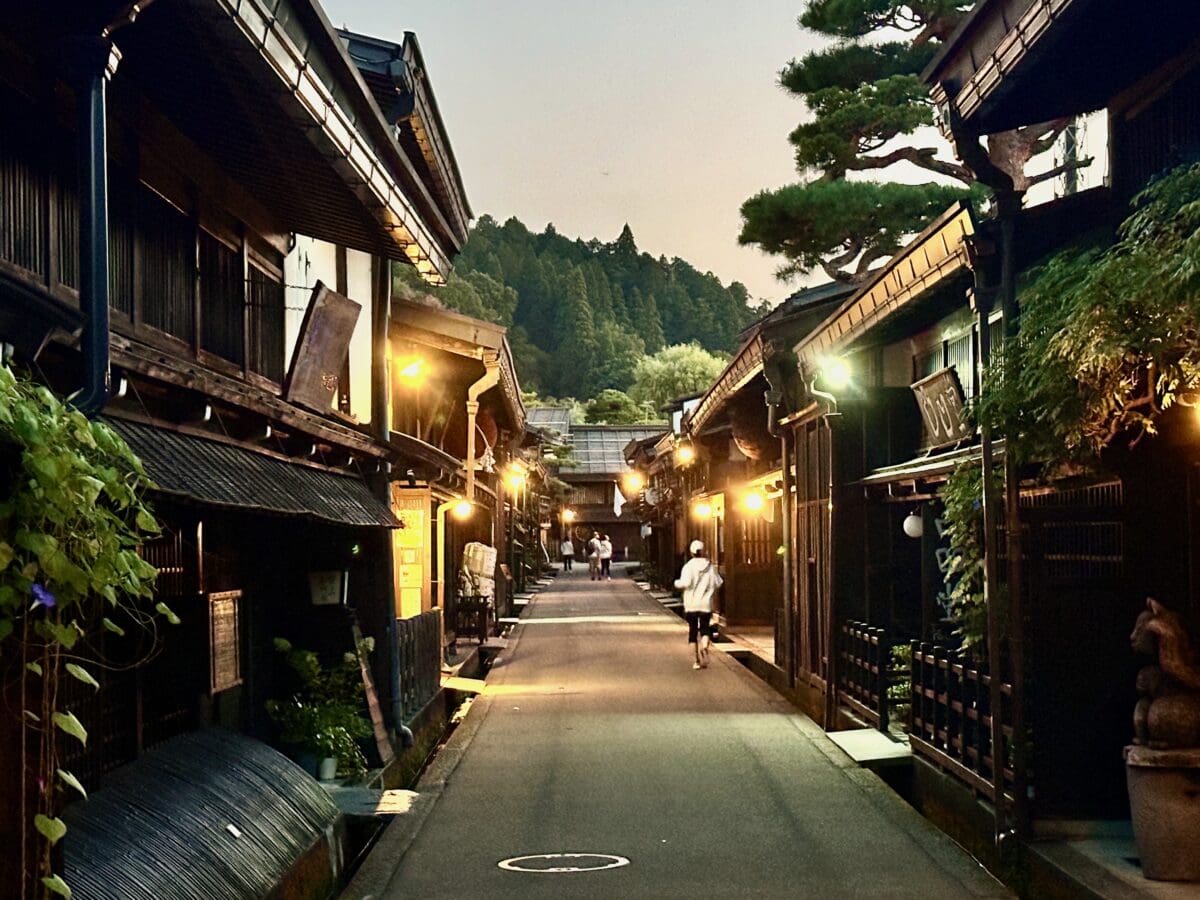
I recommend staying here if you’re looking forward to walking through the old town before breakfast or after dinner. With the wooden shopfronts, bridges, and morning markets nearby, it’s easy to go out for a short walk or return to your room between visits.
For a stay spent mostly in Takayama, I’d choose this area over the station. Most central sights are around 10 to 15 minutes from the station on foot, so you’ll have a slightly longer walk with your bags when you arrive and leave, but you’ll be closer to the places you’re visiting each day.
Near Takayama Station
The station is a better choice for an early departure, heavy luggage, or several regional bus trips. The Takayama Nohi Bus Center is beside it, so you’ll be close to the trains as well as buses for Shirakawa-go and the mountains.
You can still walk to Sanmachi and the river from here. If you’re carrying several suitcases or arriving after a long travel day, getting to the hotel quickly may be more useful than having the old streets outside your door.
Choosing a Hotel or Ryokan
Takayama is a good place for a ryokan (traditional Japanese inn) stay if you’re looking forward to a Japanese dinner, a room with tatami (woven floor mats), and time in the baths. For me, dinner and breakfast are a big part of the experience, so I recommend choosing a meal plan you’d enjoy and arriving early enough to spend time in the room and bath before dinner.
The room deserves a close look too, especially if sleeping on the floor would be uncomfortable. Some have beds, while others use futons laid on the tatami. My guide to staying in a ryokan explains these differences and what to expect from the meals. If you plan to be out all day and eat at restaurants each evening, a hotel may suit you better.
This map brings together Takayama's main stay areas, old-town sights, food stops, cultural experiences, and nearby day trips.
Recommended Hotels and Ryokan
| Stay | Location | Why Consider It? |
|---|---|---|
| Taniya | Beside the Kusakabe Folk Crafts Museum | Private townhouse and time with the family behind the museum |
| Oyado Koto No Yume | Near the station | Traditional rooms and hot-spring baths with a short arrival walk |
| Takayama Ouan | Near the station | Hotel convenience with rooftop baths |
| Hotel Wood Takayama | In the old town | A modern hotel close to the streets you’ll explore |
| Residence Hotel Takayama Station | Near the station | Kitchens, washing machines, and larger room options |
| Honjin Hiranoya Kachoan | Near Takayama Jinya | A more expensive ryokan with Japanese meals and an old-town location |
Taniya
I recommend Taniya if you’d like to spend more on a stay where you can meet the people behind Takayama’s crafts. You’ll have a renovated townhouse with a cypress bath to yourselves, as it takes one group per day. Beside it is the Kusakabe Folk Crafts Museum, where the stay booked through Wabunka includes a visit with Masaru Kusakabe, the family’s 13th head, and after-hours access.
For more time learning about local crafts or village life, you can add pottery painting or a mountain-home visit, though either activity requires at least 2 nights. Meals cost extra, so compare the full plan when deciding how much to spend and how long to stay.
You book this through Wabunka, a website for private cultural experiences and stays in Japan. I’ve worked with them in the Japan travel industry and recommend them for visits where you want time with a local host to talk and learn. Their experiences are private for your party, without a mixed tour group.
Oyado Koto No Yume
Oyado Koto No Yume gives you traditional rooms and hot-spring baths near the station, so it’s a good choice for a first ryokan stay with an easy arrival. You can put down your bags soon after getting off the train, then walk into the old town.
If you prefer a bed to a futon, use the room photographs to choose a suitable category. The meals also depend on your booking, so check what’s included before reserving dinner elsewhere.
Takayama Ouan
Takayama Ouan is my top hotel choice near the station for an easy arrival and baths after sightseeing. It’s about a 5-minute walk from the trains, with public baths and three private baths on the 13th floor, so you can spend the day in town and return for a bath in the evening.
The private baths are separate from the guest rooms and used by one party at a time. If you’d prefer to bathe privately, check the arrangements for using them before booking.
Hotel Wood Takayama
Hotel Wood Takayama is a modern hotel with wood and simple furnishings in its rooms, right in the old town. I recommend it if you expect to spend much of your stay walking around Sanmachi and want to return to your room between visits.
The room types include standard rooms with showers, larger deluxe rooms with baths, and two-level rooms for families. The rooms have no televisions, so check that everyone in your group is happy with that before booking.
Residence Hotel Takayama Station
If you’re visiting Takayama halfway through a longer trip, Residence Hotel Takayama Station is useful for doing laundry and preparing meals in your room. Every room has a kitchen and washing machine, and the station is about a 2-minute walk away, which also helps with early departures.
For families or groups, compare the larger suites with the standard rooms. The bed arrangements and capacity vary, so choose a room with enough sleeping space for everyone.
Honjin Hiranoya Kachoan
Honjin Hiranoya Kachoan is a more expensive ryokan that I recommend if you want a traditional Japanese dinner and a stay close to the old town. You can visit Takayama Jinya and the morning market nearby, then return to the inn for an afternoon in your room and bath before dinner.
The inn serves kaiseki (a Japanese meal of several seasonal courses), and you can choose between traditional tatami rooms, suites, and rooms with a semi-open-air bath. Compare the room and meal plan together, then leave an afternoon free to enjoy what you’re paying for. A late arrival followed by an early departure would leave little time for the stay.
Things to Do in Takayama
Walk Through Sanmachi and Cross Nakabashi
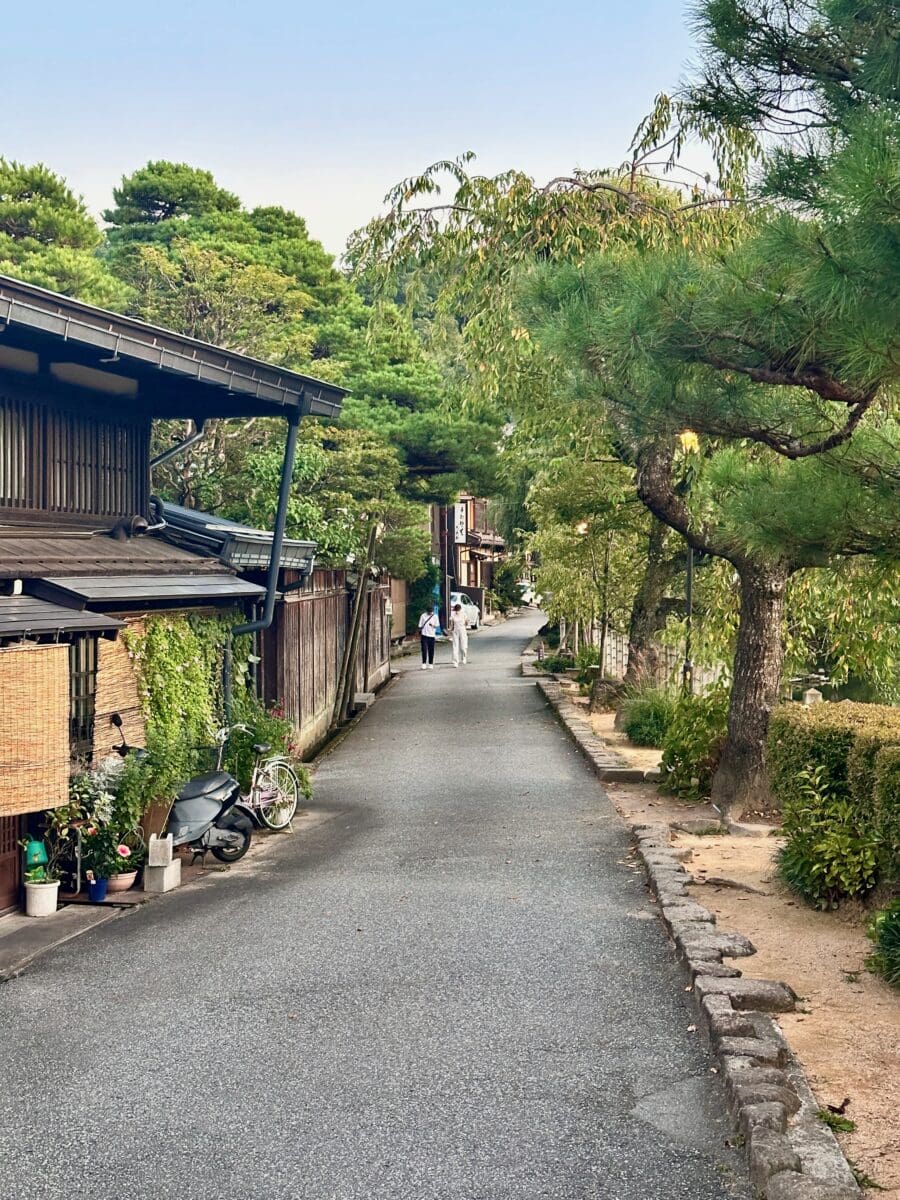
Sanmachi Suji includes Ichinomachi, Ninomachi, and Sannomachi, where wooden merchant houses sit alongside sake breweries, food shops, and craft stores. The streets are compact, but once you start going inside, a walk can easily take longer than you expected. I suggest leaving enough time to browse without having to move on to the next sight.
For fewer people, go early or later in the afternoon, but keep part of your visit within shop opening hours if you want food and tastings. Many shops close around 17:00, so an evening walk is good for seeing the streets with fewer visitors, while a daytime visit gives you more to do along the way.
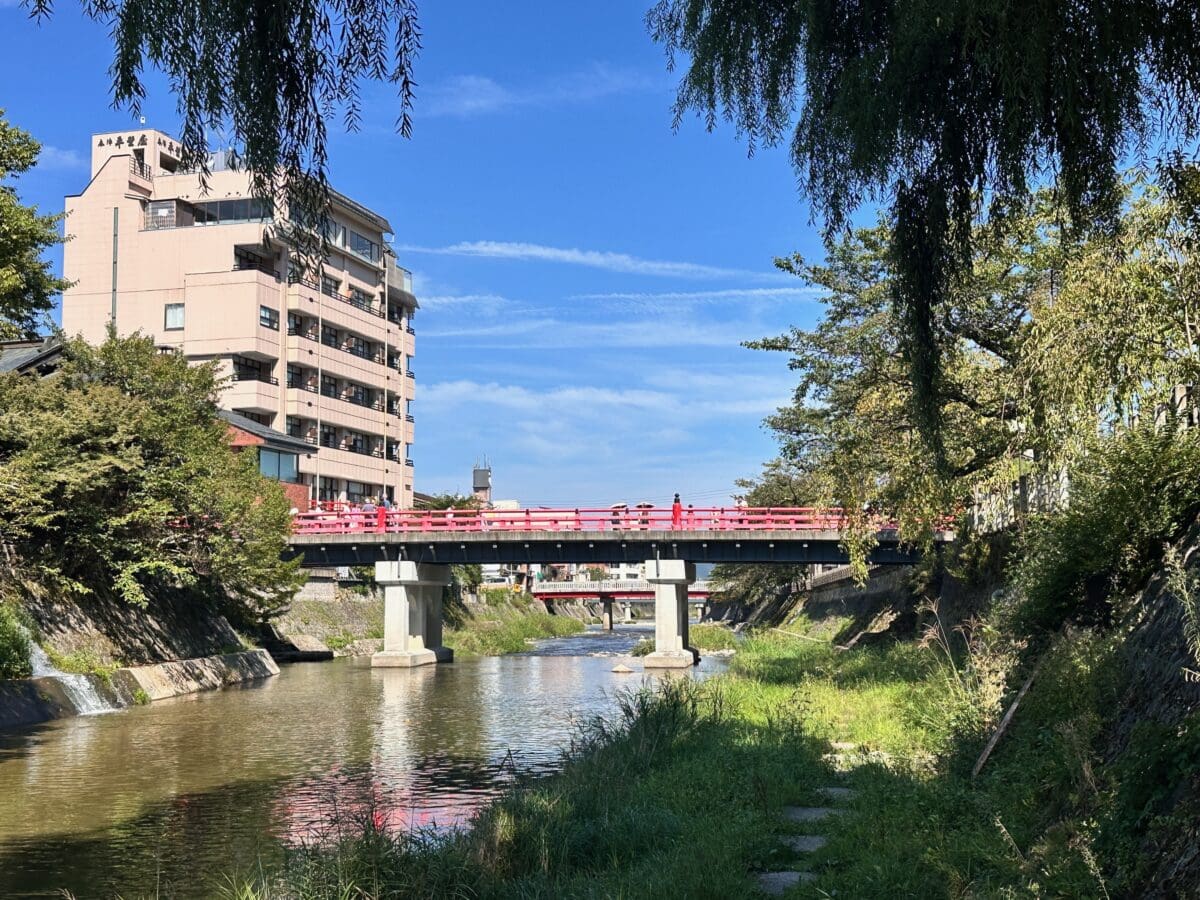
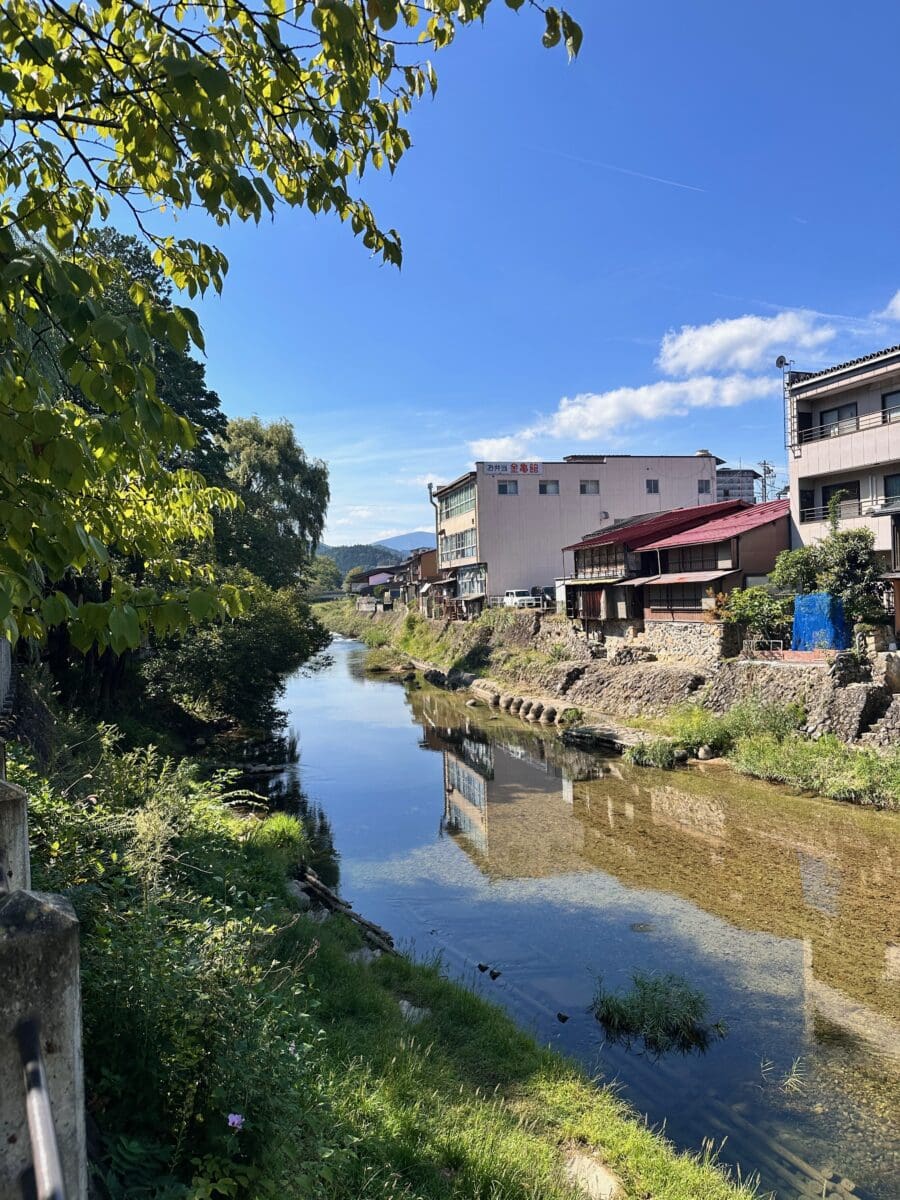
From Sanmachi, you can cross the red Nakabashi Bridge and continue beside the river, then return through the side streets. The latticework and old brewery entrances were some of the details I enjoyed looking at here, and they’re easier to notice when you aren’t hurrying between stops.
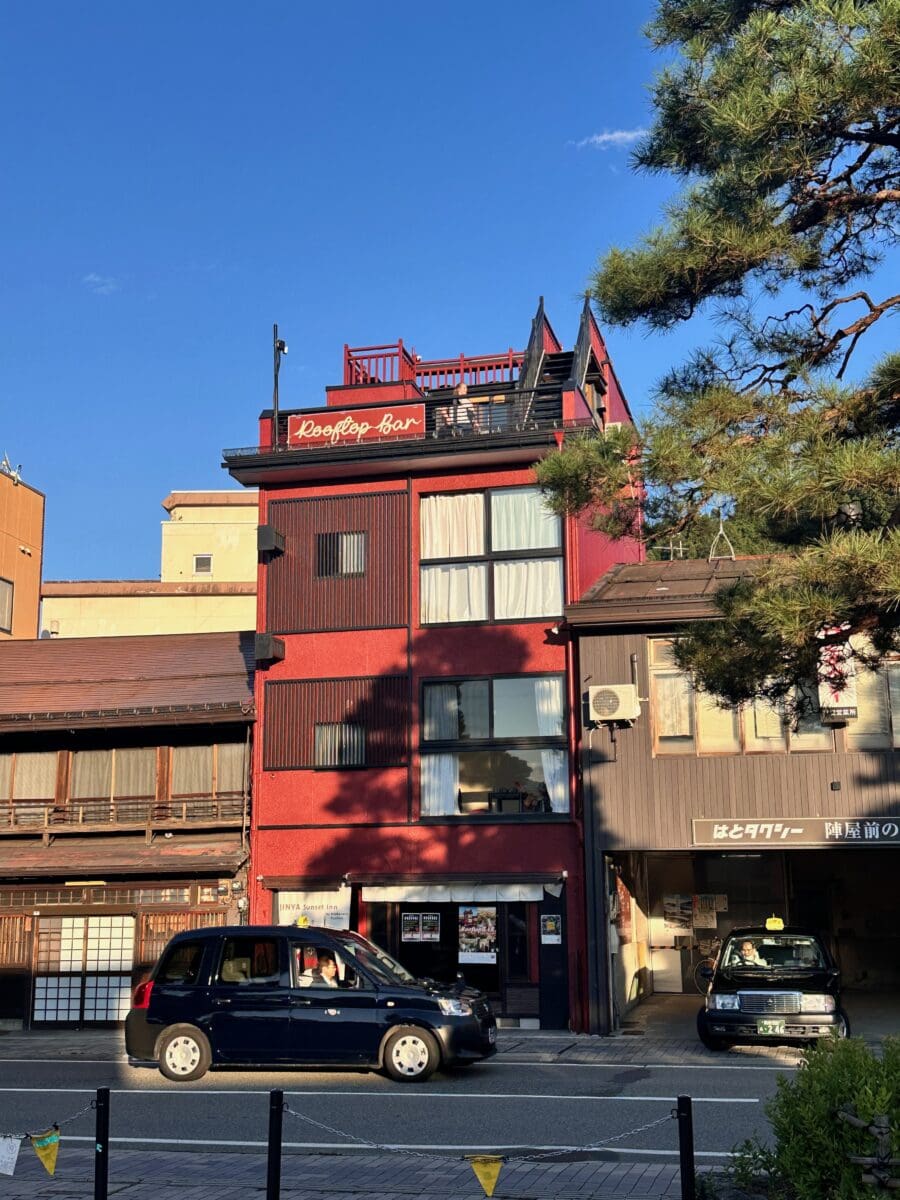
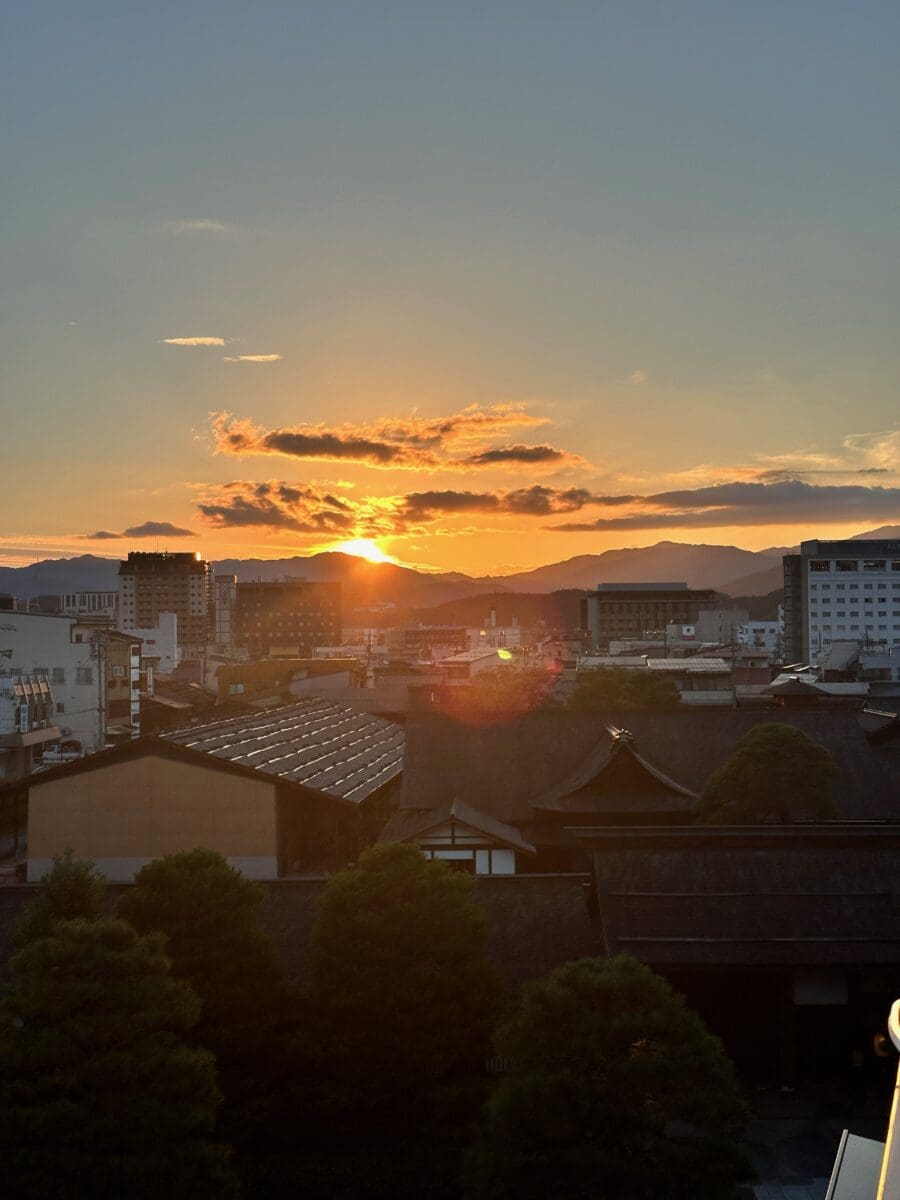
Toward sunset, I recommend the rooftop bar at Jinya Sunset Inn, in the red building opposite Takayama Jinya, for a drink overlooking the Jinya roofs. Access is through reception, where you can check the entry charge and whether the bar is open that day, as it can close in bad weather.
Visit Takayama Jinya and a Merchant House
Takayama Jinya is worth visiting to understand how the town was governed. It was the local office of the shogunate, Japan’s former military government, and you can walk through the officials’ work rooms, living quarters, and a storehouse for rice collected as tax.
Pairing it with a merchant house gives you a look at two different parts of town life: where the officials worked and how the wealthy trading families lived. If you’re interested in Takayama’s history, I recommend making time for both.
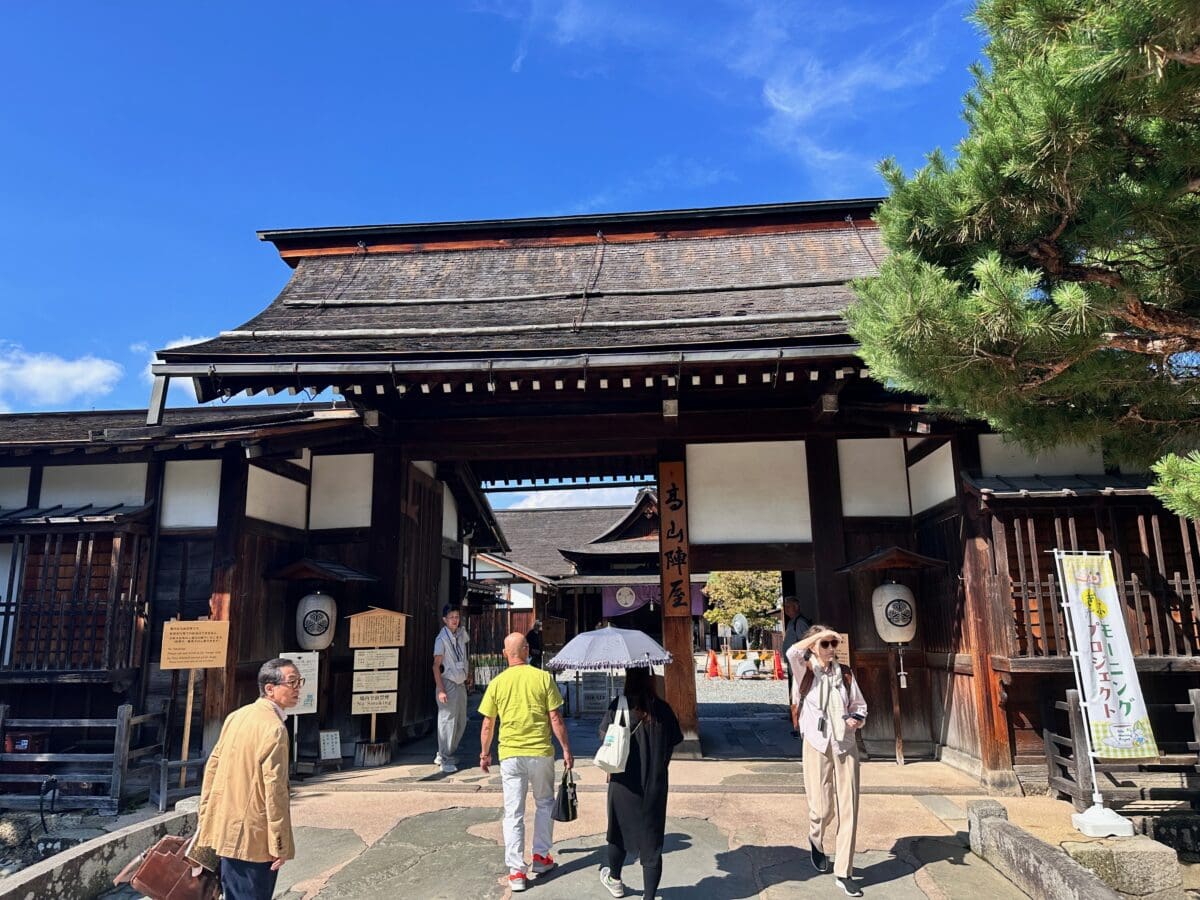
For the merchant house, choose Kusakabe Heritage House, also called the Kusakabe Folk Crafts Museum, or neighboring Yoshijima Heritage House. The wooden interiors are a reason to visit in themselves, especially the beams and the way light enters the upper part of the houses. One house is enough for a general visit, though if you love architecture, you may enjoy comparing both.
For a rainy afternoon, the Takayama Museum of History and Art has free exhibitions on local history and culture. The Hida Takayama Retro Museum is another option if you’d prefer old toys, household objects, and mid-20th-century displays.
Visit the Morning Markets Before Lunch
Takayama has two central morning markets. Miyagawa Morning Market runs beside the river, with produce stalls, snacks, crafts, and nearby souvenir shops. Jinya-mae Morning Market is in front of Takayama Jinya and has a stronger focus on farmers’ produce and homemade pickles.
Both open 7:00 to 12:00 from April to November, and 8:00 to 12:00 from December to March. Around 8:30 is a good time to arrive, giving you time to browse before continuing into town. Bring cash for small purchases, and expect fewer stalls in winter or rain.
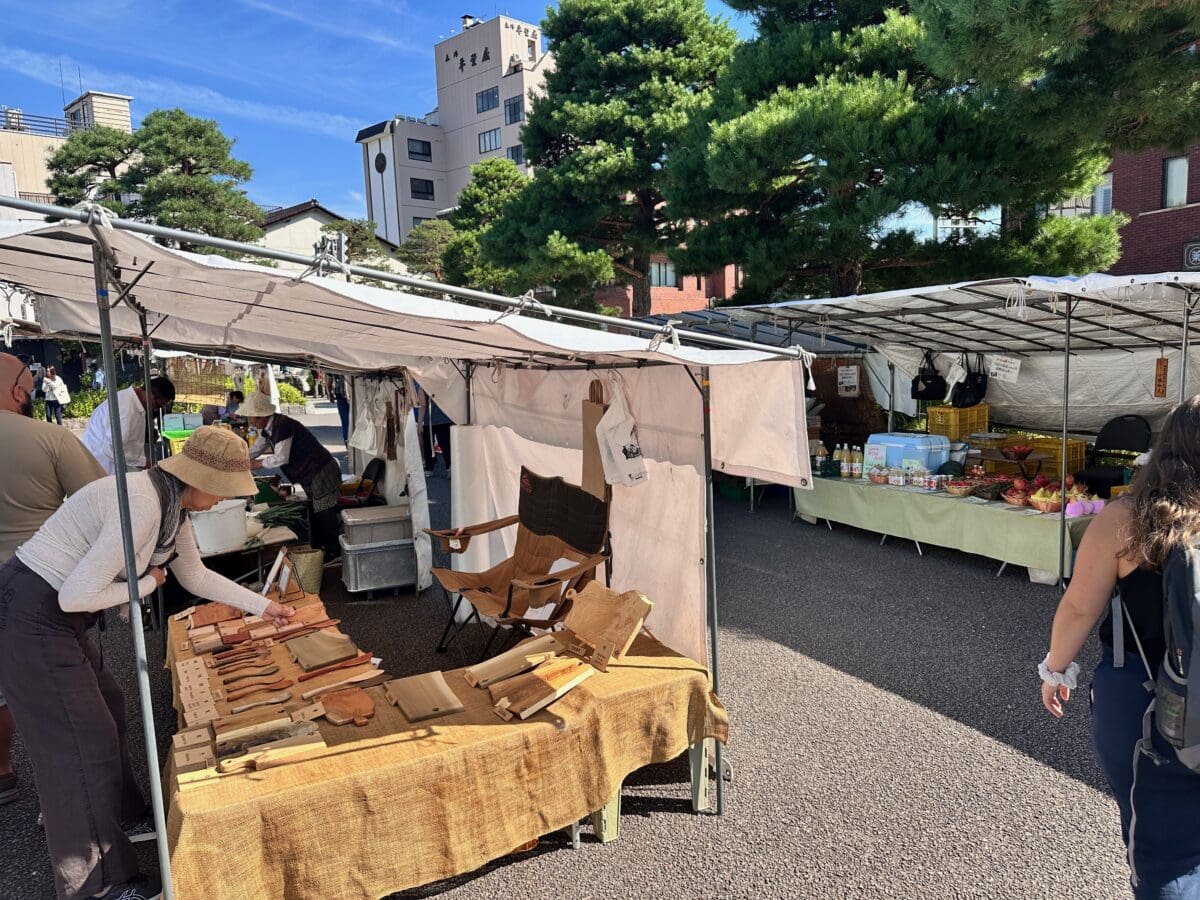
If you’re visiting Jinya that morning, start with the market outside. For a walk followed by coffee and snacks, begin beside the Miyagawa River and continue into Sanmachi as the shops open.
Try Hida Beef and the Local Food
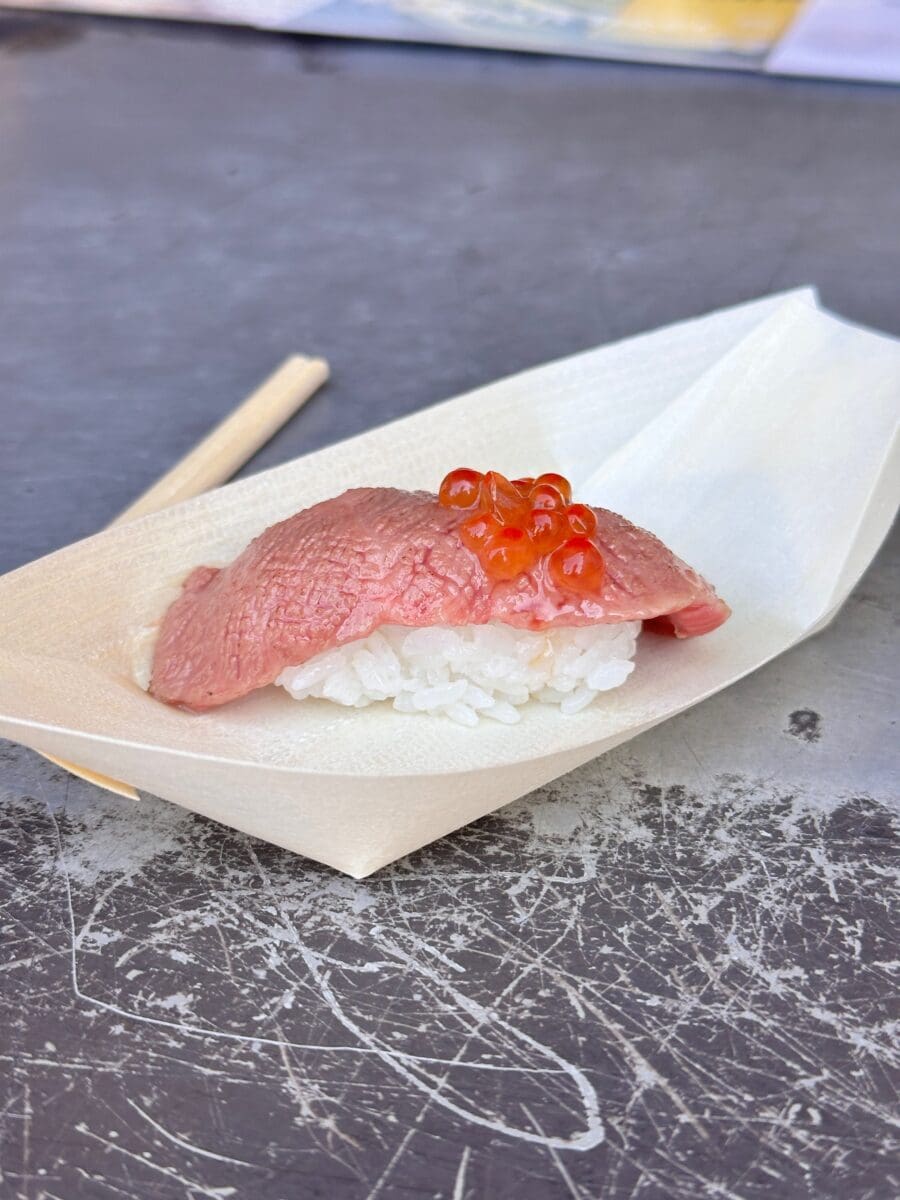
If you enjoy beef, I recommend one sit-down Hida beef meal while you’re in Takayama. Skewers and lightly seared beef on rice are good for trying a small amount during a walk, but a meal gives you time to sit down and enjoy it beyond a few bites at a food counter.
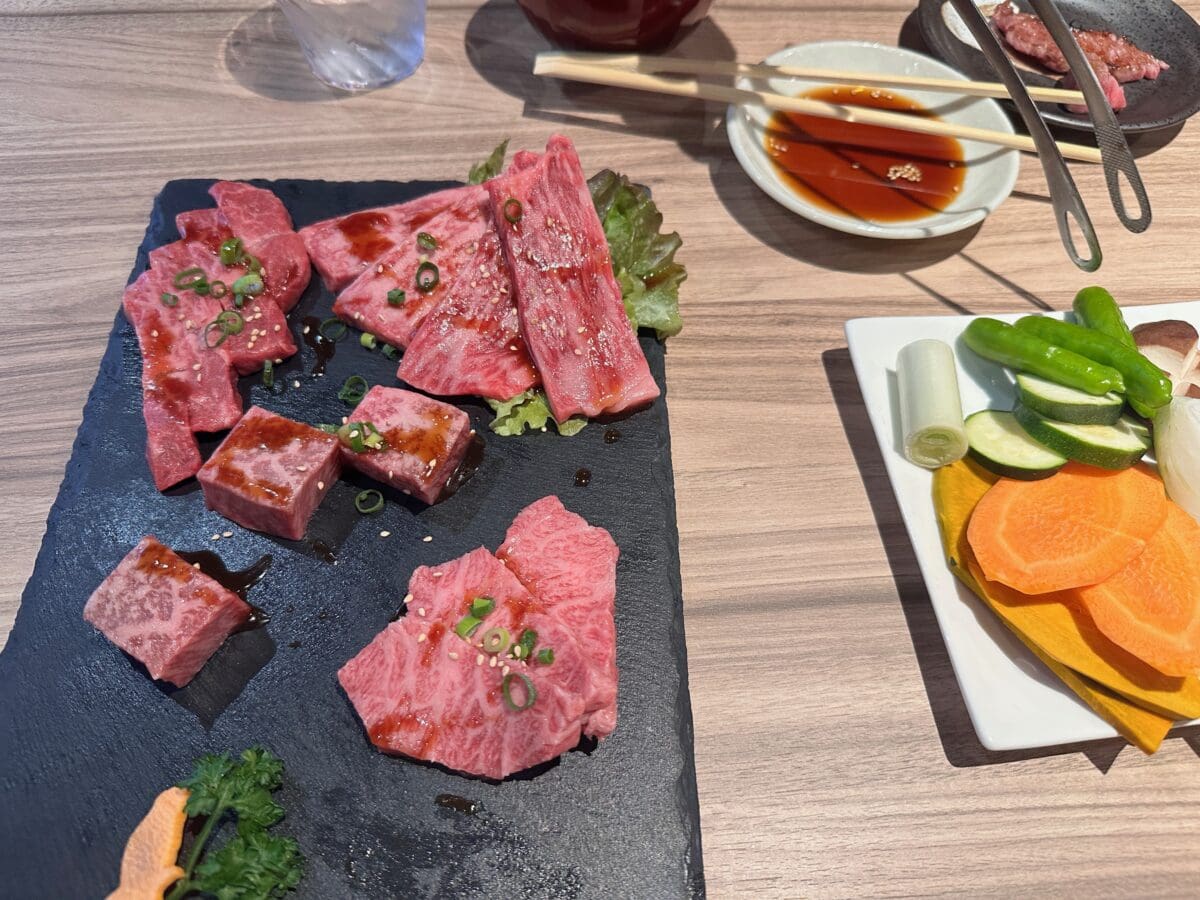
Karakuri Japanese BBQ near the station is an option for a Hida beef meal, while Center4 Hamburgers suits a more casual burger lunch. Check the day’s menu if you’re going specifically for Hida beef.
There are several other local foods I suggest trying:
- Hoba miso is miso grilled on a magnolia leaf and eaten with rice. It often comes with mushrooms or vegetables, and sometimes beef.
- Takayama ramen: Thin, curly noodles in a soy-sauce-based broth. It’s a good choice for a warm lunch between walks.
- Mitarashi dango are skewered rice dumplings. Takayama’s version is usually brushed with soy sauce and tastes more savory than the sweet, sticky version you may have tried elsewhere.
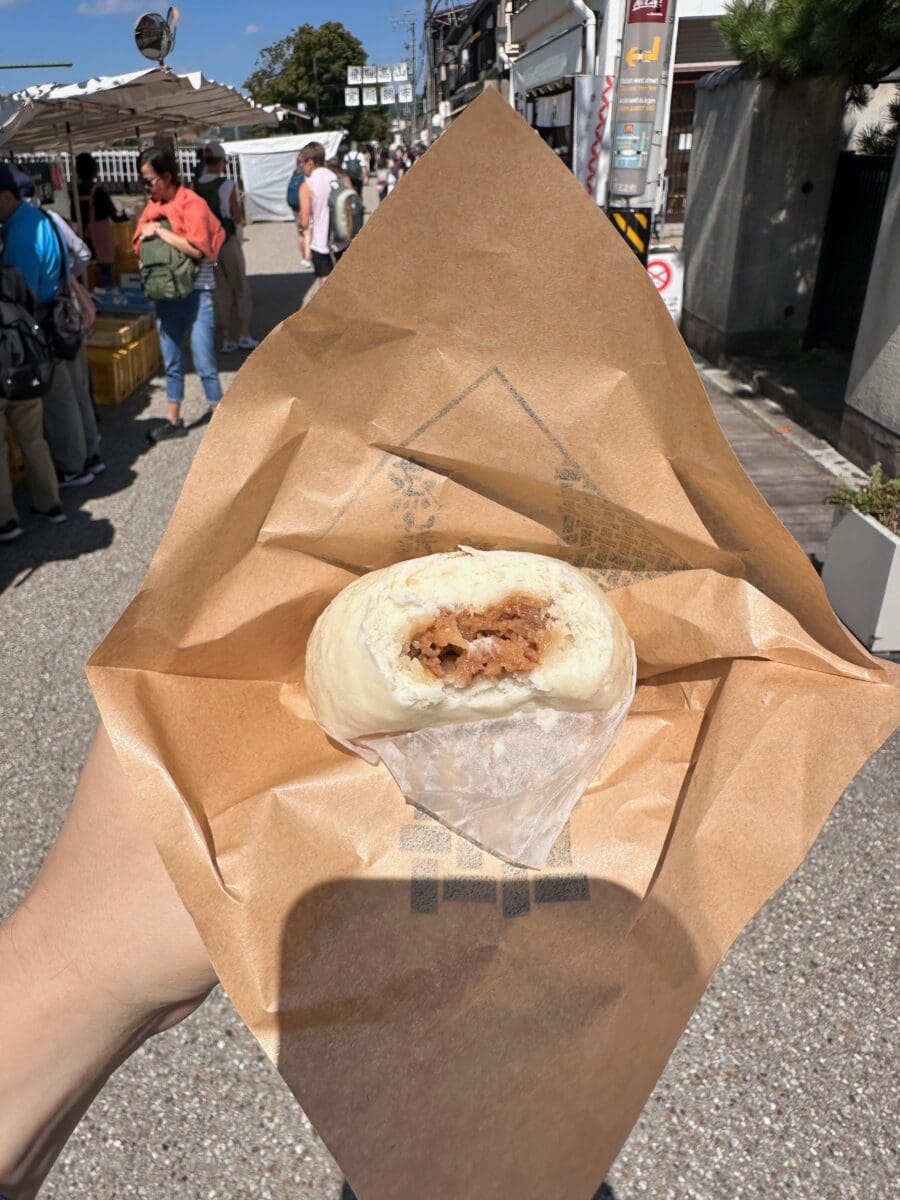
- Rice crackers and sweets: Senbei (rice crackers), steamed buns, and sweets sold around Sanmachi are easy to try in small amounts.
One beef snack and some dango give you a taste of the local food while leaving room for dinner, and you can stop at a brewery along the way. With snacks, it’s easiest to eat beside the shop or in its designated space before continuing, especially when the streets are crowded.
Stop for Sake Tasting
The breweries in and around Sanmachi are close enough that you can stop for a tasting while exploring the old town. A sugidama (a ball of cedar branches) hanging outside will help you spot them. Tastings vary in format and price, so ask at the counter what’s available and let the staff suggest a few to try if you’re unsure where to start.
Keep some coins and small notes for tastings. If you’ll be driving or cycling, save the sake until you’re finished for the day.
You may also see amazake (a sweet fermented rice drink). I personally hate it, even though I love sake, but I still recommend trying it if you’re curious. If you’re avoiding alcohol, check which version is being served: some are alcohol-free, while those made with sake lees can contain alcohol.
Walk Through the Higashiyama Temple Area
After spending time in Sanmachi’s shops, I recommend the Higashiyama Walking Course for a walk through the temples and residential streets east of town. It continues along the hillside toward Shiroyama Park and the former castle site, with wooded paths as well as temple grounds along the way.
Allow around 2 hours for the full 4 km route, or longer if you stop often. There are steps and uneven sections, so wear comfortable shoes and shorten the walk if rain or ice makes the footing difficult.
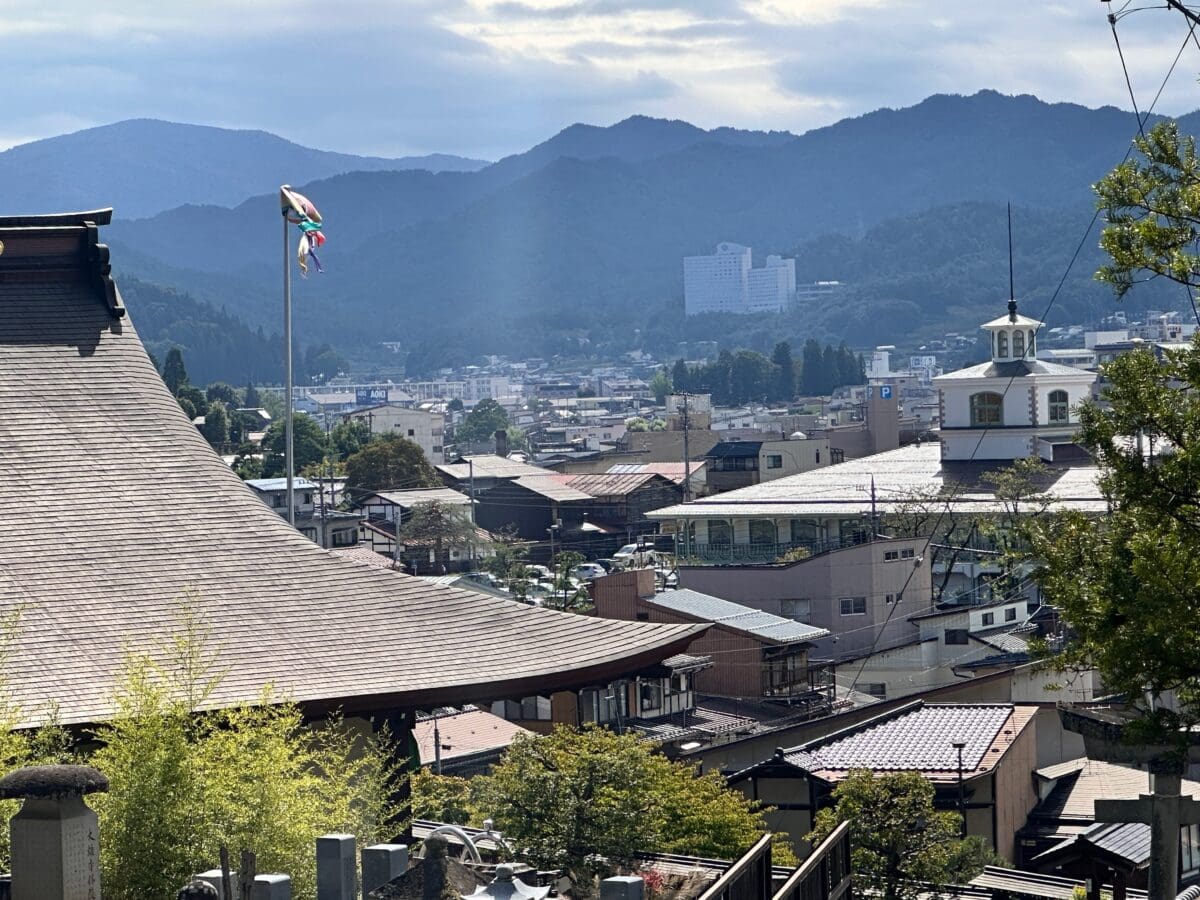
You can also walk part of the course and return to town. The temples are places of worship, with cemeteries along the route, so follow access signs and keep voices low. For a shorter visit closer to the center, Hida Kokubunji Temple has a pagoda and large ginkgo tree between the station and the old town.
Visit Hida Folk Village
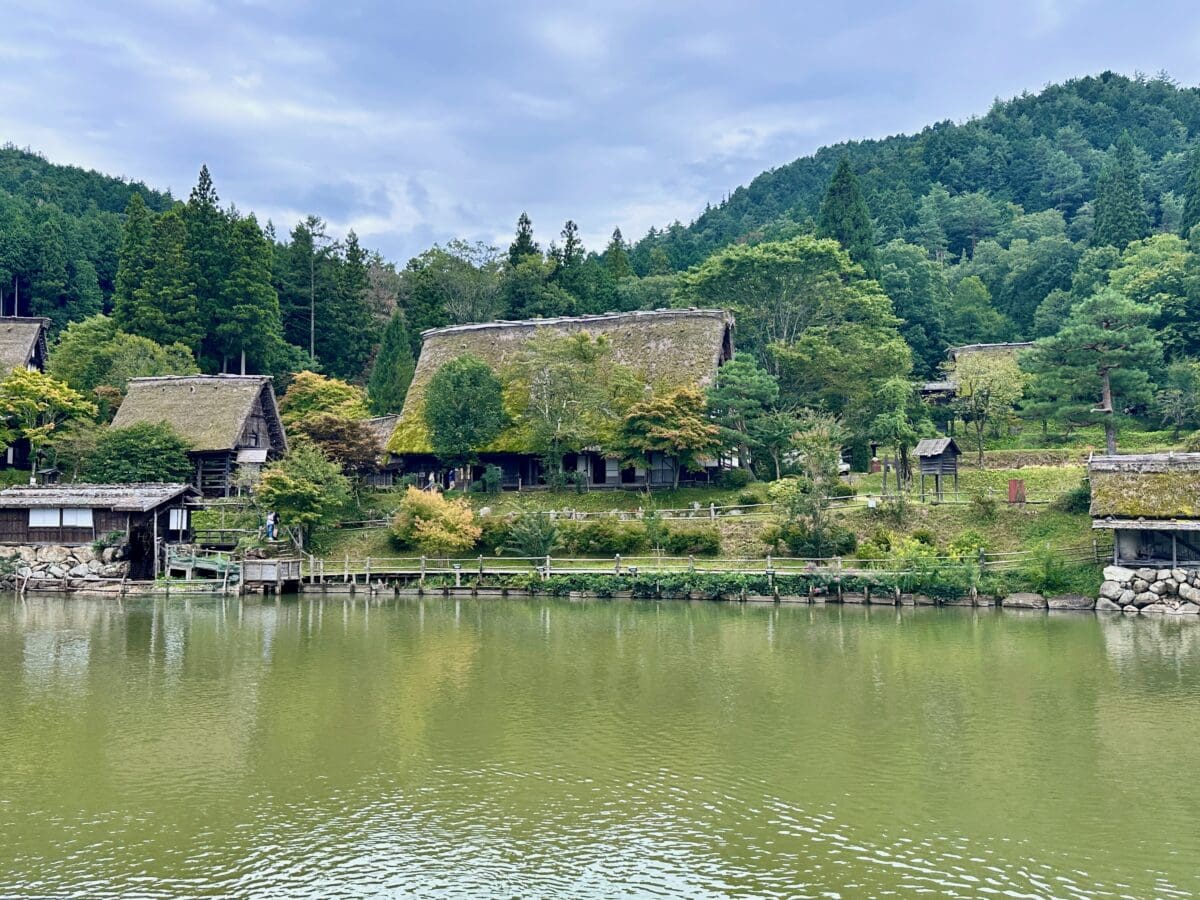
For farmhouse architecture without a separate trip to Shirakawa-go, I recommend Hida Folk Village, also called Hida-no-Sato. This open-air museum is within Takayama and brings together more than 30 historic buildings, including steep thatched-roof farmhouses.
You can enter the houses and see the tools and household objects used in the region’s mountain villages. It’s a good choice if you’re mainly interested in the buildings and how people lived in them. Shirakawa-go gives you a different kind of visit, as people still live in the village.
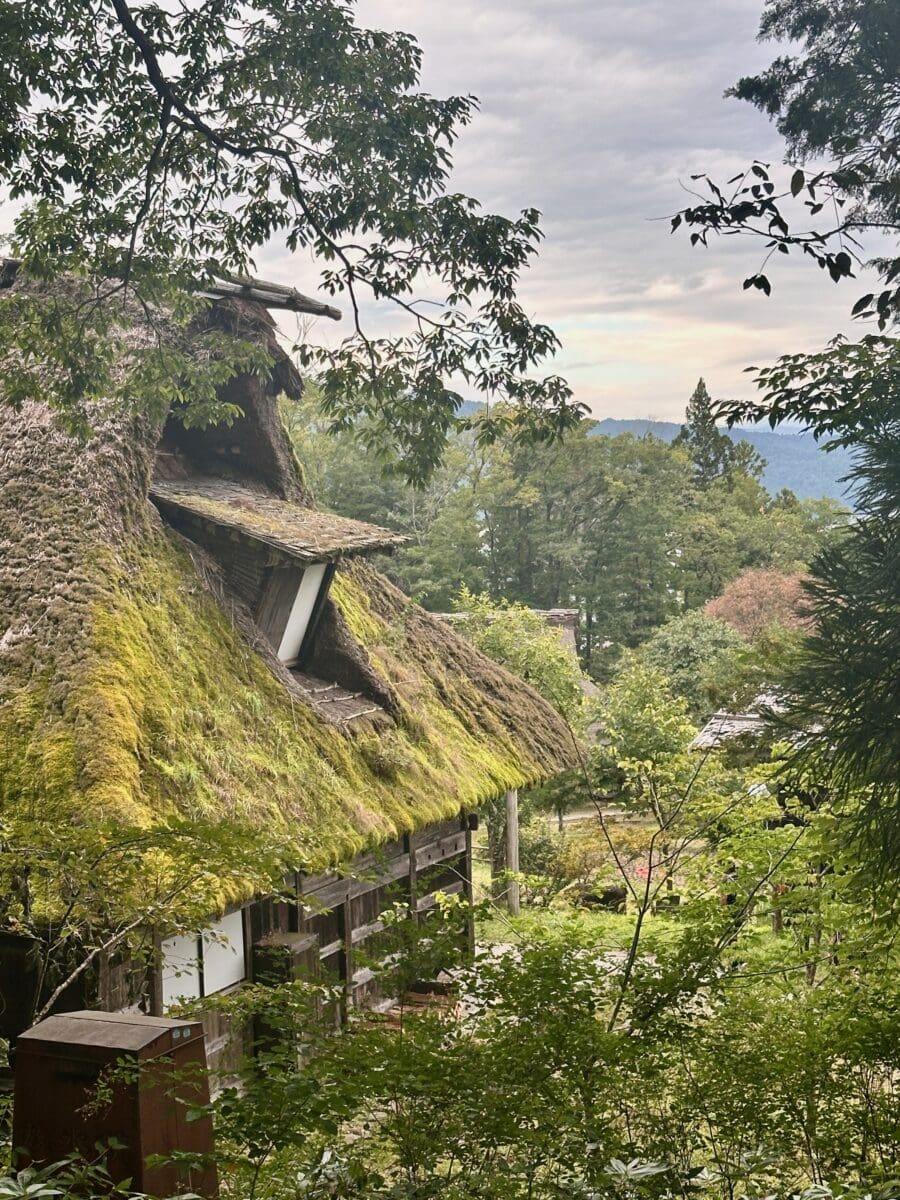
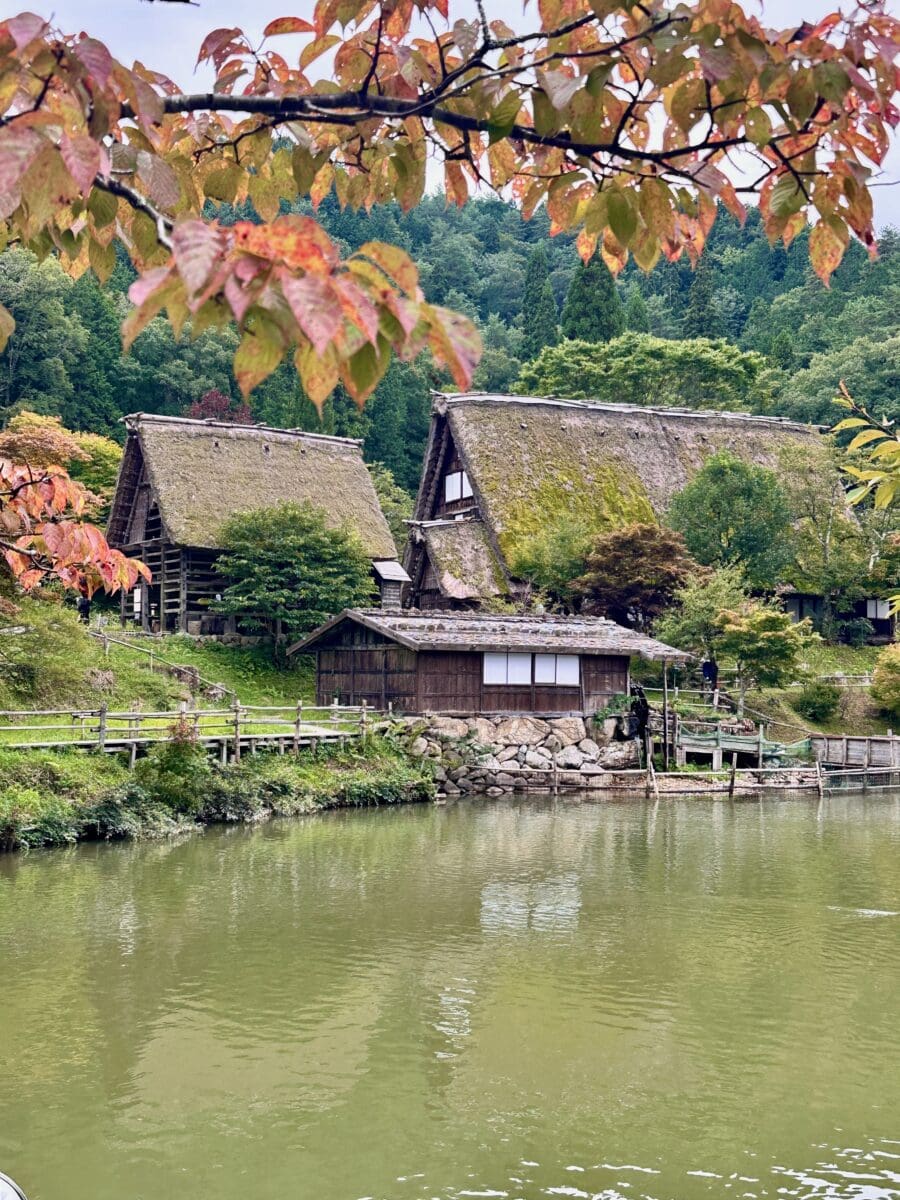
The Sarubobo bus takes about 10 minutes from the station area, and 1 hour 30 minutes to 2 hours gives you time to look around. Shoes that are easy to remove help when going into the houses. You’ll also be outdoors on the paths between them, so bring a raincoat if the forecast is wet.
For a short activity, the Hida Takayama Crafts Experience Center offers options such as making a sarubobo (the local cloth good-luck doll) or painting an ornament. It has a location near Hida Folk Village and another in town, with activities varying by branch. This is a good option for families or anyone who wants to make something without reserving a full day.
Spend a Day at Senkoji Temple
If you want to spend time with Buddhist priests and take part in the temple’s practices, I recommend the Senkoji temple visit on Wabunka. The private visit combines meditation and a guided viewing of wooden Buddhist statues carved by the monk Enku. You’ll also have a vegetarian lunch and walk part of a forest pilgrimage trail.
It takes around 6 hours and is expensive, so choose it if you’re keen to devote a day to the temple. Because it’s outside the central sightseeing area and includes a mountain trail, confirm the meeting point and walking requirements when booking. You can also request a fire ritual for an extra charge.
For a shorter visit without an organized program, the Higashiyama temples are easier to combine with Sanmachi. If you’d prefer a different activity with a local host, you can browse the other Hida Takayama experiences on Wabunka.
When to Visit Takayama
Spring and autumn are good times for walking around town, but festival dates bring much larger crowds and tighter hotel availability. If the festival isn’t your reason for visiting, I suggest choosing other dates when you can.
Summer can still be hot during the day, even though evenings are often cooler than in Japan’s larger lowland cities. Winter brings snow and cold conditions, which can make the old streets and Hida Folk Village lovely to visit, but walking and transport need more time. Check the local climate guidance and the forecast for your dates.
If Kamikochi is a priority, choose dates within its normal visitor season, roughly mid-April to mid-November. Takayama itself is a year-round destination, but the mountain outings have their own seasons and weather limits.
The Spring and Autumn Takayama Festivals
The two main festivals take place on fixed dates:
- Spring Takayama Festival: April 14 to 15, associated with Hie Shrine and the southern part of the old town.
- Autumn Takayama Festival: October 9 to 10, associated with Sakurayama Hachimangu Shrine and the northern part of town.
The attractions include decorated festival floats, processions, and karakuri (mechanical puppet) performances. The illuminated evening procession is normally on the first evening, so check the program before choosing which night to stay.
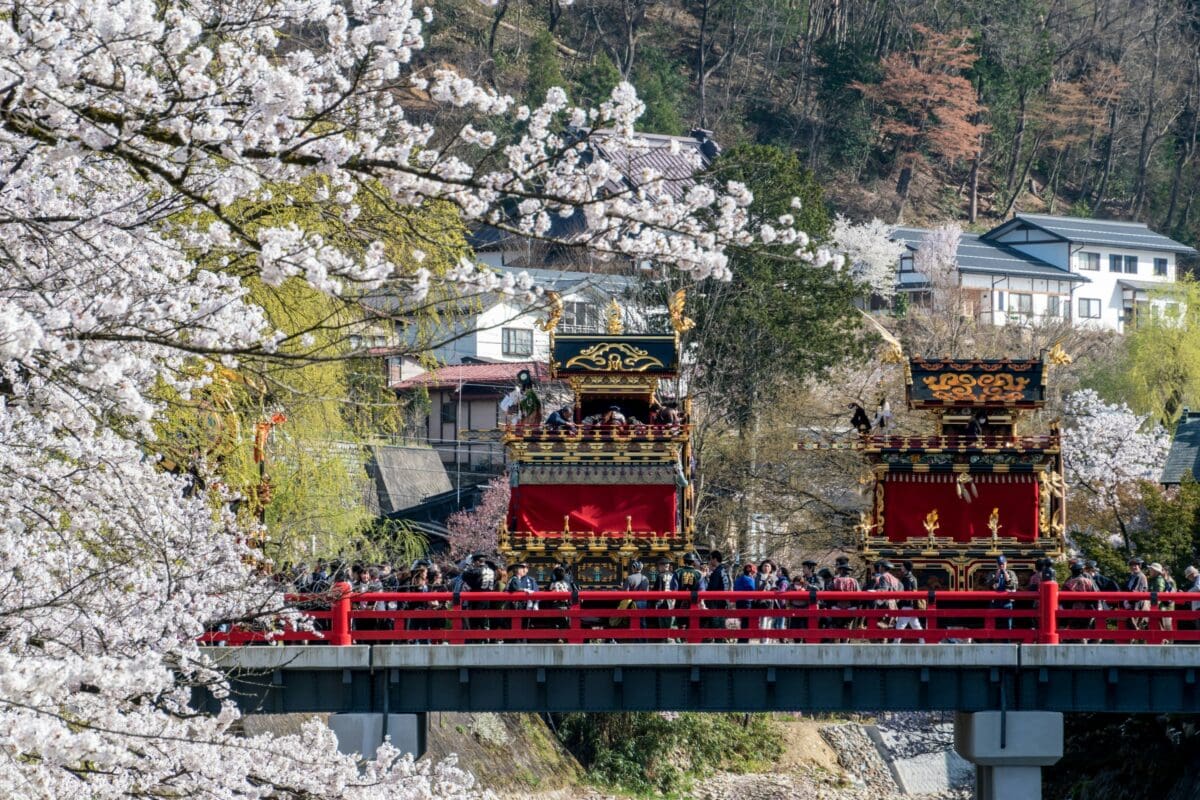
For these dates, I recommend booking accommodation early and staying within walking distance of the events, as rooms fill and the streets become busy. You’ll have an easier day if you choose a performance or part of the procession you’re keen to see and allow time to reach it, rather than moving between several viewing spots. Eat before the busiest period if you can, and bring a layer for the evening.
Rain can change or cancel outdoor events. Follow the festival’s updates and staff directions, and leave space around the floats and barriers. If you prefer visiting with fewer people, come outside the festival dates and see the floats in the exhibition hall instead.
Seeing Festival Floats Outside the Festival Dates
The Takayama Festival Floats Exhibition Hall, also called Takayama Yatai Kaikan, displays a rotating selection of four autumn-festival floats beside Sakurayama Hachimangu Shrine.
If you want a close look at the carvings, metalwork, and construction, allow about an hour here and visit the shrine afterward. It’s a way to see the floats even when your travel dates don’t line up with the festivals.
Getting to and Around Takayama
Takayama is in the mountainous Hida region of Gifu Prefecture, in central Japan. Nagoya is a useful connection for trains from Tokyo, Kyoto, and Osaka, while a trip through Kanazawa or Toyama takes you into Takayama from the north.
From Tokyo or Nagoya
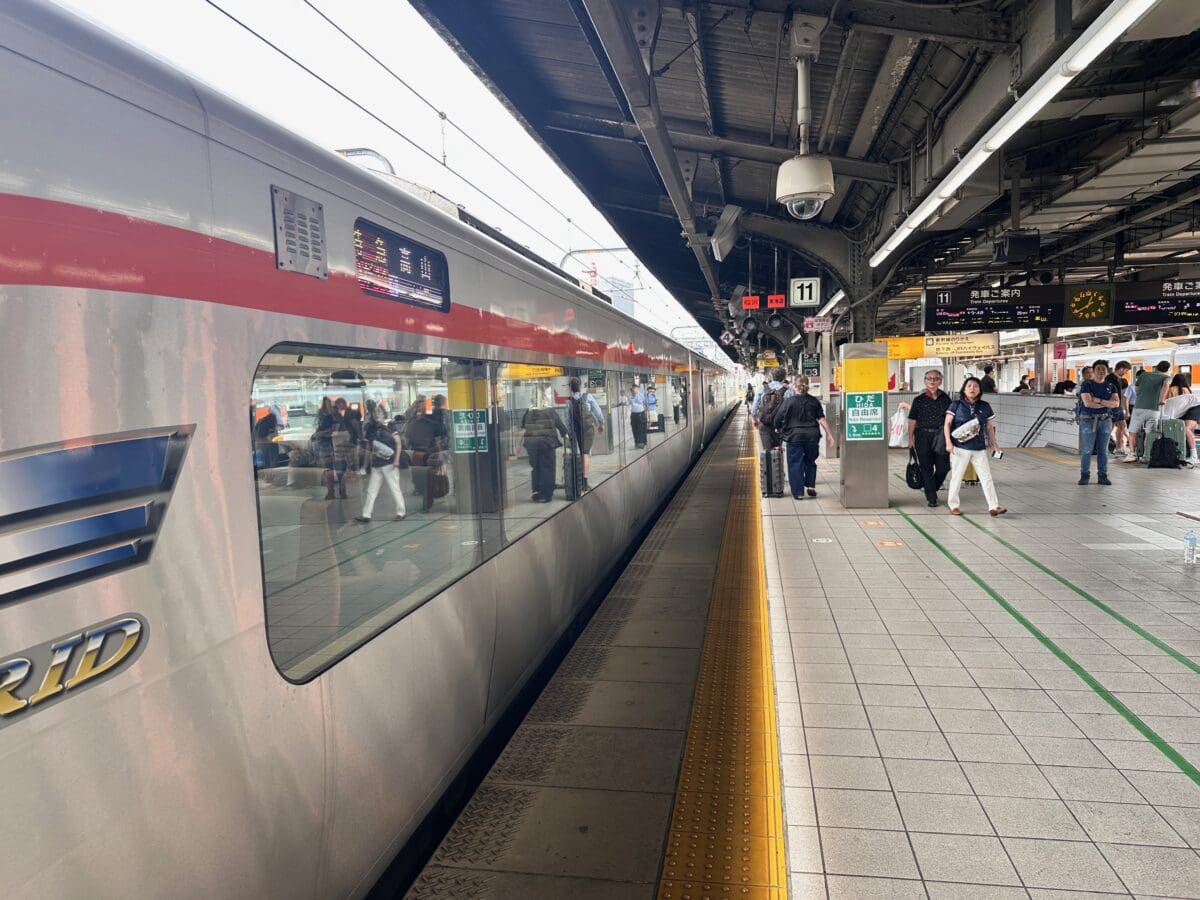
From Tokyo, I usually recommend the bullet train to Nagoya, followed by the Limited Express Hida to Takayama. Allow around 4 hours 30 minutes in total, depending on the connection. From Nagoya alone, the direct Hida takes roughly 2 hours 30 minutes.
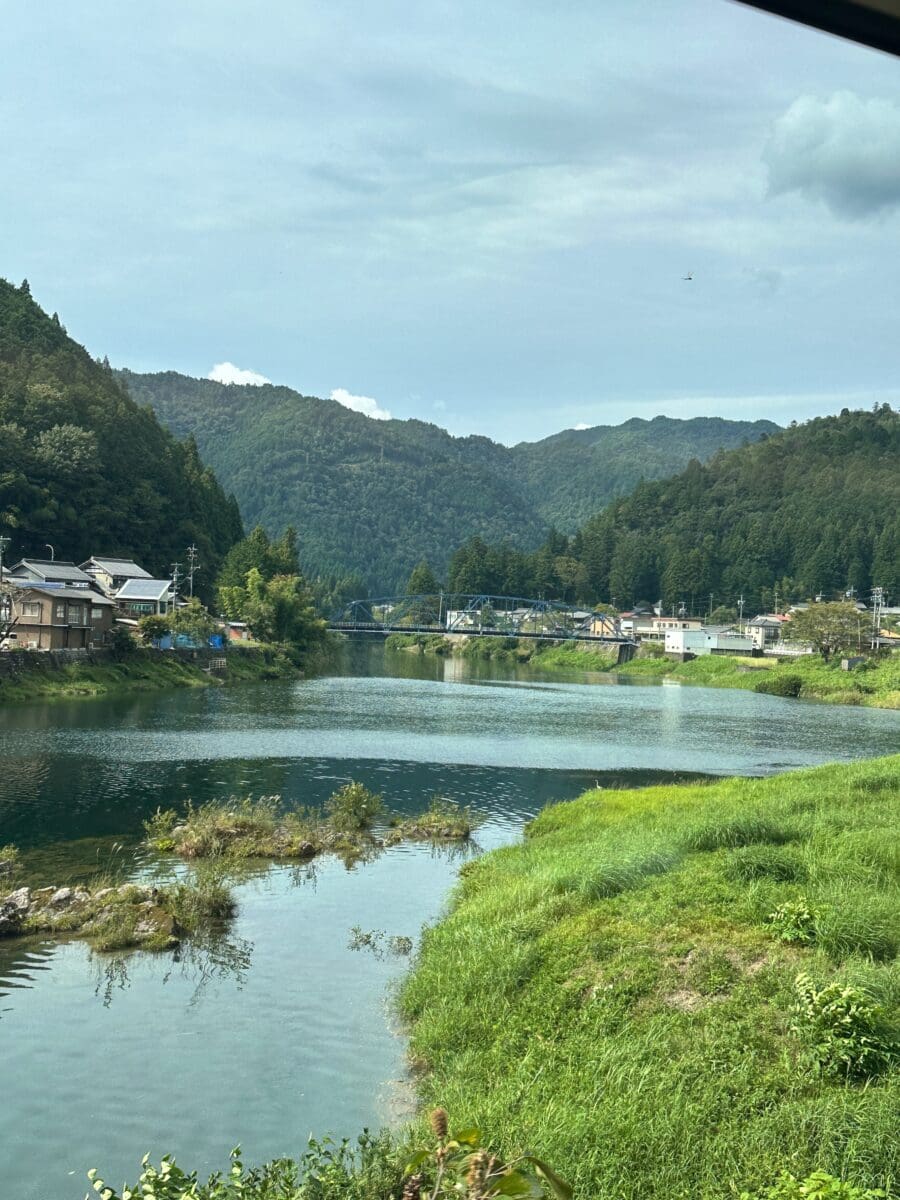
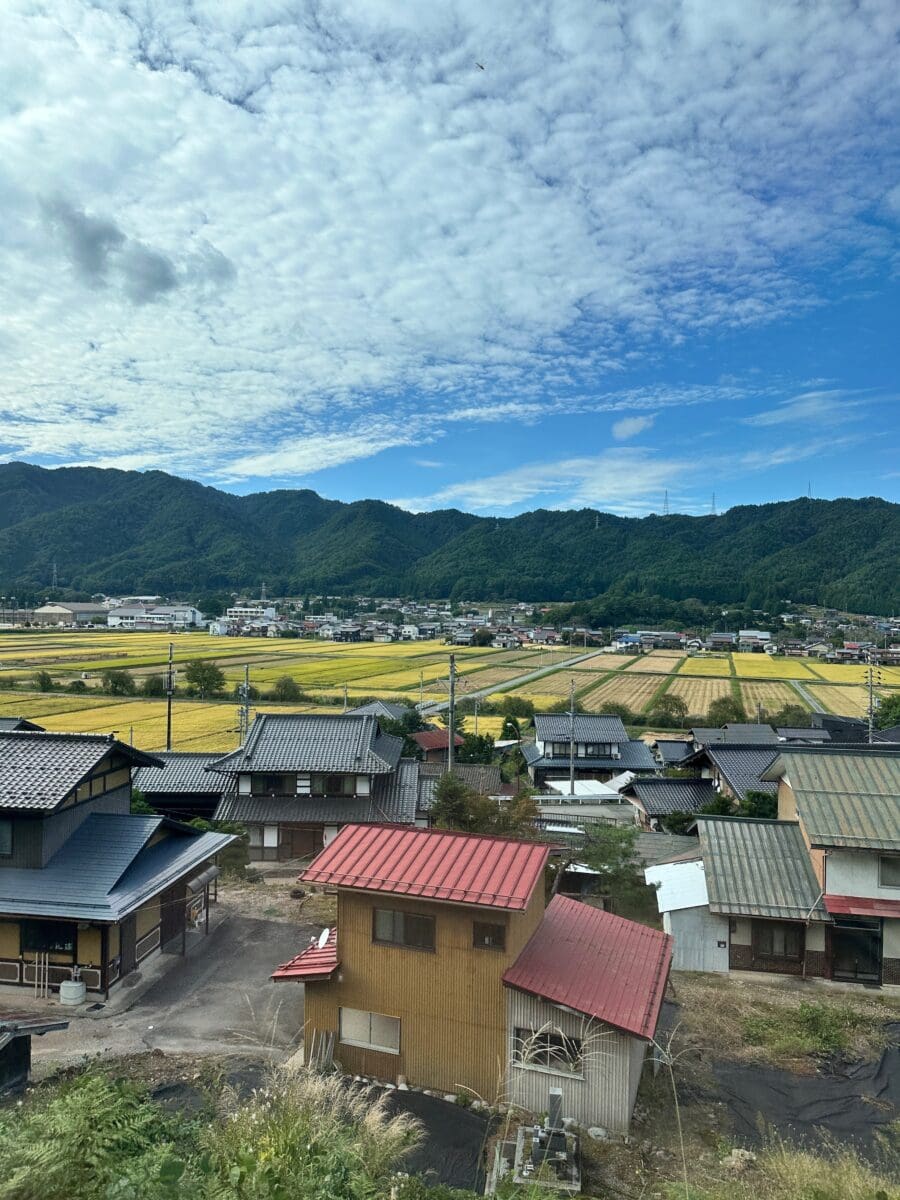
The rivers, villages, and fields along the Hida line have made this an enjoyable train journey for me, so I recommend a window seat if you can get one. When booking the connection at Nagoya, leave enough time to find the Hida platform with your luggage.
From Kyoto, Osaka, or Kanazawa
From Kyoto or Osaka, I recommend going through Nagoya unless you’re also visiting Kanazawa or Toyama. Take a Kyoto to Nagoya bullet train or a Shin-Osaka to Nagoya bullet train, then change to the Hida, allowing enough time between the two trains.
For a trip that includes Kanazawa or Toyama, the northern route lets you visit them on the way. The Thunderbird takes you from Kyoto or Osaka to Tsuruga, where you change to the Hokuriku Shinkansen. To reach Takayama by rail, continue to Toyama and change to the Hida. This connection needs a closer look because the Hida runs less often than the bullet trains.
If Kanazawa is part of your trip, you can also travel between Kanazawa and Takayama by bus through Shirakawa-go. My Kanazawa travel guide covers the city, while the three-destination itinerary explains how to connect the stops.
Highway Buses and Local Transport
If you’re keeping transport costs down, compare the direct Shinjuku–Takayama bus with the train for your dates. Daytime journeys take roughly 5 hours 45 minutes to 6 hours, which is longer than the train journey from Tokyo, but you won’t have to change along the way. Seats require a reservation.
There’s also a bus between Matsumoto and Takayama. I suggest considering it as an onward journey if you’re visiting both cities, since returning the same day takes a lot of time on the road.
Once you arrive, most central sightseeing is easiest on foot. If you’re early for check-in, ask whether your hotel can hold your bags, or use station lockers so you can start exploring without carrying them. Nohi Bus serves Hida Folk Village and regional destinations, though mountain journeys need some flexibility in winter or bad weather.
Is the Takayama-Hokuriku Area Pass Worth It?
The Takayama-Hokuriku Area Pass is worth comparing with individual tickets if you’re combining Takayama, Shirakawa-go, Kanazawa, and Kyoto or Osaka. It covers specified trains and buses over 5 consecutive days, so the journeys need to fall within that period for you to get the benefit.
Before buying, compare the coverage map and conditions with the journeys you plan to take. The Tokaido Shinkansen isn’t covered, including Tokyo to Nagoya and the Kyoto or Shin-Osaka to Nagoya route described above. To use the pass between Kyoto or Osaka and the Hokuriku region around Kanazawa and Toyama, you’ll travel through Tsuruga. You’ll also need seat reservations for certain buses, even with the pass.
Day Trips from Takayama
For a 2-night stay, I recommend choosing one nearby outing and keeping enough time for Takayama itself. Shirakawa-go, Hida-Furukawa, and the mountains offer quite different days, so choose the one you’re most interested in.
Shirakawa-go and Gokayama
I recommend Shirakawa-go for its gassho-zukuri (steep thatched-roof) houses and the chance to walk through a village where they’re still in use. The bus from Takayama takes about 50 minutes to the main village, Ogimachi. Some departures require reservations, so check both your outward and return journeys when planning the day.
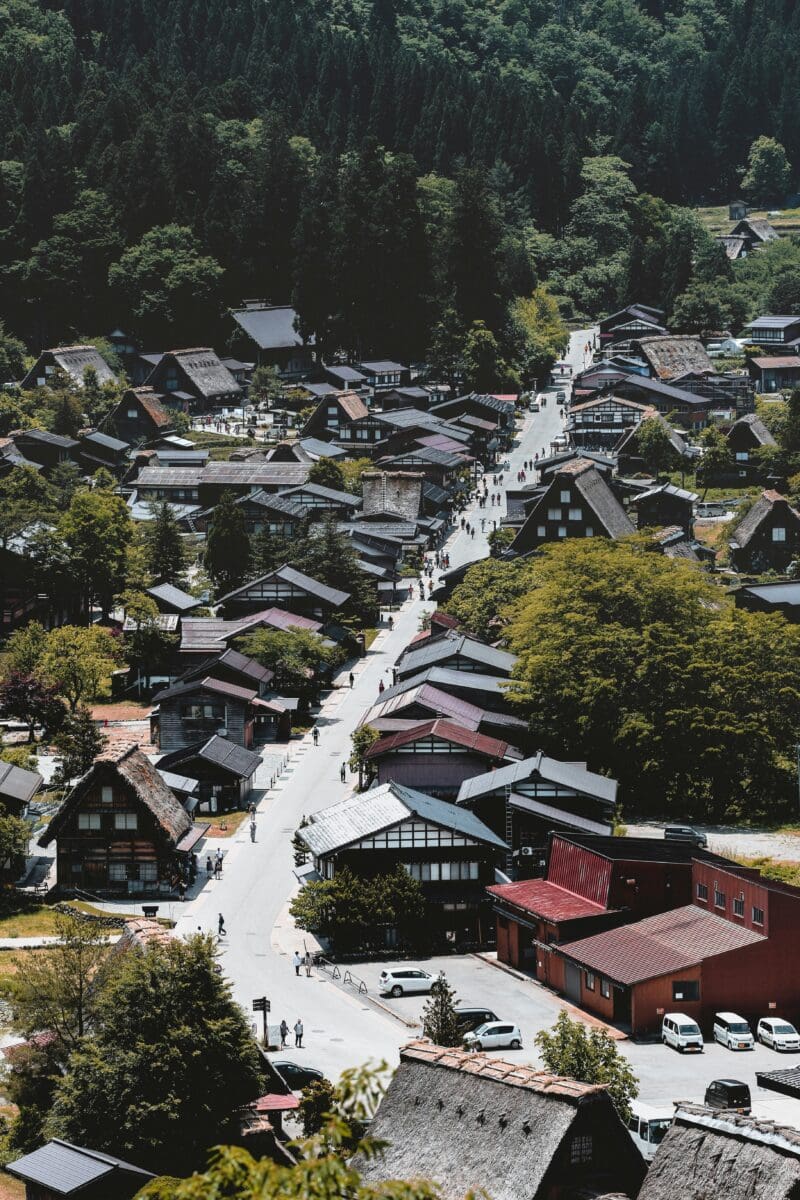
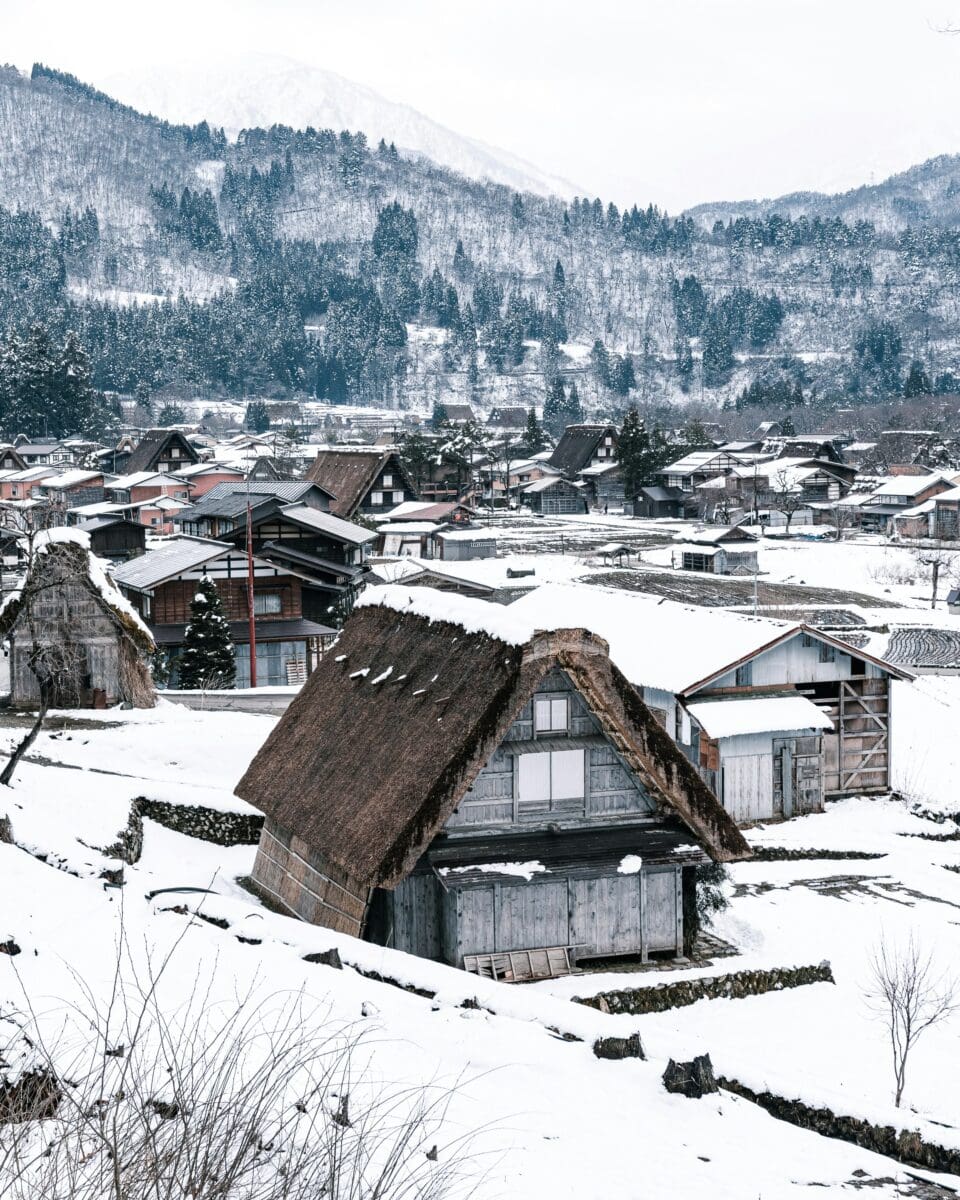
An early bus gives you a better chance of visiting before the main streets and viewpoint get crowded, especially on weekends and holidays. As you walk around, stay on public paths and follow signs around the houses, since many are people’s homes.
If you’re continuing to Kanazawa, visit Shirakawa-go during the transfer. Reserve the two bus legs separately and check luggage storage before you travel. That saves returning to Takayama only to leave the region again the next morning.
For similar architecture with fewer visitors, I prefer the Gokayama villages of Ainokura and Suganuma. Getting there takes more planning: the World Heritage Bus links Shirakawa-go with Gokayama and the Takaoka area, so check the connection from your Takayama bus and the last return. For a short stay, Hida Folk Village is easier to fit in.
Hida-Furukawa
If you enjoyed Takayama’s old buildings but found the streets busy, I recommend half a day in Hida-Furukawa. It’s a smaller town with fewer visitors, where you can walk beside the Seto River and white-walled storehouses, browse the shops, and stop for lunch.
The local train takes about 20 minutes from Takayama, followed by a short walk from Hida-Furukawa Station, which fans of the animated film Your Name may recognize. The canal’s carp are another seasonal sight, as they’re moved elsewhere for winter.
I’d choose this over a longer bus outing for an afternoon spent walking around a town. Look at the return trains before leaving Takayama, though, as they run less often than trains in a large city.
Kamikochi
Choose Kamikochi if you’d like a day walking beside a mountain river. The valley has paths around Kappa Bridge and Taisho Pond, with longer walks available if you have time and suitable conditions.
From Takayama, take a bus to Hirayu Onsen and change for Kamikochi. Allow roughly 1 hour 30 minutes to 2 hours each way, including the connection. Private cars can’t enter the valley, so drivers also need to transfer to a bus or taxi.
With that much travel, I recommend an early start and a full day for the outing. Your last connection back through Hirayu determines how long you can stay, so look at it before deciding how far to walk. The normal visitor season runs roughly from mid-April to mid-November, with opening and trail information available for planning your visit.
Shinhotaka Ropeway and Okuhida Hot Springs
Choose the Shinhotaka Ropeway for mountain views without a long hike, preferably on a day when the peaks are clear. Low cloud can hide the views, so check operating information and the weather before making the journey. The upper station is about 2,156 m above sea level, and you’ll want an extra layer even when Takayama is warm.
You can combine the ropeway with an outdoor bath in Okuhida, the group of hot-spring villages around these mountains that includes Hirayu, Fukuji, and Shin-Hotaka. To make time for both, choose a bath whose visiting hours work with your bus connections. Day-use rules vary, particularly for tattoos and private baths, so check those if they affect where you can go.
For a night in Okuhida, look for a ryokan where you’d enjoy dinner as well as the bath. I’ve stayed at a simple inn in the area where the dinner alone was worth the trip. Give yourself time to check in and enjoy it, rather than arriving at the end of a full day of sightseeing.
Gero Onsen
For an afternoon or overnight stay in a hot-spring town, I recommend Gero Onsen, south of Takayama on the railway toward Nagoya. An onsen is a natural hot spring or a bath supplied by one, and some of Gero’s ryokan open their baths to day visitors as well as overnight guests.
Half a day gives you time for a bath and a walk around town. If you’d like to try several baths, the local pass covers three participating inns, though each has its own visiting hours. Compare those hours and the pass price with your plans before buying, especially if you only expect to use one bath.
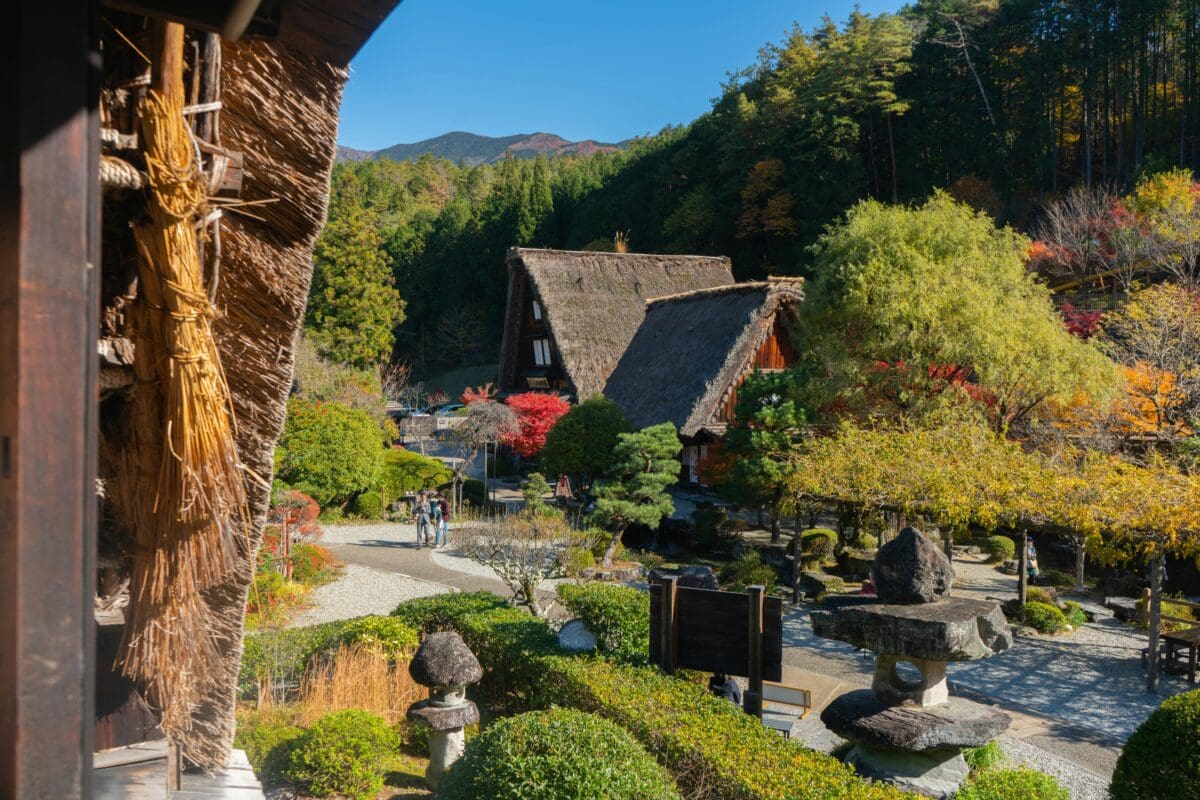
Gero also has an open-air farmhouse museum, Gero Onsen Gassho Village, if you’d like to see more of the town between baths. For travel onward to Nagoya, spending a night in Gero can save the return journey to Takayama. If you’re already staying at a ryokan with baths you’re looking forward to, I’d use that time to enjoy your accommodation instead of adding another hot-spring stop.
Comments are closed.