Tag

Kyoto

Browsing

Kyoto can be a very good place for one ryokan (traditional Japanese inn) night, especially if this is your first Japan trip and Kyoto is already on your itinerary. You do not need to add another travel day to Hakone, Kinosaki, or a mountain onsen (hot spring) town just to have a traditional inn night.

But Kyoto is not the best place for every ryokan stay. If the thing you really want is natural hot springs, outdoor baths, mountain views, and a slower retreat day, central Kyoto may not match the image in your head. Kyoto city ryokan are usually better for meals, service, architecture, and one night in an old inn.

My recommendation is simple: book a Kyoto ryokan if you can check in around mid-afternoon, eat dinner there, enjoy the room or bath, sleep there, and have breakfast without rushing out. If you will arrive late, skip dinner, leave early, and spend most of the evening outside, a normal Kyoto hotel will probably make more sense.

For broader ryokan etiquette and what to expect, read my guide to staying in a ryokan in Japan. For Kyoto, start by deciding what kind of night you want.

Some links on YavaJapan are affiliate links. If you book or buy through them, I may earn a small commission at no extra cost to you. It helps support the site, and I only link to places, stays, and experiences I genuinely think are worth recommending.

At a Glance

  • Best high-end classic Kyoto ryokan: Hiiragiya or Sumiya Ryokan if you want a high-end heritage inn and you can give it the evening.
  • Best traditional ryokan with easier booking: Seikoro Ryokan if you want a classic Kyoto inn with clearer English information and some comfort flexibility.
  • Best if meals are your priority: Yuzuya Ryokan if dinner, breakfast, Gion, and Yasaka Shrine are the parts you care about most.
  • Best if you want more comfort: Nazuna Kyoto Nijo-jo if you want beds, private bath space, and a more modern room.
  • Best if baths are your priority: Kadensho Arashiyama if you want several baths more than a small old inn.
  • Best nearby nature stay: Sumiya Kiho-an in Yunohana Onsen / Kameoka if you want one quieter night outside central Kyoto, with hot springs as a bonus.
  • Best if you want a Kyoto townhouse instead: Nishijin Fujita if you want a private machiya (traditional Kyoto townhouse) rather than full ryokan meals and service.

Quick Comparison: Which Kyoto Ryokan Type Should You Choose?

Stay TypeBest ForMy RecommendationsMealsBathsBeds / FutonsTypical PriceWatch Out For
Classic historic Kyoto ryokanOne expensive, traditional Kyoto night where you stay in for dinner and breakfastHiiragiya, Sumiya Ryokan, SeikoroDinner and breakfast are usually centralTraditional baths; not usually natural onsenFutons are common; some rooms have bedsHigh to very highPoor value if you arrive late or skip meals
Small ryokan for mealsTravelers who care most about dinner, breakfast, and staying near Gion or Yasaka ShrineYuzuya RyokanThe meal is a major reason to bookUsually about the room bath, not hot-spring waterRooms varyMid-high to highSkip if you do not enjoy Japanese meals
Modern style ryokanPeople who want ryokan mood with beds and private bath comfortNazuna Kyoto Nijo-joMeals depend on the ratePrivate open-air or semi-open-air baths, not always hot-spring waterBeds or mixed roomsHighLess traditional than a classic ryokan
Larger ryokan-hotelTravelers who care most about baths or private bathing in KyotoKadensho ArashiyamaResort-style meal plansNatural Arashiyama Onsen in one bath area, plus private bathsMore hotel-like rangeMid-high to highLarger property, not intimate heritage ryokan
Nearby nature stayTravelers who want a slower night outside central Kyoto, with hot springs as a bonusSumiya Kiho-anHalf-board-style retreat plansReal hot-spring baths, including some rooms with open-air hot-spring bathsVaries by roomMid-high to highOutside central Kyoto
Unique high-end stay near KyotoA private historic property with a guided tourYoshida SansoBreakfast included on Wabunka; dinner is available as an add-onNot a hot-spring resort stayRoom types varyVery highBetter as a special stay than a normal Kyoto base
Kyoto townhouse stayPrivacy, architecture, space, and a traditional Kyoto houseNishijin FujitaDepends on the Wabunka add-ons you chooseUsually a private house bathOften futons or house-style sleepingHigh, but per-group pricing can varyNot a ryokan

Use the table to choose the kind of stay first. When people search for the best ryokan in Kyoto, they often look at individual properties too early. It is easier to first decide whether you want to prioritize a classic and historic ryokan or a more modern one, a small local one or a larger hotel-style ryokan, one famous for its cuisine, or private baths and onsen, a ryokan in the city or in the nature, or a private townhouse.

Should You Stay in a Ryokan in Kyoto?

I think Kyoto is a good place for a ryokan night when Kyoto is already on your itinerary. Most first-time Japan trips already include the city, so you can add one special night without giving up another day to reach a separate onsen town.

Kyoto also works better than Tokyo for this kind of stay. The city has old inns, traditional architecture, Kyoto-style meals, and evening areas where a ryokan night connects naturally with the rest of the trip.

Time is the part people underestimate. A ryokan stay includes the room, staff service, dinner, breakfast, bath time, and the chance to slow down for the evening. If you check in at 19:00, eat outside, and leave before breakfast, you have removed a lot of what you paid for.

One night is enough for most travelers if you protect that night. If it is your first Kyoto night, arrive earlier in the day, send luggage ahead or store it at the station if needed, check in around 15:00, and keep the evening free. If it is your last Kyoto night, treat it the same way: finish the busy sightseeing earlier, move your luggage before check-in if needed, eat at the ryokan, enjoy the bath or room, and leave the next morning after breakfast.

Choose a normal Kyoto hotel instead if you mainly need a base for temple visits, restaurants, nightlife, day trips, and early starts. My where to stay in Kyoto guide is better for that decision.

Kyoto Ryokan vs Hakone, Kinosaki, Nagano, or Miyajima

Choose Kyoto if you want convenience, traditional city atmosphere, and one special night without changing the route too much. This works especially well on a classic first-time Japan itinerary where Kyoto is already part of the plan.

Choose Hakone, Kinosaki, Nagano, Miyajima, or another ryokan destination if what you want most is hot springs, natural surroundings, larger baths, or a slower retreat day. Kyoto can give you a very good ryokan night, but I would not book a central Kyoto ryokan if you are mainly paying for baths and landscape.

For nearby alternatives, Nara and Miyajima can also work well depending on your itinerary. I have separate guides to ryokan in Nara and ryokan in Miyajima if you are deciding where to place one traditional stay. If private onsen is your biggest priority, my Nagano ryokan with private onsen guide may be closer to what you imagined.

How to Choose the Right Kyoto Ryokan Type

Start with the kind of place you actually want to stay in, not the neighborhood.

For a normal hotel in Kyoto, location is usually one of the first things to decide. For a ryokan, location still affects your day, but the stay itself carries more weight. You are usually booking it for one special night, not for five nights of efficient sightseeing.

Look at the photos and ask yourself a simple question: do I actually want to spend an evening here? Some ryokan are old and formal, some are small and warm, some are polished and modern, and some are closer to large ryokan-hotels. The room, building, garden, view, and overall atmosphere usually tell you more than the fact that a place calls itself a ryokan.

Budget still matters, of course, because Kyoto ryokan prices can climb quickly. But once a stay is inside your budget, do not choose it only because it is a ryokan. Choose it because the place itself looks like somewhere you want to slow down for the night.

After that, look at meals. Many ryokan stays are built around dinner and breakfast. If you do not like Japanese food, have a long restaurant list in Kyoto, or dislike fixed meal times, be careful. A ryokan dinner is often one of the reasons the stay costs what it does.

Then look at bathing. Decide whether you want an in-room bath, a reservable family bath, a shared public bath, a view, or actual hot-spring water. Once you know that, the ryokan descriptions become much easier to read.

Then look at bedding. Traditional ryokan often use futons on tatami mat flooring. That can be perfectly comfortable for some travelers and difficult for others. If you already know sleeping close to the floor will be a problem, choose a stay with Western beds or a more modern room.

Finally, think about service. A small classic ryokan, a larger ryokan-hotel, a private machiya, and a nearby nature stay all give you a different night. They can all be good, but they are not interchangeable.

Best Classic Historic Kyoto Ryokan

Choose this type when you want the ryokan itself to be the main memory of the night. You are paying for heritage, service, meals, and the rare chance to stay somewhere with a long Kyoto story.

I would only book this type of ryokan if you can arrive early and keep the evening clear. If you want to rush through dinner and go back out for a packed night, this is probably the wrong use of a high-end Kyoto ryokan.

For baths, expect a city ryokan rather than an onsen resort. Many classic Kyoto ryokan are not built around natural hot-spring water. The room, meal, staff, and building are usually the real reason to book.

Hiiragiya

Hiiragiya would be my top recommendation if you want a high-end, iconic Kyoto ryokan. It dates back to 1818, and its old wing is a registered tangible cultural property. This is not the place to book if you just want somewhere convenient to sleep.

Book Hiiragiya for a formal, high-end, traditional Kyoto stay with in-room meals and careful service. Skip it if you mainly want natural onsen, a flexible sightseeing base, or a lower-cost ryokan night.

I recommend booking Hiiragiya on Wabunka if you want the stay handled as a complete overnight experience, with dinner and breakfast included. Wabunka is a site for private cultural experiences and special stays in Japan.
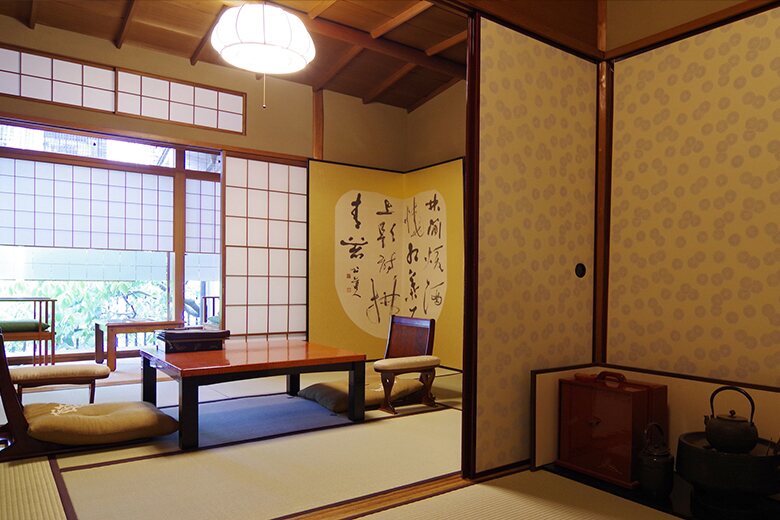
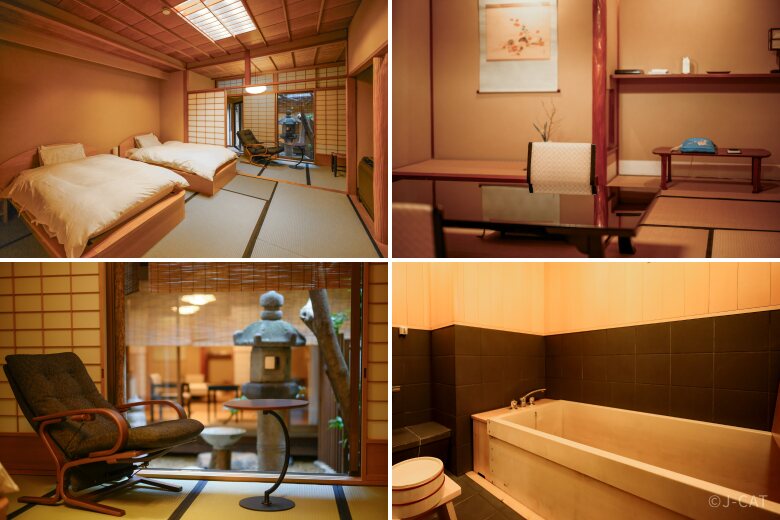
Traditional Japanese tatami room at Hiiragiya ryokan in Kyoto with low table, floor cushions, shoji screens, and calligraphy wall art
Image via Wabunka

Sumiya Ryokan

Sumiya Ryokan is another strong classic Kyoto stay, especially if tea culture is part of what draws you to Kyoto. Book it when you want the ryokan night to include a more personal cultural moment alongside the room, bath, and meal.

Meals and timing are central at Sumiya. Check-in starts from 15:00, and guests are asked to contact the ryokan if arriving after 18:00 because of dinner preparation. That detail tells you a lot about how to use the stay properly.

I recommend booking Sumiya on Wabunka if the private tea experience is what interests you. The stay includes time with the ryokan’s proprietress or her successor, so tea culture becomes part of the night instead of a separate activity.
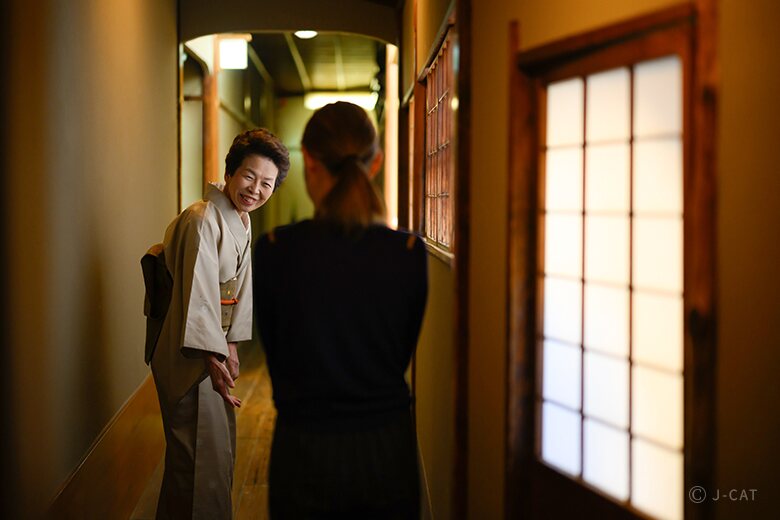
Ryokan staff greeting a guest in a Kyoto hallway
Image via Wabunka

Seikoro Ryokan

Choose Seikoro if you want a classic Kyoto ryokan but do not want the stress of the most famous luxury inns. It is easier for many first-time travelers to understand and book.

You still get in-room wooden baths, traditional rooms, and clearer English information, with some room-style flexibility. It is a good middle ground if you want a real ryokan night without the most formal luxury experience.

Treat Seikoro as a traditional bath stay with artificial mineral baths, not as a natural hot-spring ryokan.

If you want easier booking, keep Seikoro high on your list.
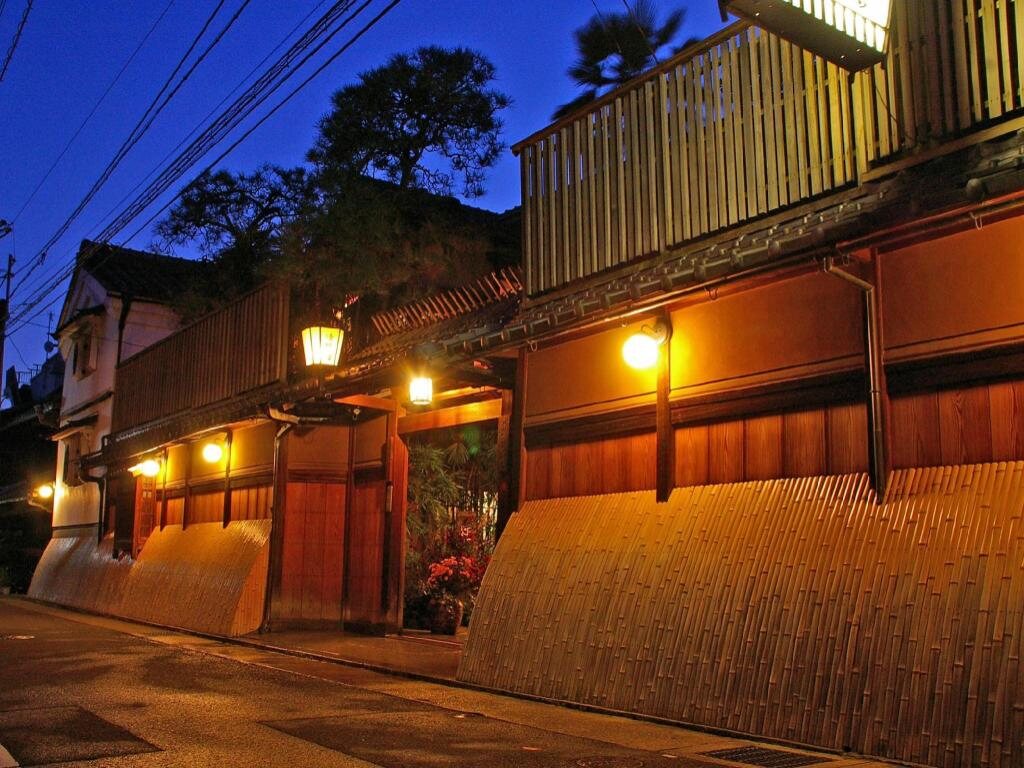
Seikoro ryokan exterior at dusk in Kyoto with warm lanterns and wooden walls
Image via Agoda

Best Kyoto Ryokan for Japanese Cuisine

Food is one of the parts people miss when they picture a ryokan night. Many travelers imagine the room, tatami mats, bath, and old building first. Then they arrive and realize dinner and breakfast take up a big part of the stay.

If you like Japanese food and want dinner at the ryokan, this is great. If you were hoping to eat at restaurants in Gion, skip breakfast, or avoid a long Japanese dinner, book a hotel instead.

Yuzuya Ryokan

Choose Yuzuya Ryokan if you want the ryokan night to revolve around dinner, breakfast, Gion, and Yasaka Shrine. It is a small inn, and the first-floor restaurant is a big part of why you would book it.

Skip Yuzuya if you mainly want hot-spring water. The yuzu cypress bath is part of the inn’s Kyoto character, but this is not the place I would choose for an onsen night.

Book Yuzuya for a Kyoto evening built around dinner, breakfast, and a traditional inn right by Yasaka Shrine. Skip it if you are unsure about Japanese meals or if you want a more flexible restaurant night.
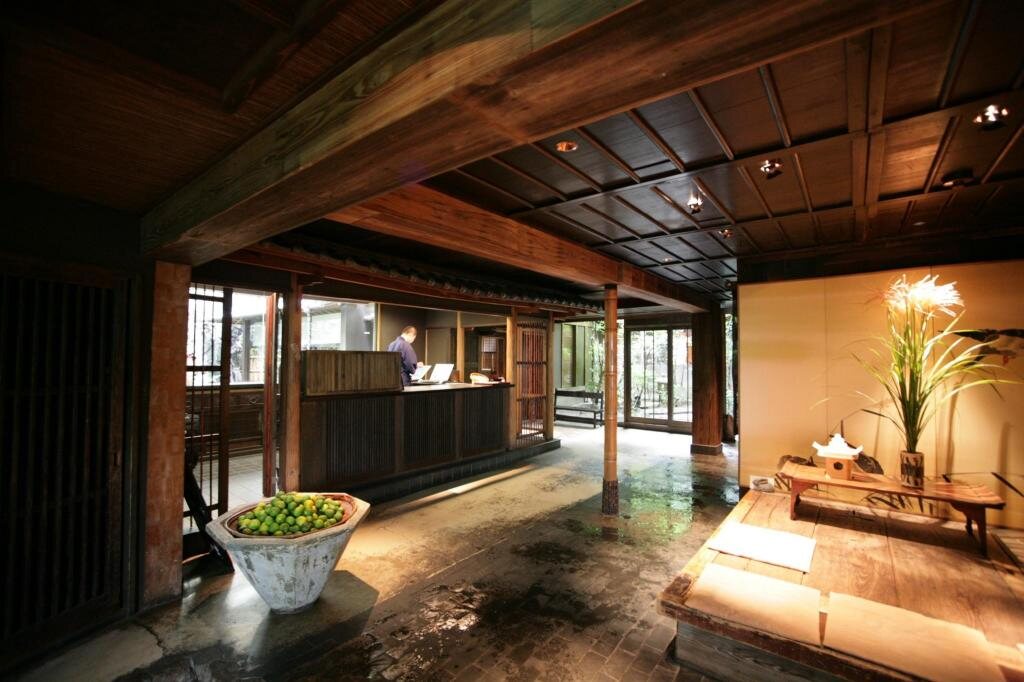
Traditional interior of Yuzuya Ryokan in Kyoto with a wooden reception area and tatami seating
Image via Agoda

Izuyasu

Use Izuyasu only if Kyoto Station convenience is important. It is a traditional inn with a long history and a strong focus on food, but most travelers should look at Yuzuya, Hiiragiya, Sumiya, or Seikoro first.

Izuyasu is most useful when you want traditional food and a ryokan-style night near Kyoto Station, especially before an early train or a long travel day. It is less useful if you are imagining Gion, Higashiyama, or one of Kyoto’s famous heritage inns.
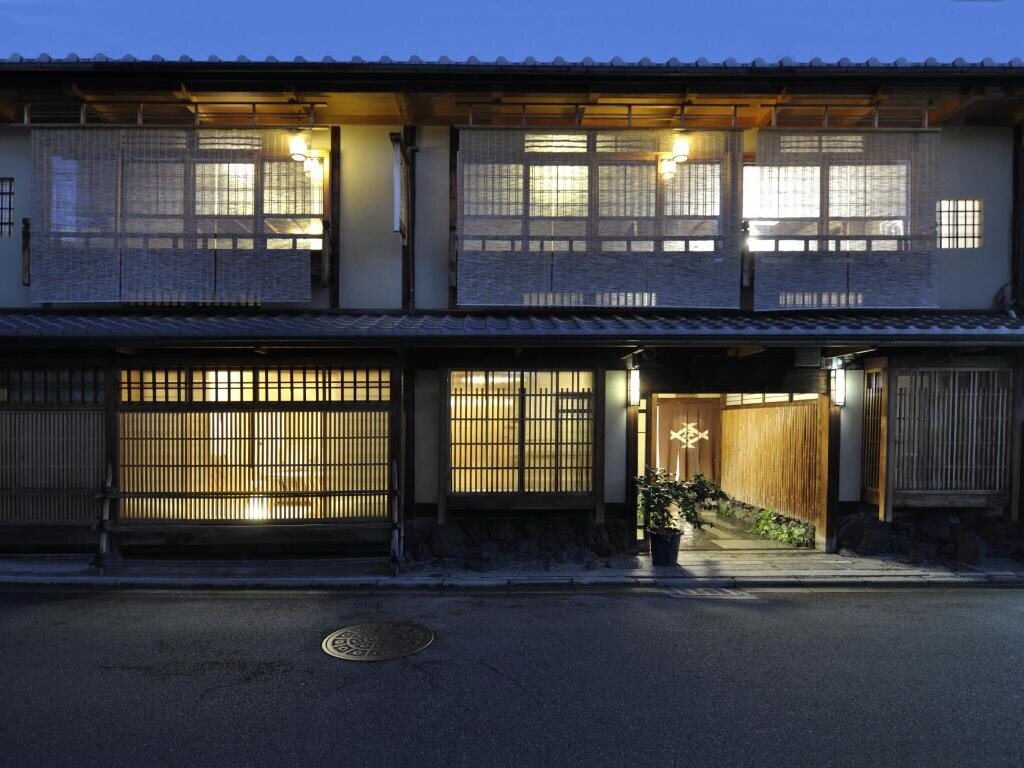
Exterior of Izuyasu, a traditional Kyoto ryokan, at dusk with warm lights glowing behind wooden lattice windows
Image via Agoda

Best Modern Ryokan for Comfort

If you like the idea of a ryokan but are nervous about futons, shared baths, old buildings, or very formal service, look at this style of stay.

For many first-time travelers, comfort is what makes the night work. A ryokan-style stay where you actually sleep well is better than a more traditional ryokan that leaves you tired the next morning.

Nazuna Kyoto Nijo-jo

Choose Nazuna Kyoto Nijo-jo if comfort comes first. It is a tea-themed ryokan in a traditional Kyoto townhouse, with five suites, private open-air or semi-open-air baths, Simmons beds, and Kyoto-made futons.

I would describe it as a luxury Kyoto townhouse stay with ryokan touches, not a very old traditional inn. Choose Nazuna if you want a traditional Kyoto look with a more modern, private, bed-friendly room.

Book it if you want a private bath but do not specifically need natural hot-spring water. I also like it for couples or older travelers who want some ryokan atmosphere but worry about sleeping entirely on futon.

Meals depend on the rate you choose. Nazuna lists breakfast hours and dinner time slots, but some rates are room-only.
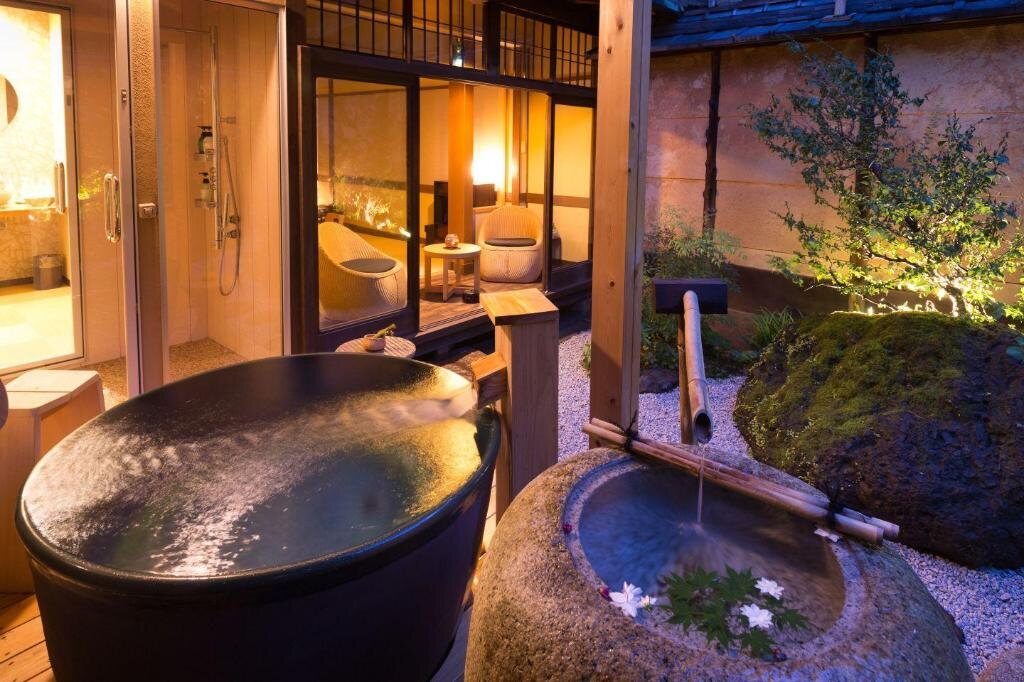
Outdoor bath and garden courtyard at Nazuna Kyoto Nijojo
Image via Agoda

If You Want a Real Ryokan With a Bed: Reconsider Seikoro

If Nazuna sounds too modern but you still need bed comfort, go back to Seikoro and compare room types carefully. It may suit you better if you want a more traditional ryokan while avoiding a fully futon-only room.

Best Kyoto Ryokan for Baths

If you are searching for a Kyoto ryokan because you want a good bath, start with the basics: in-room or shared, private or public, open-air or indoor, view or no view. Natural hot-spring water is a nice extra in Kyoto, but privacy, size, and comfort are usually more important.

For central Kyoto, many excellent ryokan are not hot-spring destinations. If you care a lot about baths, choose a larger ryokan-hotel or a stay outside the city instead of a small heritage city ryokan.

Kadensho Arashiyama

Choose Kadensho Arashiyama if you want bath variety inside Kyoto. It has natural Arashiyama Onsen in the indoor stone bath and five private bath houses. It is also in Arashiyama, so the night is less city-center and more west-Kyoto.

Kadensho is much larger than a classic city ryokan. It is closer to an onsen resort, which can be exactly right if you want several baths and Arashiyama convenience.

The indoor stone bath uses natural Arashiyama Onsen, while the open-air bath does not. Most travelers will judge the bath by privacy, comfort, and view, but the water source is important if you specifically want onsen.

Book Kadensho for bath variety and Arashiyama convenience, not for old-city ryokan intimacy.
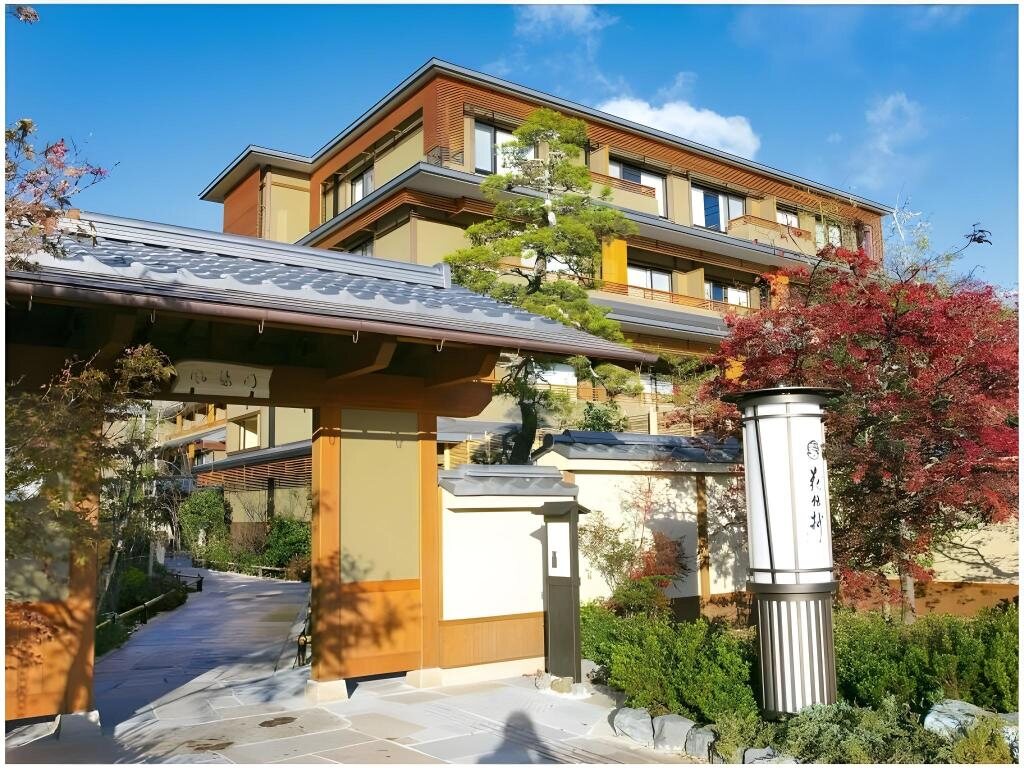
Entrance to Kadensho ryokan in Arashiyama, Kyoto, with autumn trees and a multi-story hotel building behind it
Image via Agoda

Best Stay Near Kyoto if You Want Mountains, Forest, and Onsen

Sometimes the best move is to leave central Kyoto for one night. Hot-spring water is a nice part of that, but the bigger point is getting out of the city and spending the night somewhere with more nature around you, whether that means mountains, forest, a valley, or a quieter onsen area.

These stays are not normal Kyoto sightseeing bases. Treat them as the main plan for the night. If hot springs are the whole point of the trip, I would look at a real onsen town instead. If you want one quieter night near Kyoto, this kind of stay can work well.

Sumiya Kiho-an

Choose Sumiya Kiho-an if you want a quieter ryokan night outside central Kyoto, with nature around you and onsen as a bonus. It is in Yunohana Onsen in Kameoka, with real hot-spring bath options, including some rooms with open-air hot-spring baths.

Choose this over a central Kyoto ryokan if you want a slower night away from the city. You give up some convenience, but you get much closer to the mountain-and-ryokan image many travelers have in mind.

Do not use it as a normal Kyoto base. Use it as one separate night near Kyoto, with enough time to arrive, eat, bathe, and leave the next morning without turning it into a rushed transfer.
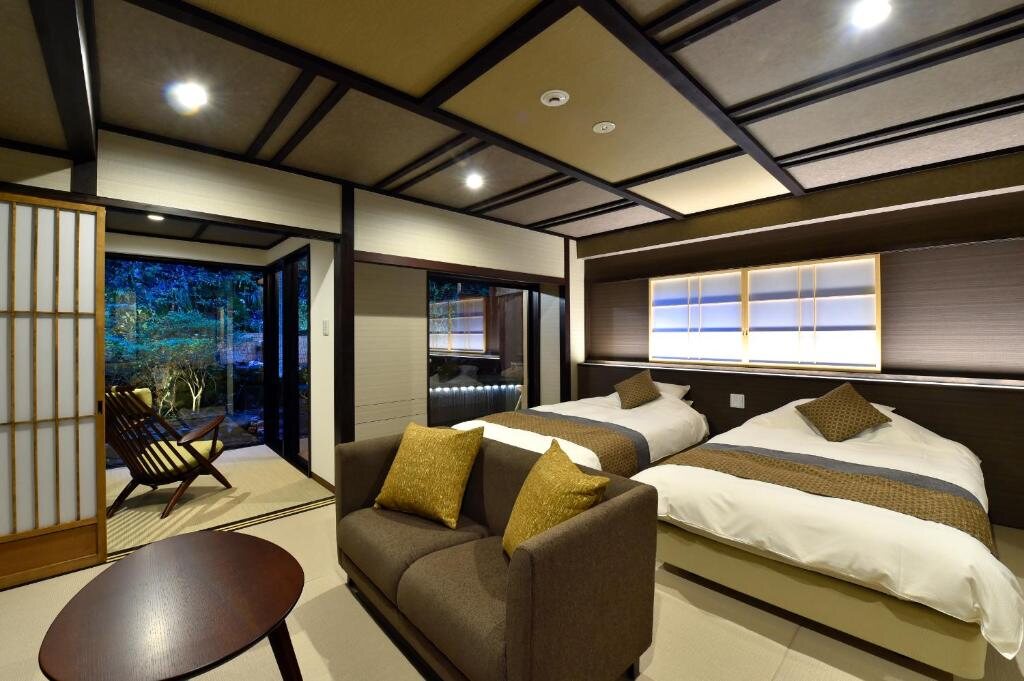
Japanese-style bedroom at Sumiya Kihoan in Kameoka with twin beds, sofa, and garden view
Image via Agoda

Yoshida Sanso

Yoshida Sanso is different again. It is more private and high-end than a normal hotel, but it is not an onsen-town retreat. Consider it if you want a slower stay near Yoshida-yama, with more privacy and history than a standard city hotel.

On Wabunka, Yoshida Sanso includes breakfast and a private guided tour of the property, with dinner available as an add-on.

The guided tour helps you understand the property instead of just sleeping in a beautiful room.

Choose Yoshida Sanso if you want a special stay with privacy and history, and you are willing to plan the evening around the property.
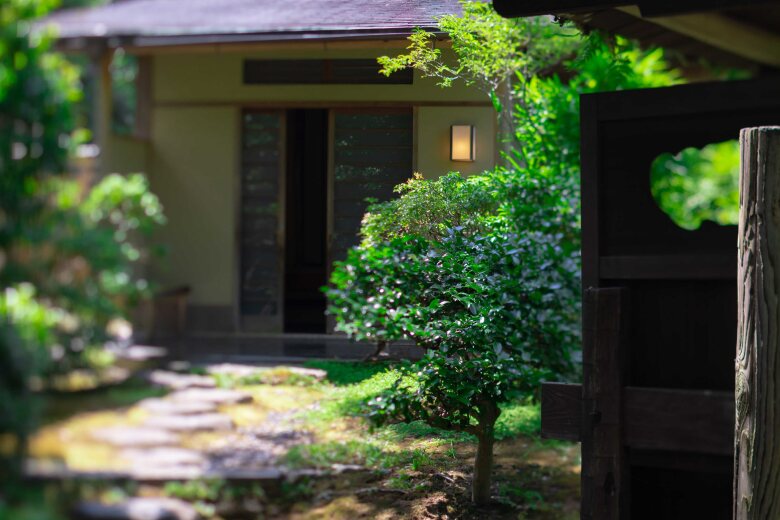
Garden path beside a traditional Kyoto villa exterior at Yoshida Sanso
Image via Wabunka

Best Kyoto Townhouse Stay Instead of a Ryokan

A Kyoto townhouse works well if you realize you may not need a ryokan at all. If what you really want is a traditional Kyoto house, a machiya can be better.

A machiya stay gives you architecture, privacy, space, and a night inside a Kyoto townhouse. It usually does not give you the same dinner, breakfast, staff service, or bathing as a ryokan. Keep this part of your planning simple: choose it when you want the house itself more than the inn service.

Nishijin Fujita

Choose Nishijin Fujita if you want privacy, space, and a traditional Kyoto house more than ryokan service. It is a one-group-per-day townhouse stay in Nishijin, inside a cultural property, with optional cultural add-ons through Wabunka.

Book it if your real wish is privacy and a Kyoto house experience. It is especially interesting for a family or small group that wants space and more privacy than a ryokan room.

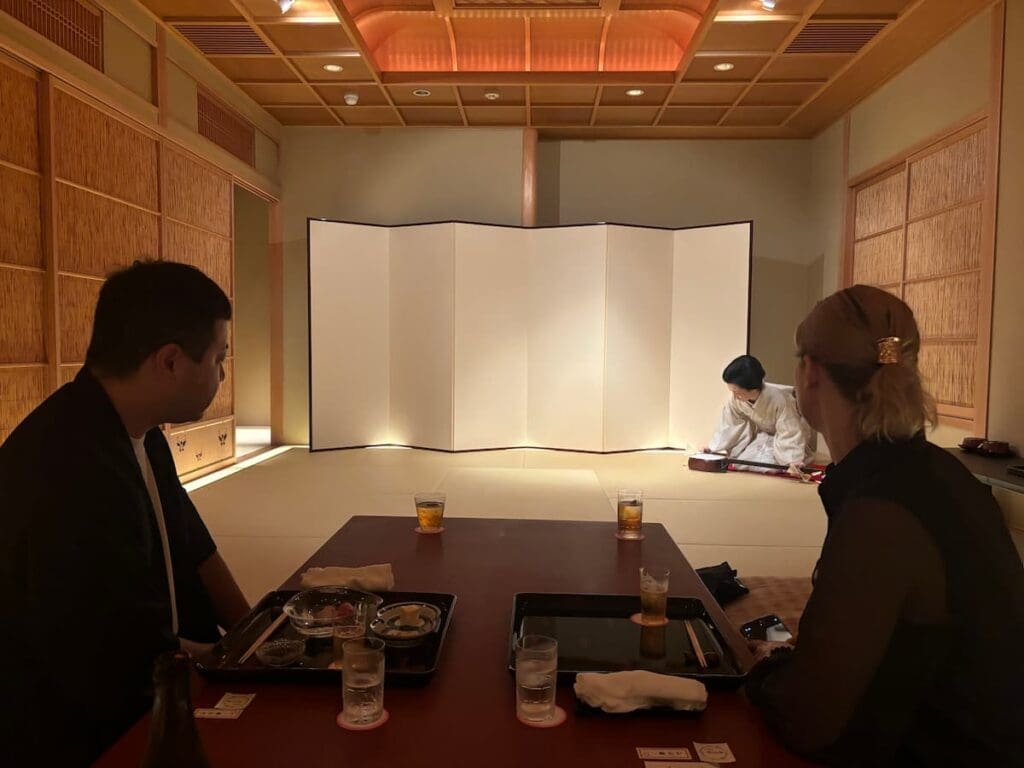
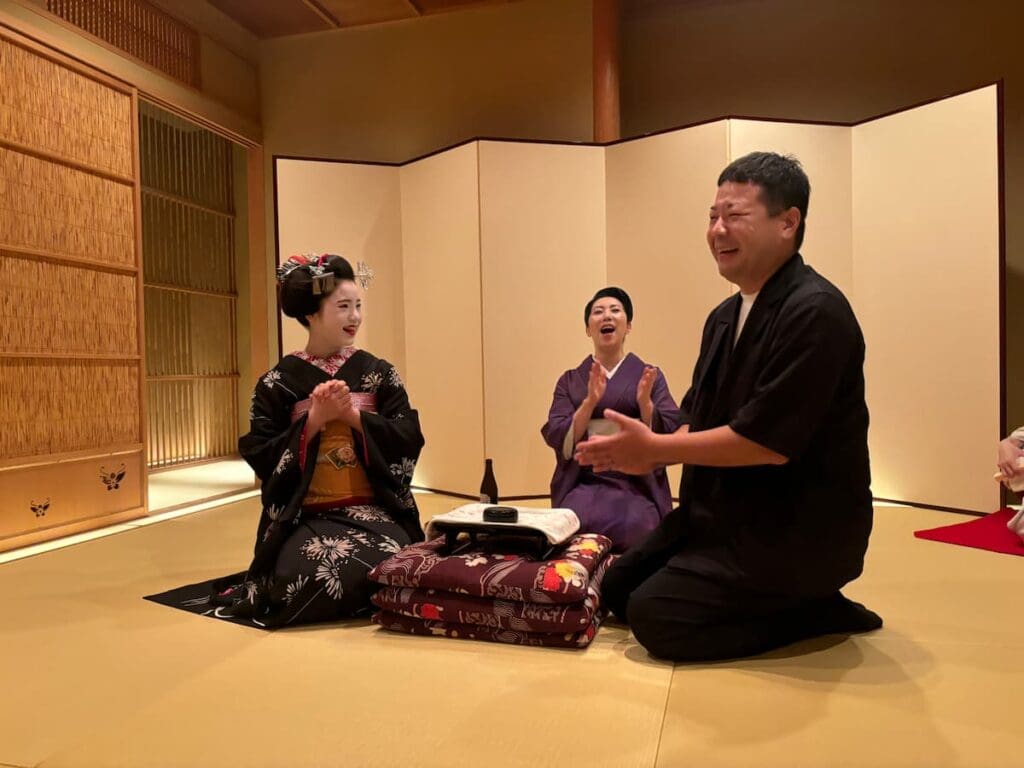
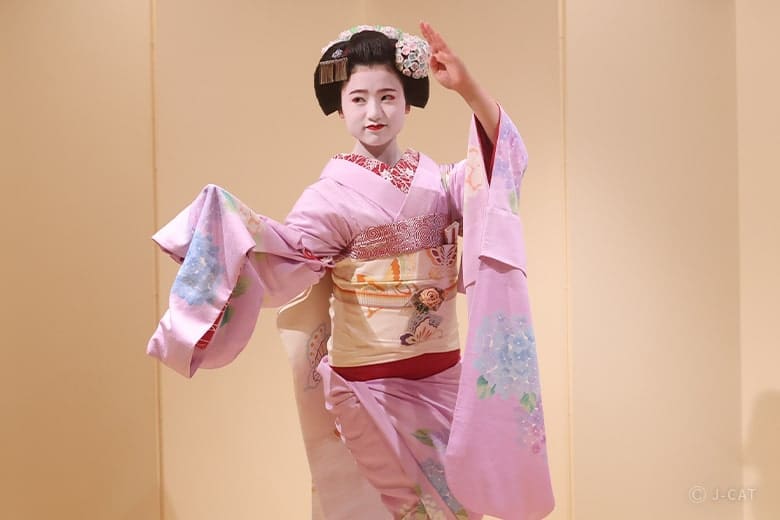
On Wabunka, Nishijin Fujita can include optional cultural elements such as traditional parlor games with geisha or maiko (apprentice geisha), tea ceremony, kimono, or a facility tour. Add those if you want a private cultural experience as part of the stay.

Book it for privacy, space, and the house itself, not for a full ryokan dinner and staff service.
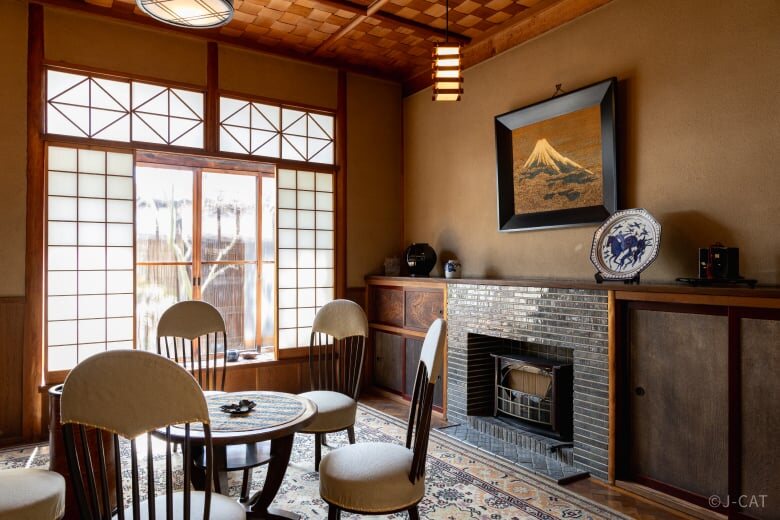
Traditional Japanese sitting room in Kyoto Nishijin with shoji screens, a fireplace, and antique furnishings
Image via Wabunka

Booking Tips Before You Choose

Protect the check-in day. For a one-night ryokan stay, try to check in around 15:00. This gives you time to see the room, settle in, use the bath, eat dinner, and actually enjoy what you paid for.

Treat dinner as part of the price. If you do not want Japanese dinner or breakfast, a normal hotel may be better. You can still add a separate Kyoto cultural experience, such as a tea ceremony in Kyoto.

Know what kind of bath you are getting. If the bath is one of the reasons you are booking, look at the practical points first: in-room or shared, private or public, open-air or indoor, view or no view. Hot-spring water is worth checking too, but in Kyoto it should usually be one part of the decision, not the whole decision.

Confirm the bedding before you pay. Many ryokan still use futons, and some room types differ within the same property. If futon sleeping worries you, prioritize Nazuna, specific Seikoro room types, or another stay that clearly offers beds.

Check meal timing and arrival rules. Some ryokan need to know if you arrive after a certain time because dinner preparation depends on it. This is especially important if you are coming from another city that day.

Use clear English booking support when it helps. If this is your first ryokan, clearer English information can reduce stress around meals, check-in, luggage, and bath etiquette.

Know when a townhouse works better. A machiya can be a wonderful Kyoto stay, but it is different from a ryokan. Book it if you want a house, privacy, and flexible time, not if you mainly want formal ryokan meals and service.

Keep special Kyoto evenings realistic. If you also want a geisha dinner, tea ceremony, or long restaurant night, do not stack everything onto the same ryokan evening. For that kind of planning, my guides to geisha in Kyoto and a private geisha dinner in Kyoto may help you decide which experience belongs on which night.

Final Recommendation by Traveler Type

If you want the high-end classic Kyoto ryokan, start with Hiiragiya or Sumiya Ryokan. Choose this kind of stay only if you can afford it and give it the evening it deserves.

If you want a more practical traditional ryokan, start with Seikoro. It is easier for many first-timers while still giving you a traditional inn experience.

If dinner, breakfast, and the Gion evening are the point, look at Yuzuya. If station convenience is more useful than the older east-side Kyoto location, keep Izuyasu in mind as a compact alternative.

If you want beds, privacy, and a smoother first ryokan-style night, start with Nazuna Kyoto Nijo-jo.

If you care a lot about the bath, start with Kadensho Arashiyama. If you want a quieter night outside the city with onsen as a bonus, look toward Sumiya Kiho-an.

If you want a slower, high-end stay with more privacy and history, look at Yoshida Sanso on Wabunka. If you want a traditional Kyoto house rather than a ryokan, start with Nishijin Fujita.

And if your Kyoto plans are full of restaurants, late nights, early trains, and long sightseeing days, book a normal hotel instead. A good Kyoto hotel is not a lesser choice. It may simply work better for your trip. Start with my where to stay in Kyoto guide or, if you are still choosing where to base yourself in the Kyoto-Osaka region, my Kyoto vs Osaka guide.

FAQ

Is One Night in a Kyoto Ryokan Enough?

Yes, one night is enough for most travelers if you check in early and keep the evening free. It works poorly if you arrive late, skip dinner, and leave early the next morning.

Are Kyoto Ryokan Real Onsen?

Some Kyoto-area stays have natural hot-spring water, especially outside central Kyoto or in areas such as Arashiyama and Yunohana Onsen. Many central Kyoto ryokan are traditional inns without natural onsen. If hot-spring water is important to you, look for the bath type on the room or plan page.

What Is the Difference Between a Private Bath and a Private Onsen?

A private bath means you can bathe privately. Onsen means natural hot-spring water. A property should say clearly when a private bath uses onsen water.

Should I Book Dinner and Breakfast at a Kyoto Ryokan?

Usually, yes. Dinner and breakfast are often a major part of the ryokan stay. If you do not want Japanese meals or fixed meal times, a hotel plus a separate Kyoto dinner may be a better choice.

Can I Stay in a Kyoto Ryokan if I Do Not Want to Sleep on a Futon?

Yes, but choose carefully. Look for Western-bed rooms, Japanese-Western rooms, or modern ryokan-style stays such as Nazuna Kyoto Nijo-jo. Check the exact room type, even within the same ryokan.

Is a Machiya Stay the Same as a Ryokan?

No. A machiya stay is usually a traditional Kyoto townhouse stay. It can be private, beautiful, and memorable, but it normally does not have the same meal, bath, and staff-service structure as a ryokan.

Is Kyoto Better Than Hakone or Kinosaki for a Ryokan Night?

Kyoto is better if you want convenience and a traditional city stay without adding another travel leg. Hakone, Kinosaki, and other onsen destinations are usually better if hot springs and retreat time are what you care about most.
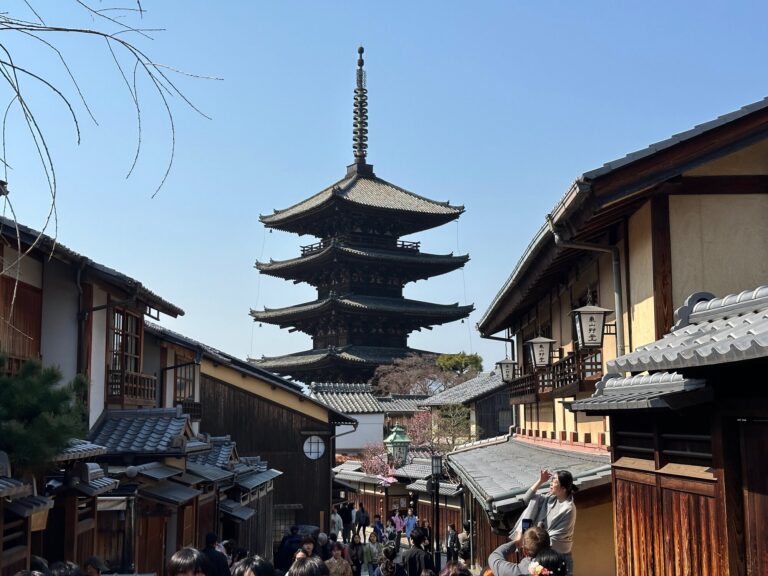
Where you stay in Kyoto changes the trip more than many first-time visitors expect. It affects how often you change trains, how annoying your luggage feels, whether evenings are easy, and whether your hotel feels like a practical base or part of the experience.

For most travelers, I would start with three areas. Downtown Kyoto is the best all-round base if you want restaurants, shopping, river walks, Gion access, and flexible sightseeing. Kyoto Station is the smartest choice if rail access, day trips, luggage, late arrivals, or early departures are driving the decision. Gion and Southern Higashiyama are best when classic Kyoto streets, east-side temples, and evening walks are worth extra transfer friction.

If you are still deciding whether to base in Kyoto or Osaka at all, read my guide to Kyoto or Osaka: Where Should You Stay? first. This guide assumes you have decided to stay in Kyoto and now need to choose the right part of the city.

If you are still building the wider trip, start with my Plan Your Trip to Japan guide, then come back to this once Kyoto’s role in the route is clearer.

Some links on YavaJapan are affiliate links. If you book or buy through them, I may earn a small commission at no extra cost to you. It helps support the site, and I only link to places, stays, and experiences I genuinely think are worth recommending.

At a Glance

  • Best all-round Kyoto base: Downtown Kyoto, especially Shijo-Kawaramachi, Shijo-Karasuma, and Sanjo.
  • Best for rail, luggage, and day trips: Kyoto Station.
  • Best for classic Kyoto walks: Gion and Southern Higashiyama.
  • Best calmer central alternative: Karasuma Oike, Nijo, and the Imperial Palace side.
  • Best calmer premium base: Okazaki, Northern Higashiyama, and Keage.
  • Best one-night stay-as-destination: Arashiyama.
  • Best niche special-stay areas: Nishijin and Kitano for machiya stays, and Fushimi only for a deliberate southern-Kyoto route.

How to Choose Your Kyoto Base

In my opinion, the best way to choose your hotel is to look at what your trip looks like.

If your Kyoto plan mixes Kiyomizu-dera, Nishiki Market, Gion, Arashiyama, shopping, restaurants, and a few flexible evenings, Downtown Kyoto is usually the easiest place to start. It gives you a strong middle ground without committing the whole trip to one side of the city.

If you have several JR day trips, a shinkansen arrival, a late check-in, an early train, large suitcases, or children, Kyoto Station can be the better choice. It may not feel as Kyoto-specific outside the hotel door, but it often makes the trip smoother.

If your Kyoto image is mainly Kiyomizu-dera, Yasaka Shrine, Kodaiji, old streets, traditional restaurants, and walking back after dinner, Gion or Southern Higashiyama can be worth the extra friction. The tradeoff is that cross-city sightseeing and station transfers usually take more effort.

For longer stays, I also like looking at Central Kyoto around Karasuma Oike, Nijo, or the Imperial Palace side. It can feel calmer and more livable while still keeping you central. For a slower premium stay, Okazaki or Keage can work well. For one night where the stay itself is the point, Arashiyama, Nishijin, or a central ryokan may make more sense than changing your whole Kyoto base.

Hotels are usually the better default than Airbnb in Japan. In my experience, hotels reduce friction: front desks can hold luggage, help with taxis, explain small local details, and make arrival easier. Japan also has good convenience stores, department-store food floors, cafes, and restaurants, so the kitchen advantage of an apartment is often less important than people expect.

Kyoto Area Comparison Table

AreaBest IfThink Twice IfTransport LogicEvening FeelHotel Style
Downtown KyotoYou want the best balance of sightseeing, food, shopping, and eveningsYou have many JR or shinkansen daysSubway, Hankyu, Keihan, and walking all help, but JR usually needs a transferBest overall for restaurants, bars, river walks, and flexible nightsBroadest hotel range
Kyoto StationYou care about rail, luggage, day trips, late arrivals, or early departuresYou want classic Kyoto streets outside the doorBest JR and shinkansen logicConvenient, but more transport-hub than Kyoto neighborhoodPractical hotels, larger properties, family options
Gion / Southern HigashiyamaYou want east-side temples, old streets, and memorable eveningsYou dislike taxi, bus, or luggage frictionGood walking access east, weaker for JR-heavy plansStrong Kyoto evening feelPremium hotels, ryokan, smaller stays
Central KyotoYou want calm central access, space, and subway convenienceYou want nightlife directly outside the hotelKarasuma Oike and Nijo are useful subway anchorsCalmer than DowntownUpper-mid hotels, design hotels, premium city stays
Okazaki / Northern HigashiyamaYou want museums, Nanzenji, Keage, and a slower premium baseYou want the easiest all-city baseTozai Line helps, but walking and taxis still affect the stayCalm and culture-focusedPremium hotels and special stays
ArashiyamaYou want one night around the river, bridge, and bamboo-grove areaYou need an efficient base for all Kyoto sightseeingJR, Hankyu, and Randen help, but it is still west of the main city coreCalm at night, with early closing timesLuxury hotels and ryokan-style stays
FushimiYour route focuses on Fushimi Inari, Uji, Nara, or sakeYou want a general Kyoto baseUseful for specific southbound rail plansMore local and lower-keyLimited use as a main base
Nishijin / KitanoYou want a machiya, textile area, or cultural-property stayYou want easy rail-first sightseeingMore bus, taxi, and deliberate route planningResidential and traditionalMachiya, special stays, small inns

Kyoto’s official travel guidance also recommends using trains and subways where possible because buses can be very crowded, especially on popular sightseeing routes. It also points travelers toward luggage services and hands-free travel, which is especially useful if you are changing hotels or arriving before check-in.

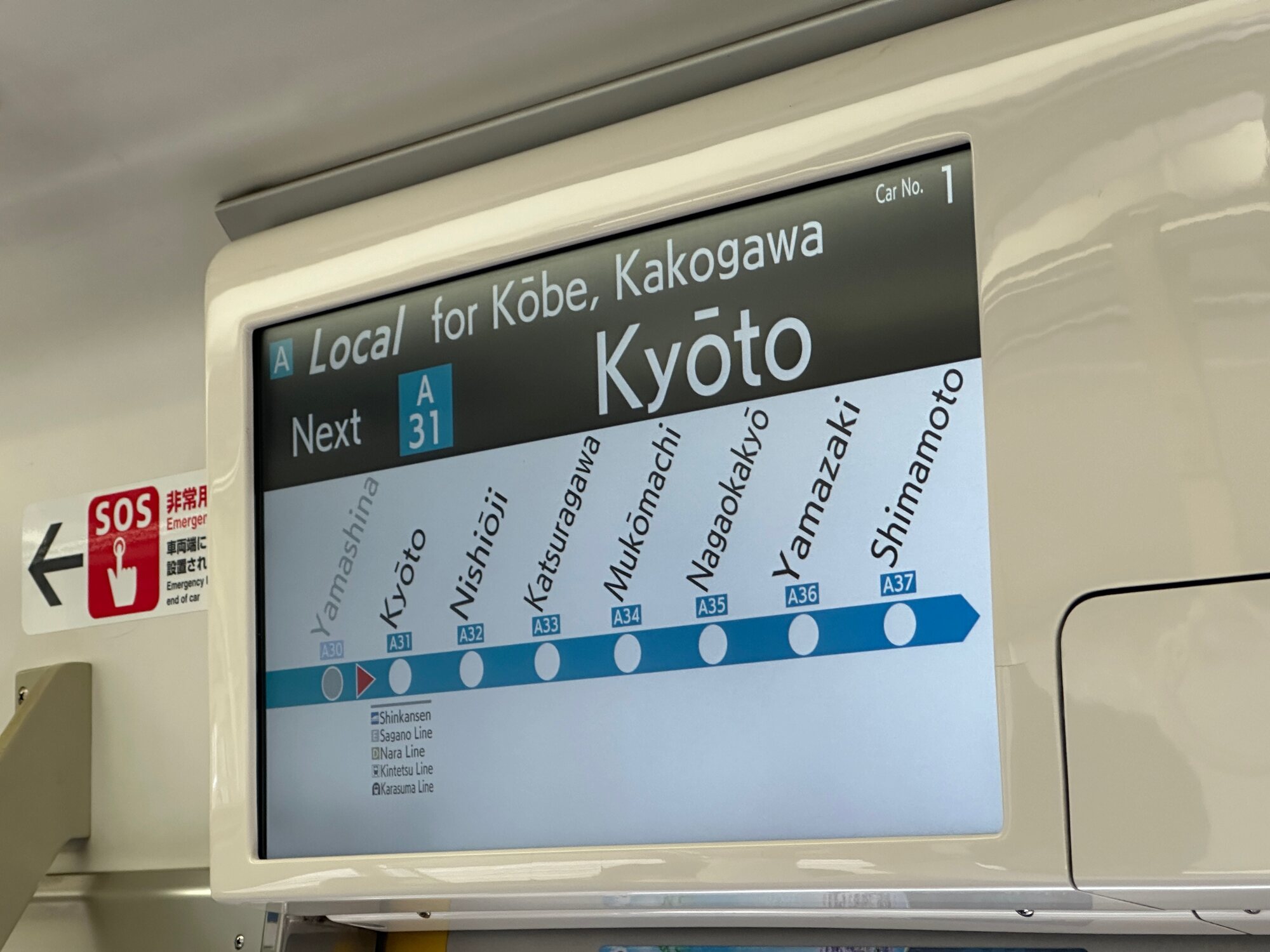
Train car display showing route information for Kyoto, with the next stop for Kobe and Kakogawa
Kyoto route info on the train

Downtown Kyoto: Shijo-Kawaramachi, Shijo-Karasuma, and Sanjo

Downtown Kyoto is where I would start for many mixed Kyoto trips. It works because it does not force you into one version of the city. You can walk toward Nishiki Market, Pontocho, the Kamo River, Gion, department stores, cafes, restaurants, and a lot of evening options. Depending on the exact block, you also have useful access to subway, Hankyu, Keihan, and bus routes.

This is the area I would choose if your Kyoto stay is mostly about balance. You might do Kiyomizu-dera one morning, Arashiyama another day, a tea ceremony in Kyoto one afternoon, dinner near Pontocho, and maybe a walk through Gion at night. Downtown keeps those options open.

The main tradeoff is JR access. If you are using Kyoto Station every day for Nara, Uji, Osaka, Hiroshima, the shinkansen, or airport transfers, Downtown usually adds one more step. That is fine for many travelers, but it is not ideal if the whole stay is rail-heavy.

Exact location also changes the experience. Shijo-Kawaramachi and Sanjo are stronger for evenings, river access, and Gion walks. Shijo-Karasuma is a little more practical for the subway and can feel calmer around hotel blocks. I would check the actual hotel map, not only the broad area name.

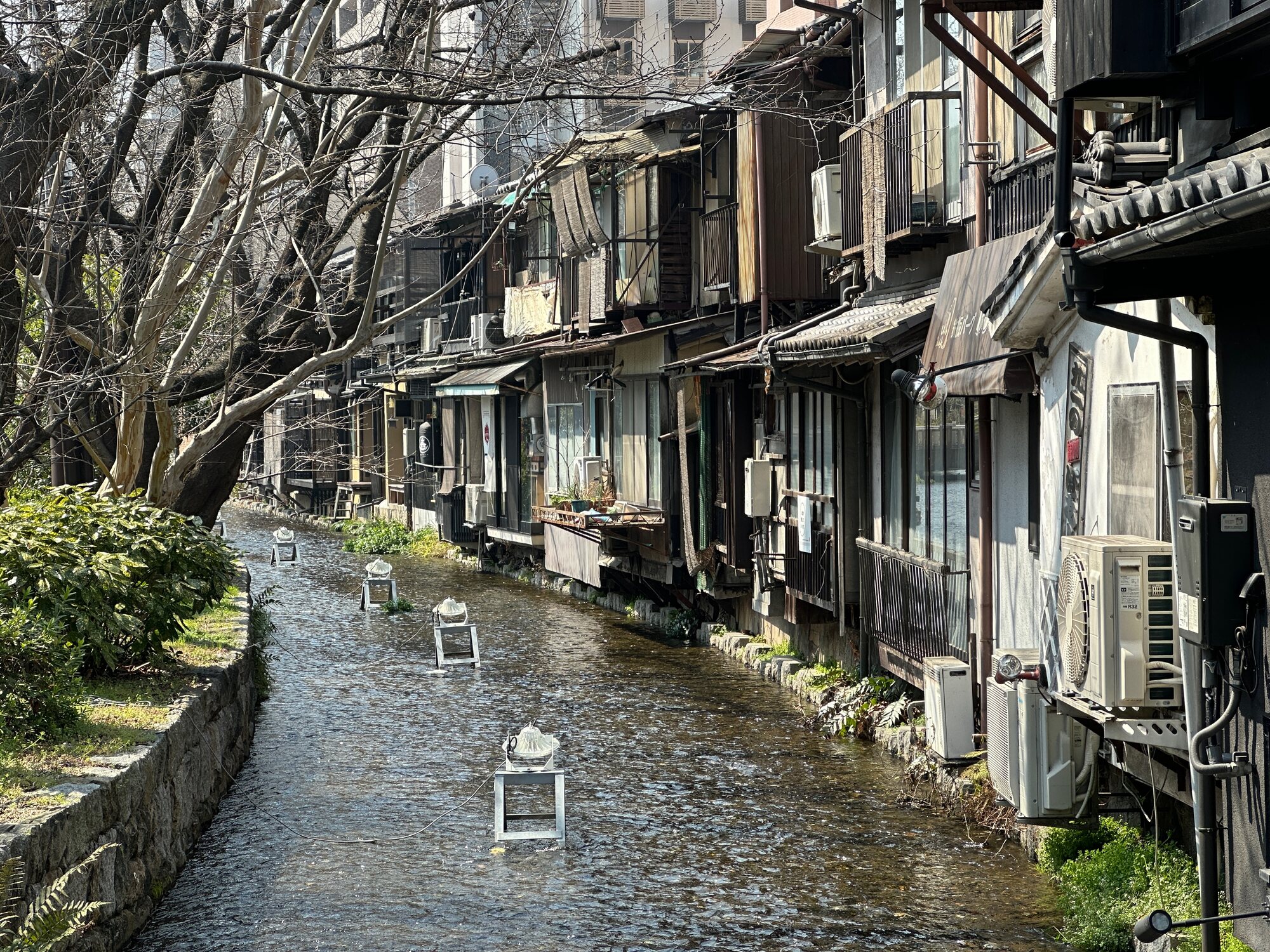
Kyoto Shirakawa Canal lined with traditional-style buildings and bare trees along a narrow water channel
Kyoto Shirakawa Canal feels peaceful

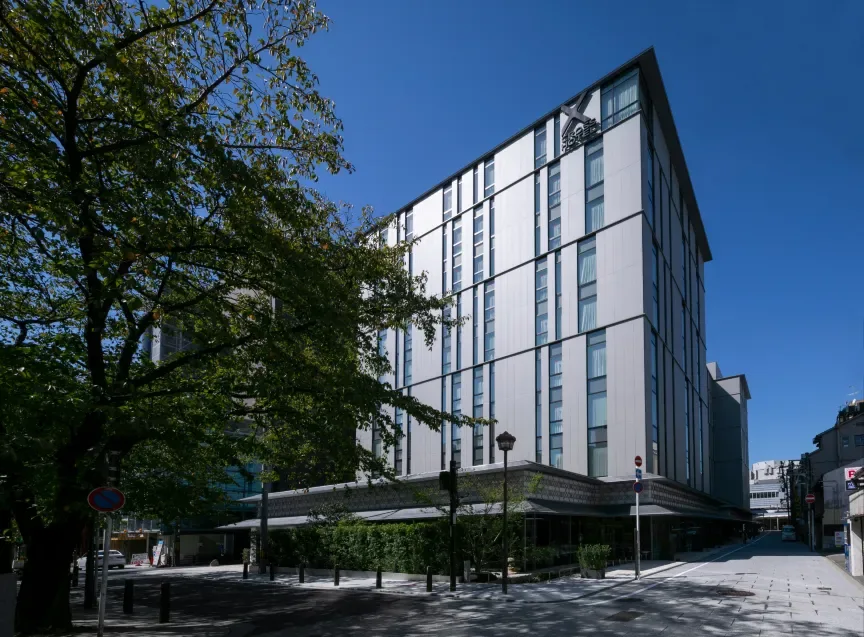
Cross Hotel Kyoto

Cross Hotel Kyoto is one of the easiest Downtown hotels to recommend because it sits near Kawaramachi Sanjo, with good access to the Kamo River, Gion-side walks, restaurants, and several transport options. It works well for a first Kyoto stay where you want the hotel to be practical without feeling like a pure station hotel.

Cross Hotel Kyoto exterior on a tree-lined street in Kyoto
Image via Trip.com

I would look at it first if you want a clean all-round Downtown base and do not need a ryokan or luxury-hotel moment. The watch-out is simple: this is still not a JR-first location, so day trips through Kyoto Station mean an extra transfer.

THE GATE HOTEL KYOTO TAKASEGAWA by HULIC

THE GATE HOTEL KYOTO TAKASEGAWA by HULIC is a stronger choice if you want Downtown convenience with a more memorable hotel feel. The location near Shijo-Kawaramachi keeps dinner, shopping, Gion-Shijo, and river walks easy.

This is best for couples or adults who want a slightly more special city hotel without moving into a less convenient east-side location. Entry-level rooms can be more compact, so families or travelers with large luggage should compare room categories carefully.

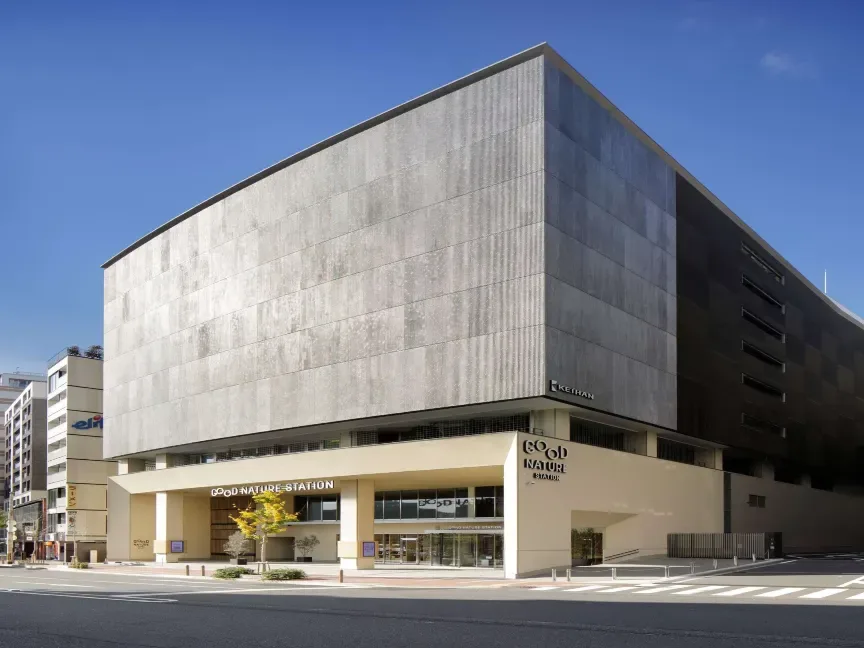
GOOD NATURE HOTEL KYOTO

GOOD NATURE HOTEL KYOTO is useful if you want Downtown but also care about room comfort, food access, and a more modern hotel setup. It is close to Kyoto Kawaramachi and Gion-Shijo, which keeps the evening side of Kyoto easy.

Good Nature Station building in Kyoto with a modern gray facade and street-level entrance
Image via Trip.com

I would consider it for families, friends, or longer stays where room category and practical comfort are important. The tradeoff is that it feels more contemporary than traditional, so it is not the best choice if your hotel itself needs to feel old-Kyoto.

Solaria Nishitetsu Hotel Kyoto Premier

Solaria Nishitetsu Hotel Kyoto Premier is a good Sanjo-side option if you like the idea of Downtown but want a slightly calmer Kamo River edge. It keeps you close to restaurants, Gion, the river, and Kyoto Shiyakusho-mae Station without placing you directly in the busiest shopping blocks.

This is strongest for couples or solo travelers who want walkability with a softer setting. It is less obvious for groups than some larger-room hotels, so check room layouts before booking.

Kyoto Station

Kyoto Station is the most practical Kyoto base. It is the place I would choose if the trip depends on rail, luggage, and easy transfers more than evening walks outside the hotel.

This area works especially well for shinkansen arrivals, late check-ins, early departures, airport connections, and day trips to Nara, Uji, Fushimi Inari, Osaka, or even farther west. It is also easier when you have large suitcases, strollers, or a group that does not want to drag luggage through smaller streets.

Kyoto’s official accommodation guide points out that the station area has many large hotels and business hotels, plus lockers and luggage check-in options. That matches my own general advice for Japan: the first or last night should often be easy. After a long travel day, convenience can be worth more than charm.

The tradeoff is that Kyoto Station feels like a major transport hub. It has restaurants, shops, and plenty of convenience, but it does not give you the same evening experience as Downtown, Gion, or the Kamo River side.

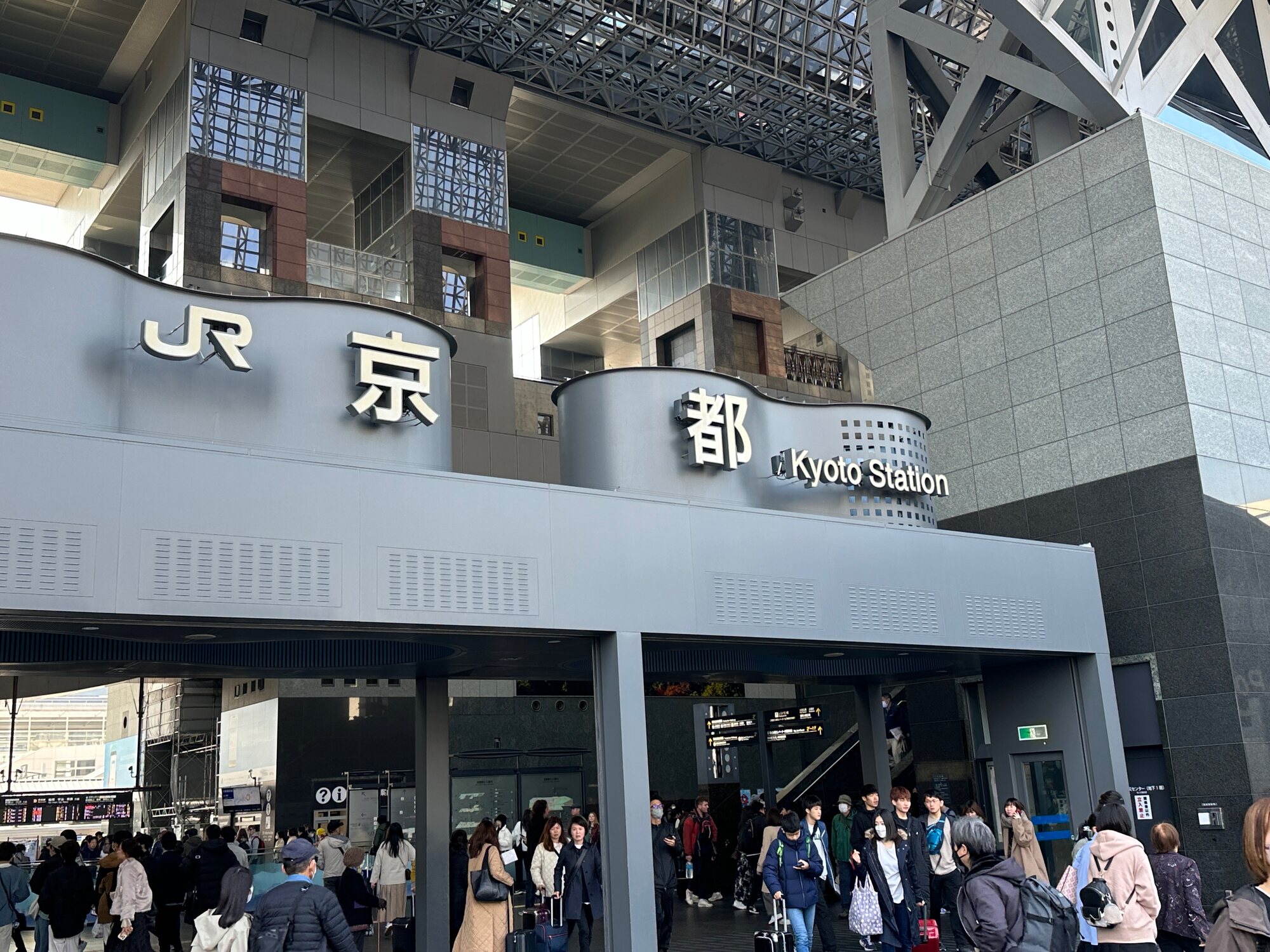
JR Kyoto Station entrance with large JR and 京都 signs and a crowd of travelers in the foreground
Kyoto Station entrance felt busy

Hotel Granvia Kyoto

Hotel Granvia Kyoto is the cleanest station choice because it is inside Kyoto Station. If your main concern is minimizing movement with luggage, catching trains easily, or keeping the first and last night simple, this is the hotel I would check first.

It is best for rail-heavy itineraries, families, late arrivals, and short stays. The watch-out is that you are choosing the station experience, not a neighborhood stay. For some trips, that is exactly the right tradeoff.

Hotel Vischio Kyoto by GRANVIA

Hotel Vischio Kyoto by GRANVIA is a practical station-side choice if you want comfort, easy access, and a large public bath after long travel days. It is close to Kyoto Station and fits travelers who want function without paying for the full Granvia position.

I would look here for a practical short stay near the station. The Hachijo-side location is useful, but it is still station-area Kyoto, so do not expect the same evening feel as Gion or Downtown.

MIMARU Kyoto Station

MIMARU Kyoto Station is one of the strongest choices for families, groups, and travelers with several suitcases. The apartment-hotel setup usually works better when you need space, separate sleeping arrangements, a kitchen, or a room that can handle more than two people comfortably.

This is a good example of why I often prefer hotels over Airbnb in Japan. You can get apartment-style practicality while still having a hotel structure. The watch-out is that you should not expect a classic full-service luxury hotel feel.

Kyoto Century Hotel

Kyoto Century Hotel is a softer station-area option if you want Kyoto Station convenience but prefer a more classic full-service hotel feel. It is close enough to the station to make arrivals and departures easy, and it works well for adults who want practical comfort.

I would consider it for station convenience without the most businesslike feel. As with the other station hotels, the main compromise is the area itself.

Gion and Southern Higashiyama

Gion and Southern Higashiyama are the right choice when you want Kyoto to feel close the moment you step outside. This area works well if your trip focuses on Kiyomizu-dera, Yasaka Shrine, Kodaiji, traditional streets, evening walks, tea, geisha culture, and higher-budget stays.

If you are planning a private geisha dinner in Kyoto or want to understand where to see geisha in Kyoto, staying on this side of the city can make the evening feel much easier.

The tradeoff is practical. Gion and Southern Higashiyama can involve more walking, taxis, buses, or transfers. Large luggage is more annoying here than at Kyoto Station. Cross-city sightseeing also takes more planning.

I would choose this area if east-side Kyoto is the point of the stay. If you mainly want easy restaurants, river access, and flexible transit, Downtown can give you a similar Gion-adjacent experience with less friction.

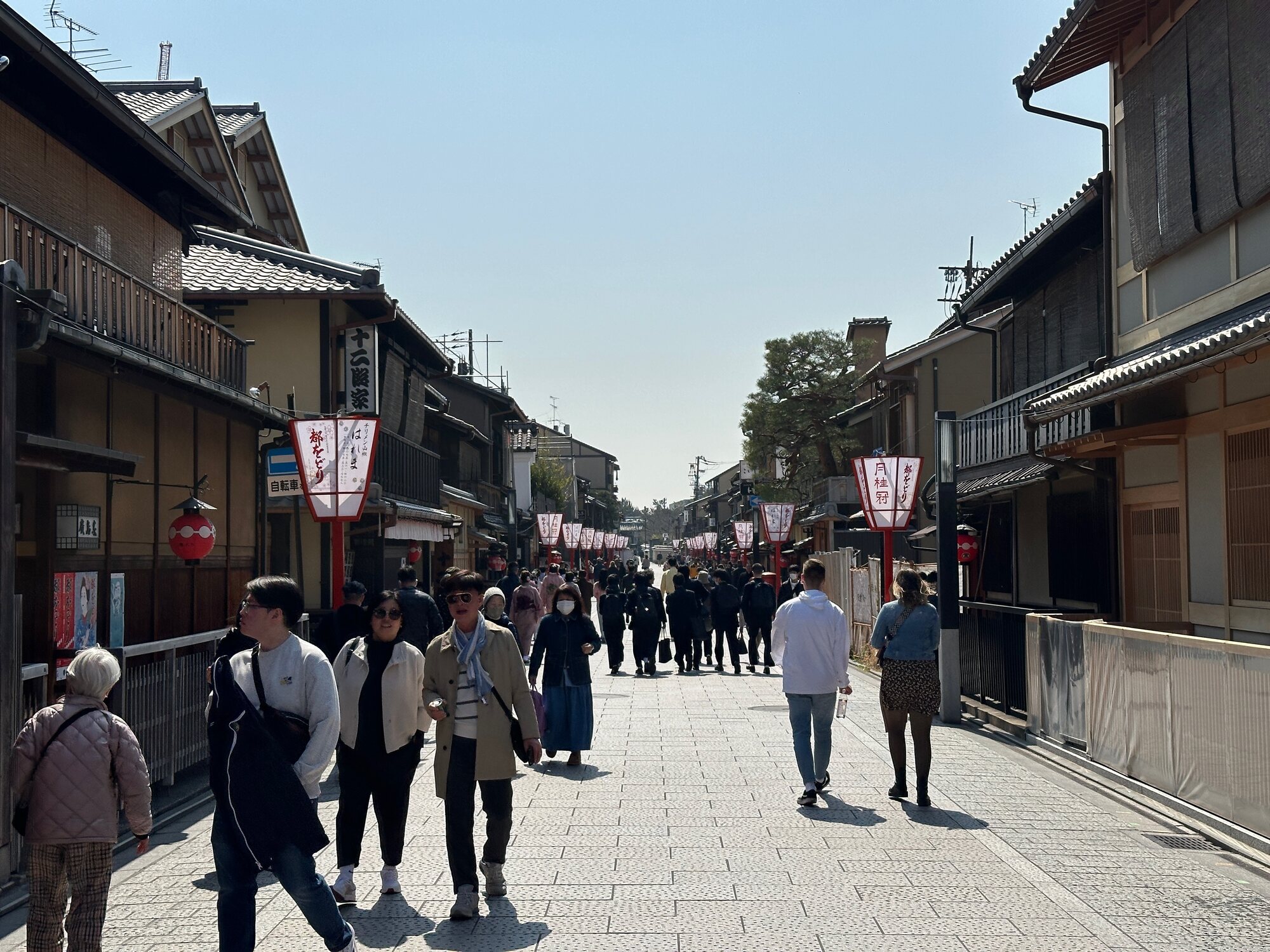
Crowds walking down a traditional street in Kyoto’s Gion district, lined with old wooden buildings and red lantern banners
Gion street feels wonderfully lively

HOTEL THE CELESTINE KYOTO GION

HOTEL THE CELESTINE KYOTO GION is one of the more practical Gion-side choices because it gives you access to Southern Higashiyama without going fully tiny, remote, or ryokan-like. It works well if you want east-Kyoto evenings but still want a hotel that feels easy to use.

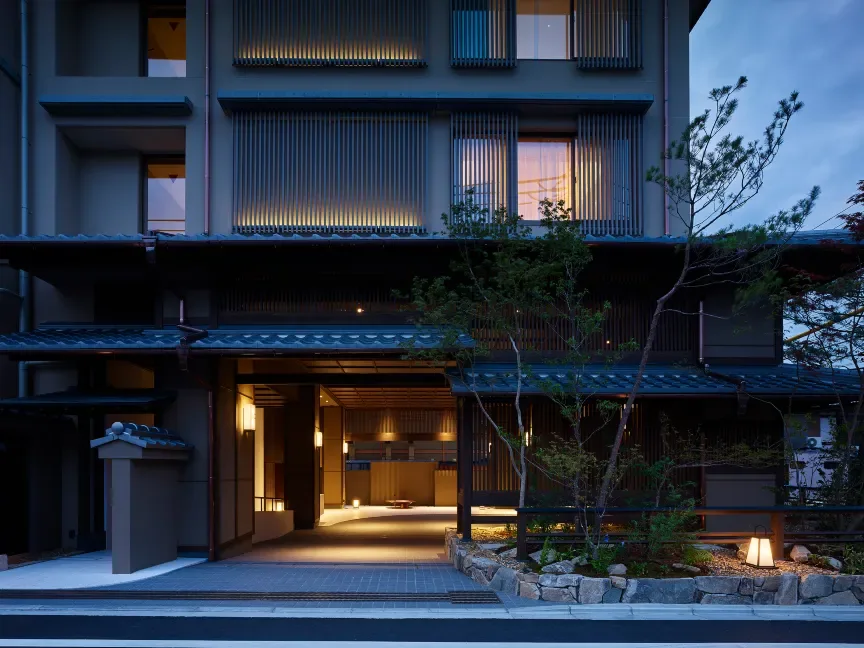
The Celestine Kyoto Gion hotel entrance at dusk with warm lights and a traditional-style facade
Image via Trip.com

This is a good fit for couples and travelers focusing on Gion, Kiyomizu, Yasaka, and evening walks. The watch-out is that it still relies more on walking, taxi, or shuttle logic than a Downtown or Kyoto Station hotel.

Sowaka

Sowaka is the hotel I would look at if the goal is a strong old-Kyoto stay in the Yasaka and Southern Higashiyama area. It is best for couples, special occasions, and travelers who want the stay itself to feel tied to Kyoto’s traditional side.

The caution is that this is not the most flexible family or logistics-first choice. Some room policies can be age-specific, so check the exact room category and child policy before booking.

Park Hyatt Kyoto

Park Hyatt Kyoto is for travelers who want the hotel to be one of the main memories of the Kyoto stay. The location near Ninenzaka, Kodaiji, and Yasaka Pagoda is hard to beat if your ideal Kyoto evening is walking back through the east-side streets rather than optimizing transfers.

I would treat it as a high-budget, hotel-as-experience choice. Choose it for the hotel setting and east-side location, not for day-trip convenience or value.

ART MON ZEN KYOTO

ART MON ZEN KYOTO sits near Furumonzen and works well for travelers who want Gion access with an art-focused hotel stay. It also has a Wabunka experiential-stay version that combines a one-night stay with an art class, gallery tour, and tea ceremony.

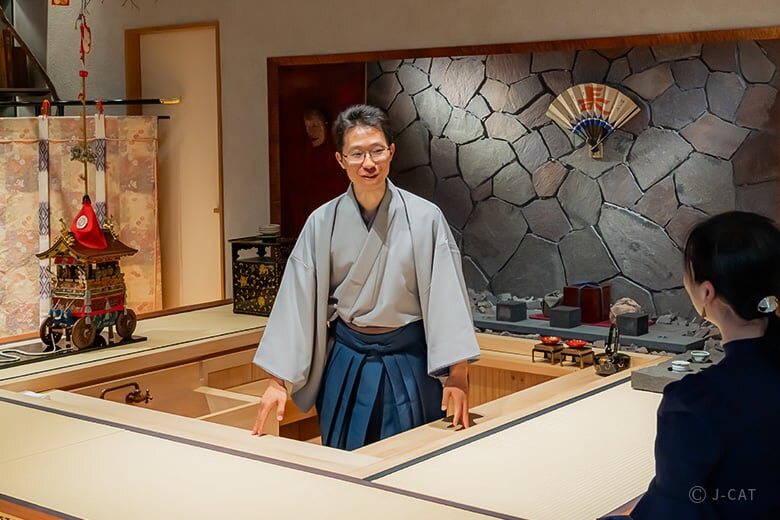
Man in a kimono standing behind a counter in a Kyoto art gallery or restaurant interior
Image via Wabunka

This is best for adults who want a premium cultural stay rather than a simple hotel room. If you want the Wabunka version, check the specific plan carefully because the experience, price, and group size are different from a normal hotel booking.

Central Kyoto: Karasuma Oike, Nijo, and the Imperial Palace Side

Central Kyoto is the area I would check when Downtown feels too busy, Gion feels too expensive or inconvenient, and Kyoto Station feels too practical. Around Karasuma Oike, Nijo, and the Imperial Palace side, you can get calmer streets, subway access, and often better room comfort.

This area works especially well for longer stays. You are still central, but you do not have to sleep in the busiest restaurant and shopping zone. Karasuma Oike is particularly useful because it connects the Karasuma and Tozai subway lines.

The tradeoff is evening energy. If you want to step out directly into the strongest restaurant and nightlife area, Downtown is easier. If you want a calmer base that still moves well, Central Kyoto is a strong alternative.

Ace Hotel Kyoto

Ace Hotel Kyoto is directly connected to Karasuma Oike Station, which makes it one of the easiest Central Kyoto hotels to understand. It is good for travelers who want a design-led stay, subway convenience, and walkable access toward Downtown.

I would consider it for couples, friends, or a family that wants central access with more personality than a standard chain hotel. The watch-out is price: the design and location can carry a premium.

The Royal Park Hotel Iconic Kyoto

The Royal Park Hotel Iconic Kyoto is a strong Karasuma Oike option if you want a polished hotel with subway convenience and useful facilities. It works well for travelers who want central access but do not need Gion or Kawaramachi outside the door.

This is a good fit for mixed east-west sightseeing because the subway makes movement easier. Check the room category carefully if a bathtub is important, because some room types may use shower booths only.

Kyoto Brighton Hotel

Kyoto Brighton Hotel is a calm central choice near the Imperial Palace side. It makes sense if you want larger rooms, a gentler setting, and a more relaxed premium stay, especially for families or longer visits.

The tradeoff is that it is less immediate than Downtown. You may rely more on shuttle, taxi, or subway planning. I would book it because you want space and calm, not because you want the easiest restaurant-hopping area.

HOTEL THE MITSUI KYOTO

HOTEL THE MITSUI KYOTO is the ultra-premium central option near Nijo Castle. It is best when you want a refined city stay with spa value and a location that feels calm without being far from central Kyoto.

I would not choose it for value or nightlife. I would choose it if you want one of Kyoto’s strongest luxury city hotels and the budget supports it.

Okazaki and Northern Higashiyama

Okazaki, Keage, and Northern Higashiyama are good if your Kyoto trip leans toward museums, Nanzenji, Heian-jingu, the Philosopher’s Path side, and calmer premium stays. This is not the first area I would recommend to most first-time travelers, but it can be excellent when the trip is already east-side and slower.

The Tozai Line helps, especially around Keage, but this area is still less plugged into Kyoto’s busiest evening core. Kyoto’s official transport guidance for Okazaki also points travelers toward rail routes where possible instead of relying only on buses around crowded sightseeing areas.

Choose this area if your hotel and east-side mornings are part of the plan. Skip it if you want the easiest access to restaurants, shopping, and mixed city movement.

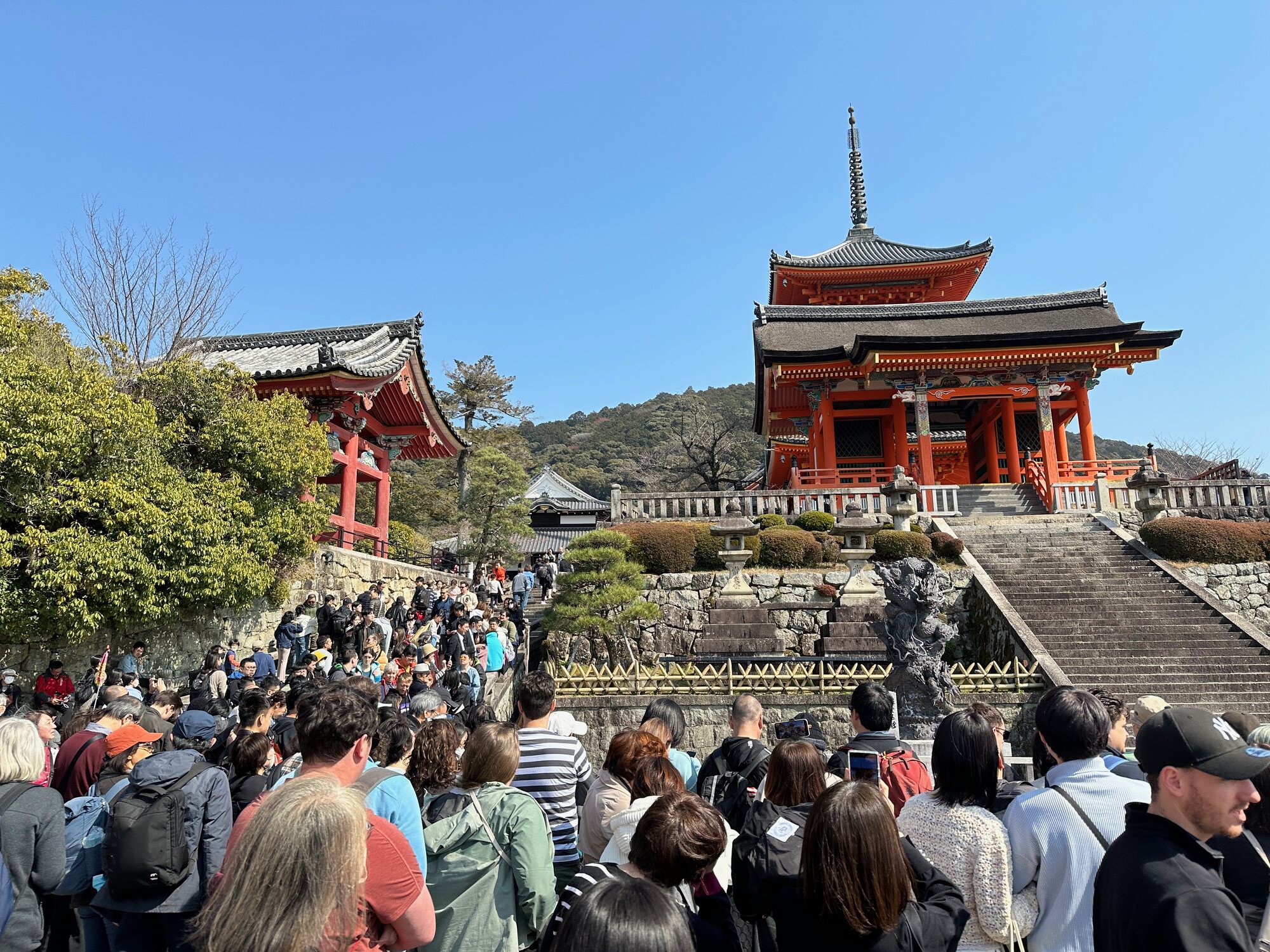
Crowd walking up the stone steps toward Kiyomizu-dera in Kyoto, Japan, with red temple halls and a clear blue sky
Crowds at Kiyomizu-dera in Kyoto

The Westin Miyako Kyoto

The Westin Miyako Kyoto is the most obvious large premium hotel in this area. It works well if you want Keage access, a full-service hotel, spa facilities, and enough scale for families or longer stays.

I would consider it for a comfortable east-side premium base. The watch-out is that it can feel more self-contained than neighborhood-led, so you should want the hotel facilities as part of the appeal.

Hotel Okura Kyoto Okazaki Bettei

Hotel Okura Kyoto Okazaki Bettei is better for travelers who want a smaller, calmer luxury stay around Okazaki. It fits couples and adults who want a softer base near museums and northern Higashiyama.

The tradeoff is rail convenience. It is not as immediately connected as Kyoto Station, Downtown, or Karasuma Oike, so I would choose it for calm and cultural access, not maximum efficiency.

Nanzenji Sando Kikusui

Nanzenji Sando Kikusui is more of a destination-style stay than a normal Kyoto base. It makes sense if you want the garden, privacy, and Nanzenji setting to be the reason for the night.

I would save it for a special one-night stay rather than use it as the default base for a busy first Kyoto trip.

Arashiyama

Arashiyama is beautiful to stay in when you treat it as its own experience. Early mornings near the river, Togetsukyo Bridge, the bamboo grove area, and nearby temples can feel very different when you are already sleeping there.

But Arashiyama is not the easiest Kyoto base for most first-time trips. It sits west of the main city core, and cross-city sightseeing takes more time. Evenings also finish earlier than in Downtown or Gion.

I would use Arashiyama as one special night or as a deliberate west-Kyoto stay. I would not usually make it the only Kyoto base if the trip includes a lot of east-side temples, restaurants, day trips, and general city movement.

Suiran, a Luxury Collection Hotel, Kyoto

Suiran is the main Arashiyama luxury choice if you want the stay itself to be the point. It fits travelers who want a high-end river-and-mountain setting and are happy to spend more for a one-night break from the city core.

This is best for couples and premium travelers. The watch-out is location: choose it because you want Arashiyama, not because you want the easiest base for all of Kyoto.

MUNI Kyoto

MUNI Kyoto is a smaller luxury choice near Togetsukyo Bridge. It works well if you want an Arashiyama stay with a more design-led hotel feel and strong food-and-river appeal.

I would look here for a one-night Arashiyama break. The same location tradeoff applies: it is better as a focused stay than as a practical base for every Kyoto day.

Togetsutei

Togetsutei is a more traditional Arashiyama ryokan-style option. It is best if you want meal timing, baths, and Japanese inn routines to be part of the stay.

I would treat it as a ryokan-style one-night choice. If you need total schedule flexibility, a regular hotel in Downtown or Kyoto Station may be easier.

Conditional Areas: Fushimi and Nishijin / Kitano

Fushimi and Nishijin can be good choices, but I would not put them beside Downtown, Kyoto Station, or Gion as default answers.

Fushimi works if your route is deliberately southbound. Maybe you want Fushimi Inari very early, Uji, Nara, or the sake district. In that case, staying closer to Fushimi can reduce backtracking. For most mixed Kyoto trips, though, it is too specialized.

Nishijin and Kitano work when you want a machiya, textile-area context, an older residential feeling, or a cultural-property stay. The tradeoff is convenience. You will likely use more buses, taxis, or careful route planning than you would from Downtown or Kyoto Station.

Wabunka can be useful when you want a private cultural stay rather than a normal hotel booking. Wabunka offers private cultural experiences and stays for international travelers in Japan, with no mixed groups. It works with Japanese artisans, cultural hosts, ryokan, and special properties, and many plans include interpreter support when the host does not speak English. Its stays are tied to places where the stay itself has cultural value, so they make the most sense when you want one special Kyoto night rather than a purely practical base.

Nishijin Fujita is a good example. It is a private machiya stay in Nishijin with Wabunka cultural add-ons available, such as tea, kimono, and geisha or maiko entertainment options depending on the plan. I would consider it for travelers who want privacy, residential Kyoto, and a stay that feels deliberately different from a normal hotel.

Kyoto Hotel Shortlist Comparison

HotelAreaBest FitStyleAccess LogicWatch-Out
Cross Hotel KyotoDowntownFirst Kyoto stay, mixed sightseeingUpper-mid city hotelStrong walkability and multiple nearby linesJR days need a transfer
THE GATE HOTEL KYOTO TAKASEGAWADowntownCouples, adults, design-led city stayUpper-mid to luxuryShijo-Kawaramachi and Gion-Shijo accessSmaller entry categories
GOOD NATURE HOTEL KYOTODowntownFamilies, groups, longer staysModern upper-mid hotelVery central Kawaramachi locationLess traditional in feel
Solaria Nishitetsu Hotel Kyoto PremierDowntown / SanjoCalmer Kamo River side stayUpper-mid hotelSanjo and Kyoto Shiyakusho-mae logicLess group-focused
Hotel Granvia KyotoKyoto StationRail, luggage, late arrivalsStation hotelInside Kyoto StationLess neighborhood character
Hotel Vischio Kyoto by GRANVIAKyoto StationPractical short stayMidrange to upper-mid hotelVery close to Kyoto StationStation-area feel
MIMARU Kyoto StationKyoto StationFamilies and groupsApartment hotelStation access with larger room logicLess full-service
Kyoto Century HotelKyoto StationStation convenience with softer serviceFull-service hotelVery close to Kyoto StationStill station-based
HOTEL THE CELESTINE KYOTO GIONGion / HigashiyamaEast-Kyoto stay with hotel comfortUpper-mid to luxury hotelWalk, taxi, and shuttle logicLess efficient for JR-heavy days
SowakaGion / HigashiyamaCouples and special occasionsLuxury heritage hotelEast-side walkingCheck child and room policies
Park Hyatt KyotoGion / HigashiyamaHigh-budget memory stayUltra-luxury hotelNinenzaka and Kodaiji locationVery expensive
ART MON ZEN KYOTOGion / SanjoArt-focused premium stayLuxury boutique hotelGion and Sanjo accessBetter for adults
Ace Hotel KyotoCentral KyotoSubway-first design stayUpper-mid to luxury hotelKarasuma OikeStyle premium
The Royal Park Hotel Iconic KyotoCentral KyotoMixed east-west sightseeingUpper-mid to luxury hotelKarasuma OikeCheck bath setup by room
Kyoto Brighton HotelCentral KyotoSpace, calm, familiesUpper-mid hotelShuttle, taxi, and subway planningLess immediate
HOTEL THE MITSUI KYOTOCentral KyotoLuxury city stayUltra-luxury hotelNijojo-maeHigh price
The Westin Miyako KyotoOkazaki / KeagePremium east-side baseLuxury hotelKeage and shuttle logicMore self-contained
Hotel Okura Kyoto Okazaki BetteiOkazakiCalm luxury staySmall luxury hotelTaxi, bus, and Keage logicLess rail-convenient
Nanzenji Sando KikusuiNanzenji / KeageDestination-style one nightLuxury inn-style stayEast-side walking and taxiNot a default base
SuiranArashiyamaPremium Arashiyama nightUltra-luxury hotelWest-Kyoto focusInefficient for all-city sightseeing
MUNI KyotoArashiyamaDesign-led one-night breakLuxury hotelTogetsukyo areaLimited evening action nearby
TogetsuteiArashiyamaRyokan-style Arashiyama stayTraditional innArashiyama focusLess flexible schedule

Ryokan, Machiya, and Wabunka-Style Experiential Stays

For most travelers, I would separate the Kyoto stay into two decisions.

First, choose the practical main base. That might be Downtown, Kyoto Station, Gion, or Central Kyoto depending on the route.

Then decide whether you want one special night. That could be a ryokan, machiya, Arashiyama hotel, cultural-property stay, or Wabunka experiential stay. I would usually not stay in a ryokan for the whole Kyoto trip unless the trip is specifically centered on that. Ryokan are often best for one night because meals, bath time, check-in pace, and service style become part of the experience.

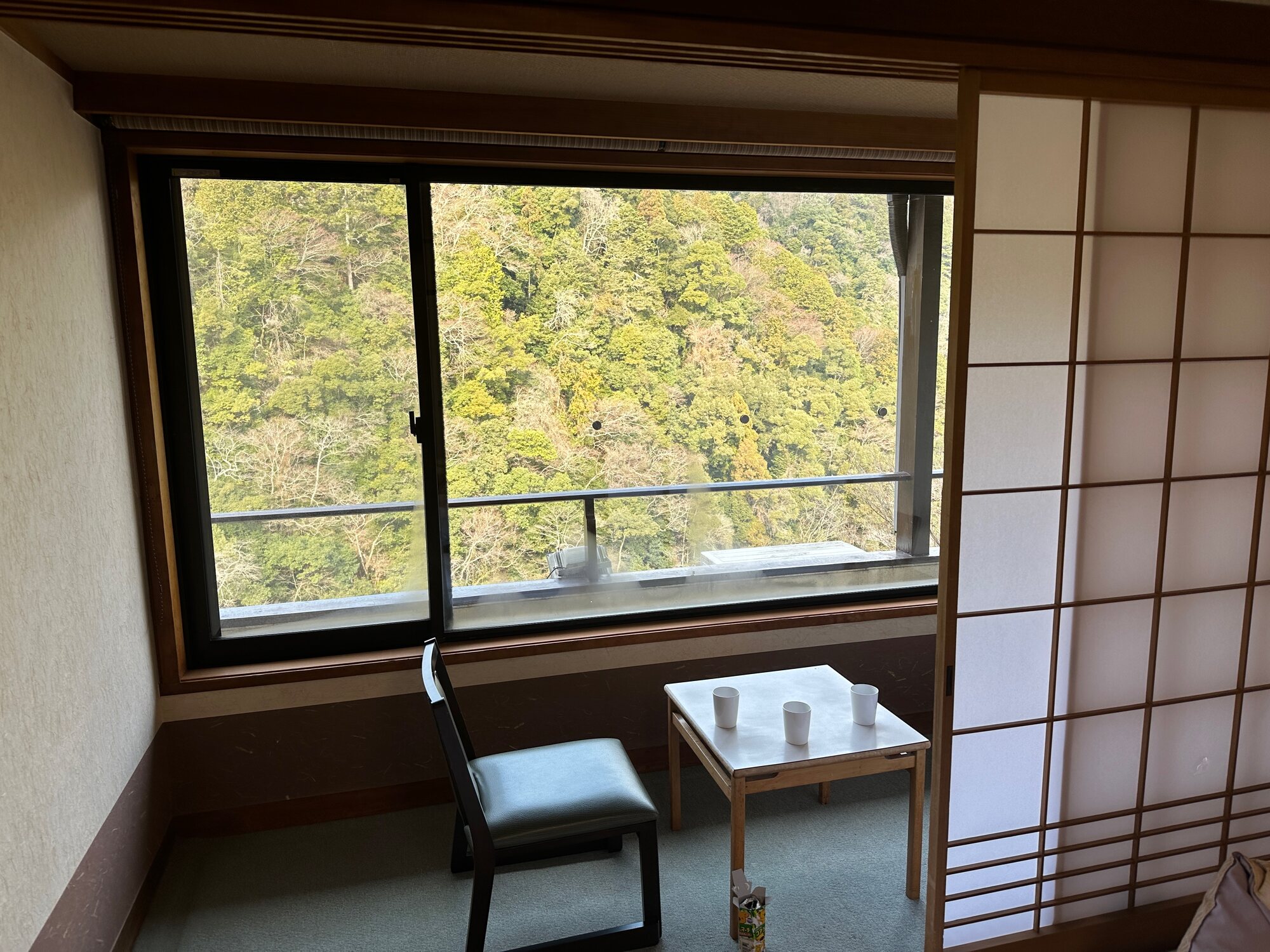
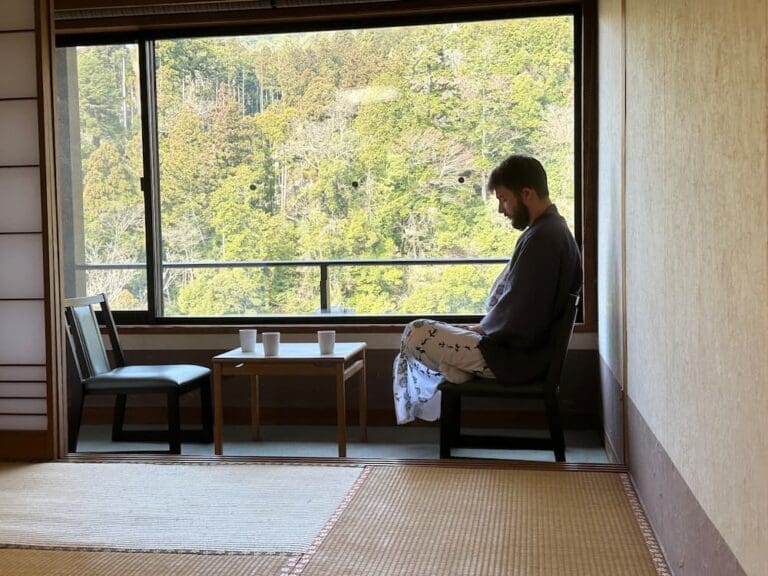
Ryokan room balcony with a table and chairs looking out onto a lush green forest
I loved the forest view from my ryokan

If you are new to this kind of stay, read my ultimate guide to staying in a ryokan in Japan before booking. It explains the practical side in more detail than this Kyoto area guide should.

Some Wabunka Kyoto stays combine accommodation with private cultural access. They are best for travelers who want a premium, private experience and are comfortable spending more for something more personal than a standard hotel booking. Wabunka is not the main hotel solution for most Kyoto trips. It is better as the one night you remember separately.

Sumiya Ryokan

Sumiya Ryokan is one of the strongest central options for a Kyoto ryokan night because it keeps the stay special without pushing you far from the city core. Wabunka’s plan includes a one-night stay, Kyoto-style breakfast, and a private tea experience at the ryokan.

Traditional tatami room and bath at Sumiya Ryokan in Kyoto
Image via Wabunka

This is the kind of stay I would consider after booking a practical main base. It works well if you want one traditional central Kyoto night rather than a full ryokan-led itinerary.

Hiiragiya

Hiiragiya is one of Kyoto’s classic high-end ryokan names. It makes sense for travelers who want a serious ryokan night in a central location and understand that the meal timing, service, and pace are part of what they are paying for.

I would save it for a deliberate special occasion or premium ryokan night. For a rail-heavy or budget-sensitive stay, a regular hotel will be easier.

Yoshida-Sanso

Yoshida-Sanso fits the Northern Higashiyama and Okazaki logic. It is better as a retreat-like night than as a convenience-first base, and the Wabunka stay adds private access and guidance around the property.

I would consider it if you want one slower, culture-led night and you are happy to let the stay set the pace.

Marufukuro

Marufukuro is different from a ryokan. It is a design hotel in the former Nintendo headquarters, so the appeal is story, architecture, and a stay that feels separate from a normal chain hotel.

This can work if you want a special hotel night without switching into ryokan rules. The location is not the same as Gion-at-night, so choose it for the property story rather than east-side walking.

Before You Book a Kyoto Hotel

Kyoto hotel pricing can change a lot by season, weekday, room type, and cancellation rules. A hotel that looks like good value in February can be much harder to justify during cherry blossom season, autumn foliage, or Gion Matsuri.

Kyoto’s accommodation tax also changed on March 1, 2026. The current official Kyoto accommodation tax page lists the tax per person, per night as:

Accommodation Fee per Person per NightTax
Under ¥6,000¥200
¥6,000 to ¥19,999¥400
¥20,000 to ¥49,999¥1,000
¥50,000 to ¥99,999¥4,000
¥100,000 or more¥10,000

That tax is not usually the main cost of the trip, but it becomes noticeable at luxury hotels and ryokan. If you are comparing Kyoto and Osaka hotel prices, or trying to work out whether a special night fits the budget, use the Japan Trip Cost Calculator as a broader planning tool.

Before booking, check these details:

  • Exact station distance: A hotel can say Kyoto Station, Gion, or Higashiyama and still be much less convenient than it sounds.
  • Room size and bedding: Twin rooms, family rooms, sofa beds, and extra-bed rules vary by property.
  • Child policies: Check this especially at ryokan, small luxury hotels, and heritage-style stays.
  • Bath wording: Public bath, onsen, private bath, spa, and in-room bath do not all mean the same thing.
  • Shuttle details: If a hotel mentions a shuttle, verify the current schedule before relying on it.
  • Luggage storage: This is one reason hotels are often easier than apartments in Japan.
  • Bus dependence: If your plan depends on buses during peak seasons, build in extra patience or adjust the route toward rail, subway, walking, taxi, or luggage forwarding.
  • Hotel moves: Moving once for a special night can be worth it. Moving several times inside Kyoto usually needs a very clear reason.

If you are planning a first Japan route and Kyoto is only one part of it, this is also where a broader 14-day Japan itinerary can help. Your Kyoto hotel should fit the whole route, not only the Kyoto section.

If Tokyo is also on your route, use the same base-first logic in my guide to where to stay in Tokyo. The details are different, but the decision is similar: choose the hotel area that makes your hardest days easier.

Final Recommendation

If your Kyoto plan is mixed and you want the safest all-round base, start with Downtown Kyoto. I would compare Cross Hotel Kyoto, THE GATE HOTEL KYOTO TAKASEGAWA, GOOD NATURE HOTEL KYOTO, and Solaria Nishitetsu Hotel Kyoto Premier first.

If the trip has many trains, day trips, suitcases, kids, late arrivals, or early departures, choose Kyoto Station. Hotel Granvia Kyoto, Hotel Vischio Kyoto by GRANVIA, MIMARU Kyoto Station, and Kyoto Century Hotel all fit that logic in different ways.

If the trip is mainly about east-side temples, traditional streets, evening walks, and a more Kyoto-specific hotel feeling, choose Gion or Southern Higashiyama. Just accept that you are trading some convenience for that experience.

For longer, calmer, or more premium stays, look at Central Kyoto or Okazaki / Keage. For one special night, consider Arashiyama, a central ryokan, Nishijin Fujita, or another Wabunka-style experiential stay.

My simple rule is this: book the hotel that makes your hardest travel days easier, then add one special Kyoto night only if it improves the trip.

If you can choose only one Kansai base for a first trip to Japan, I would usually stay in Kyoto.

Osaka is still a good choice for the right trip. It is fun, easier for some airports and day trips, and much better if you want repeated late nights around Namba, Dotonbori, or Shinsaibashi. But for most first-time travelers, Kyoto is the city you will probably want to wake up in more often.

The practical reason is simple: Kyoto rewards early starts. If your trip includes Fushimi Inari, Higashiyama, Gion, Arashiyama, temples, gardens, tea, or geisha-related experiences, sleeping in Kyoto makes those days easier. Osaka is easy enough to visit from the right Kyoto base for an evening or a full day.

I would stay in Osaka instead if your trip is genuinely Osaka-led: late-night food and bars, Universal Studios Japan, an early or late Kansai International Airport flight, better hotel value on your dates, or several westward day trips like Kobe, Himeji, Hiroshima, or Koyasan.

A split stay can work too, but I would only do it when the Osaka stay has a real purpose. Moving hotels for one casual Osaka dinner usually adds more friction than it removes.

Some links on YavaJapan are affiliate links. If you book or buy through them, I may earn a small commission at no extra cost to you. It helps support the site, and I only link to places, stays, and experiences I genuinely think are worth recommending.

At a Glance

Best ChoiceWorks Best IfWatch-Out
KyotoYour trip is Kyoto-heavy, this is your first Kansai visit, or you want easier early startsKyoto hotels can be expensive in spring, autumn, and high-demand periods
OsakaYou want repeated late nights, USJ, KIX or Itami convenience, better hotel value, or westward day tripsIt is weaker if most mornings start in Kyoto
Split stayYou have 5+ Kansai nights and at least 2 Osaka-focused nights, or airport and rail logistics make the move usefulOne casual Osaka evening rarely justifies changing hotels

My short version: stay in Kyoto by default, stay in Osaka when Osaka will actually carry the trip, and split only when the hotel move improves real days rather than just sounding balanced on paper.

The Main Rule: Choose the Base That Makes Your Hardest Days Easier

This is a base decision, not a city ranking.

When people compare Kyoto and Osaka, they often talk about which city is more traditional, more fun, cheaper, or better for food. That can help, but it misses the main travel question: where is it most useful to wake up, return at night, and handle your bags?

For many first-time travelers, the hardest days are Kyoto days. Kyoto sightseeing often works better when you start early, avoid the busiest hours where possible, and keep your route simple. Staying in Kyoto helps with that.

Osaka is different. It is very easy to enjoy as a planned day or evening from Kyoto, especially if your Kyoto hotel is near Kyoto Station, Kawaramachi, Sanjo, or another useful rail connection. If you want one Osaka food night, one Dotonbori walk, or one day in Osaka, you probably do not need to move hotels.

Osaka becomes stronger when the hard parts of your trip point west or late: USJ, KIX, Itami, Minami nightlife, Kobe, Himeji, Hiroshima, Koyasan, or repeated Osaka evenings. In that case, sleeping in Osaka can stop the trip from turning into daily backtracking.

This is the same logic I use when helping travelers plan Japan routes more broadly: convenience is not boring. It affects how the trip feels every morning and every night. If you are still shaping the full route, my Plan Your Trip to Japan guide and 14-day Japan itinerary are useful next reads.

Hotel Area Changes the Decision More Than People Expect

The phrase you will see everywhere is that Kyoto and Osaka are only about 30 minutes apart by train. That can be true for a simple Osaka Station to Kyoto Station trip on JR, but it is only one version of the journey.

But most travelers do not sleep on the platform at Osaka Station and step directly onto the platform at Kyoto Station. You still need to walk from the hotel, navigate the station, transfer if needed, reach the sightseeing area, and do the same thing again at night.

That is why area-to-area logic is more useful than city-to-city advice.

Kyoto Station

Kyoto Station is the logistics-first Kyoto base.

Stay here if you want simpler arrivals, easier luggage handling, shinkansen access, airport rail, or day trips that start from JR. It is especially practical if your Kansai stay includes Nara, Uji, Hiroshima, Himeji, or onward travel toward Tokyo or western Japan.

JR Kyoto Station entrance with large JR and 京都 signs and a crowd of travelers in the foreground
Kyoto Station entrance felt busy

The tradeoff is that Kyoto Station does not give you the same old-city feeling as Gion or Higashiyama. You can still eat well and move around easily, but you may not step outside the hotel and immediately feel like you are in the Kyoto you pictured.

Gion, Kawaramachi, and Sanjo

This is the old-city Kyoto base I would check if evenings, walks, restaurants, and access to eastern Kyoto rank above pure train efficiency.

Kawaramachi, Pontocho, Kiyamachi, Sanjo, and the Gion edge put you near dining, bars, the Kamo River, shopping streets, and easy walks into older parts of the city. This is also a good reply to the idea that Kyoto has no evening life. Kyoto may not have Osaka’s late-night intensity, but it is not empty at night if you stay in the right area.

Crowds walking down a traditional street in Kyoto’s Gion district, lined with old wooden buildings and red lantern banners
Gion street feels wonderfully lively

The caution is transport. Some hotels here are excellent for Hankyu or Keihan lines, but less convenient for JR-heavy days. Check the exact station near your hotel, not only the neighborhood name.

Umeda and Osaka Station

Umeda and Osaka Station are the transport-first Osaka base.

If you stay in Osaka but still want to visit Kyoto, this is usually the cleaner Osaka choice. JR gives good access to Kyoto Station, and Hankyu works well for downtown Kyoto around Kawaramachi. Umeda is also strong for Kobe, Himeji, Shin-Osaka, shopping, and general city access.

The tradeoff is that Umeda is not the same as staying near Dotonbori. It has plenty of food and nightlife, but if your dream Osaka nights are in Minami, Namba or Shinsaibashi may feel more natural.

Namba and Shinsaibashi

Namba and Shinsaibashi are the nightlife and food-led Osaka base.

Stay here if you want to finish multiple nights around Dotonbori, Hozenji, Shinsaibashi, Nippombashi, or nearby bar and food areas without thinking about the last train back to Kyoto. This is also one of the best Osaka-side choices for Kansai International Airport because Nankai’s Rapi:t connects Namba and KIX in as little as 34 minutes, according to Nankai Electric Railway.

The caution is Kyoto access. Namba is workable for Kyoto, but repeated Kyoto starts from Namba usually feel less clean than staying in Umeda or Kyoto itself.

Shin-Osaka

Shin-Osaka is a rail-first base with a narrow use case.

It can be smart if you have early shinkansen departures, a Hiroshima day trip, a rail-heavy itinerary, or an airport leg that works better from Shin-Osaka. It is not where I would stay for a first Kansai trip if the goal is to enjoy Kyoto or Osaka evenings.

Think of Shin-Osaka as practical. Useful, sometimes exactly right, but rarely the most satisfying main base for the holiday itself.

Stay in Kyoto If Kyoto Is the Main Reason You Are in Kansai

Kyoto is my default recommendation because, for most first-time travelers, Kyoto is the stronger reason to be in Kansai.

If your list includes Fushimi Inari, Kiyomizu-dera, Higashiyama, Gion, Arashiyama, gardens, temples, tea, traditional streets, or geisha-related experiences, staying in Kyoto makes the trip easier. You can start earlier, return to the hotel between plans more easily, and avoid making Kyoto feel like a commute.

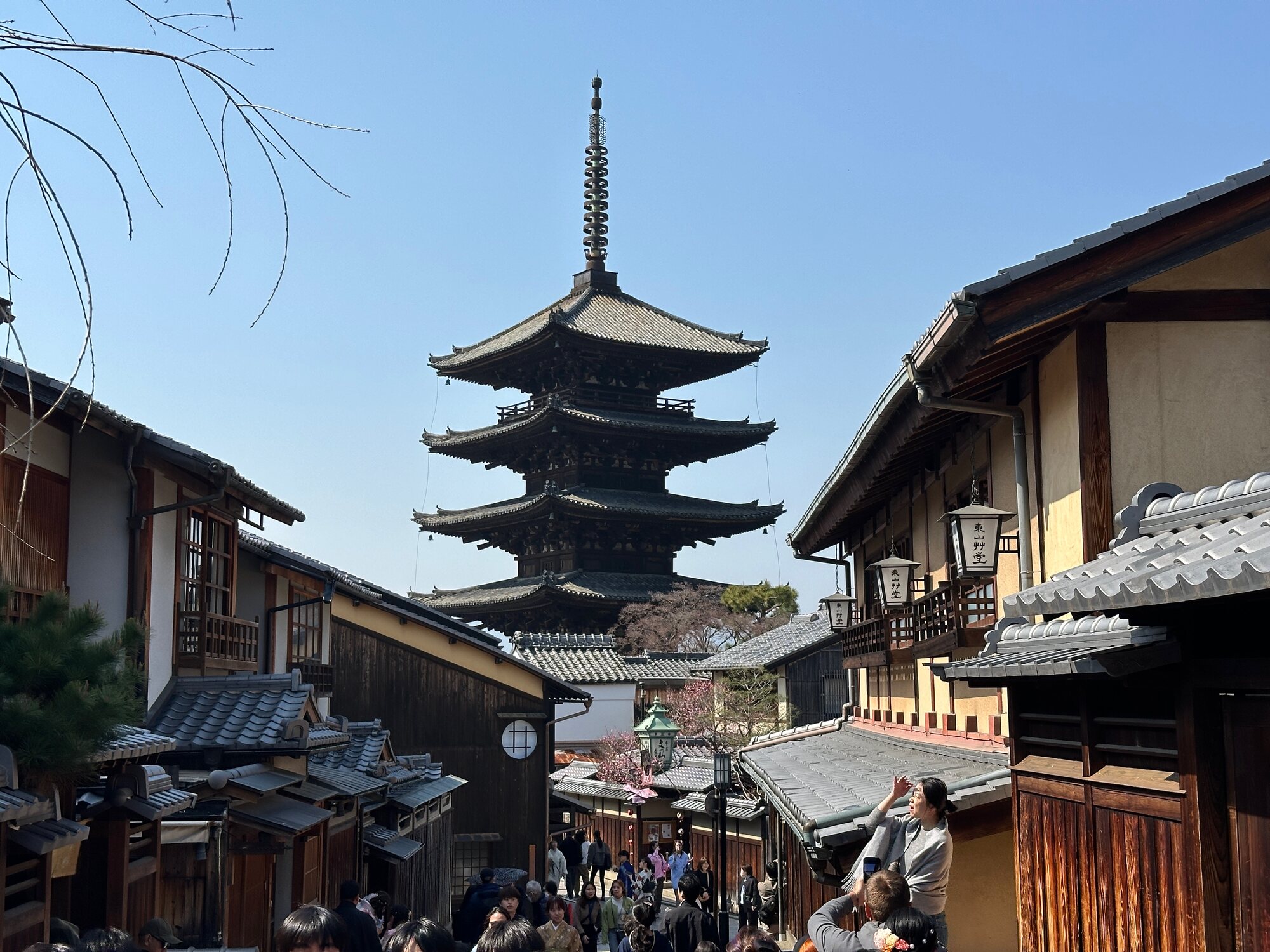
A five-story pagoda rising above a street lined with traditional buildings in Kyoto’s Yasaka area, with people gathered below.
Kyoto’s Yasaka pagoda street buzz

This is especially true with 3 to 4 Kansai nights. With that little time, I would rather keep one base and make Kyoto easy than spend energy changing hotels.

Kyoto is also better than many people expect in the evening. If you stay around Kawaramachi, Pontocho, Sanjo, Kiyamachi, or the Gion side, you will have restaurants, cafes, bars, riverside walks, and late enough options for most travelers. Osaka still has the stronger late-night food and drinking culture, but Kyoto is not a place where you need to go back to the hotel at 20:00.

If Kyoto is your base because you care about cultural experiences, you can connect the stay decision with the rest of your trip. For example, I would look at a tea ceremony in Kyoto, a geisha-related experience, or, for a higher-end evening, a private geisha dinner in Kyoto. If you want the accommodation itself to become part of the trip, my ryokan guide is also worth reading before you book.

Choose Kyoto if:

  • This is your first Kansai stay and Kyoto is high on your list.
  • Your side trips are mostly Osaka, Uji, and maybe Nara.
  • You want calmer evenings without giving up restaurants and bars.
  • You are traveling with kids and want simpler mornings.
  • You would rather visit Osaka once or twice than return from Kyoto every day.

Stay in Osaka If Osaka Will Actually Carry the Trip

Osaka is the better base when the city itself is a real part of the trip, rather than only a cheaper place to sleep.

I would stay in Osaka if you want repeated late nights around Namba, Dotonbori, Shinsaibashi, or nearby food and bar areas. In that situation, sleeping in Kyoto can become annoying. You have to keep checking train times, end the night earlier, or deal with a longer return when you are tired.

Osaka is also the stronger base for Universal Studios Japan. If USJ is one of your biggest Kansai priorities, staying in Osaka, at least for that part of the trip, can make the day easier.

Airport logic can point toward Osaka too. Namba is strong for KIX through Nankai. Umeda, Namba, and Shin-Osaka are all useful for Itami, and the Osaka International Airport bus access page lists direct Osaka-side routes that are easier than Kyoto for many travelers. Kyoto Station can still work for many flights, but if your flight is very early or very late, Osaka may reduce stress.

Day trips can also move the balance. Osaka is usually stronger for Kobe, Himeji, Koyasan, USJ, and some Hiroshima day-trip logic. Kyoto is still possible for many of these, especially if you stay at Kyoto Station, but Osaka gives you a better starting point when the trip keeps pulling west or south.

Osaka also has culture and history. Osaka Castle, Sumiyoshi Taisha, Shitennoji, museums, neighborhoods, markets, and food culture can all be part of a good trip. I would not frame Osaka as only nightlife. The better question is whether those Osaka experiences are central enough to justify sleeping there.

Choose Osaka if:

  • You want multiple late Osaka nights.
  • USJ is a headline priority.
  • Your flight timing makes KIX or Itami access important.
  • You are doing several westward or Osaka-side day trips.
  • Kyoto hotels are far more expensive on your exact dates.
  • You genuinely prefer Osaka’s city energy and do not mind making Kyoto a full-day trip.

Split Kyoto and Osaka If the Hotel Move Earns Its Keep

I like split stays when they solve a real problem. I do not like them when they are added only because both cities sound worth seeing.

Moving hotels costs time. You pack, check out, store or forward luggage, travel, wait until check-in, and reset the room. Even if the train between the cities is short, the hotel move can take a noticeable part of the day.

For 3 to 4 Kansai nights, I would usually choose one base. Kyoto is the default if Kyoto is the priority. Osaka is fine if your trip is Osaka-led, nightlife-led, USJ-led, or airport-led.

For 5+ Kansai nights, a split starts to make more sense. I would consider it if you have at least 2 Osaka-focused nights. For example:

  • 3 nights Kyoto + 2 nights Osaka for Kyoto sightseeing plus Osaka nightlife
  • 4 nights Kyoto + 2 nights Osaka if you want USJ, Minami nights, and KIX access
  • Kyoto first, then Osaka before an early KIX flight
  • Kyoto first, then Shin-Osaka or Umeda before a westward shinkansen route

The strongest reason to sleep in Osaka is nightlife. If you plan to drink, eat late, or stay around Minami until late, having your hotel nearby is much nicer than watching the clock for the last train.

The weakest reason is vague fear of missing Osaka. If you mainly want Kyoto, stay in Kyoto and plan one proper Osaka evening or day. That usually solves the problem without adding another hotel change.

Kansai NightsBest Base PlanWhy
2 nightsUsually KyotoToo short to spend energy moving hotels
3 to 4 nightsUsually one baseKyoto by default, Osaka if the trip is Osaka-led
5+ nightsKyoto or a splitSplit if 2+ nights are genuinely Osaka-focused
Early or late KIX flightConsider Osaka last nightNamba or Shin-Osaka may make departure easier
USJ plus Osaka nightsConsider OsakaThe Osaka base improves real days

Day Trips and Airport Logic

Day trips and airport plans can change the base decision quickly. If your Kansai stay is mostly Kyoto sightseeing, stay in Kyoto. If your stay is full of Osaka-side and westward trips, Osaka becomes more persuasive.

Use this as a planning table, not as a promise that the other city is impossible.

Train car display showing route information for Kyoto, with the next stop for Kobe and Kakogawa
Kyoto route info on the train
Destination or AirportBetter BasePractical NoteWhen the Other Base Still Works
UjiKyotoKyoto is the cleanest start, especially from Kyoto Station or Keihan-side areasOsaka works, but it is a longer outing
NaraEitherKyoto Station and Osaka-Namba are both strongUmeda works, but it is not the neatest Osaka start
KobeOsakaUmeda/Osaka Station is especially usefulKyoto works if Kobe is only one day and your hotel is near Kyoto Station
HimejiOsakaOsaka or Shin-Osaka is usually easierKyoto Station can work if you use the right train
HiroshimaOsaka or Shin-OsakaShin-Osaka is the cleaner rail baseKyoto Station can still work, but the day is long
KoyasanOsakaNamba-side access is much betterKyoto is possible, but usually more awkward
USJOsakaThis is one of the clearest Osaka winsKyoto works if USJ is only one day and you accept the longer return
KIXOsakaNamba and Shin-Osaka are strong depending on routeKyoto Station works for many normal flight times
ItamiOsakaUmeda, Namba, and Shin-Osaka are more convenientKyoto can work, but allow more time

If one of these places is central to your trip, let it influence the base. If it is just a single optional day, do not let it overturn the whole stay decision.

Is Osaka Worth Using as a Cheaper Base for Kyoto?

Sometimes, yes. But I would not assume it automatically.

Kyoto hotels can become expensive and harder to book in cherry blossom season, autumn foliage season, Golden Week-style holiday periods, and weekends with strong demand. From March 1, 2026, Kyoto’s accommodation tax also became more noticeable above the lowest rate bands, with the updated structure listed by Kyoto City.

So if Kyoto prices are high on your exact dates, Osaka can be a sensible fallback.

But the savings need to be meaningful. If Osaka saves you only a small amount per night, the extra transport, longer mornings, and later returns may not be worth it for a Kyoto-heavy trip. This is especially true if your Osaka hotel is in Namba and most days begin in eastern Kyoto.

I would compare:

  • The total hotel price for your exact dates
  • The extra train cost for your party
  • How many days actually start in Kyoto
  • Whether you are willing to leave earlier each morning
  • Whether you will come back late with tired legs or kids
  • Whether Osaka adds value beyond price

If Osaka is much cheaper and you also want Osaka nights, USJ, KIX, or westward day trips, the Osaka base can make sense. If your real trip is Kyoto, and Osaka is only cheaper by a little, I would try hard to stay in Kyoto.

Where I Would Book by Priority

This is not meant to be a full Kyoto hotel guide or Osaka hotel guide. Think of it as a starting matrix: choose the area first, then compare hotel prices and room types on your actual dates.

Ryokan room balcony with a table and chairs looking out onto a lush green forest
I loved the forest view from my ryokan

If Kyoto Is Your Base

If one of these Kyoto examples fits, use the links to compare current prices and room types, then choose by area fit first.

PriorityArea to CheckHotel ExampleNotes
Kyoto atmosphere and walkingSouthern Higashiyama or Gion sideNOHGA Hotel Kiyomizu KyotoGood if you want Kyoto culture close by, weaker for rail-first logistics
Transport and day tripsKyoto StationHotel Granvia KyotoVery easy for trains, luggage, airport rail, and onward travel
Kyoto eveningsKawaramachi, Sanjo, Pontocho edgeCross Hotel KyotoStrong for restaurants, bars, shopping, and walking into Gion
Families and groupsKyoto Station Hachijo sideMIMARU Kyoto StationApartment-style rooms work well when space and simple logistics count
BudgetKyoto Station south side or GojoPiece Hostel KyotoGood for social or budget travelers, not for a full-service hotel feel

For a first-time Kyoto-heavy trip, I would usually start with Kyoto Station for logistics or Kawaramachi/Sanjo/Gion-side areas for evenings and walking. Southern Higashiyama is lovely for the Kyoto feeling, but make sure the exact hotel location does not make every rail day harder.

If Osaka Is Your Base

If one of these Osaka examples fits, use the links to compare prices and room types for your actual dates, then check whether the area matches the kind of Osaka stay you want.

PriorityArea to CheckHotel ExampleNotes
Nightlife and foodNamba, Shinsaibashi, Dotonbori edgesCross Hotel OsakaVery central for Minami nights, but expect crowds nearby
Transport and day tripsUmeda or Osaka StationHotel Hankyu RESPIRE OsakaStrong if Osaka is your base but Kyoto and Kobe are still important
Rail-first logisticsShin-Osakakaraksa hotel grande Shin-Osaka TowerBest when trains and airport access are the reason for staying here
Calmer family convenienceTenmabashi, Kitahama, Osaka Castle sideHotel Keihan Tenmabashi EkimaeMore practical than flashy, with easier access and less late-night intensity
BudgetNippombashi or Namba edgesSotetsu Grand Fresa Osaka-NambaUseful location and value, but check room size carefully

For Osaka, the biggest decision is Umeda versus Namba. Umeda is better for transport. Namba is better for late nights and food. Shin-Osaka is best when the train plan is doing the work, not when you want a memorable Osaka neighborhood.

Common Scenarios

You Have 3 to 4 Kansai Nights

Choose one base in most cases.

If this is a first trip and Kyoto is your priority, stay in Kyoto. You can still plan one Osaka evening or one Osaka day without moving hotels.

Stay in Osaka only if the trip is clearly Osaka-led: USJ, late nights, KIX, or a major price difference on your dates.

You Have 5+ Kansai Nights

Kyoto can still work as a single base if your trip is Kyoto-heavy.

A split stay becomes more reasonable when you can give Osaka at least 2 focused nights. That might mean one USJ day plus one Minami night, or several Osaka and westward day trips.

If the second hotel does not improve at least two real days, I would usually keep one base.

You Are Traveling With Kids

I would prioritize fewer transfers, easier mornings, room size, and predictable station access.

For a Kyoto-heavy family trip, Kyoto Station, the Hachijo side, or a calmer central Kyoto area often works better than a romantic but awkward location. For an Osaka-heavy family trip, Umeda, Tenmabashi, Kitahama, or the Osaka Castle side can be easier than staying in the middle of Minami.

If USJ is one of the main reasons for the trip, Osaka gets much stronger.

You Care Most About Nightlife and Food

Stay in Osaka, especially around Namba or Shinsaibashi edges, if you expect multiple late nights.

Stay in Kyoto if you want good dinners, bars, and evening walks, but not a heavy late-night trip. Kawaramachi, Pontocho, Kiyamachi, Sanjo, and Gion-side areas give Kyoto enough evening life for many travelers.

The real question is how many nights you will actually end late.

You Are Watching the Budget Closely

Compare exact dates before deciding. If you are trying to judge whether the hotel saving is real, the Japan trip cost calculator can help you compare the stay cost against the rest of the trip.

Osaka can be the better value, especially during high-demand Kyoto periods. But if your trip is mainly Kyoto, small nightly savings can disappear into transport time and daily friction.

If Kyoto is only a little more expensive, I would usually pay for the Kyoto base. If Kyoto prices jump hard, Osaka becomes easier to justify.

You Have an Early or Late KIX Flight

Osaka often wins here, especially Namba or Shin-Osaka depending on your route.

If the rest of the trip is Kyoto-heavy and your flight is at a normal time, Kyoto Station can still work. If the flight is very early, very late, or stressful with kids and luggage, consider moving to Osaka or an airport-linked hotel for the final night.

You Mainly Want Kyoto but Worry About Missing Osaka

Stay in Kyoto and plan Osaka properly.

Do one full Osaka day, or go in the afternoon and stay for dinner around Namba or Dotonbori. If you choose a Kyoto hotel with good access, that can give you enough Osaka without turning the whole stay into an Osaka base.

Do not move hotels just to solve vague anxiety. Move only when Osaka will meaningfully improve the trip.

FAQs

Is It Better to Stay in Kyoto or Osaka for a First Trip?

For most first-time travelers, Kyoto is the better default. It is usually the higher-priority city, and staying there makes Kyoto mornings easier.

Osaka is better if your trip is nightlife-led, USJ-led, airport-led, budget-led, or focused on several Osaka-side and westward day trips.

Is Osaka Cheaper Than Kyoto for Hotels?

Often, but not always in a way that changes the decision.

Osaka usually has broader hotel value, while Kyoto can be more expensive in spring, autumn, and other high-demand periods. Still, compare your exact dates. A modest Osaka saving may not be worth commuting into Kyoto every day.

Can I Visit Kyoto From Osaka Every Day?

Yes, you can. Many travelers do.

But I would only do that if Osaka is genuinely the better base for your trip. If most days are Kyoto days, staying in Kyoto is usually easier.

Can I Visit Osaka From Kyoto at Night?

Yes. A planned Osaka evening from Kyoto can work well, especially if your Kyoto hotel has good access.

One planned Osaka evening from Kyoto is different from doing the same late return several times after food and drinks. If that is the trip you want, stay in Osaka for those nights.

Should I Split My Stay Between Kyoto and Osaka?

Split if you have enough time and a clear reason.

For me, that usually means 5+ Kansai nights and at least 2 Osaka-focused nights, or a route where sleeping in Osaka helps with KIX, Shin-Osaka, USJ, or late-night plans.

Is Kyoto Too Calm at Night?

Not if you choose the right area.

Kyoto is calmer than Osaka overall, but Kawaramachi, Pontocho, Kiyamachi, Sanjo, and Gion-side areas have plenty of restaurants, bars, and evening walks for many travelers.

Is Osaka Good If I Care About Culture and History?

Yes. Osaka has historic sites, shrines, temples, museums, neighborhoods, and a strong food culture.

Kyoto is still the stronger default for a culture-heavy first Kansai trip, but Osaka should not be reduced to food and nightlife only.

Which Is Better for Nara, Kyoto or Osaka?

Both can work. Kyoto Station and Osaka-Namba are both good starts for Nara.

If Nara is your only day trip, I would not choose the whole base around it. If your trip also includes Uji and Kyoto sightseeing, Kyoto gets stronger. If it also includes Namba, Koyasan, or Osaka evenings, Osaka may fit better.

Which Is Better for USJ, Kyoto or Osaka?

Osaka is better for USJ.

You can visit USJ from Kyoto, but if USJ is a major part of the trip, staying in Osaka saves time and makes the day easier.

Which Is Better for KIX, Kyoto or Osaka?

Osaka is usually easier for KIX, especially Namba or Shin-Osaka.

Kyoto Station can still work for many flights, but for very early or late departures I would seriously consider an Osaka-side final night.

Is Shin-Osaka a Good Place to Stay?

Shin-Osaka is good when trains are the point.

Stay there for shinkansen access, certain airport routes, or a rail-heavy plan. I would not choose it for Kyoto atmosphere, Osaka nightlife, or a first-time leisure base unless the logistics clearly justify it.

Where Should I Stay If I Have Only 3 Nights in Kansai?

Stay in one place.

For most first-time travelers, that means Kyoto. Choose Osaka instead if USJ, late-night Osaka, KIX timing, or hotel prices are the main drivers.

Final Recommendation

If this is your first Kansai trip and you can choose only one base, I would stay in Kyoto.

Kyoto is usually the place most first-time travelers will want more time with, and staying there makes the best Kyoto days easier. Osaka is still worth visiting, but it does not automatically need to be where you sleep.

Choose Osaka when your real priorities point there: late-night food and bars, USJ, KIX or Itami, better hotel value, Koyasan, Kobe, Himeji, Hiroshima, or several Osaka-focused days.

Choose a split stay only when the second hotel improves at least two real days or solves a major route problem. If it only sounds balanced, I would keep one base.

For the broader route, start with where to go in Japan and the 14-day Japan itinerary. If you are choosing stays more carefully across the trip, compare this with where to stay in Tokyo and the guide to staying in a ryokan.

If you want to do a tea ceremony in Kyoto, the main thing is not just booking the highest-rated option you can find. It is choosing the right format for the kind of experience you actually want.

Some tea ceremonies are basically a short cultural activity with matcha, sweets, and a few explanations in English. Others feel much more personal and memorable, especially when they are private and led by people with serious training. Both can be fine. The mistake is assuming they are all roughly the same.

I have worked in the Japan travel industry since 2019 and seen a lot of visitors add tea ceremony to their Kyoto plan almost automatically. Some end up loving it. Some come out a bit underwhelmed. Usually the difference is not tea ceremony itself. It is the specific experience they booked.

If you are still comparing this with other activities, start with my broader guide to the best cultural experiences in Japan.

Some links on YavaJapan are affiliate links. If you book or buy through them, I may earn a small commission at no extra cost to you. It helps support the site, and I only link to places, stays, and experiences I genuinely think are worth recommending.

At a Glance

If you just want the short version:

Japanese tea ceremony setup with cast-iron kettle on brazier, bamboo ladle, tea bowls, and tea caddy on tatami in a tea room
Such a peaceful tea ceremony setting

Kyoto Tea Ceremony Experiences Compared

Choosing a tea ceremony in Kyoto is less about finding one universal winner and more about matching the format to your budget, schedule, and patience level. Some sessions are private and genuinely calm. Others are more like an easy cultural activity with some nice photos attached.

The table below is still the best way to compare the options quickly before you read the detailed recommendations.

ExperienceAreaPrice LevelFormatBest ForBooking
Towa RyokanKyoto Station areaPremiumPrivate with interpreterBest overall serious tea ceremonyWabunka
Nakamura TokichiUjiPremiumPrivate with interpreterBest if you are already going to UjiWabunka
Sasara-an TearoomShimogyo WardPremiumPrivate with interpreterBest if sweets matter to you tooWabunka
Geisha (Maiko) Tea Ceremony & ShowHigashiyamaMid-rangeGroup show plus tea ceremonyBest if you specifically want a geisha or maikoOfficial website
Maikoya Tea Ceremony KyotoCentral KyotoMid-rangeSmall groupBest mid-range pickGetYourGuide
Matcha Tea Ceremony at Anko-anKita WardMid-rangeMixed groupBest if you want a quieter residential settingKlook
Tea Ceremony Ju-AnShimogyo WardBudgetGroupBest budget optionGetYourGuide
Nishiki OrizuruyaCentral KyotoBudgetGroupBest if you care about central locationViator

My Top Picks in Kyoto

My Top Pick in Kyoto: Towa Ryokan

If I had to recommend just one tea ceremony in Kyoto, this is the one I would look at first.

It is booked through Wabunka, a Japan-based site for international travelers looking for private cultural experiences and stays that feel much more personal than standard tours. Their experiences are private for your group only, and when the host does not speak English, they include an interpreter so the exchange still feels smooth and natural.

I have worked with Wabunka and featured several of their experiences on YavaJapan already. They are consistently the platform I trust most when someone wants a more traditional, deeper experience instead of a standard tourist class.

Towa Ryokan works especially well because it gets the practical side right too. It is near Kyoto Station, the session length is solid, the setting feels properly calm, and the whole experience is private. If tea ceremony is one of the experiences you care about most on this trip, this is where I would start.

Woman in kimono serving tea in a tatami room with shoji screens at Towa Ryokan
Warm hospitality at Towa Ryokan. Photo credit: Wabunka

Best if You Are Already Going to Uji: Nakamura Tokichi

If your Kyoto itinerary already includes Uji, this is one of the most interesting tea-related experiences on the list.

The appeal here is not just tea ceremony itself. You are stepping into a historic tea merchant setting, spending more time on the experience, and getting something that feels closer to a tea-focused cultural visit than a quick introduction for tourists. It is less convenient than staying inside central Kyoto, but I do think it is worth the detour for people who are genuinely interested in tea.

Best if You Specifically Want Tea with a Geisha or Maiko

This is a different kind of recommendation from the private Wabunka experiences above, but I do think it deserves a place near the top because a lot of travelers are specifically looking for tea ceremony with a geisha or maiko.

Geisha (Maiko) Tea Ceremony & Show in Kyoto Gion Kiyomizu is more staged and more packaged than the best private tea ceremonies in Kyoto, but that is also exactly why it works for the right person. You are booking it because you want that specific combination of tea, performance, and interaction, not because it is the most serious tea-school style session in the city.

If the geisha side is the part you care about most, my guide to where to see geisha in Kyoto is the better next read.

Best Mid-range Pick: Maikoya Tea Ceremony Kyoto

If you want something noticeably better than the cheapest tea ceremony options, but you do not want to pay Wabunka prices, Maikoya Tea Ceremony Kyoto is probably the cleanest compromise.

It is still much more geared toward visitors than the top private picks above, but the small-group format and calmer feel make it easier to recommend than the most generic classes. If you want a tea ceremony that still feels pleasant and reasonably polished without turning into a major splurge, this is probably where I would start.

Best Budget Pick: Tea Ceremony Ju-An at Jotokuji Temple

If price is the deciding factor, Tea Ceremony Ju-An at Jotokuji Temple is the easiest low-cost choice.

It is a short, more introductory group experience, so I would look at it as an accessible first taste of tea ceremony rather than the most memorable version of it.

Is Tea Ceremony in Kyoto Worth It?

Yes, I think tea ceremony in Kyoto can absolutely be worth it, but only if you book it for the right reason.

If your goal is simply to tick off one famous Kyoto activity, the cheapest short group class is usually enough. But if you are hoping for something calm, memorable, and less touristy, then the difference between a basic tea demo and a genuinely good private experience is huge.

That is why I would not treat this like a filler activity between temples. A good tea ceremony changes the pace of your day in a way that actually feels good. A weak one just gives you matcha, a few explanations, and a couple of photos.

What to Look for Before Booking

Private or Group

This is the first thing I would check.

If you care about atmosphere, privacy matters a lot. A tea ceremony with only your group feels very different from sitting with eight or ten strangers while someone rushes through the explanation in English.

Location

If several options look similar, I would choose by location.

  • central Kyoto convenience
  • a more special detour to Uji

Uji is worth it for the right person, but I would not automatically add the extra travel time unless tea is already a real interest for you.

What the Session Actually Includes

A lot of tea ceremony listings sound similar until you look closely.

  • tea
  • sweets
  • simple explanation
  • maybe kimono

Others include longer duration, stronger host credentials, a more serious setting, private interpretation support, and a format that feels much more personal. That difference is what you are really paying for.

Japanese tea ceremony room with tatami mats, a tokonoma alcove displaying a calligraphy scroll and a bonsai on a wooden stand
I love this calm tea room vibe

A Short Note on Tea Ceremony in Kyoto

Kyoto really is the natural place to do this experience. The city’s link to tea ceremony is not just marketing. The major tea-school lineages are rooted here, and Kyoto still has the strongest ecosystem of tea rooms, teachers, utensils, sweets, and related cultural spaces.

That said, I would keep the historical part in perspective as a traveler. You do not need to understand every tea-school distinction before booking. What matters much more is whether the session you choose matches the kind of Kyoto moment you actually want.

Best Picks by Traveler Type

The Bottom Line

If you want the best tea ceremony experience in Kyoto, I would start with Towa Ryokan.

If you are already planning to visit Uji, Nakamura Tokichi becomes a very strong choice.

If you want to spend less, Maikoya Tea Ceremony Kyoto and Tea Ceremony Ju-An are the two I would look at first depending on how tight your budget is.

The main thing is not choosing the most famous listing. It is choosing the one that fits how you want this part of your Kyoto trip to feel.

Tea ceremony at Sakaguchian teahouse, woman in kimono kneeling on tatami with windows opening to a lush Japanese garden
Quiet moment in Sakaguchian teahouse garden (Viator)

If your goal is to see geisha in Kyoto, there are much better ways to do it than hovering around Gion and hoping to catch a quick photo.

You can still see geiko and maiko in Kyoto, but the useful question is not just where. It is how. Some options are free and public. Some are stage performances. Some are easier paid experiences. And a few are genuinely special private experiences if this is something you care about enough to spend on properly.

If you are still choosing between geisha, tea, crafts, and other trip highlights, start with my broader guide to cultural experiences in Japan.

The options run from the easiest and most accessible to the most exclusive, then finish with the main seasonal events worth knowing about.

Some links on YavaJapan are affiliate links. If you book or buy through them, I may earn a small commission at no extra cost to you. It helps support the site, and I only link to places, stays, and experiences I genuinely think are worth recommending.

At a Glance

If you just want the short version:

Best Ways to See Geisha in Kyoto

1. Walk Through Gion Respectfully

If you want the simplest answer to “where can I see geisha in Kyoto?”, it is still Gion, especially in the late afternoon or evening.

That said, this is the least reliable option. You might see geiko or maiko walking to an appointment. You might also see none. But if you do see one, try to keep your distance, be as respectful as with anybody else, and don’t treat her like an attraction.

If you try this, treat it as a pleasant possibility, not a guaranteed activity.

2. Watch a Public Show

For most travelers, this is the easiest option I would actually recommend.

If what you want is to see geisha perform in a way that is public, simple, and respectful, then stage performances make much more sense than street-spotting. You know what you are getting, you are not intruding on anyone, and you can actually build your day around it.

Homepage of the Gion Kagai Art Museum showing a close-up of a maiko holding a gold fan
Homepage of the Gion Kagai Art Museum

3. Book an Accessible Paid Geisha Experience

This is the middle ground between public performances and the expensive private experiences.

These are still tourism products, but they are easier to book, much more accessible than a real private ochaya evening, and usually good enough for travelers who are simply curious and want one polished geisha-related moment on the trip.

If you want something easy and bookable without spending a fortune, this is probably the category you should start with.

Best High-end Geisha Experiences

If what you want is not just to see geisha but to have a more personal and memorable experience around geiko and maiko culture, then the normal OTA options are not the most interesting part of the market.

My Top Premium Recommendation: Fortune Garden Kyoto

If you want the cleanest high-end recommendation, I would start with Fortune Garden Kyoto on Wabunka.

Wabunka is a Japan-based website for international travelers who want private cultural experiences and stays that feel much more personal than standard tours. They work directly with respected hosts and venues across Japan, the experiences are private for your group only, and when needed they include an interpreter so the exchange still feels smooth and natural.

I have worked with Wabunka and featured them on YavaJapan several times already. If you have read the site before, you have probably seen me recommend them in other cultural-experience articles too.

This Fortune Garden experience is the most balanced premium geisha recommendation here because it is still luxurious and memorable, but it is not as intimidating or extreme in price as the most exclusive private ochaya experiences.

Maiko performing a traditional dance indoors at Fortune Garden restaurant in Kyoto, with a bamboo garden visible through the open doors
A maiko performs a traditional dance in a private room at restaurant Fortune Garden in Kyoto. Photo credit: Wabunka.

Best if You Want the Most Private and Authentic Format

If you want to go deeper, the private Wabunka experiences are the ones I would look at first:

These are not for everyone. They are expensive, and they make the most sense for travelers who really care about this subject, are planning a special occasion, or want one standout cultural experience that feels far more personal than a standard geisha show.

If that is you, then yes, I do think these are in a completely different category from the easier paid options.

If you want a more detailed look at one of these formats, I also wrote a dedicated review of the ochaya dinner route here:

Seasonal Events and Performances

If you are visiting Kyoto at the right time of year, this is often the easiest and most culturally satisfying way to see geiko and maiko perform properly.

Best Seasonal Pick: Miyako Odori

If you are in Kyoto in April, Miyako Odori is the first performance I would check.

This is the most famous of Kyoto’s annual geisha-district dance performances. It is staged by the geiko and maiko of Gion Kobu, usually runs from April 1 to April 30, and is one of the easiest ways for normal visitors to see the real thing on stage without needing insider access.

If you are in Kyoto at that time, I would put it ahead of random Gion street-spotting without hesitation.

Other Seasonal Performances Worth Knowing

The other performances in this group follow the same basic idea: they are public seasonal stage shows tied to one of Kyoto’s geisha districts. They are one of the easiest respectful ways to see geiko and maiko perform if your trip does not line up with Miyako Odori.

  • Kitano Odori usually runs in late March to early April and is performed by the geiko and maiko of Kamishichiken, Kyoto’s oldest geisha district.
  • Kyo Odori usually takes place in early to mid-April and is the spring performance of Miyagawacho, another of Kyoto’s major hanamachi.
  • Kamogawa Odori runs from May 1 to May 24 and is staged by Pontocho, so it is a strong option if your trip falls after the April dance season.
  • Gion Odori usually runs from November 1 to November 10 and is the main fall performance to look for in Kyoto.
  • Miyako no Nigiwai usually happens in late June and is a rarer bonus because it brings performers from all five Kyoto geisha districts onto one stage.

If your timing lines up with one of these, I would prioritize that over random street-spotting.

Seasonal Street Sightings

There are also a few seasonal moments where you may see geiko and maiko more easily in public, especially:

  • Setsubun at Yasaka Shrine on February 2 and 3 is the easiest one to understand as a visitor because it includes public appearances, short dances, and a crowd that is already there to watch.
  • Gion Matsuri runs across July, especially around the main parade dates on July 17 and 24, but it is not a geisha event in itself. I would treat geiko and maiko appearances here as a possible bonus, not something to build your whole day around.
  • Hassaku in Gion happens on August 1 and is the most culturally interesting of the three, but also the one where respectful behavior matters most. It is a traditional day of formal visits in Gion, not a performance staged for an audience.

What Not to Do in Gion

Do not treat Gion like a geisha safari.

If you happen to see geiko or maiko walking between appointments, fine. But following them, crowding them, blocking their way, or trying to turn the whole district into a photo hunt is exactly the behavior that has created so many problems in Kyoto.

  • watch a public performance
  • book a proper paid experience
  • or keep your street sightings passive and brief

The Bottom Line

If you want the easiest respectful answer, go for a public show or seasonal dance performance.

If you want something more polished and bookable, choose one of the paid geisha experiences.

If you want the most memorable version of this topic and you are willing to spend for it, start with Fortune Garden Kyoto on Wabunka or one of the more private Wabunka geisha experiences.

The main thing is not just seeing geisha. It is choosing a way of doing it that is respectful, realistic, and actually worth your time.

Geisha, written 芸者 in Japanese, literally means “person of art.” The first kanji, 芸, conveys the meaning of art or performance, while 者 refers to a person, and is often used in combination with other kanji to describe someone’s role or profession. In Kyoto, geisha are called geiko, and those who are still in training are known as maiko.

At their core, geiko are highly skilled entertainers trained in traditional arts such as dance, music, conversation, and hosting. They emerged around the 18th century and have been part of the Japanese culture ever since. Even though their numbers have decreased significantly since their peak before World War II, it’s still possible to meet real geisha and enter their world through a private dinner in a Kyoto ochaya (tea house).

Why Are Geiko Dinners So Difficult to Book?

However, booking such an experience is notoriously difficult. Reservations usually require an introduction, and unless you’re well-connected and fluent in Japanese, it’s nearly impossible to arrange on your own.

Very few companies have the connections to organize this kind of experience—especially one that isn’t designed for tourists but reflects what Japanese local customers would receive. Wabunka is one of those rare companies, specializing in private and authentic cultural experiences.

Thanks to Wabunka, I had the chance to attend one of these dinners. What I thought would be just a high-priced experience turned out to be one of the most memorable evenings I’ve ever had in Japan.

What Happens During a Dinner with Geiko and Maiko?

The evening started outside the ochaya, tucked away in Kyoto’s Gion Higashi district, one of the city’s five geisha districts. In order to ensure stress-free communication with the geiko and maiko attending the dinner, Wabunka arranges a private guide and interpreter for all bookings. My guide for the night, Selina, was already waiting for me when I arrived.

From the outside, the ochaya looked beautiful and inviting, with soft lights and a wooden design that felt both traditional and elegant. It gave off a sense of mystery—the kind of place where you don’t know what happens inside, but you know it must be something special. Tonight, I was finally going to see for myself.

Exterior the ochaya. Photo credit Wabunka

Before heading inside, Selina explained the traditions of ozashiki (banquets) and the culture surrounding geiko and maiko. It is not my first time joining a Wabunka experience (I can’t recommend them enough – they offer the most authentic experiences in Japan), but I’m always impressed by how kind and knowledgeable their guides are. 

Once we entered, we were guided upstairs to a private ozashiki room, a beautifully arranged tatami-floored space. I’m always a bit nervous about traditional Japanese rooms because they often have low tables and floor chairs. These chairs have a backrest but no legs, so you’re still sitting directly on the floor. This usually means having to sit cross-legged or in seiza position, which can get uncomfortable quickly, especially for people with non-existent flexibility (like me). But this ozashiki room was surprisingly comfortable. It had a recessed space under the table, so I wouldn’t have to deal with the usual discomfort. My legs sighed with relief.

As we settled in, our guide Selina helped us order our drinks, and soon after, the geiko and maiko entered to greet us. The geiko was Masaki, an experienced artist, elegant and confident. The maiko was Masane, a promising apprentice with youthful grace and charm. Both belong to Ochaya Man, the teahouse where this experience takes place, owned by the fourth-generation proprietress Masami Ueyanagi.

Interior of a tea house in Kyoto where guests can have private dinners with geiko and maiko
The interior of an ozashiki room. Photo credit Wabunka

I’m not going to lie. I was quite nervous about meeting a real geiko and maiko, especially in a language I don’t speak fluently. But from the moment they stepped into the room, the atmosphere transformed. Their presence filled the space with warmth and energy.

I had seen geiko and maiko passing by on the streets, but being so close to them, seeing their kimono and make-up up close, being able to hear their voices, felt completely different. As we started chatting I could ask many questions that had been in my mind for a long time. 

Why did they decide to pursue this specific profession, how do they see the profession evolving in the coming decades, what do their daily lives look like outside of appointments, and of course what did they think of the current over-tourism trend (Kyoto even started limiting access to specific streets in Gion in April 2024), among other things.

The conversation flowed effortlessly, with my guide translating everything flawlessly.

While we chatted, the meal began. We were served a kaiseki dinner (Japanese style multi-course meal), with each dish beautifully arranged and perfectly balanced, as usual with kaiseki meals. The in-house chef tailored the menu to our preferences, offering a tempura dish instead of raw fish for one course after a last-minute request of one of my companions (but please, do communicate any dietary preferences in advance when booking to avoid any surprise for the chef).

Kaiseki meal a geisha dinner in Kyoto
The meal was exceptional. Photo credit Wabunka

Traditional Performances and Games

Partway through the evening, Masane performed a traditional dance while Masaki accompanied her on the shamisen, a traditional three-stringed instrument. The guide told me these performances were often the highlight of the evening. I understood why right away. The precision of their movements, their grace acquired after years of dedication, the music, and the atmosphere all came together to create a moment I’ll never forget.

Geisha dinner in Kyoto
Preparing for the performance

After the performances came ozashiki asobi, or traditional parlor games. We played Konpira Funefune, a rhythmic hand game, and Toratora, a fast-paced version of rock-paper-scissors. By this point, I noticed my initial nervousness had completely vanished. I was actually surprised at how fun these simple games were. Maybe it was due to the geiko and maiko being such good entertainers, or maybe because of the few drinks I had so far (drinks were unlimited and Masaki and Masane were refilling my cup as soon as I finished it), but it was surprisingly very easy for me to join the fun despite my introverted nature.

By the end of the games, I felt completely at ease, and the evening had flown by faster than I could have imagined.

A geisha and a customer playing traditional games at a geisha dinner in Kyoto
Playing Konpira Funefune, surprisingly really fun game

After a final chat, it was time to say goodbye to Masaki and Masane and leave the ochaya. As we stepped out, my friends and I looked at each other and said almost in unison: “That was amazing”.

Since we were heading in the same direction, we walked with Selina for a few streets, chatting about our impressions and asking her a few last questions. Then we parted ways and headed back to our hotel.

Why This Experience Is Special

Before attending, I’ll admit I was skeptical about the cost of this kind of experience. I’d always thought that a dinner with geiko and maiko might be overpriced for what it was.

But I was completely wrong.

What makes a geiko and maiko dinner so special is the personal connection you feel throughout the evening. Being able to speak directly with them, ask questions, and see their performances up close is something you can’t experience anywhere else.

Maiko performing a traditional dance at geisha dinner in Kyoto
Meeting the geiko and maiko in private changes everything. Photo credit Wabunka

The ochaya itself added to the magic. You could feel this place was authentic, and the ozashiki was private and comfortable, perfect for enjoying the dinner and chatting with the geiko and maiko.

Something else that really stood out throughout the night is the hospitality. The geiko and maiko poured drinks for me, refilled my cup before I even noticed it was empty, the in-house chef accommodated our dietary preferences, and every moment of the evening felt smooth and seamless.

Is a Private Geisha Dinner Worth It?

Absolutely.

If you’re interested in the geiko and maiko culture or looking for a once-in-a-lifetime experience, I highly recommend this experience. 

That said, it’s important to note that this evening is on the expensive side. It’s worth considering only if you have the budget or if it’s a lifelong dream of yours.

For other ways to see and meet geisha in Kyoto, read my full guide here. My top recommendation is this behind-the-scenes experience, where you can visit off-limits areas of an ochaya and even learn from the proprietress herself (on top of meeting a maiko, talking with her, and watching her performance). As you can imagine this experience is not cheap, but it is more affordable than a more classic full-course dinner experience as food won’t be served.

Opportunities like this are incredibly rare. With fewer geiko and maiko in Japan today, this is a unique chance to meet some of the most talented geiko and maiko of our time in the heart of Kyoto’s most famous geisha district.

If you’d like to book this geiko and maiko dinner, you can do so through Wabunka. They’ll arrange everything for you, including a private guide and securing access to some of Kyoto’s best geiko and maiko. But be prepared to have multiple dates available for flexibility as these bookings are notoriously difficult to secure.

If this is on your bucket list, don’t hesitate. It wasn’t even on mine, but now I’m adding it to my friends and family’s.