
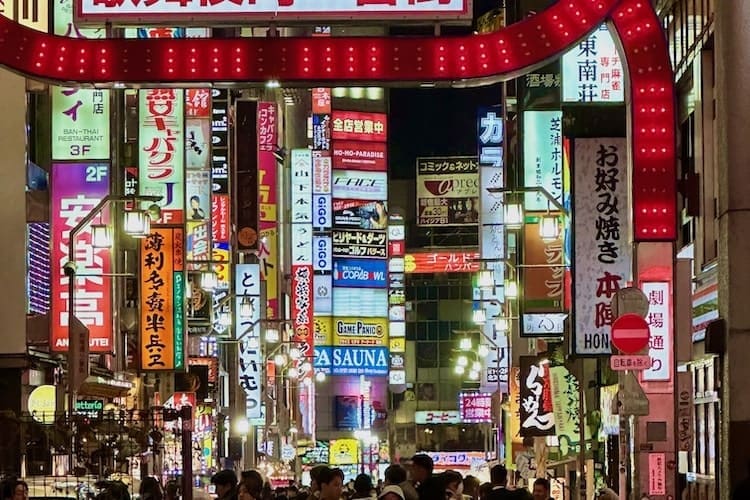
I’ve lived in Tokyo since 2019 and spent a lot of time in its different neighborhoods, so my recommendations depend as much on the kind of neighborhood you’d enjoy as on how easy it is to get around. I think some of the busiest areas are great for going out with friends, but I’d recommend somewhere with fewer crowds if you want to spend more time walking around near your hotel.
Whichever you prefer, staying near the Yamanote Line is an easy way to keep your journeys simple, since it connects many of the areas you’ll want to visit without changing trains. If a smaller central neighborhood appeals to you more, check its subway connections before ruling it out. With two or three lines nearby, it can be just as convenient.
- At a Glance
- Tokyo Areas and Hotels Compared
- How to Choose Where to Stay in Tokyo
- Omotesando and Aoyama: Cafes, Fashion, and Small Streets
- Shibuya: A Lively Stay Near Shops and Restaurants
- Kagurazaka and Iidabashi: Restaurants and Quieter Side Streets
- Yanaka and Nezu: Older Streets, Temples, and Small Shops
- Tokyo Station and Ginza: Shopping and Easy Access to Trains
- Shinjuku: Excellent Access and Nights Out with Friends
- Ueno: Museums, the Park, and Family Apartments
- Ikebukuro: Shopping and Good Train Connections
- Asakusa: Choose It for the Neighborhood
- Before You Book
Some links on YavaJapan are affiliate links. If you book or buy through them, I may earn a small commission at no extra cost to you. It helps support the site, and I only link to places, stays, and experiences I genuinely think are worth recommending.
At a Glance
- Cafes, independent shops, and walks: Omotesando and Aoyama. Compare Tokyu Stay Aoyama Premier for a practical room with laundry facilities and The Aoyama Grand Hotel for a more expensive stay.
- Smaller streets and a calmer central neighborhood: Kagurazaka for restaurants and cafes, or Yanaka and Nezu for older streets, small shops, and temples.
- A lively stay near shops and restaurants: Shibuya. Shibuya Tokyu REI has compact rooms near the station; Cerulean Tower offers larger rooms high above the city.
- Trains to other cities: Stay near Tokyo Station itself. Ginza is another good central option, but a Ginza hotel may still require a separate journey to the station.
- Traveling with children or friends: Compare the apartments at MIMARU Tokyo Ueno East and larger rooms at Hotel Vintage Kagurazaka.
- Train connections and nights out: Shinjuku remains very convenient, especially for friends planning to go out. I prefer other areas if you want fewer crowds around your hotel.
- Other options: Ueno and Ikebukuro have good transport and plenty of hotels. Asakusa suits a stay focused on its temple and surrounding streets, though I don’t recommend it for every first trip.
Tokyo Areas and Hotels Compared
Hotel prices vary a lot with your dates and the size of the room. I’ve included compact hotels, family apartments, and more expensive places with larger rooms so you can compare a few options in each area. The hotel suggestions are based on their locations and facilities, rather than my own stays.
| Area | Why I Recommend It | Hotels to Compare |
|---|---|---|
| Omotesando and Aoyama | Cafes, small shops, and walks with your partner or friends | Tokyu Stay Aoyama Premier: in-room laundry; The Aoyama Grand: luxury and larger rooms |
| Shibuya | Shopping, restaurants, and evenings out | Shibuya Tokyu REI: compact rooms near the station; Cerulean Tower: luxury and city views |
| Kagurazaka and Iidabashi | Cafes, restaurants, and quieter side streets within central Tokyo | Hotel Vintage Kagurazaka: space for groups; Hotel Metropolitan Edmont: family rooms near Iidabashi |
| Yanaka and Nezu | Older residential streets, small shops, and time around Ueno | Hotel Graphy Nezu: casual hotel with several room types; Sawanoya: a small Japanese inn |
| Tokyo Station and Ginza | Shinkansen from Tokyo Station, or shopping and subway access in Ginza | Hotel Ryumeikan Tokyo: near the Yaesu exit; The Tokyo Station Hotel: luxury inside the station building; MUJI Hotel Ginza: simple design above the store |
| Shinjuku | Excellent transport and nights out with friends | Sunroute Plaza Shinjuku: compact rooms south of the station; JR Kyushu Hotel Blossom: larger twin-room options nearby |
| Ueno | Museums, the park, and northeastern Tokyo | Mitsui Garden Hotel Ueno: a short station walk; MIMARU Tokyo Ueno East: apartments with kitchens |
| Ikebukuro | Shopping and several useful railway lines | Hotel Resol Ikebukuro: small rooms near Higashi-Ikebukuro; Hotel Metropolitan Tokyo Ikebukuro: a larger hotel west of the station |
| Asakusa | Staying near Senso-ji and exploring eastern Tokyo | The Gate Hotel Kaminarimon: rooftop views; Asakusa Tobu Hotel: triple and four-person room options |
Use the map below to compare the Tokyo areas discussed in this guide:
How to Choose Where to Stay in Tokyo
On my first visit in 2017, I stayed in an Airbnb in Kosuge, outside central Tokyo, because it looked like a good deal. The trip was great, but getting back to the accommodation took too long. It was one of the main things I wished I’d chosen differently.
Since then, I’ve recommended staying centrally rather than saving a little on a room farther out. Before booking, look at how long it will take to reach the places you want to visit, including the walk to the station and any changes along the way. A cheaper room may still be worth it, but I wouldn’t recommend a long journey back every evening for a small saving.
Staying centrally can also mean choosing a smaller neighborhood. Kagurazaka and Nezu, for example, are inside the Yamanote loop and have good subway connections, with residential streets, cafes, and shops near the hotels. They’re worth considering if you’d rather stay somewhere less crowded than the areas around the biggest stations.
If you’re still deciding which cities to include, my guides to planning a trip to Japan and where to go in Japan can help you work out the wider route before choosing hotels.
Start with the Yamanote Line, Then Compare Subway Connections
The JR Yamanote Line runs in a loop through Shinjuku, Shibuya, Tokyo Station, Ueno, Ikebukuro, and other major areas. I recommend it as a simple starting point when choosing where to stay, especially for a first visit. Many of its stops are places you’ll want to explore, so you can make several sightseeing trips without changing trains or figuring out different lines.
That said, a central neighborhood with two or three subway lines nearby can be equally convenient, or even better for the places on your itinerary. I suggest checking which lines serve the hotel and where they go before ruling out an area just because it isn’t on the Yamanote Line.
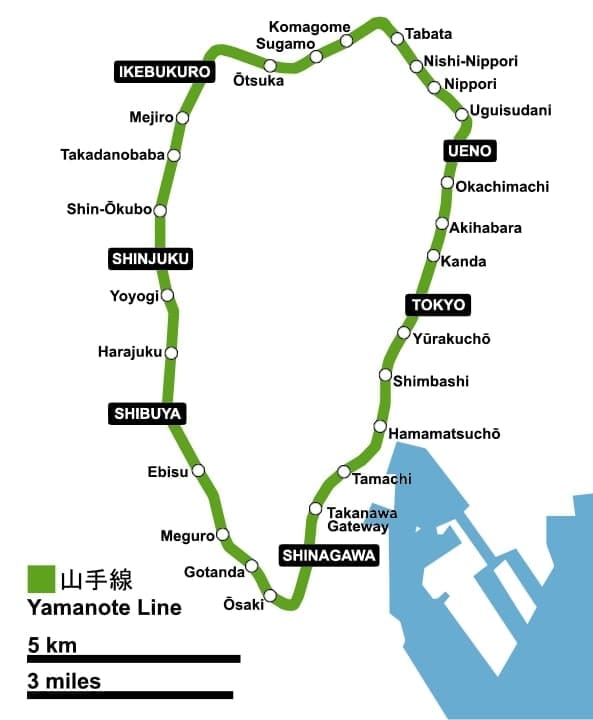
Before choosing a hotel, check the journey from the airport and to a few places you plan to visit. Allow some extra time inside the bigger stations, too. In Shinjuku or Tokyo Station, you may still have quite a walk to your platform after reaching the entrance.
Omotesando and Aoyama: Cafes, Fashion, and Small Streets
I recommend Omotesando if you enjoy cafes, fashion, and walking around small streets. It’s an affluent area, with designer stores along the main avenue and smaller boutiques and vintage shops toward Harajuku. I think it’s especially nice for couples or friends who want to start the day with a coffee, browse a few shops, and explore nearby before heading to other parts of Tokyo.
From here, it’s easy to explore western Tokyo. Shibuya is close, Shinjuku is easy to reach by train, and Harajuku and Yoyogi Park are toward the western end of Omotesando. You can use the Ginza, Hanzomon, and Chiyoda subway lines at Omotesando Station, or walk to Harajuku Station for the Yamanote Line.
The smaller streets are particularly nice to walk around, but the main avenue and the streets near Harajuku can get very crowded on weekends. Check where your hotel is within the area, too. Aoyama extends east of Omotesando, and both hotels below are closer to Gaienmae Station than to Harajuku or Yoyogi Park.
For families, I think it depends on what your children enjoy. Younger children may not get much out of the cafes and fashion shops, while older children who enjoy shopping could have a great time here.
Tokyu Stay Aoyama Premier
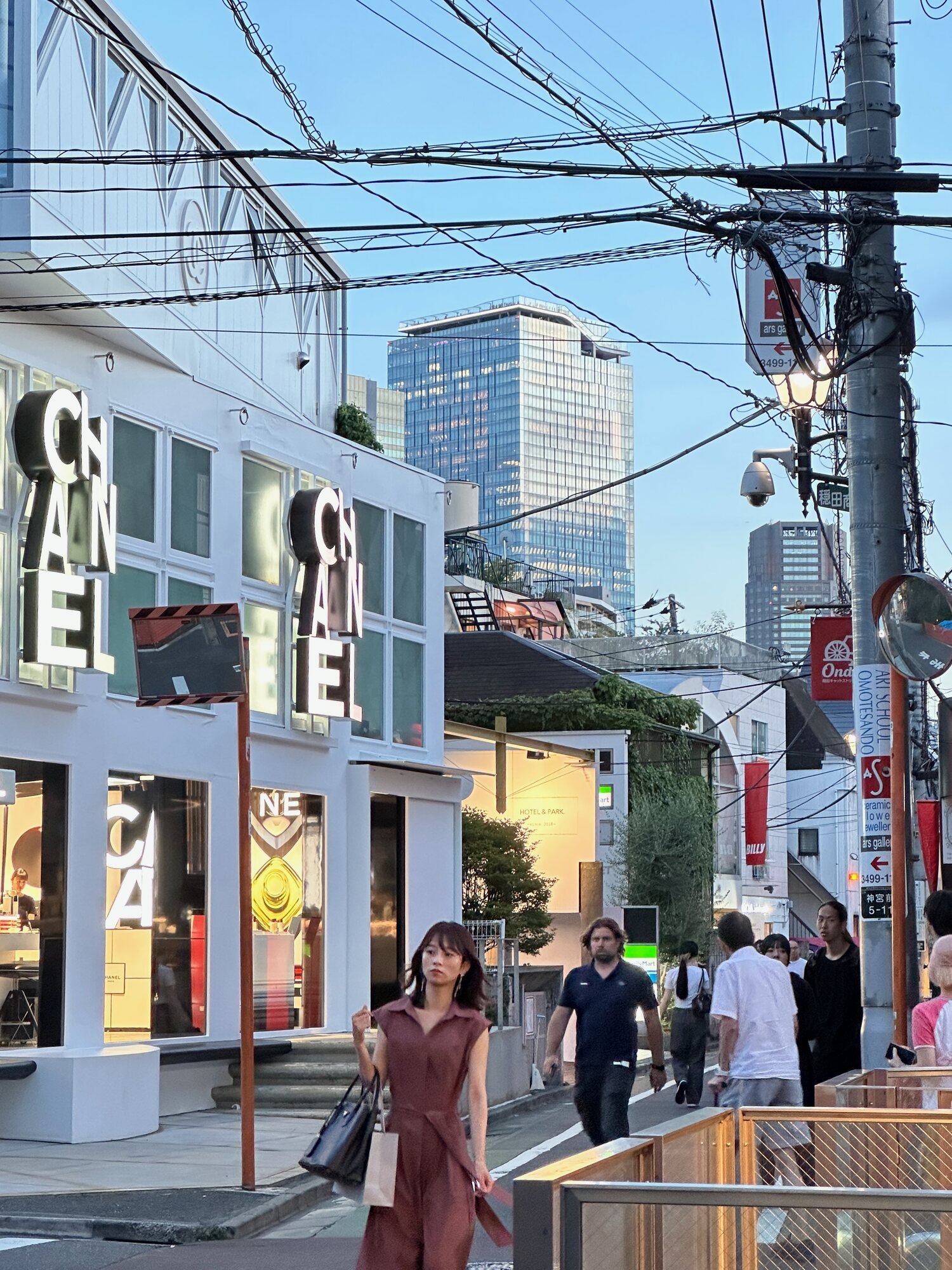
Tokyu Stay is worth considering for a longer stay, especially if you’d use a washer-dryer in your room. Some room categories also have a kitchenette. It’s close to Gaienmae Station and around an 8-minute walk from Omotesando Station, so you can stay in Aoyama without paying for one of its luxury hotels.
The Aoyama Grand Hotel
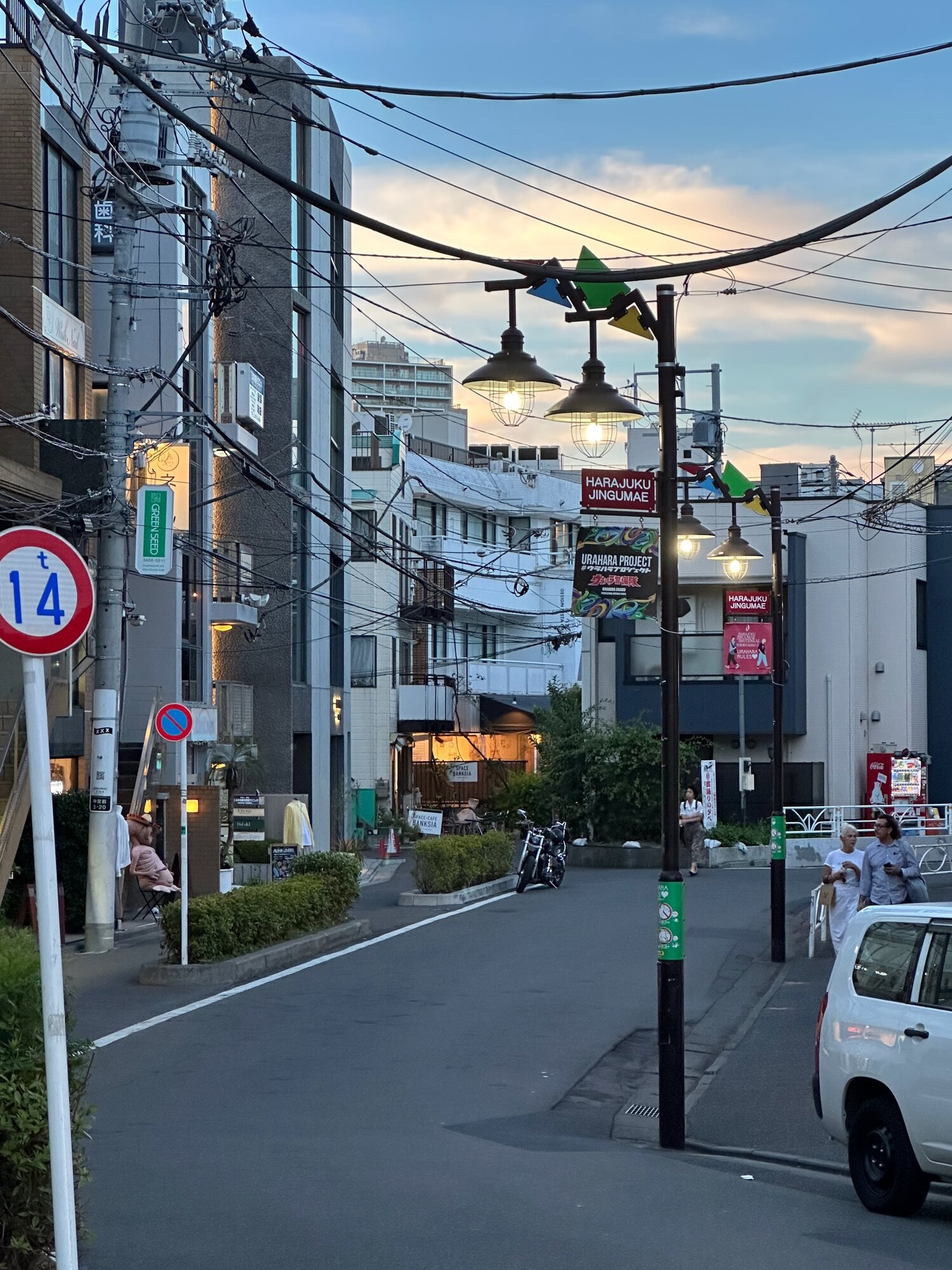
If you’re happy to spend more for a larger room, I suggest The Aoyama Grand. Even its Standard rooms are 32 m², which is quite spacious compared with many Tokyo doubles, and they have a mid-century design. Like Tokyu Stay, it’s near Gaienmae Station, around an 8-minute walk from Omotesando Station.
Shibuya: A Lively Stay Near Shops and Restaurants
Shibuya is a good choice if you want restaurants, cafes, shops, and places to go out near your hotel. It’s also easy to get around from here, with JR trains and several subway and private railway lines at the station.
Harajuku, Omotesando, and Daikanyama are close enough to walk to, depending on where you’re staying and how much walking you want to do. You could browse shops around Harajuku, stop for coffee near Omotesando, and return to Shibuya for dinner without repeatedly crossing the city.
That said, the streets around Shibuya Station and the crossing are very busy. I think it’s a more enjoyable place to stay than Shinjuku, but I wouldn’t recommend it if you’re hoping for peace and quiet near your hotel. In that case, consider the smaller neighborhoods below.
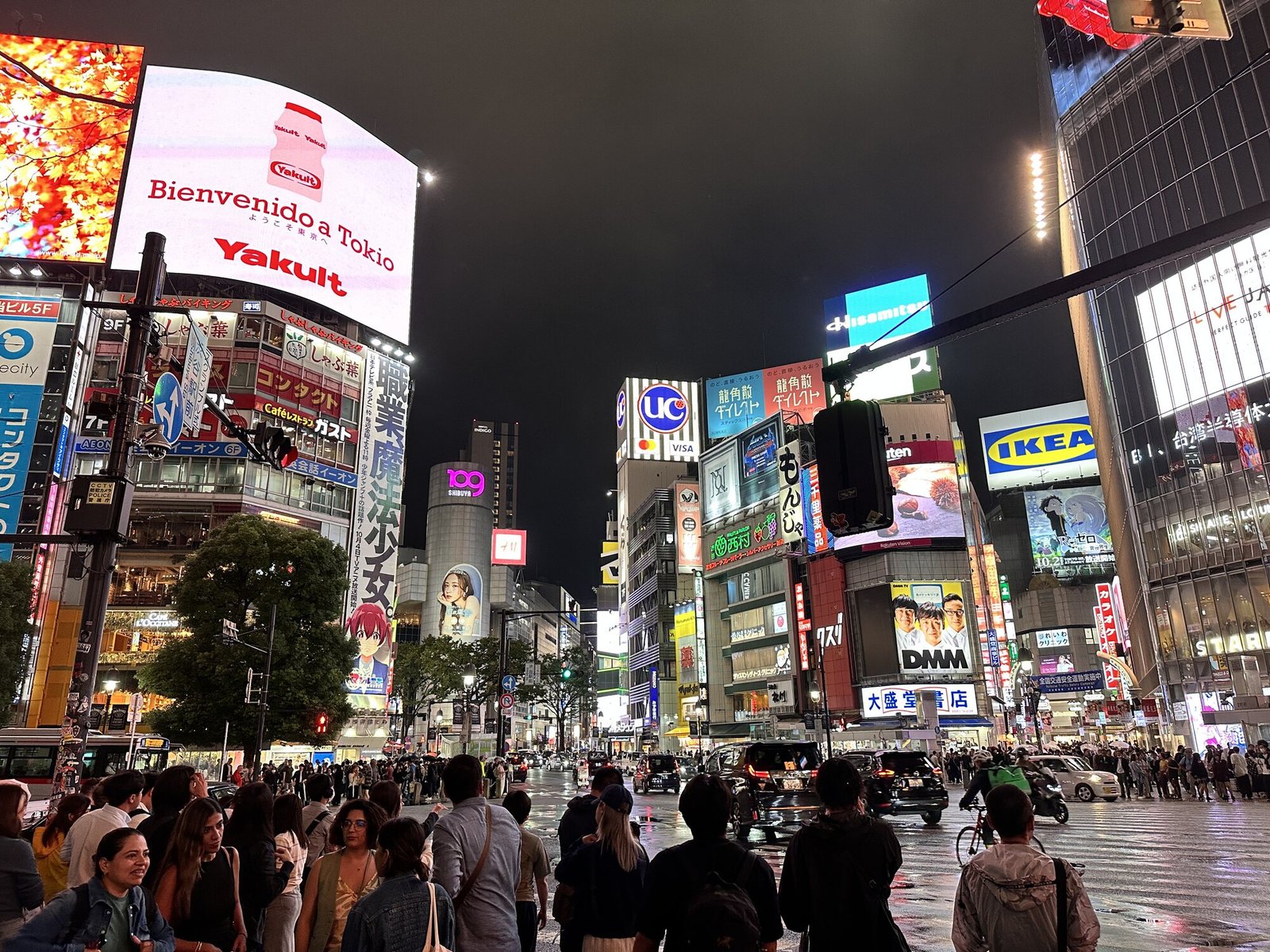
Shibuya Tokyu REI Hotel
Shibuya Tokyu REI is worth comparing if you want to stay close to the station and the luxury hotels are beyond your budget. Its Standard Double is only 13.8 m², so it’s better suited to a short stay with light luggage, especially if you’ll spend most of the day out.
Cerulean Tower Tokyu Hotel
For more space, I suggest looking at Cerulean Tower. Its Standard Floor King rooms are around 34 m², on floors 19 to 30, with views over Tokyo. It’s a more expensive option, but you may appreciate the larger room if you’ll be spending several nights here. The view depends on the room you book.
Kagurazaka and Iidabashi: Restaurants and Quieter Side Streets
I recommend Kagurazaka if you want to stay centrally but prefer smaller streets with fewer crowds. There are Japanese and French restaurants, bakeries, cafes, and small shops, so you can spend an evening eating nearby and walking around without going back into a busy station area.
It’s also a neighborhood that residents are happy to stay in. Ushigome-Kagurazaka ranked 10th in the greater Tokyo region in SUUMO’s 2026 survey of places residents want to keep living.
Getting around is convenient, too. Kagurazaka Station has the Tozai Line, Ushigome-Kagurazaka has the Oedo Line, and Iidabashi, down the hill, has JR Chuo-Sobu trains and several subway lines. Just keep in mind that the area is hilly and the main shopping street gets busy. For quieter surroundings, look at hotels on the residential streets away from it.
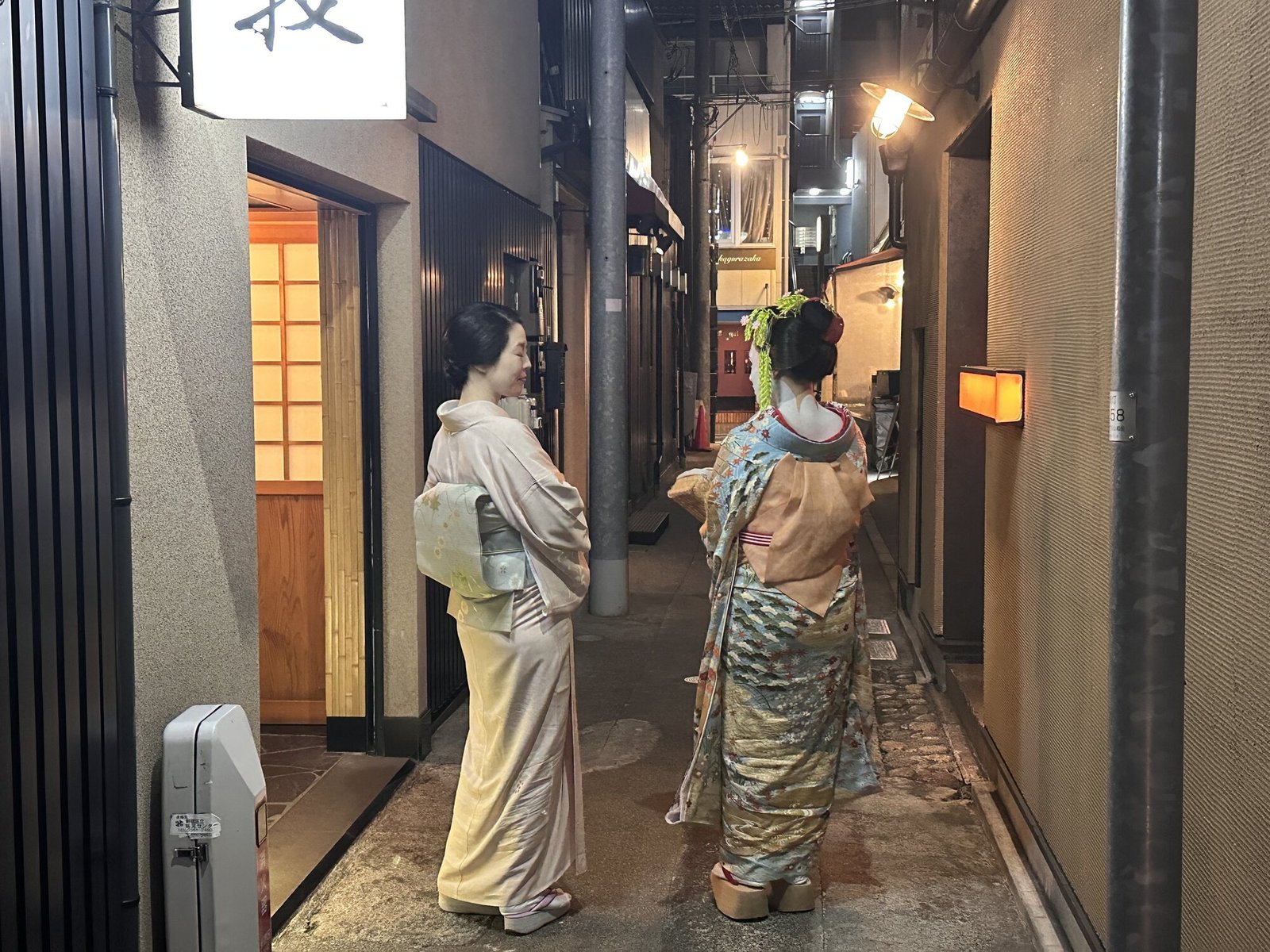
Hotel Vintage Kagurazaka
Hotel Vintage is a good option if you’re traveling with friends and want to share a room. The 56 m² Executive Room sleeps up to six, using two queen beds and two daybed sofas, so make sure everyone is comfortable with that arrangement. It’s a small hotel on the northern side of Kagurazaka, near Kagurazaka and Edogawabashi subway stations.
Hotel Metropolitan Edmont
For families who prefer a larger hotel with restaurants, I suggest Hotel Metropolitan Edmont near Iidabashi. You’ll have a walk to Kagurazaka’s smaller streets, but the 37 m² East Wing family room sleeps up to five people. If you’re booking for January 12, 2027, or later, look for the same room under its new name, Deluxe Twin – East Wing.
Yanaka and Nezu: Older Streets, Temples, and Small Shops
Yanaka and Nezu are good places to consider if you’d enjoy older residential streets, small shops, and temples around your hotel. They’re west of the railway between Ueno and Nippori, inside the Yamanote loop, with older wooden houses, cafes, and neighborhood shopping streets to explore. Ueno Park is nearby, too.
Yanaka Ginza, the best-known shopping street, attracts plenty of visitors, but you’ll find quieter streets away from it. Neighboring Sendagi is also popular with its residents, ranking 28th in the same SUUMO resident survey.
Nezu and Sendagi stations are on the Chiyoda Line, which also serves Omotesando and Meiji-jingumae near Harajuku. You can reach the Yamanote Line at Nippori, though the walk depends on your hotel. I especially recommend this area if you plan to spend time around Ueno and eastern Tokyo. If you want to go out often in Shibuya or Shinjuku, staying closer to those areas will make getting home easier.
Hotel Graphy Nezu
Graphy has a cafe and shared spaces where you can spend time outside your room. It’s worth comparing if you’re looking for a casual hotel, but pay attention to whether the room has its own bathroom. Some of the cheaper categories, including the Semi-Double with Shared Bathroom, use shared facilities. Larger rooms with private bathrooms are also available.
Sawanoya Ryokan
If you’d prefer a small Japanese inn, consider Sawanoya in Yanaka. It has 12 Japanese-style rooms, but only two have their own bath and toilet. For the others, the shared baths can be used privately. I recommend it if you’re comfortable using facilities outside your room and would enjoy a more traditional stay. When you send the reservation form, the inn checks availability before confirming your booking.
Tokyo Station and Ginza: Shopping and Easy Access to Trains
I recommend the areas around Tokyo Station and Ginza for families and anyone who wants department stores, restaurants, and good transport connections without staying near the main nightlife districts. With offices and large shops around you, the atmosphere is quite different from the smaller neighborhoods above.
For the most convenient access to the shinkansen (bullet train), stay close to Tokyo Station itself. That saves you a trip across the city with your bags when you leave, though you’ll still need time to find your platform inside the station.
Nearby Ginza is a good alternative if you’re mainly interested in shopping, restaurants, and exploring Tokyo by subway. Ginza Station has the Ginza, Marunouchi, and Hibiya lines, and JR Yurakucho Station is nearby. Just check the hotel’s location if you also want easy access to Tokyo Station, as you may need a subway ride or taxi with your luggage. Ginza’s main shopping streets can get crowded during the day, too.
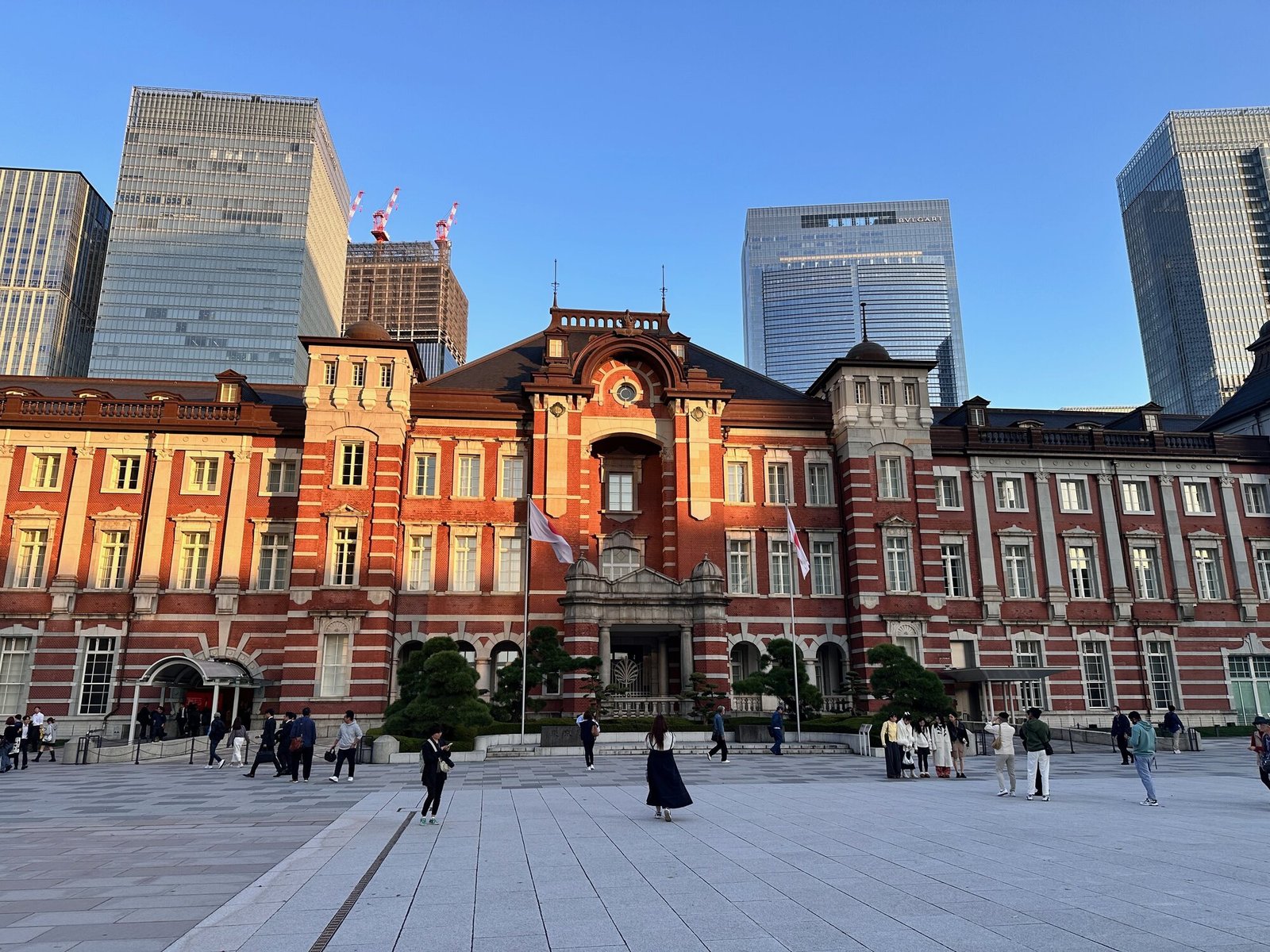
Hotel Ryumeikan Tokyo
Ryumeikan is around a 3-minute walk from Tokyo Station’s Yaesu North Exit. I recommend considering it if you want a short walk with your luggage but would rather spend less than at The Tokyo Station Hotel. There are several room types, so check the bed size and floor space for the rate you’re looking at.
The Tokyo Station Hotel
The Tokyo Station Hotel is a luxury hotel inside the historic Marunouchi station building, with European-style rooms. I think it’s a lovely option for a special occasion if you’d enjoy spending time in the hotel itself. It costs considerably more than a standard hotel nearby, so I wouldn’t recommend it just for a shorter walk to your train.
MUJI Hotel Ginza
MUJI Hotel is a good choice if you enjoy the brand’s simple design and want to stay in Ginza. It’s in the same building as the MUJI store. Room sizes differ considerably: Type A is 14 to 15 m², while Type C is 24 to 25 m². For two people spending several nights, I suggest comparing the larger categories before booking the lowest rate.
Shinjuku: Excellent Access and Nights Out with Friends
I find Shinjuku too touristy and crowded to recommend it to everyone, particularly around the main nightlife streets. If you want somewhere pleasant for a morning coffee or an evening walk without so many people around, I recommend one of the other neighborhoods above.
For a group of friends who want to go out drinking and experience Tokyo’s busiest nightlife, though, Shinjuku is probably the best choice. Kabukicho, northeast of the station, has bars, restaurants, neon signs, and plenty going on late into the evening. Staying nearby lets you enjoy that without planning the night around a train home.
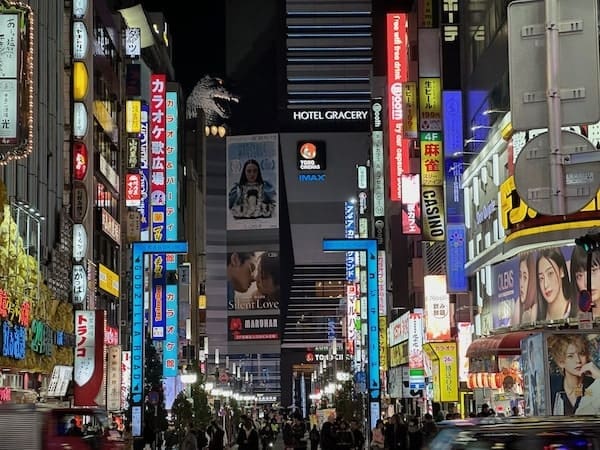
Even if you aren’t interested in nightlife, Shinjuku is still worth considering for its transport connections. I think it’s probably the best-connected area in Tokyo, with JR trains, subway lines, and the Odakyu and Keio railways taking you around the city and farther west.
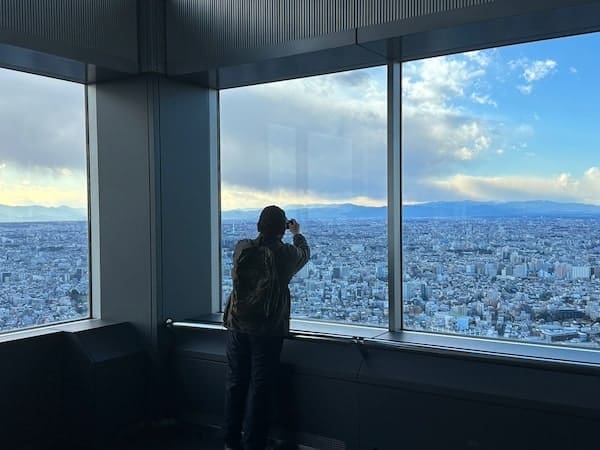
If you choose Shinjuku, I suggest the west or south side of the station. You’ll keep the restaurants and trains within reach while staying away from the middle of Kabukicho. West Shinjuku has more offices and large hotels, along with the Tokyo Metropolitan Government Building and its observation decks.
Hotel Sunroute Plaza Shinjuku
Sunroute Plaza is around a 3-minute walk from the south exit, so you can stay close to Shinjuku Station without being in the middle of Kabukicho. The Economy Double is 15.7 m². If two of you are traveling with large suitcases, I suggest looking at the larger doubles or twins.
JR Kyushu Hotel Blossom Shinjuku
Blossom is also close to the south exit and is worth comparing with Sunroute if you’d prefer a larger twin room. Its twin rooms have a separate washing area beside the bathtub, which is useful if you want a bath after a day of walking. Check the category before booking, as the Standard Double is smaller at 18 m².
Ueno: Museums, the Park, and Family Apartments
I suggest Ueno if you want to visit museums, spend time in the park, and explore northeastern Tokyo. You’ll have JR trains and the Ginza and Hibiya subway lines, plus plenty of shops and places to eat around the station.
You may find a better room for your budget here than in Shibuya or Omotesando, though that depends on your dates. The streets around the station and Ameyoko shopping area are busy. If you want more residential surroundings, compare nearby Nezu instead.
Mitsui Garden Hotel Ueno
Mitsui Garden is around a 2-minute walk from JR Ueno Station’s Asakusa Exit, with subway connections nearby as well. If you want a hotel close to the trains and are traveling with children, take a look at its panda-themed rooms as well as the standard options.
MIMARU Tokyo Ueno East
For a family or group of four, I recommend looking at MIMARU. The 39 m² Family Apartment has two single beds and a bunk bed, so everyone has their own bed, along with a kitchen and dining space. Compare its price with booking two rooms elsewhere, especially if you’d prefer to stay together.
Ikebukuro: Shopping and Good Train Connections
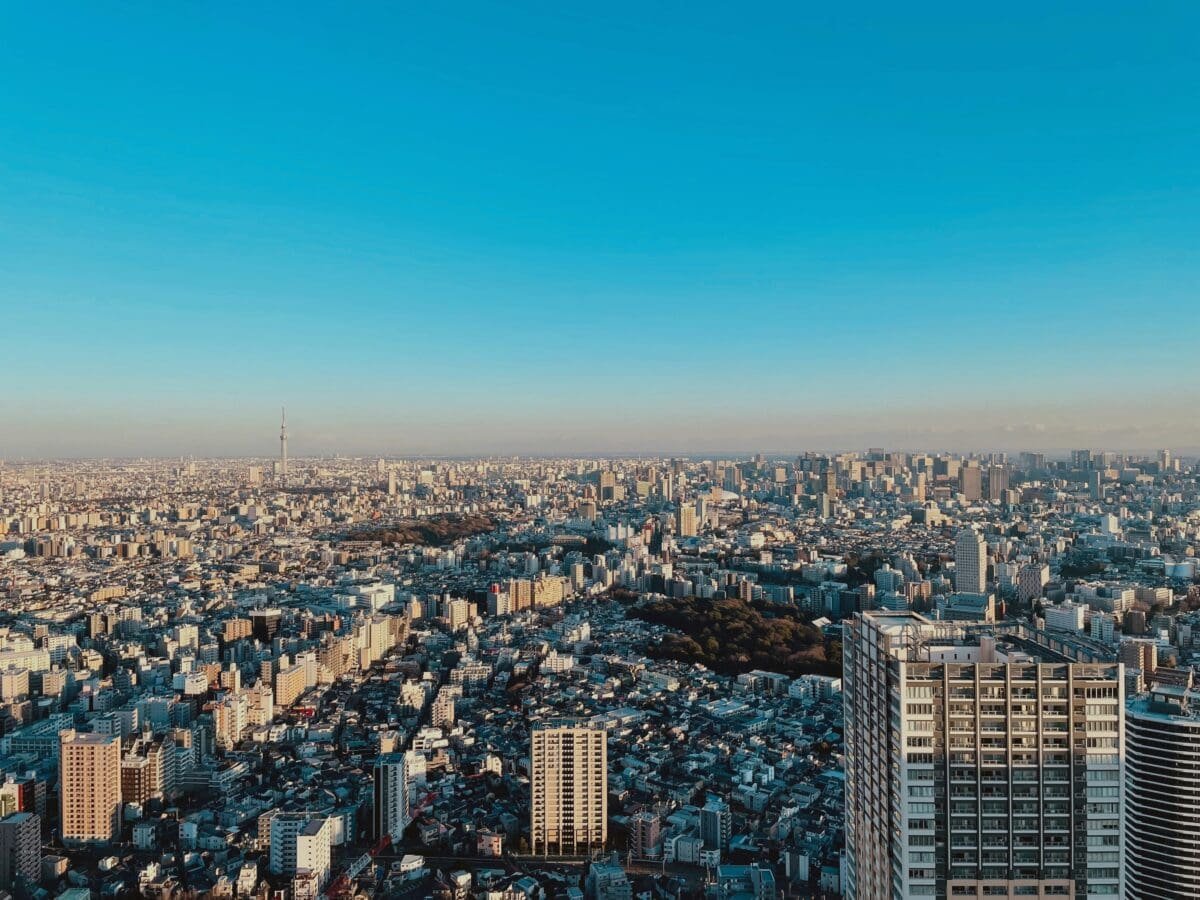
Ikebukuro has plenty of restaurants and shops, including anime and manga stores, with direct trains to Shinjuku and Shibuya on the Yamanote Line. Other lines take you to northern and western Tokyo. If you find a hotel you prefer here, it’s a convenient alternative to staying in either of those two areas.
It’s another large, busy station area, so I wouldn’t choose it just to avoid crowds. Check which side of the station your hotel is on and the route from the exit you’ll use.
Hotel Resol Ikebukuro
Resol is close to Higashi-Ikebukuro subway station and around a 6-minute walk from JR Ikebukuro. Its 14 m² Moderetto room has one 140 cm bed, so it’s quite compact for two people. If you’re traveling with a friend or want separate beds, I suggest the larger 21 m² twin.
Hotel Metropolitan Tokyo Ikebukuro
Metropolitan is a larger hotel on the west side of the station. It’s worth checking if there are three of you and you’d prefer to share: the Superior Twin with Extra Bed is 27 m² and sleeps three. You can stay together and still have a short walk to the station.
Asakusa: Choose It for the Neighborhood
I think Asakusa gets recommended too often as the best place to stay on a first Tokyo trip. Senso-ji, the large Buddhist temple at the center of the area, and the older shopping streets are good reasons to spend time here. But the area is also very touristy during the day, and you’ll have longer journeys if most of your plans are around Shinjuku, Shibuya, and Harajuku.
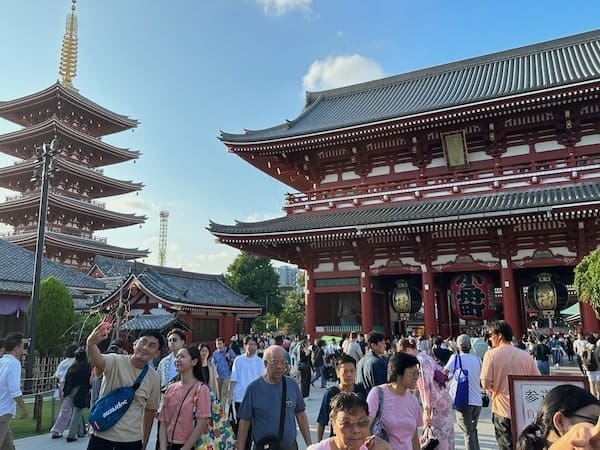
Asakusa does have useful transport. The Ginza Line runs directly to Ueno, Ginza, and Shibuya, and there are Toei Asakusa Line and Tobu trains as well. I recommend staying here when you want to spend time in the neighborhood, or when much of your sightseeing is in eastern Tokyo. Being close to Senso-ji for one visit wouldn’t be enough for me to choose it for the whole stay.
The Gate Hotel Kaminarimon
I suggest The Gate Hotel if you want to stay near Senso-ji and would enjoy a drink with a view when you get back. There’s a rooftop terrace for guests overlooking Tokyo Skytree, along with a restaurant and bar upstairs. It could be especially nice for a couple spending a few nights in Asakusa.
Asakusa Tobu Hotel
Asakusa Tobu has triple and four-person rooms, so it’s another option for families or friends who want to stay together. Look for the Deluxe Triple or Deluxe Fourth rooms when booking. There are also doubles and twins if there are just two of you.
Before You Book
Once you’ve narrowed down the area, check the walk from the station, the room size, and the number of beds. A small room can be fine when you’ll be out all day, but two people sharing a narrow bed with large suitcases may prefer to spend more for extra space.
If you’ll arrive late from the airport, check the transfer for that time of night before booking. And if you plan to go out late, staying near the restaurants or bars you want to visit makes the journey home easier.
For most visits, I suggest keeping one hotel for your time in Tokyo. You can explore other neighborhoods during the day without packing and checking in again. If you’d also enjoy a more elaborate ryokan (traditional Japanese inn) stay with dinner and bathing, consider a separate night elsewhere on your route. My guide to staying in a ryokan in Japan explains the different kinds of stay.
Comments are closed.