
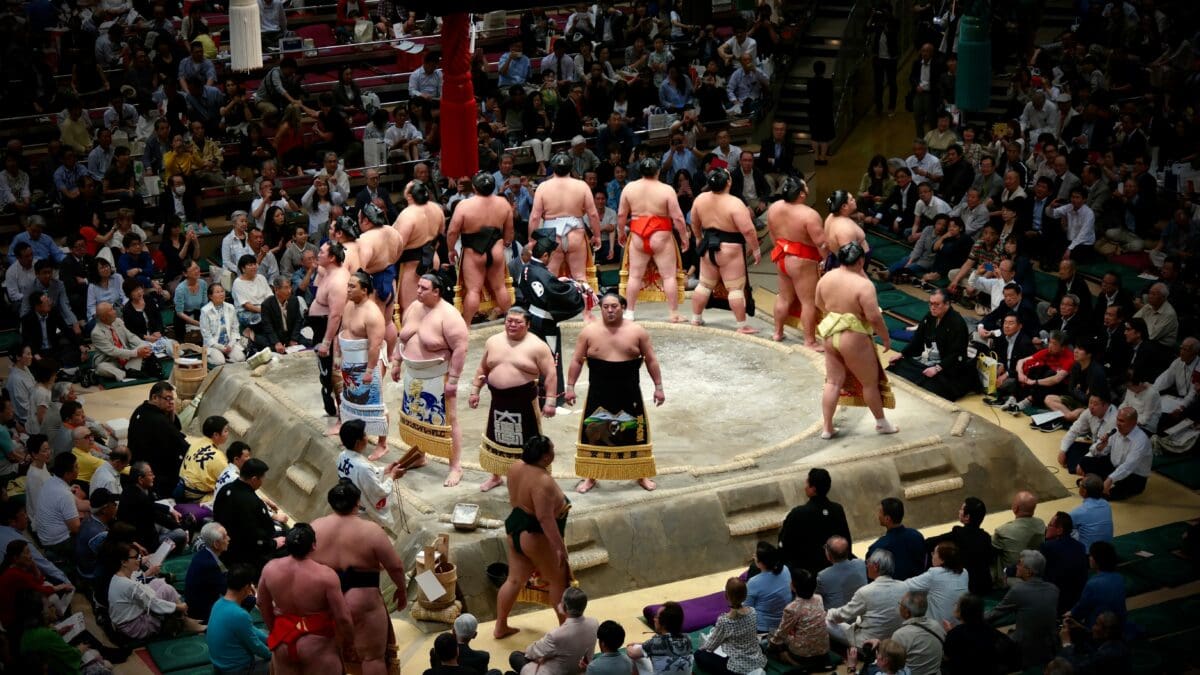
Watching a Grand Sumo tournament is something I recommend even if you’ve never followed the sport. The basic rules are easy to understand, and between matches you’ll see the wrestlers’ formal entrances, salt throwing, and other ceremonies that are as much a part of the day as the wrestling itself. The part that takes a little planning is finding a tournament during your trip. There are six each year, split between Tokyo, Osaka, Nagoya, and Fukuoka.
Once you’ve found dates that work, I suggest buying through Ticket Oosumo, the official ticket service, and choosing a chair seat for your first visit. You’ll be sitting for a while, so comfort makes a difference. An afternoon from around 14:00 to 18:00 gives you time for the higher divisions and their ceremonies, with the morning free for something else. Below, I’ll explain how to get tickets, what the different seats are like, and what you can expect once you’re inside.
- At a Glance
- When and Where to Watch a Sumo Tournament
- How to Buy Sumo Tickets
- Which Sumo Seats Should You Choose?
- What Time Should You Arrive?
- Understanding the Matches and Ceremonies
- Food, Comfort, and Etiquette
- Watching Sumo Outside the Main Tournaments
- Sumo Shows and Chanko Meals
- Spending More Time in Ryogoku
Some links on YavaJapan are affiliate links. If you book or buy through them, I may earn a small commission at no extra cost to you. It helps support the site, and I only link to places, stays, and experiences I genuinely think are worth recommending.
At a Glance
- Tokyo tournaments: January, May, and September at Ryogoku Kokugikan. The official calendar has the exact dates.
- Other cities: Osaka in March, Nagoya in July, and Fukuoka in November. Each tournament lasts 15 days.
- Tickets: Buy when sales open through Ticket Oosumo. Once a day sells out, there are no tickets available at the arena.
- Seats: Chairs are my recommendation for most visitors. Box seats mean sitting on floor cushions and usually paying for a whole box.
- Timing: Around 14:00 to 18:00 covers the higher divisions. For the top division alone, aim to be seated by 15:00, before the entrance ceremonies.
- Outside tournament dates: A guided practice visit may be an option for watching training, while a restaurant show has a more playful format with demonstrations and a meal.
When and Where to Watch a Sumo Tournament
The main professional tournaments, called honbasho, each run for 15 consecutive days. Your ticket is for one of those days, so you can attend for an afternoon without following the whole competition. If you get into it and want to come back, you’ll need a separate ticket for the next visit.
| Month | City | Venue |
|---|---|---|
| January | Tokyo | Ryogoku Kokugikan |
| March | Osaka | EDION Arena Osaka, also called Osaka Prefectural Gymnasium |
| May | Tokyo | Ryogoku Kokugikan |
| July | Nagoya | IG Arena |
| September | Tokyo | Ryogoku Kokugikan |
| November | Fukuoka | Fukuoka Kokusai Center |
You’ll find the exact tournament dates and ticket release dates on the Japan Sumo Association’s calendar. For Nagoya, make sure you’re planning your journey to IG Arena, as older directions may still send you to Dolphins Arena.
If a Tokyo tournament overlaps with the days you’ll be there, Ryogoku Kokugikan is easy to include in your plans. It’s close to the station, and you can have lunch or visit a museum in the neighborhood before going in. There are plenty of places serving chanko nabe, the hot pot associated with sumo wrestlers, which makes a nice lunch to go with the day.
The tournaments take place in different months, so your travel dates determine which city you can watch in. During the March, July, and November tournaments, the matches are in Osaka, Nagoya, and Fukuoka respectively, with no Grand Sumo tournament in Tokyo at the same time. If you’re traveling then, I suggest checking whether the host city fits your route before adding a stop for sumo.
How to Buy Sumo Tickets
Start with Official Ticket Sales
Ticket Oosumo’s English website is where I recommend starting. If you’re still working out which tournament you can attend, the Japan Sumo Association’s ticket page brings the different events together.
I tried to book sumo tickets in 2026 and missed out because they sold out so quickly. Based on that experience, I really recommend being ready at the exact time sales open, rather than planning to come back later that day. Even the less popular dates can go quickly.
Tickets may not be on sale when you start planning your trip, so record the release date and convert the opening time to your own time zone. Release dates differ between tournaments, and counting back one month won’t always work. If sumo is something you’re particularly looking forward to, include it among the Japan bookings to prepare for in advance.
I also suggest having several possible dates and a backup seat category ready. If you’re on holiday and can choose freely, aim for a weekday rather than a weekend, when more people in Japan have time to attend. Weekdays sell out too, but being flexible gives you more chances than trying for one specific Saturday or Sunday.
Before the sale, spend a little time on the booking page looking at the date options, seat categories, and how availability is displayed. That way, when tickets go on sale, you’re already familiar with what you’re choosing instead of trying to understand the page while seats are disappearing.
If you plan to use the Japanese website, register in advance and complete the phone verification, then make sure you can log in. I wouldn’t leave those steps until sales open. If you’re booking through the English service, you’ll enter your personal details as part of its separate purchase process instead.
With the current English booking service, you pay by credit card and collect the tickets at a 7-Eleven in Japan using the instructions in your confirmation email. Leave time to do that before heading to the arena. The total includes service fees on top of the seat price, and the cancellation conditions are worth reading before you pay.
Ticket Services and Guided Packages
If you’d rather have someone help with the purchase, BuySumoTickets can arrange tickets and delivery to your hotel in Japan or an overseas address. I suggest comparing the full cost, including delivery, with buying directly. When placing an order, you’ll also want to know whether the tickets are already secured or the service still needs to buy them for you.
For a visit with a guide, you can browse sumo tournament packages on Klook. I think a guide is worth considering if you’re curious about the ceremonies and would enjoy having someone explain what’s happening as you watch. If you mainly want to see the matches, an ordinary admission ticket is enough.
The Klook results include different packages, so the seat and meeting time are just as important as the price. For example, an afternoon meeting gives you less time inside than a ticket you can use from the morning. The individual booking should make clear which city and date you’re attending, where you’ll sit, and whether a guide is included.
One point to be careful about with third-party tickets: unauthorized resold tickets can be refused at entry. Before paying, ask how the service supplies its tickets and whether the tournament organizer permits the sale.
If Your Date Is Sold Out
If you miss out, I suggest checking the other days you’ll be in the city before changing any travel plans. You may find a date that works just as well. Once a day has sold out, there are no same-day tickets at the arena, so an early morning queue won’t help.
Another possibility is the official resale service, where eligible ticket holders can offer their tickets at face value. You’ll need to register on the Japanese website, and availability depends on someone putting a ticket up for sale. It’s an option to try, though I wouldn’t count on it for one particular day.
A confirmed tournament package may still be available through a ticket service. Otherwise, the practice visits, restaurant shows, and occasional retirement events below give you other ways to see sumo. Each has its own schedule, so the available options will depend on your dates.
Which Sumo Seats Should You Choose?
For most visitors, I recommend chair seats, particularly if you’re going alone, bringing children, or not used to sitting on the floor. At Kokugikan they’re generally farther from the ring, but having a backrest for several hours is a good reason to choose them. Being closer won’t make the afternoon more enjoyable if your knees or back are uncomfortable.
| Seat Type | What It’s Like | Who I’d Recommend It For |
|---|---|---|
| Chair | An individual seat, generally upstairs at Kokugikan | Most first-time visitors, especially anyone who prefers a backrest |
| Box | A small area with floor cushions, where you remove your shoes | Friends or families happy to sit close together on the floor |
| Ringside | Floor seating immediately beside the ring, where wrestlers can fall into the audience | Visitors who understand the risks and are comfortable with stricter rules |
Box seats, called masu, can be fun with friends, though the space is fairly compact. Standard boxes sold through the English Tokyo service are for four people, and two people using a four-person box still pay for the whole box. You may find other capacities through different sales channels, so it’s worth checking exactly what you’re buying before comparing prices.
To give you an idea of the cost, a weekday chair seat for the September Tokyo tournament starts at ¥3,500 per person, with a ¥2,000 service fee per ticket through the English service. Prices change with the city, day, and section, and the Tokyo seating and price page lets you compare the categories. Use the full amount including fees when comparing it with an agency quote.
Ringside seats are restricted to ages 16 and over. Food and drink aren’t allowed, and photography requires permission, so I wouldn’t choose them just for the chance to take closer photos.
If you’re bringing children, Tokyo currently requires tickets from age 4, and younger children need one too if they’ll use their own seat. Child discounts and family options vary by category and booking channel, so the ticket conditions for your family are worth checking before paying.
Wheelchair seating needs a separate arrangement. A standard chair ticket doesn’t reserve a wheelchair space, and Kokugikan currently takes bookings for its designated wheelchair seats by Japanese-language telephone, with a short payment deadline. I recommend getting help with that call if needed and following the instructions for the tournament you’re attending.
What Time Should You Arrive?
If you arrive around 14:00, you’ll have time to find your seat and watch the second-highest division before the top wrestlers compete. If you’d rather keep more of the day free, arriving by 15:00 should still give you time for the top division’s entrance ceremonies.
| Part of the Day | What to Expect |
|---|---|
| Morning | Lower-division bouts with fewer spectators, with opening times varying by day |
| Around 14:00 onward | The second-highest division, juryo, with its entrance ceremony and bouts |
| Around 15:30 onward | Entrance ceremonies for makuuchi, the top division, followed by its bouts |
| Around 18:00 | The bouts finish and the closing ceremony follows, with presentations on the final day |
These times are approximate, especially on the final day. If there’s a ceremony you particularly want to see, aim to arrive a little before it begins. A yokozuna, sumo’s highest-ranked wrestler, also has a separate entrance ceremony when participating.
For a longer visit, you could come in the morning while fewer spectators are there, look around, and watch some lower-division bouts before going out for lunch. You’d then return for the afternoon. Tokyo tournaments currently allow one reentry, returning by 17:00, which makes that possible. Keep your ticket with you and confirm the return arrangements before leaving, particularly at another venue.
Getting to Ryogoku Kokugikan
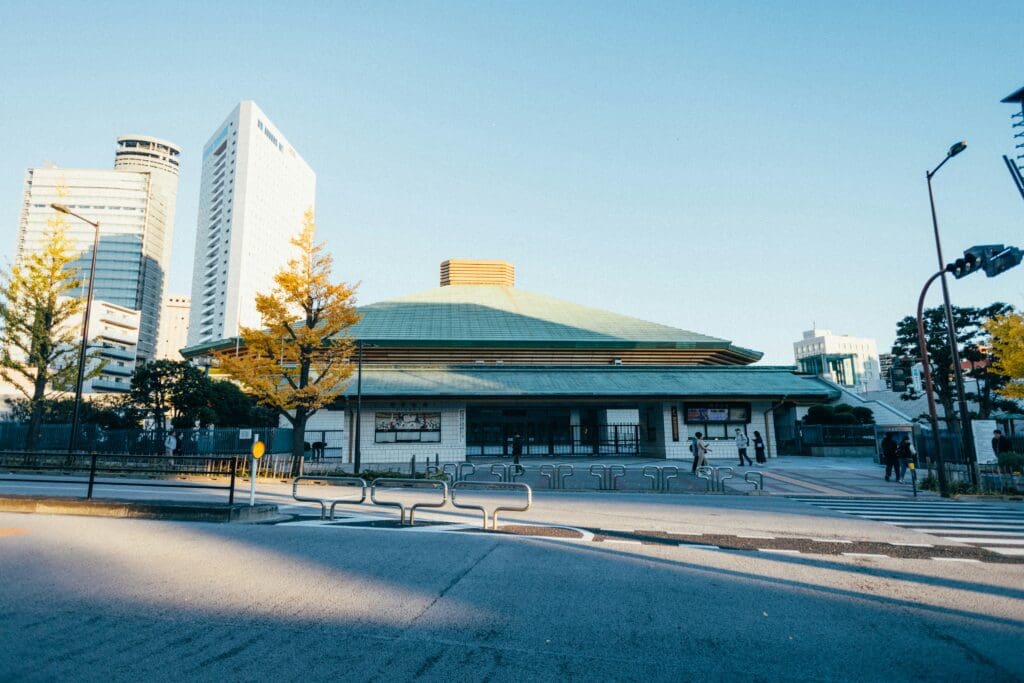
Getting to the Tokyo arena is straightforward once you’re at the right station. It’s about a 1-minute walk from JR Ryogoku Station’s west exit, or a 5-minute walk from Exit A4 of Ryogoku Station on the Toei Oedo subway line. Those are separate stations, despite sharing the name.
The JR Chuo-Sobu local line takes you there from Akihabara, Yoyogi, and Shinjuku. From Shibuya, you’ll need to change trains. I suggest checking which line your route uses before setting off so you know which exit to look for when you arrive.
Understanding the Matches and Ceremonies
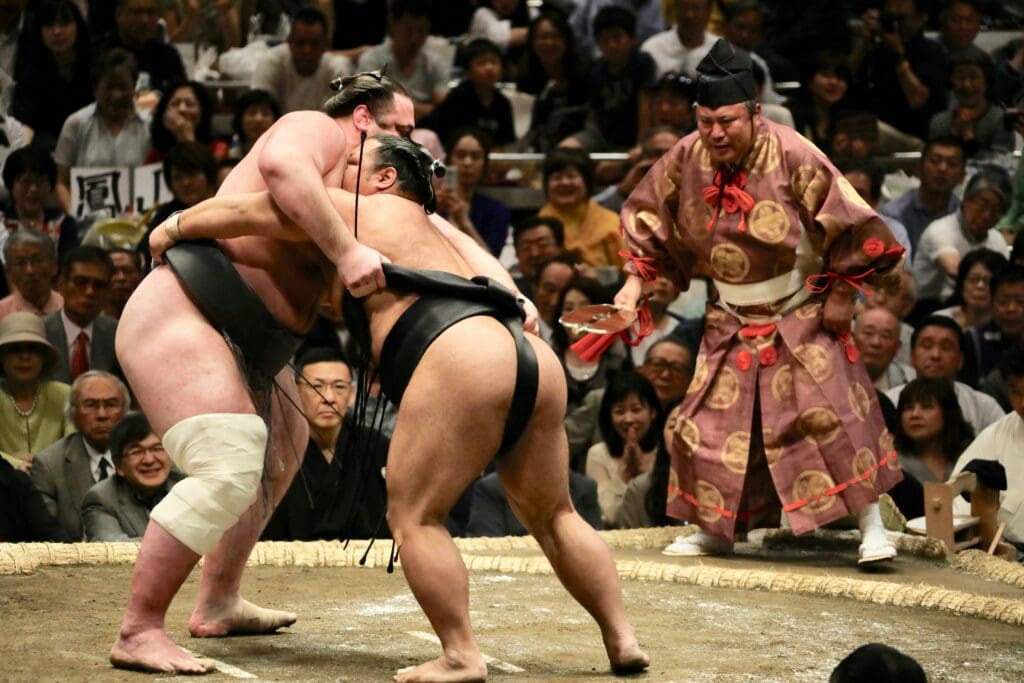
The basic rule is easy to follow: a wrestler loses when he touches the ground outside the ring, or touches the ground inside it with anything other than the soles of his feet. A fingertip on the ground can be enough. There are no weight classes in professional Grand Sumo, which is why you may see two wrestlers of quite different sizes facing each other.
If you’re new to watching, try following one wrestler’s feet and his grip on the belt, called a mawashi. You’ll have something specific to look at beyond the collision, and it becomes easier to notice how a wrestler loses his balance or gets pushed toward the edge.
In the two highest divisions, wrestlers normally compete once each day, while lower-division wrestlers have fewer bouts across the 15 days. The top-division championship goes to whoever finishes with the most wins, with a playoff if needed.
The competition also has longstanding connections with Shinto, Japan’s native religious tradition. That’s why you’ll see salt thrown to purify the dohyo (sumo ring), formal gestures before the wrestling begins, and a shrine-shaped roof suspended above it. Understanding a little of this helps explain why the preparations take up so much of the afternoon.
What to Watch Before a Bout
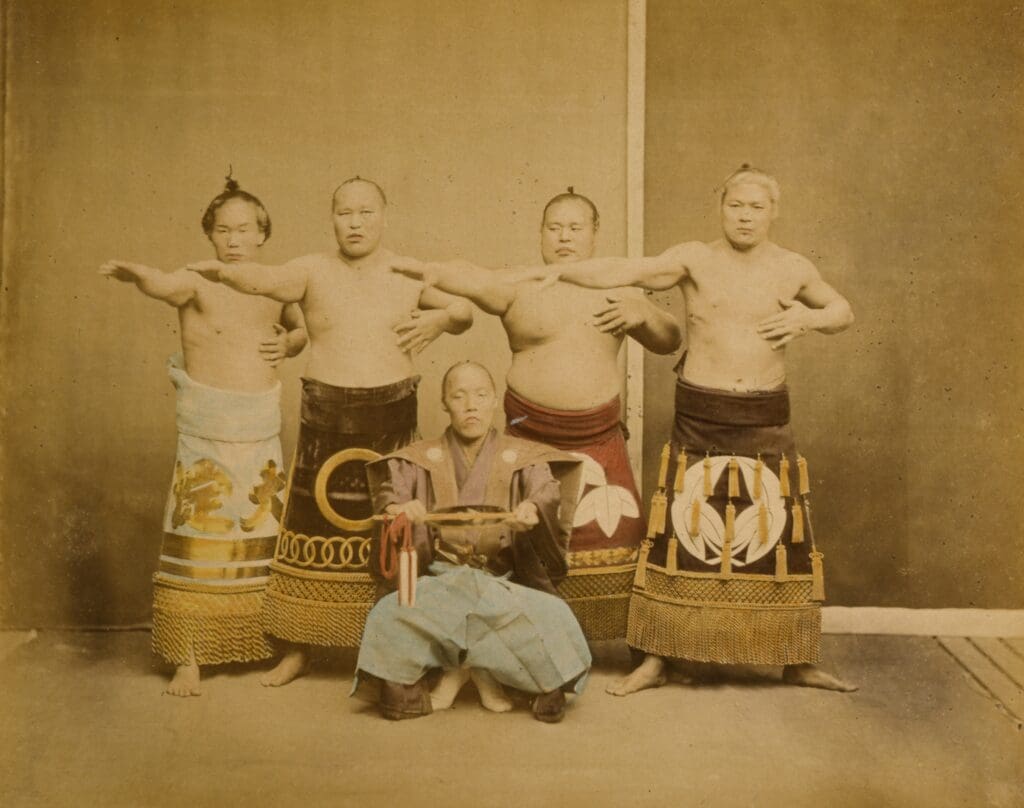
Before the higher divisions compete, the wrestlers come in wearing decorated aprons for the dohyo-iri, or ring-entering ceremony. A participating yokozuna makes a separate entrance wearing a thick white rope around his waist, so he’s easy to recognize even if you haven’t learned the wrestlers’ names yet.
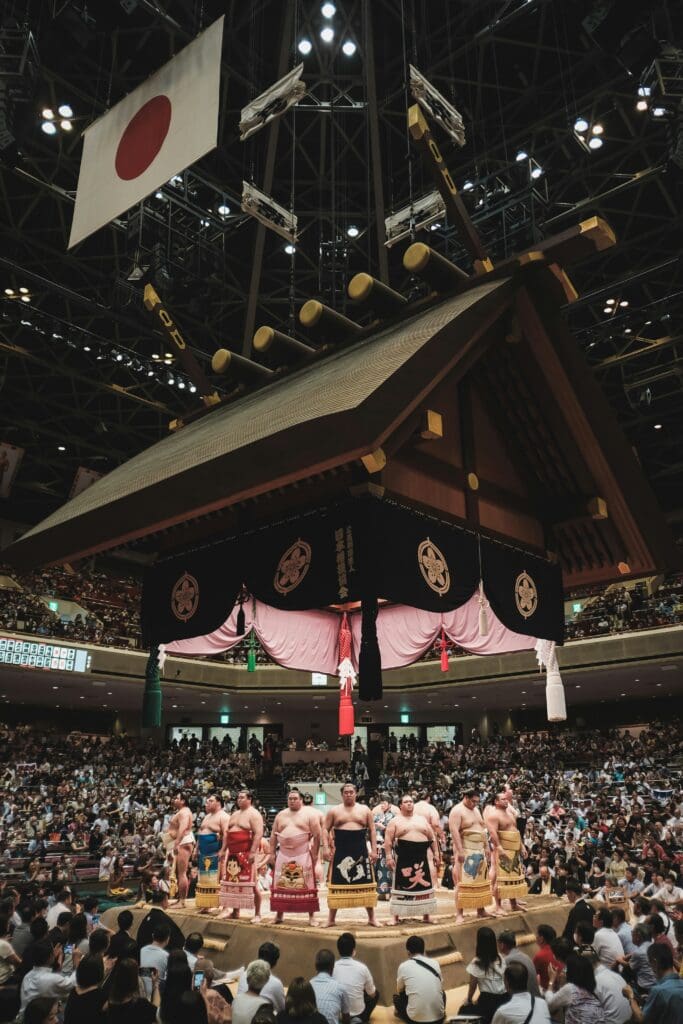
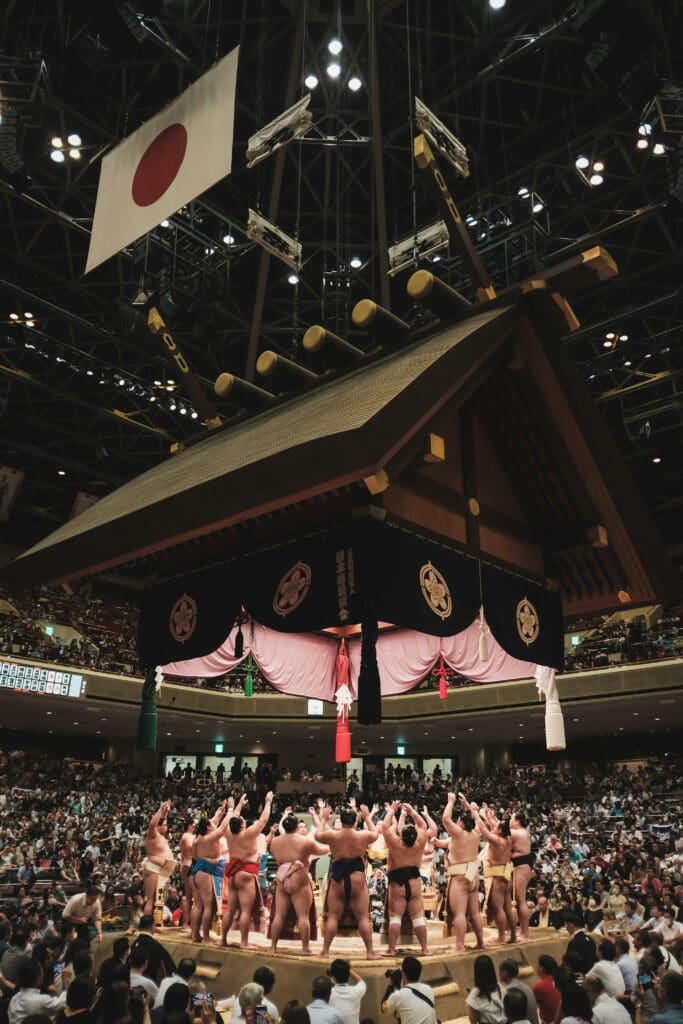
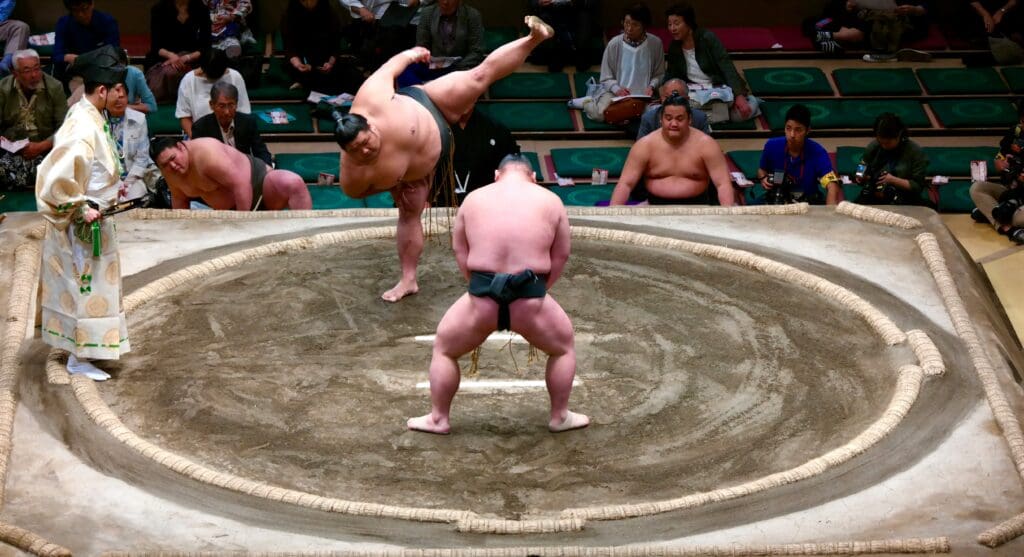
For the individual bouts, you’ll see wrestlers lifting and stamping their legs, a movement called shiko, and throwing salt. They’ll crouch and face each other, then sometimes stand up and go through more preparations before finally charging. The match itself can be over in seconds after all that buildup.
There’s quite a lot happening around them too. The yobidashi, or ring attendants, call the wrestlers’ names and maintain the ring between bouts. The gyoji is the referee with the fan, while the judges seated nearby can discuss a close result and order a rematch. Once you know who they are, it’s easier to follow a pause in the action.
Sponsor Banners and the End of the Day
Before some bouts, attendants walk around the ring carrying banners for the sponsors providing prize money. That explains the envelopes you may see the winner receive afterward, along with a short hand-chopping gesture before he takes them.
After the final bout, there’s a brief bow-twirling ceremony called yumitori-shiki. I suggest staying for it if you can, especially after spending the afternoon watching the other ceremonies. If you’re curious about the ranks and gestures, the English introduction to sumo gives you more to read before your visit.
Food, Comfort, and Etiquette
You can make quite a comfortable afternoon of it with lunch and drinks at your seat. At Kokugikan, the concessions sell meals, snacks, and drinks, and eating is allowed in ordinary chair and box seats. Ringside seats are the exception. Chanko nabe may also be available, although I suggest checking that day’s food service if it’s what you’re hoping to have for lunch.
I recommend eating and browsing the souvenirs before the top division begins. Once the wrestlers you came to see are competing, it’s more enjoyable to stay in your seat than spend that time shopping. For Tokyo, plan to buy food and drinks inside rather than bringing them with you.
A small bag, some cash, and comfortable layers are enough for most visits. Large suitcases are easier left at your hotel, and if you have box seats, shoes you can slip off easily will save you some trouble when getting settled.
The audience can be enthusiastic, with applause and cheering during the matches. A few habits help everyone see and hear what’s happening:
- Watch and take photos from your assigned seat, keeping the aisles and other seating areas clear.
- Wait until a bout ends before moving, so you don’t block someone’s view of the action.
- Keep your phone silent and avoid flash, following any additional photography rules for your seat.
- Keep your belongings inside your box if you’re sitting on the floor, with shoes removed.
- Leave cushions in place and stay off the ring platform.
Around Kokugikan, visitors are also asked not to wait for wrestlers to arrive or leave. If meeting wrestlers and taking photos with them is something you’re hoping for, a visit that includes those opportunities is a better choice.
For keeping track of the competition, you can use the English match listings and results. Saving the day’s information beforehand lets you refer to it without repeatedly looking things up during the matches.
Watching Sumo Outside the Main Tournaments
When a tournament doesn’t fit your dates, a practice visit or a restaurant show can still be a good way to see sumo. They’re quite different experiences, though. At a stable, you’re watching wrestlers train and will usually need to stay silent. At a restaurant show, there’s more conversation, demonstrations, food, and sometimes a chance to participate.
I suggest choosing whichever of those actually appeals to you. If you were looking forward specifically to the competition and the crowd, you may prefer to save sumo for another trip and try a different cultural experience in Japan.
Guided Sumo Practice Visits
A sumo stable is where wrestlers train and, for many, live, so visiting one means fitting around their working day. I recommend a guided visit because the organizer handles permission and meeting arrangements, then explains where to sit and how to behave. Practice schedules can change, and which stable you visit depends on the date.
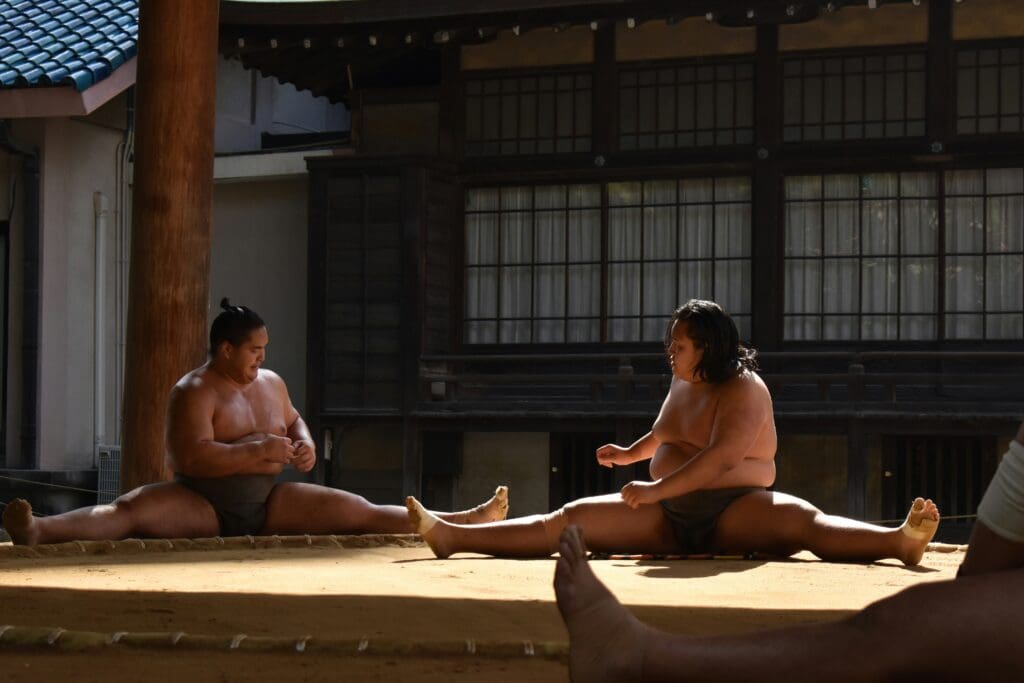
You can compare group tours on Viator, Klook, and GetYourGuide. You’ll find several listings through those searches, with differences in group size, seating, and minimum age. A meal or conversation with wrestlers is only included in some tours, so look for those details if they’re part of what you’re hoping to do.
Once you’re at the stable, the guide will explain the rules about shoes, photos, and where to sit. Arriving on time with your phone silenced helps the group settle in without interrupting practice. Save questions for the breaks your guide allows, so the conversation won’t interrupt training.
Free Viewing at Arashio-beya
For a free option, Arashio-beya in Tokyo’s Nihonbashi-Hamacho area allows you to watch practice through its street-side windows on scheduled days. You can do this without a reservation, but the calendar is worth checking shortly before going because sessions can change or be canceled.
I used to live a few streets away, and there were often 20 to 30 people trying to see through the long, low window. With that many people in front of you, getting a good view could be difficult. I recommend a guided visit if you’re making a special trip for sumo, rather than relying on being able to see through the window.
If you do watch from outside, keep your voice down and leave the pavement and neighboring entrances clear. Flash, eating, and drinking aren’t allowed while watching.
Retirement Events and Regional Tours
Occasionally, your trip may overlap with a retirement event that includes a danpatsu-shiki, the ceremony in which a retiring wrestler’s topknot is cut. Some public events also have exhibition bouts and demonstrations, so they can be interesting if you’d enjoy a day focused on a wrestler’s career. The program and tickets are separate from the regular tournaments.
There are also regional exhibition tours, called jungyo, between the main tournaments. The tour calendar is worth a look if you’re traveling elsewhere in Japan. You may find an event in a place you’re already visiting, with its own program and ticket arrangements.
Sumo Shows and Chanko Meals
If you’d prefer a meal and some audience participation, the restaurant shows below are a more relaxed introduction to sumo than a working practice session. They can also suit a group where some people are curious about the sport but aren’t keen on spending a whole afternoon at a tournament.
Chanko nabe is a hot pot with vegetables and ingredients such as meat, fish, or tofu, with recipes varying between restaurants. You can have it at plenty of places in Ryogoku without booking a show. If you’re eating alone, I suggest asking about lunch sets or portions, and if you have dietary restrictions, confirming what’s in the broth before booking.
Yokozuna Tonkatsu Dosukoi Tanaka
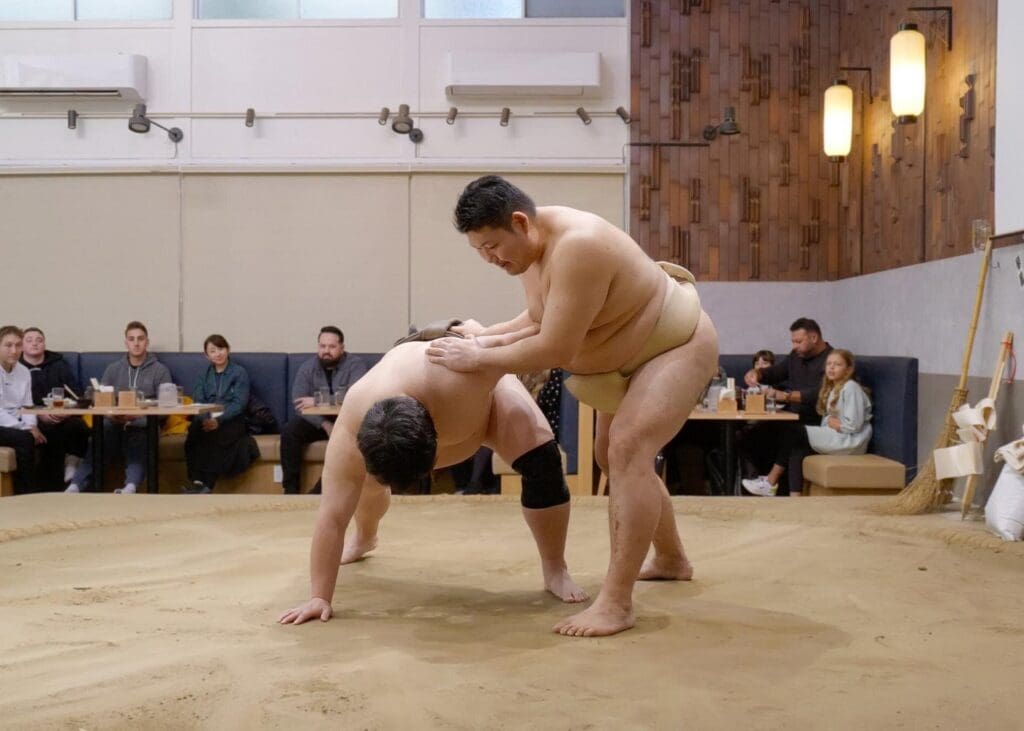
At Dosukoi Tanaka, former sumo wrestlers give demonstrations in a restaurant ring, with a meal included in the experience. Some guests can join a supervised challenge and take photos, so there’s a chance to get involved as well as watch.
I recommend it if that playful side appeals to you. You’ll get explanations and demonstrations in a setting where visitor participation is part of the event. When booking, choose a session that includes the show and meal, as the restaurant doesn’t have demonstrations at every meal.
Asakusa Sumo Club
Asakusa Sumo Club also combines a show, a chanko meal, and audience participation. It’s a tourist-oriented experience, which can work well if you’d enjoy asking questions and taking photos alongside the demonstrations. I think it’s a good choice for that kind of introduction, while a stable visit is better for watching the training itself.
You can compare the Asakusa Sumo Club booking on Klook too. The session, seating, menu, and participation conditions should help you decide which booking works for your group.
Spending More Time in Ryogoku
For a Tokyo tournament day, lunch and one museum visit in Ryogoku make a pleasant morning before you head to the arena. I suggest keeping it to something like that, especially if you’re hoping to see the higher divisions from the beginning. Several museums and a practice visit would leave you rushing between them.
The Sumo Museum is inside Kokugikan on the first floor, with changing displays of ceremonial aprons, prints, and material from sumo history. It’s free outside tournaments, but during a Grand Sumo tournament you’ll need an arena ticket to get in. Its opening calendar is useful when planning, as the museum closes for exhibition changes and has shorter hours during tournaments.
Nearby, Eko-in Temple was a venue for sumo tournaments before the first Kokugikan opened. For a museum visit beyond sumo, you could learn about the city’s history at the Edo-Tokyo Museum, see the artist’s work at the Sumida Hokusai Museum, or visit the Japanese Sword Museum. Their opening days will help you narrow down which one to include.
Where to Stay for a Tokyo Tournament
If sumo is a major part of your Tokyo stay, I recommend staying in Ryogoku. You can walk to the arena and come back for dinner nearby, which is particularly convenient if you’re attending on more than one day.
For a single afternoon within a longer Tokyo trip, though, I’d think about your other plans before choosing a hotel here. If most of your sightseeing and evenings will be across the city, another area in my Tokyo accommodation guide may be more convenient for the stay as a whole.
For a more expensive hotel in Ryogoku, I recommend The Gate Hotel Ryogoku by Hulic. It’s beside the Sumida River, close to Kokugikan, and a short walk from JR Ryogoku Station, so you get the riverside setting without a long journey to the matches. If the view is part of the reason you’re booking, choose a room category that includes it, as the outlook differs between rooms.
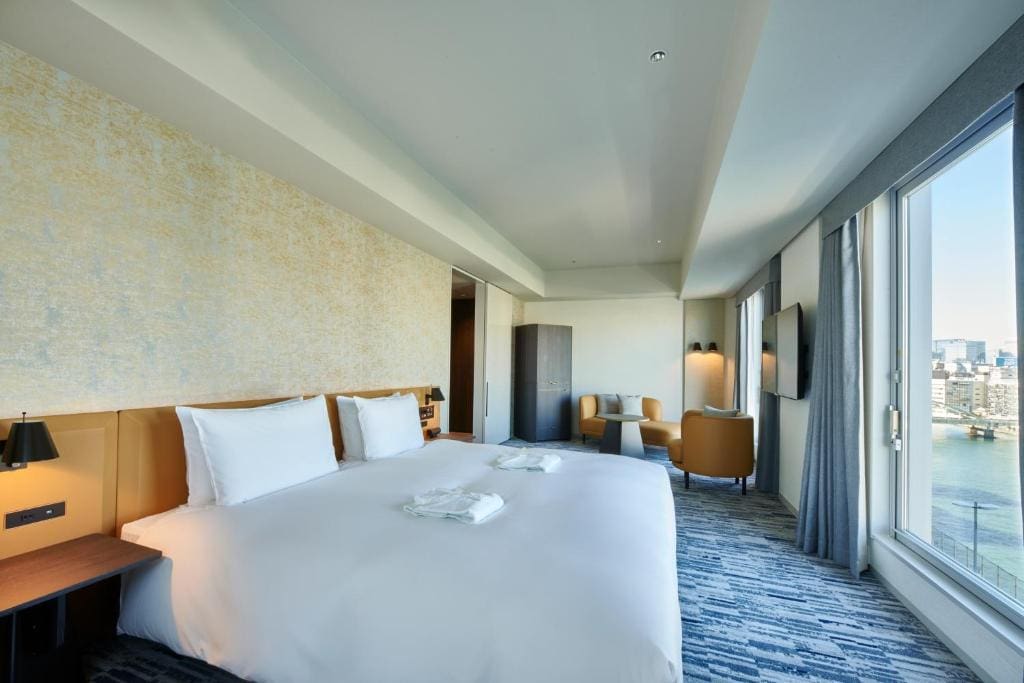
Pearl Hotel Ryogoku and Ryogoku View Hotel are simpler alternatives near JR Ryogoku Station. I’d compare their room sizes and beds alongside the price, especially if you’re sharing or have large bags. For a short stay focused on the tournament, being close to the station and arena may be all you need from the hotel.
Where to Stay in the Other Tournament Cities
In Osaka, Nagoya, and Fukuoka, I suggest choosing an area where you’ll also want to spend the rest of your stay. The venue is one journey to plan, but restaurants and transport near the hotel will be useful every day.
- Osaka: Namba is convenient for EDION Arena Osaka, while Shinsaibashi gives you another option near restaurants and shopping. The walk to the arena depends on the specific hotel.
- Nagoya: Sakae and the area around Fushimi Station both work for a city stay, with a separate journey to IG Arena to plan from your hotel.
- Fukuoka: The areas around Hakata Station and Tenjin have restaurants and transport options for reaching Fukuoka Kokusai Center.
Comments are closed.