Tag

Ryokan

Browsing

Where you stay in Kyoto changes the trip more than many first-time visitors expect. It affects how often you change trains, how annoying your luggage feels, whether evenings are easy, and whether your hotel feels like a practical base or part of the experience.

For most travelers, I would start with three areas. Downtown Kyoto is the best all-round base if you want restaurants, shopping, river walks, Gion access, and flexible sightseeing. Kyoto Station is the smartest choice if rail access, day trips, luggage, late arrivals, or early departures are driving the decision. Gion and Southern Higashiyama are best when classic Kyoto streets, east-side temples, and evening walks are worth extra transfer friction.

If you are still deciding whether to base in Kyoto or Osaka at all, read my guide to Kyoto or Osaka: Where Should You Stay? first. This guide assumes you have decided to stay in Kyoto and now need to choose the right part of the city.

If you are still building the wider trip, start with my Plan Your Trip to Japan guide, then come back to this once Kyoto’s role in the route is clearer.

Some links on YavaJapan are affiliate links. If you book or buy through them, I may earn a small commission at no extra cost to you. It helps support the site, and I only link to places, stays, and experiences I genuinely think are worth recommending.

At a Glance

  • Best all-round Kyoto base: Downtown Kyoto, especially Shijo-Kawaramachi, Shijo-Karasuma, and Sanjo.
  • Best for rail, luggage, and day trips: Kyoto Station.
  • Best for classic Kyoto walks: Gion and Southern Higashiyama.
  • Best calmer central alternative: Karasuma Oike, Nijo, and the Imperial Palace side.
  • Best calmer premium base: Okazaki, Northern Higashiyama, and Keage.
  • Best one-night stay-as-destination: Arashiyama.
  • Best niche special-stay areas: Nishijin and Kitano for machiya stays, and Fushimi only for a deliberate southern-Kyoto route.

How to Choose Your Kyoto Base

In my opinion, the best way to choose your hotel is to look at what your trip looks like.

If your Kyoto plan mixes Kiyomizu-dera, Nishiki Market, Gion, Arashiyama, shopping, restaurants, and a few flexible evenings, Downtown Kyoto is usually the easiest place to start. It gives you a strong middle ground without committing the whole trip to one side of the city.

If you have several JR day trips, a shinkansen arrival, a late check-in, an early train, large suitcases, or children, Kyoto Station can be the better choice. It may not feel as Kyoto-specific outside the hotel door, but it often makes the trip smoother.

If your Kyoto image is mainly Kiyomizu-dera, Yasaka Shrine, Kodaiji, old streets, traditional restaurants, and walking back after dinner, Gion or Southern Higashiyama can be worth the extra friction. The tradeoff is that cross-city sightseeing and station transfers usually take more effort.

For longer stays, I also like looking at Central Kyoto around Karasuma Oike, Nijo, or the Imperial Palace side. It can feel calmer and more livable while still keeping you central. For a slower premium stay, Okazaki or Keage can work well. For one night where the stay itself is the point, Arashiyama, Nishijin, or a central ryokan may make more sense than changing your whole Kyoto base.

Hotels are usually the better default than Airbnb in Japan. In my experience, hotels reduce friction: front desks can hold luggage, help with taxis, explain small local details, and make arrival easier. Japan also has good convenience stores, department-store food floors, cafes, and restaurants, so the kitchen advantage of an apartment is often less important than people expect.

Kyoto Area Comparison Table

AreaBest IfThink Twice IfTransport LogicEvening FeelHotel Style
Downtown KyotoYou want the best balance of sightseeing, food, shopping, and eveningsYou have many JR or shinkansen daysSubway, Hankyu, Keihan, and walking all help, but JR usually needs a transferBest overall for restaurants, bars, river walks, and flexible nightsBroadest hotel range
Kyoto StationYou care about rail, luggage, day trips, late arrivals, or early departuresYou want classic Kyoto streets outside the doorBest JR and shinkansen logicConvenient, but more transport-hub than Kyoto neighborhoodPractical hotels, larger properties, family options
Gion / Southern HigashiyamaYou want east-side temples, old streets, and memorable eveningsYou dislike taxi, bus, or luggage frictionGood walking access east, weaker for JR-heavy plansStrong Kyoto evening feelPremium hotels, ryokan, smaller stays
Central KyotoYou want calm central access, space, and subway convenienceYou want nightlife directly outside the hotelKarasuma Oike and Nijo are useful subway anchorsCalmer than DowntownUpper-mid hotels, design hotels, premium city stays
Okazaki / Northern HigashiyamaYou want museums, Nanzenji, Keage, and a slower premium baseYou want the easiest all-city baseTozai Line helps, but walking and taxis still affect the stayCalm and culture-focusedPremium hotels and special stays
ArashiyamaYou want one night around the river, bridge, and bamboo-grove areaYou need an efficient base for all Kyoto sightseeingJR, Hankyu, and Randen help, but it is still west of the main city coreCalm at night, with early closing timesLuxury hotels and ryokan-style stays
FushimiYour route focuses on Fushimi Inari, Uji, Nara, or sakeYou want a general Kyoto baseUseful for specific southbound rail plansMore local and lower-keyLimited use as a main base
Nishijin / KitanoYou want a machiya, textile area, or cultural-property stayYou want easy rail-first sightseeingMore bus, taxi, and deliberate route planningResidential and traditionalMachiya, special stays, small inns

Kyoto’s official travel guidance also recommends using trains and subways where possible because buses can be very crowded, especially on popular sightseeing routes. It also points travelers toward luggage services and hands-free travel, which is especially useful if you are changing hotels or arriving before check-in.

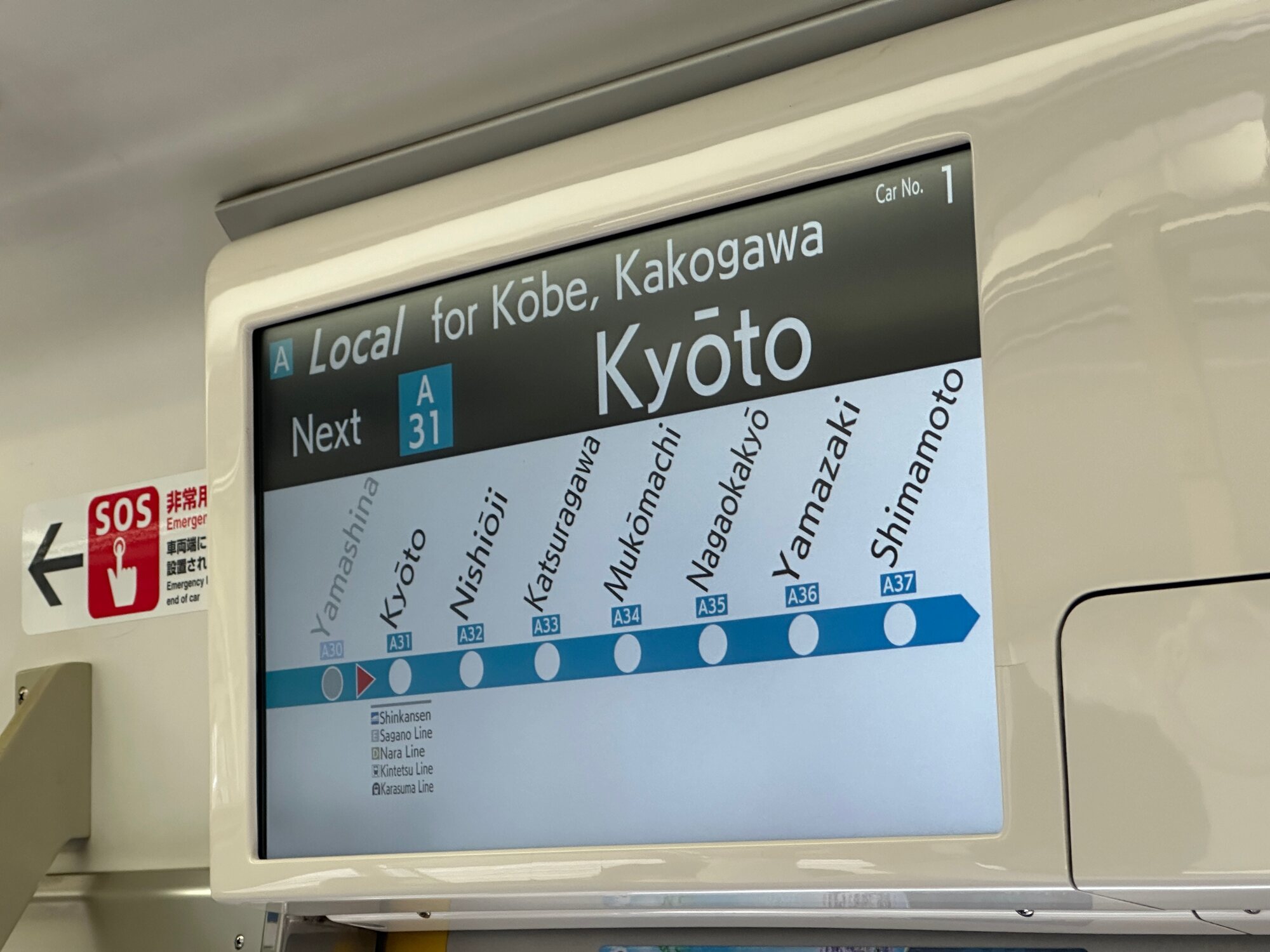
Train car display showing route information for Kyoto, with the next stop for Kobe and Kakogawa
Kyoto route info on the train

Downtown Kyoto: Shijo-Kawaramachi, Shijo-Karasuma, and Sanjo

Downtown Kyoto is where I would start for many mixed Kyoto trips. It works because it does not force you into one version of the city. You can walk toward Nishiki Market, Pontocho, the Kamo River, Gion, department stores, cafes, restaurants, and a lot of evening options. Depending on the exact block, you also have useful access to subway, Hankyu, Keihan, and bus routes.

This is the area I would choose if your Kyoto stay is mostly about balance. You might do Kiyomizu-dera one morning, Arashiyama another day, a tea ceremony in Kyoto one afternoon, dinner near Pontocho, and maybe a walk through Gion at night. Downtown keeps those options open.

The main tradeoff is JR access. If you are using Kyoto Station every day for Nara, Uji, Osaka, Hiroshima, the shinkansen, or airport transfers, Downtown usually adds one more step. That is fine for many travelers, but it is not ideal if the whole stay is rail-heavy.

Exact location also changes the experience. Shijo-Kawaramachi and Sanjo are stronger for evenings, river access, and Gion walks. Shijo-Karasuma is a little more practical for the subway and can feel calmer around hotel blocks. I would check the actual hotel map, not only the broad area name.

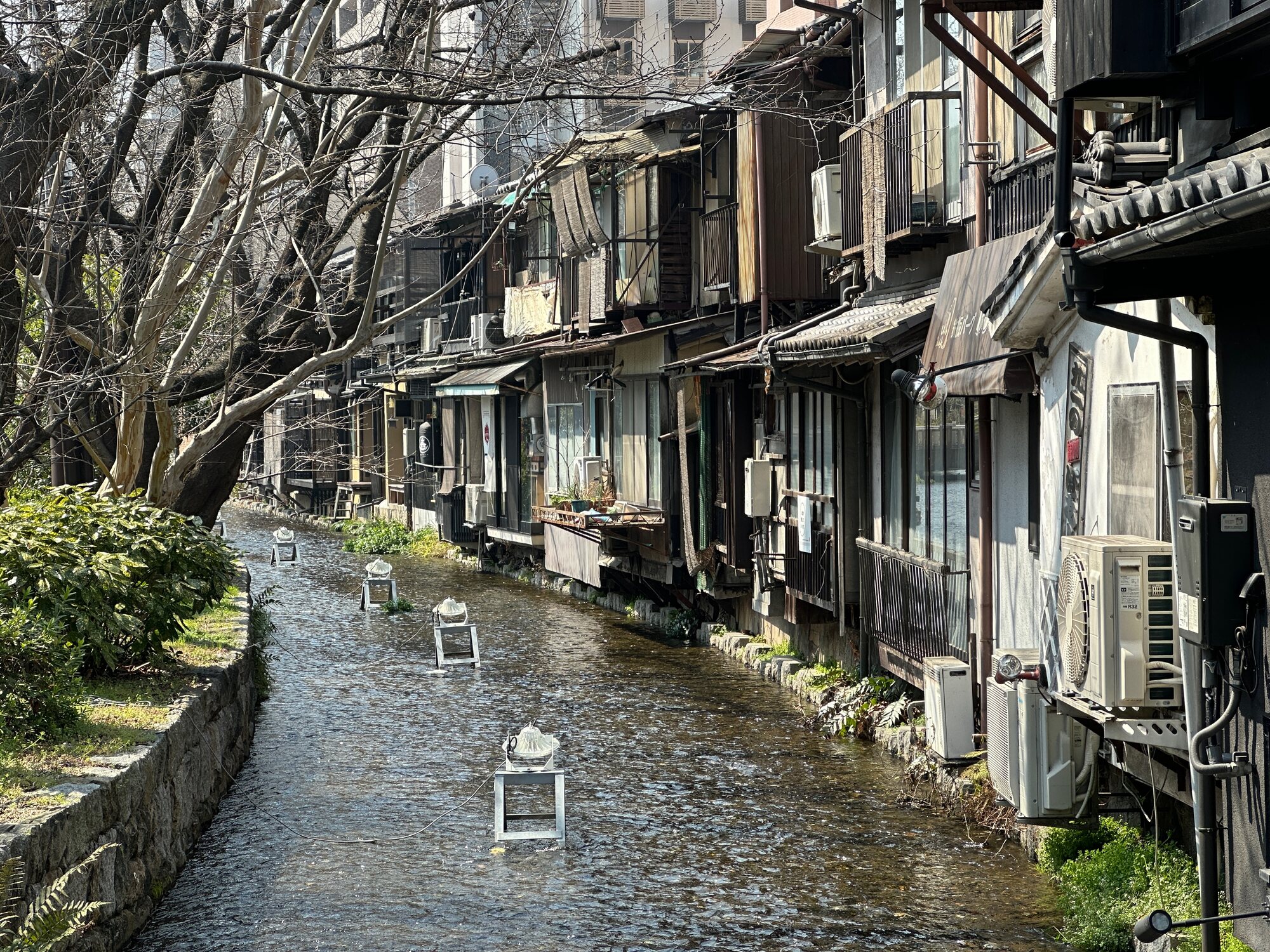
Kyoto Shirakawa Canal lined with traditional-style buildings and bare trees along a narrow water channel
Kyoto Shirakawa Canal feels peaceful

Cross Hotel Kyoto

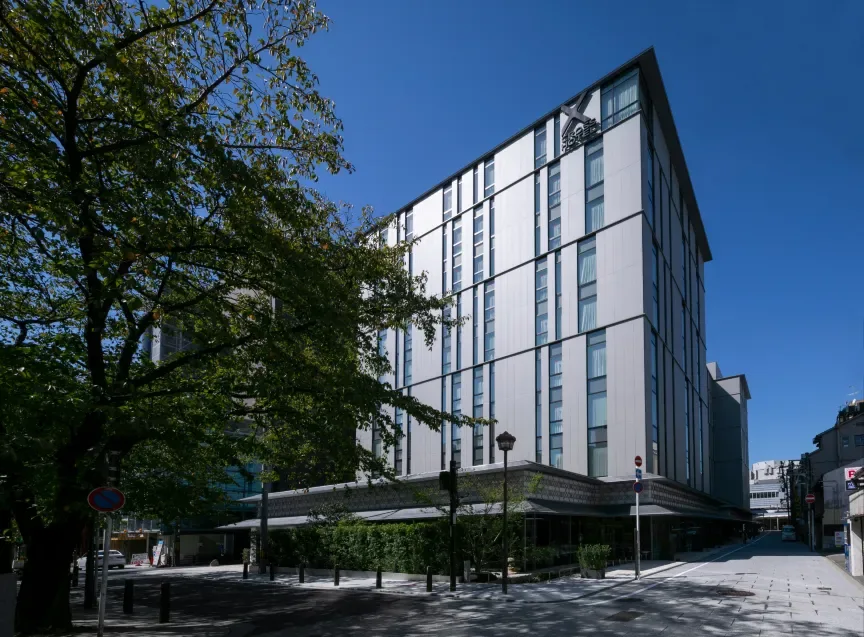
Cross Hotel Kyoto is one of the easiest Downtown hotels to recommend because it sits near Kawaramachi Sanjo, with good access to the Kamo River, Gion-side walks, restaurants, and several transport options. It works well for a first Kyoto stay where you want the hotel to be practical without feeling like a pure station hotel.

Cross Hotel Kyoto exterior on a tree-lined street in Kyoto
Image via Trip.com

I would look at it first if you want a clean all-round Downtown base and do not need a ryokan or luxury-hotel moment. The watch-out is simple: this is still not a JR-first location, so day trips through Kyoto Station mean an extra transfer.

THE GATE HOTEL KYOTO TAKASEGAWA by HULIC

THE GATE HOTEL KYOTO TAKASEGAWA by HULIC is a stronger choice if you want Downtown convenience with a more memorable hotel feel. The location near Shijo-Kawaramachi keeps dinner, shopping, Gion-Shijo, and river walks easy.

This is best for couples or adults who want a slightly more special city hotel without moving into a less convenient east-side location. Entry-level rooms can be more compact, so families or travelers with large luggage should compare room categories carefully.

GOOD NATURE HOTEL KYOTO

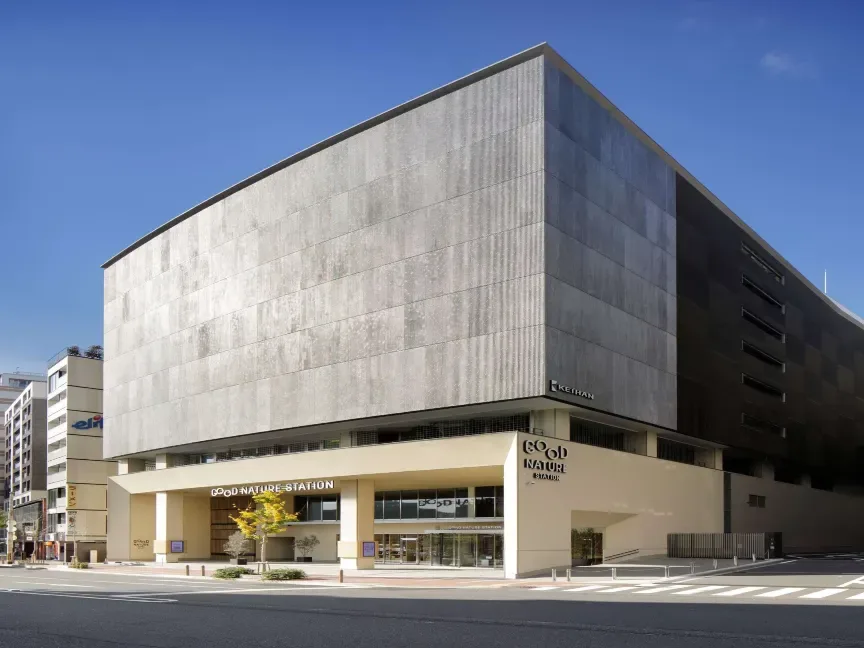
GOOD NATURE HOTEL KYOTO is useful if you want Downtown but also care about room comfort, food access, and a more modern hotel setup. It is close to Kyoto Kawaramachi and Gion-Shijo, which keeps the evening side of Kyoto easy.

Good Nature Station building in Kyoto with a modern gray facade and street-level entrance
Image via Trip.com

I would consider it for families, friends, or longer stays where room category and practical comfort are important. The tradeoff is that it feels more contemporary than traditional, so it is not the best choice if your hotel itself needs to feel old-Kyoto.

Solaria Nishitetsu Hotel Kyoto Premier

Solaria Nishitetsu Hotel Kyoto Premier is a good Sanjo-side option if you like the idea of Downtown but want a slightly calmer Kamo River edge. It keeps you close to restaurants, Gion, the river, and Kyoto Shiyakusho-mae Station without placing you directly in the busiest shopping blocks.

This is strongest for couples or solo travelers who want walkability with a softer setting. It is less obvious for groups than some larger-room hotels, so check room layouts before booking.

Kyoto Station

Kyoto Station is the most practical Kyoto base. It is the place I would choose if the trip depends on rail, luggage, and easy transfers more than evening walks outside the hotel.

This area works especially well for shinkansen arrivals, late check-ins, early departures, airport connections, and day trips to Nara, Uji, Fushimi Inari, Osaka, or even farther west. It is also easier when you have large suitcases, strollers, or a group that does not want to drag luggage through smaller streets.

Kyoto’s official accommodation guide points out that the station area has many large hotels and business hotels, plus lockers and luggage check-in options. That matches my own general advice for Japan: the first or last night should often be easy. After a long travel day, convenience can be worth more than charm.

The tradeoff is that Kyoto Station feels like a major transport hub. It has restaurants, shops, and plenty of convenience, but it does not give you the same evening experience as Downtown, Gion, or the Kamo River side.

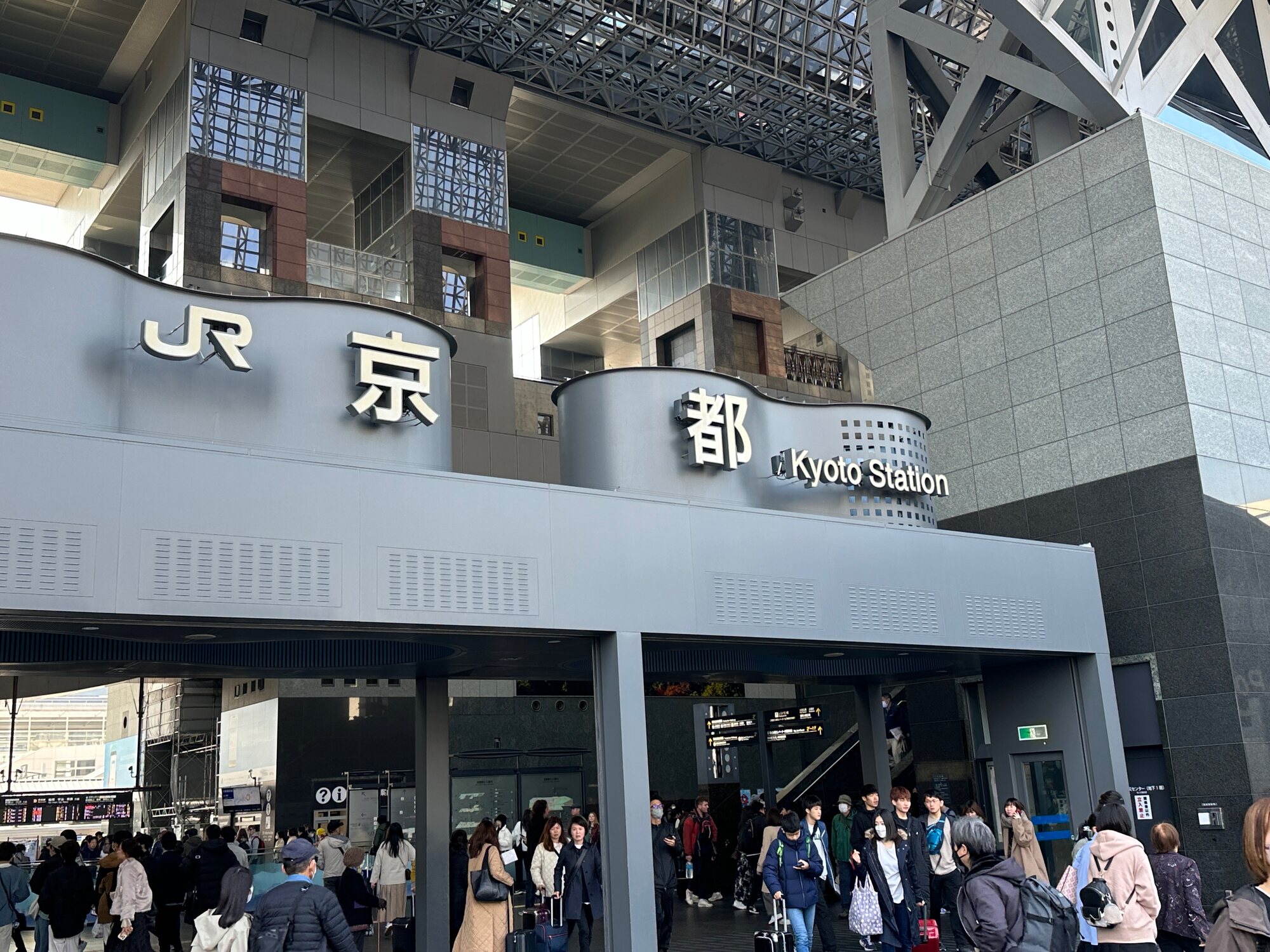
JR Kyoto Station entrance with large JR and 京都 signs and a crowd of travelers in the foreground
Kyoto Station entrance felt busy

Hotel Granvia Kyoto

Hotel Granvia Kyoto is the cleanest station choice because it is inside Kyoto Station. If your main concern is minimizing movement with luggage, catching trains easily, or keeping the first and last night simple, this is the hotel I would check first.

It is best for rail-heavy itineraries, families, late arrivals, and short stays. The watch-out is that you are choosing the station experience, not a neighborhood stay. For some trips, that is exactly the right tradeoff.

Hotel Vischio Kyoto by GRANVIA

Hotel Vischio Kyoto by GRANVIA is a practical station-side choice if you want comfort, easy access, and a large public bath after long travel days. It is close to Kyoto Station and fits travelers who want function without paying for the full Granvia position.

I would look here for a practical short stay near the station. The Hachijo-side location is useful, but it is still station-area Kyoto, so do not expect the same evening feel as Gion or Downtown.
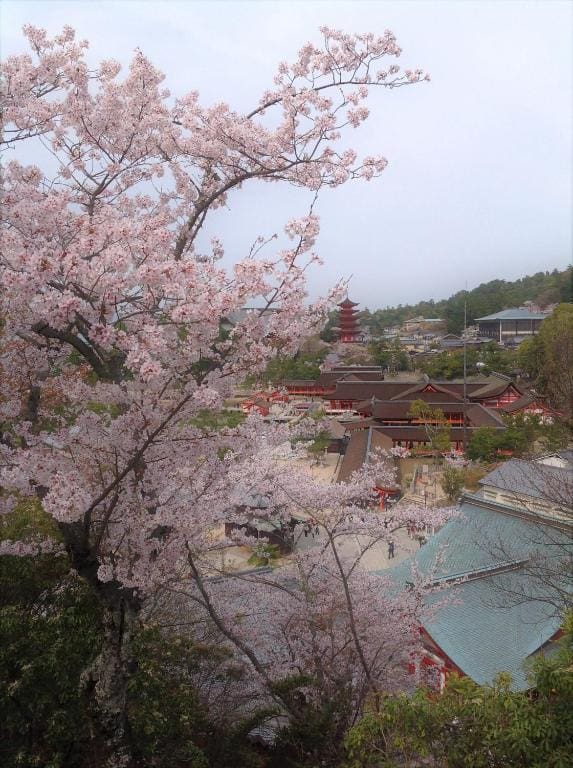
MIMARU Kyoto Station

MIMARU Kyoto Station is one of the strongest choices for families, groups, and travelers with several suitcases. The apartment-hotel setup usually works better when you need space, separate sleeping arrangements, a kitchen, or a room that can handle more than two people comfortably.

This is a good example of why I often prefer hotels over Airbnb in Japan. You can get apartment-style practicality while still having a hotel structure. The watch-out is that you should not expect a classic full-service luxury hotel feel.

Kyoto Century Hotel

Kyoto Century Hotel is a softer station-area option if you want Kyoto Station convenience but prefer a more classic full-service hotel feel. It is close enough to the station to make arrivals and departures easy, and it works well for adults who want practical comfort.

I would consider it for station convenience without the most businesslike feel. As with the other station hotels, the main compromise is the area itself.

Gion and Southern Higashiyama

Gion and Southern Higashiyama are the right choice when you want Kyoto to feel close the moment you step outside. This area works well if your trip focuses on Kiyomizu-dera, Yasaka Shrine, Kodaiji, traditional streets, evening walks, tea, geisha culture, and higher-budget stays.

If you are planning a private geisha dinner in Kyoto or want to understand where to see geisha in Kyoto, staying on this side of the city can make the evening feel much easier.

The tradeoff is practical. Gion and Southern Higashiyama can involve more walking, taxis, buses, or transfers. Large luggage is more annoying here than at Kyoto Station. Cross-city sightseeing also takes more planning.
I would choose this area if east-side Kyoto is the point of the stay. If you mainly want easy restaurants, river access, and flexible transit, Downtown can give you a similar Gion-adjacent experience with less friction.

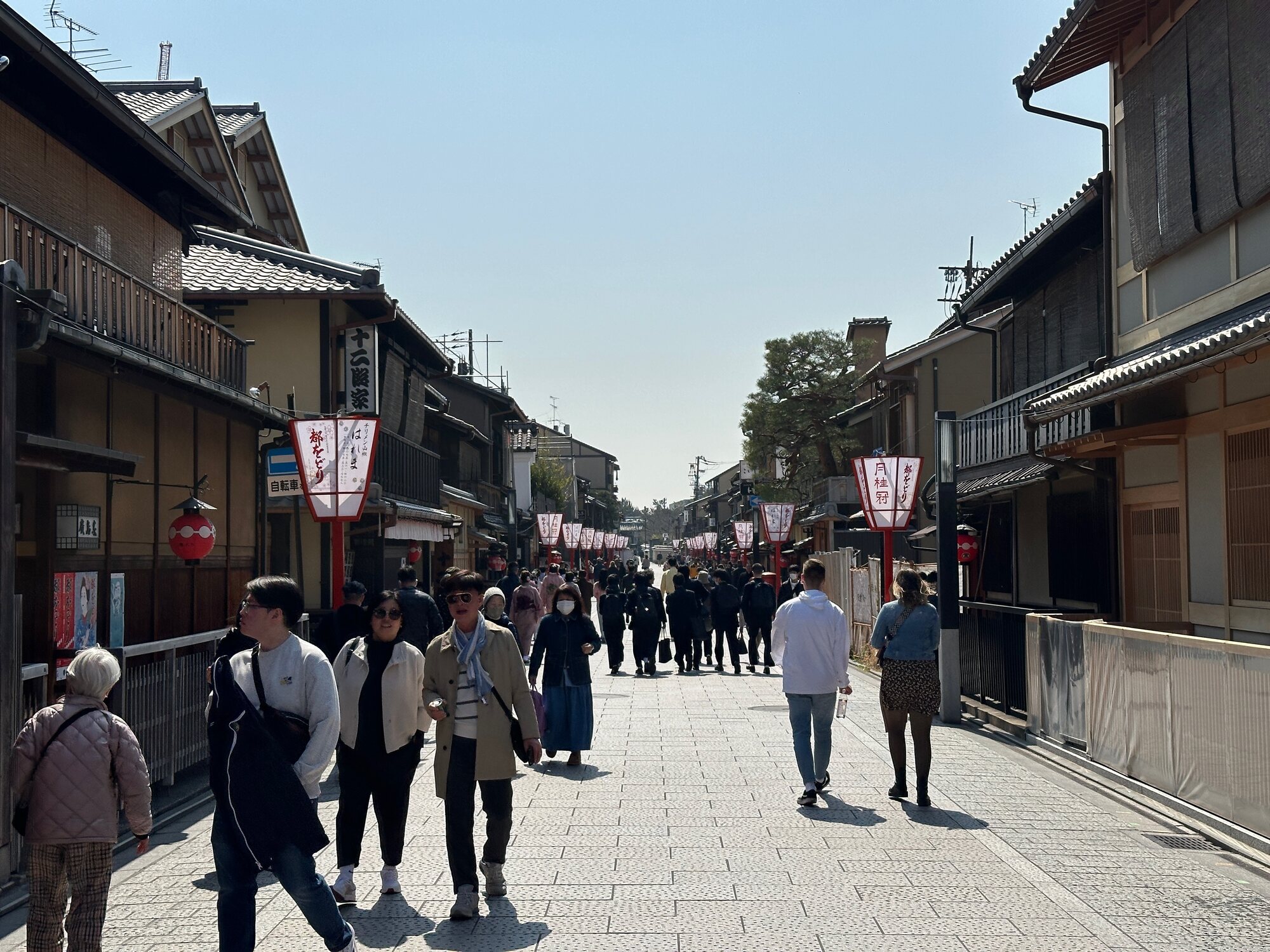
Crowds walking down a traditional street in Kyoto’s Gion district, lined with old wooden buildings and red lantern banners
Gion street feels wonderfully lively

HOTEL THE CELESTINE KYOTO GION

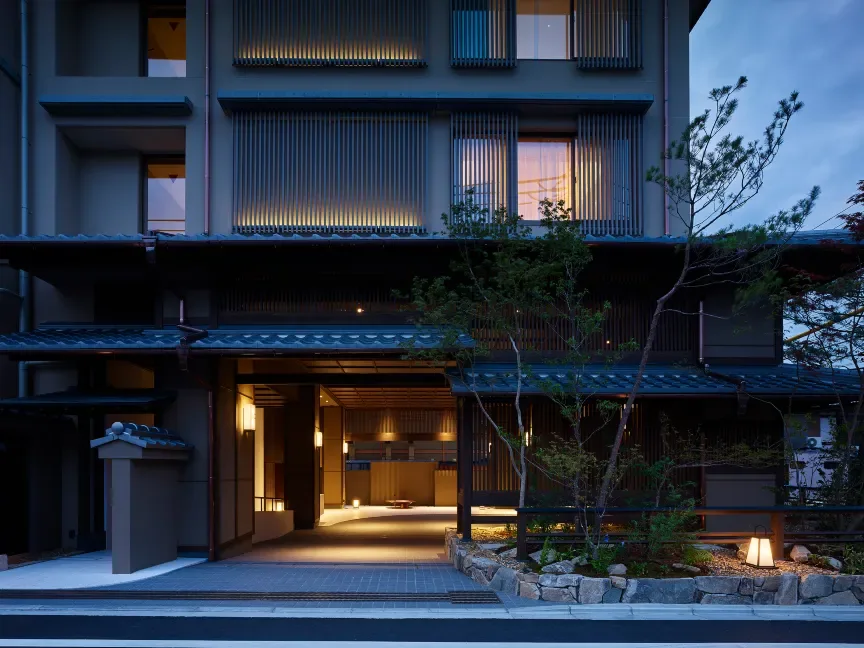
HOTEL THE CELESTINE KYOTO GION is one of the more practical Gion-side choices because it gives you access to Southern Higashiyama without going fully tiny, remote, or ryokan-like. It works well if you want east-Kyoto evenings but still want a hotel that feels easy to use.

The Celestine Kyoto Gion hotel entrance at dusk with warm lights and a traditional-style facade
Image via Trip.com

This is a good fit for couples and travelers focusing on Gion, Kiyomizu, Yasaka, and evening walks. The watch-out is that it still relies more on walking, taxi, or shuttle logic than a Downtown or Kyoto Station hotel.

Sowaka

Sowaka is the hotel I would look at if the goal is a strong old-Kyoto stay in the Yasaka and Southern Higashiyama area. It is best for couples, special occasions, and travelers who want the stay itself to feel tied to Kyoto’s traditional side.

The caution is that this is not the most flexible family or logistics-first choice. Some room policies can be age-specific, so check the exact room category and child policy before booking.

Park Hyatt Kyoto

Park Hyatt Kyoto is for travelers who want the hotel to be one of the main memories of the Kyoto stay. The location near Ninenzaka, Kodaiji, and Yasaka Pagoda is hard to beat if your ideal Kyoto evening is walking back through the east-side streets rather than optimizing transfers.

I would treat it as a high-budget, hotel-as-experience choice. Choose it for the hotel setting and east-side location, not for day-trip convenience or value.

ART MON ZEN KYOTO

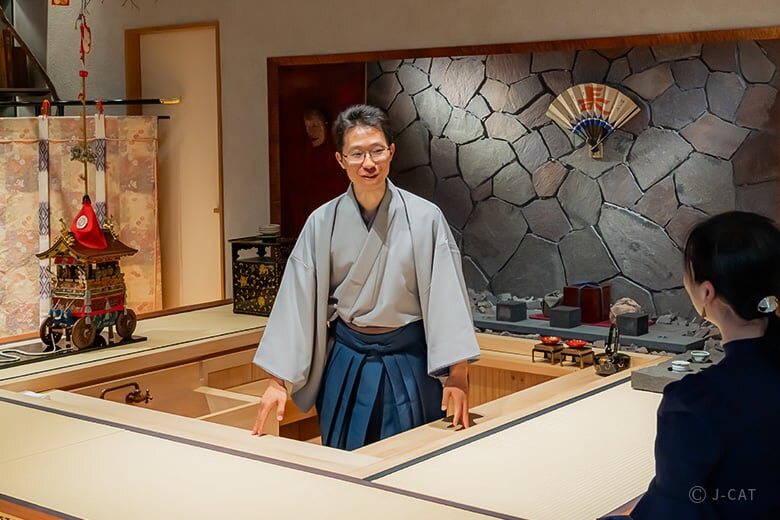
ART MON ZEN KYOTO sits near Furumonzen and works well for travelers who want Gion access with an art-focused hotel stay. It also has a Wabunka experiential-stay version that combines a one-night stay with an art class, gallery tour, and tea ceremony.

Man in a kimono standing behind a counter in a Kyoto art gallery or restaurant interior
Image via Wabunka

This is best for adults who want a premium cultural stay rather than a simple hotel room. If you want the Wabunka version, check the specific plan carefully because the experience, price, and group size are different from a normal hotel booking.

Central Kyoto: Karasuma Oike, Nijo, and the Imperial Palace Side

Central Kyoto is the area I would check when Downtown feels too busy, Gion feels too expensive or inconvenient, and Kyoto Station feels too practical. Around Karasuma Oike, Nijo, and the Imperial Palace side, you can get calmer streets, subway access, and often better room comfort.

This area works especially well for longer stays. You are still central, but you do not have to sleep in the busiest restaurant and shopping zone. Karasuma Oike is particularly useful because it connects the Karasuma and Tozai subway lines.

The tradeoff is evening energy. If you want to step out directly into the strongest restaurant and nightlife area, Downtown is easier. If you want a calmer base that still moves well, Central Kyoto is a strong alternative.

Ace Hotel Kyoto

Ace Hotel Kyoto is directly connected to Karasuma Oike Station, which makes it one of the easiest Central Kyoto hotels to understand. It is good for travelers who want a design-led stay, subway convenience, and walkable access toward Downtown.

I would consider it for couples, friends, or a family that wants central access with more personality than a standard chain hotel. The watch-out is price: the design and location can carry a premium.

The Royal Park Hotel Iconic Kyoto

The Royal Park Hotel Iconic Kyoto is a strong Karasuma Oike option if you want a polished hotel with subway convenience and useful facilities. It works well for travelers who want central access but do not need Gion or Kawaramachi outside the door.

This is a good fit for mixed east-west sightseeing because the subway makes movement easier. Check the room category carefully if a bathtub is important, because some room types may use shower booths only.

Kyoto Brighton Hotel

Kyoto Brighton Hotel is a calm central choice near the Imperial Palace side. It makes sense if you want larger rooms, a gentler setting, and a more relaxed premium stay, especially for families or longer visits.

The tradeoff is that it is less immediate than Downtown. You may rely more on shuttle, taxi, or subway planning. I would book it because you want space and calm, not because you want the easiest restaurant-hopping area.

HOTEL THE MITSUI KYOTO

HOTEL THE MITSUI KYOTO is the ultra-premium central option near Nijo Castle. It is best when you want a refined city stay with spa value and a location that feels calm without being far from central Kyoto.

I would not choose it for value or nightlife. I would choose it if you want one of Kyoto’s strongest luxury city hotels and the budget supports it.

Okazaki and Northern Higashiyama

Okazaki, Keage, and Northern Higashiyama are good if your Kyoto trip leans toward museums, Nanzenji, Heian-jingu, the Philosopher’s Path side, and calmer premium stays. This is not the first area I would recommend to most first-time travelers, but it can be excellent when the trip is already east-side and slower.

The Tozai Line helps, especially around Keage, but this area is still less plugged into Kyoto’s busiest evening core. Kyoto’s official transport guidance for Okazaki also points travelers toward rail routes where possible instead of relying only on buses around crowded sightseeing areas.

Choose this area if your hotel and east-side mornings are part of the plan. Skip it if you want the easiest access to restaurants, shopping, and mixed city movement.

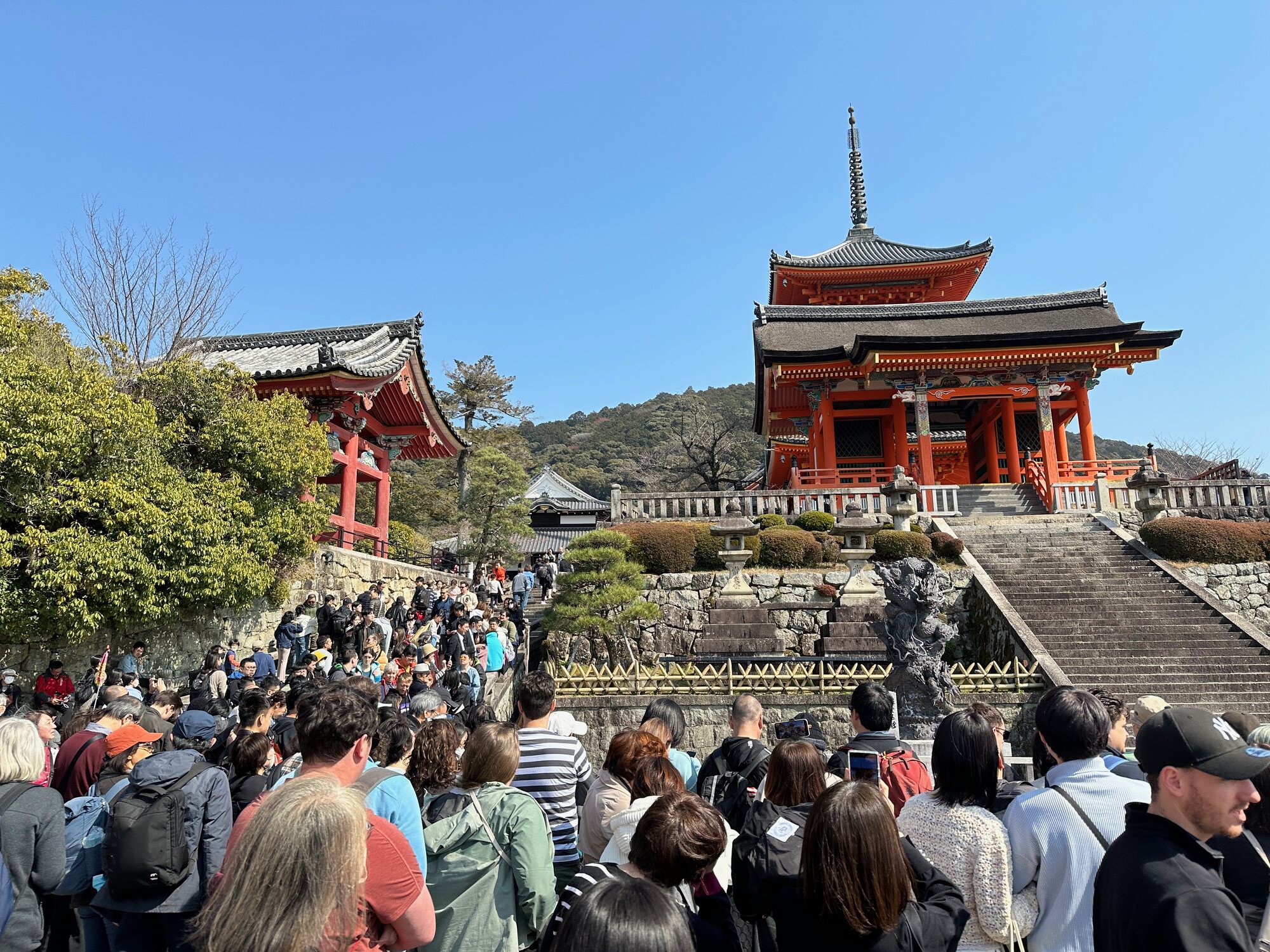
Crowd walking up the stone steps toward Kiyomizu-dera in Kyoto, Japan, with red temple halls and a clear blue sky
Crowds at Kiyomizu-dera in Kyoto

The Westin Miyako Kyoto

The Westin Miyako Kyoto is the most obvious large premium hotel in this area. It works well if you want Keage access, a full-service hotel, spa facilities, and enough scale for families or longer stays.

I would consider it for a comfortable east-side premium base. The watch-out is that it can feel more self-contained than neighborhood-led, so you should want the hotel facilities as part of the appeal.

Hotel Okura Kyoto Okazaki Bettei

Hotel Okura Kyoto Okazaki Bettei is better for travelers who want a smaller, calmer luxury stay around Okazaki. It fits couples and adults who want a softer base near museums and northern Higashiyama.

The tradeoff is rail convenience. It is not as immediately connected as Kyoto Station, Downtown, or Karasuma Oike, so I would choose it for calm and cultural access, not maximum efficiency.

Nanzenji Sando Kikusui

Nanzenji Sando Kikusui is more of a destination-style stay than a normal Kyoto base. It makes sense if you want the garden, privacy, and Nanzenji setting to be the reason for the night.

I would save it for a special one-night stay rather than use it as the default base for a busy first Kyoto trip.

Arashiyama

Arashiyama is beautiful to stay in when you treat it as its own experience. Early mornings near the river, Togetsukyo Bridge, the bamboo grove area, and nearby temples can feel very different when you are already sleeping there.

But Arashiyama is not the easiest Kyoto base for most first-time trips. It sits west of the main city core, and cross-city sightseeing takes more time. Evenings also finish earlier than in Downtown or Gion.

I would use Arashiyama as one special night or as a deliberate west-Kyoto stay. I would not usually make it the only Kyoto base if the trip includes a lot of east-side temples, restaurants, day trips, and general city movement.

Suiran, a Luxury Collection Hotel, Kyoto

Suiran is the main Arashiyama luxury choice if you want the stay itself to be the point. It fits travelers who want a high-end river-and-mountain setting and are happy to spend more for a one-night break from the city core.

This is best for couples and premium travelers. The watch-out is location: choose it because you want Arashiyama, not because you want the easiest base for all of Kyoto.

MUNI Kyoto

MUNI Kyoto is a smaller luxury choice near Togetsukyo Bridge. It works well if you want an Arashiyama stay with a more design-led hotel feel and strong food-and-river appeal.

I would look here for a one-night Arashiyama break. The same location tradeoff applies: it is better as a focused stay than as a practical base for every Kyoto day.

Togetsutei

Togetsutei is a more traditional Arashiyama ryokan-style option. It is best if you want meal timing, baths, and Japanese inn routines to be part of the stay.

I would treat it as a ryokan-style one-night choice. If you need total schedule flexibility, a regular hotel in Downtown or Kyoto Station may be easier.

Conditional Areas: Fushimi and Nishijin / Kitano

Fushimi and Nishijin can be good choices, but I would not put them beside Downtown, Kyoto Station, or Gion as default answers.

Fushimi works if your route is deliberately southbound. Maybe you want Fushimi Inari very early, Uji, Nara, or the sake district. In that case, staying closer to Fushimi can reduce backtracking. For most mixed Kyoto trips, though, it is too specialized.

Nishijin and Kitano work when you want a machiya, textile-area context, an older residential feeling, or a cultural-property stay. The tradeoff is convenience. You will likely use more buses, taxis, or careful route planning than you would from Downtown or Kyoto Station.
Wabunka can be useful when you want a private cultural stay rather than a normal hotel booking. Wabunka offers private cultural experiences and stays for international travelers in Japan, with no mixed groups. It works with Japanese artisans, cultural hosts, ryokan, and special properties, and many plans include interpreter support when the host does not speak English. Its stays are tied to places where the stay itself has cultural value, so they make the most sense when you want one special Kyoto night rather than a purely practical base.

Nishijin Fujita is a good example. It is a private machiya stay in Nishijin with Wabunka cultural add-ons available, such as tea, kimono, and geisha or maiko entertainment options depending on the plan. I would consider it for travelers who want privacy, residential Kyoto, and a stay that feels deliberately different from a normal hotel.

Kyoto Hotel Shortlist Comparison

HotelAreaBest FitStyleAccess LogicWatch-Out
Cross Hotel KyotoDowntownFirst Kyoto stay, mixed sightseeingUpper-mid city hotelStrong walkability and multiple nearby linesJR days need a transfer
THE GATE HOTEL KYOTO TAKASEGAWADowntownCouples, adults, design-led city stayUpper-mid to luxuryShijo-Kawaramachi and Gion-Shijo accessSmaller entry categories
GOOD NATURE HOTEL KYOTODowntownFamilies, groups, longer staysModern upper-mid hotelVery central Kawaramachi locationLess traditional in feel
Solaria Nishitetsu Hotel Kyoto PremierDowntown / SanjoCalmer Kamo River side stayUpper-mid hotelSanjo and Kyoto Shiyakusho-mae logicLess group-focused
Hotel Granvia KyotoKyoto StationRail, luggage, late arrivalsStation hotelInside Kyoto StationLess neighborhood character
Hotel Vischio Kyoto by GRANVIAKyoto StationPractical short stayMidrange to upper-mid hotelVery close to Kyoto StationStation-area feel
MIMARU Kyoto StationKyoto StationFamilies and groupsApartment hotelStation access with larger room logicLess full-service
Kyoto Century HotelKyoto StationStation convenience with softer serviceFull-service hotelVery close to Kyoto StationStill station-based
HOTEL THE CELESTINE KYOTO GIONGion / HigashiyamaEast-Kyoto stay with hotel comfortUpper-mid to luxury hotelWalk, taxi, and shuttle logicLess efficient for JR-heavy days
SowakaGion / HigashiyamaCouples and special occasionsLuxury heritage hotelEast-side walkingCheck child and room policies
Park Hyatt KyotoGion / HigashiyamaHigh-budget memory stayUltra-luxury hotelNinenzaka and Kodaiji locationVery expensive
ART MON ZEN KYOTOGion / SanjoArt-focused premium stayLuxury boutique hotelGion and Sanjo accessBetter for adults
Ace Hotel KyotoCentral KyotoSubway-first design stayUpper-mid to luxury hotelKarasuma OikeStyle premium
The Royal Park Hotel Iconic KyotoCentral KyotoMixed east-west sightseeingUpper-mid to luxury hotelKarasuma OikeCheck bath setup by room
Kyoto Brighton HotelCentral KyotoSpace, calm, familiesUpper-mid hotelShuttle, taxi, and subway planningLess immediate
HOTEL THE MITSUI KYOTOCentral KyotoLuxury city stayUltra-luxury hotelNijojo-maeHigh price
The Westin Miyako KyotoOkazaki / KeagePremium east-side baseLuxury hotelKeage and shuttle logicMore self-contained
Hotel Okura Kyoto Okazaki BetteiOkazakiCalm luxury staySmall luxury hotelTaxi, bus, and Keage logicLess rail-convenient
Nanzenji Sando KikusuiNanzenji / KeageDestination-style one nightLuxury inn-style stayEast-side walking and taxiNot a default base
SuiranArashiyamaPremium Arashiyama nightUltra-luxury hotelWest-Kyoto focusInefficient for all-city sightseeing
MUNI KyotoArashiyamaDesign-led one-night breakLuxury hotelTogetsukyo areaLimited evening action nearby
TogetsuteiArashiyamaRyokan-style Arashiyama stayTraditional innArashiyama focusLess flexible schedule

Ryokan, Machiya, and Wabunka-Style Experiential Stays

For most travelers, I would separate the Kyoto stay into two decisions.

First, choose the practical main base. That might be Downtown, Kyoto Station, Gion, or Central Kyoto depending on the route.

Then decide whether you want one special night. That could be a ryokan, machiya, Arashiyama hotel, cultural-property stay, or Wabunka experiential stay. I would usually not stay in a ryokan for the whole Kyoto trip unless the trip is specifically centered on that. Ryokan are often best for one night because meals, bath time, check-in pace, and service style become part of the experience.

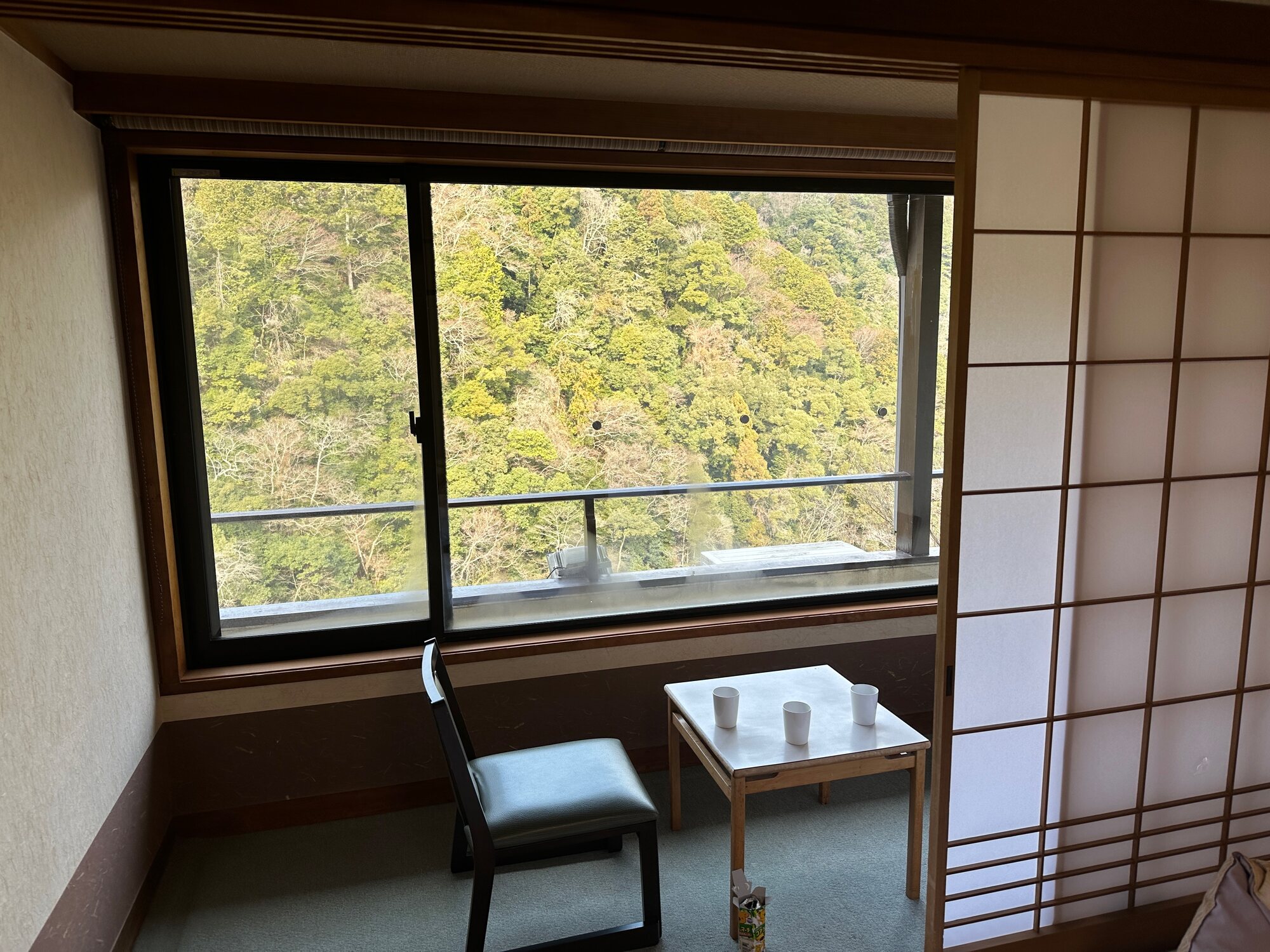
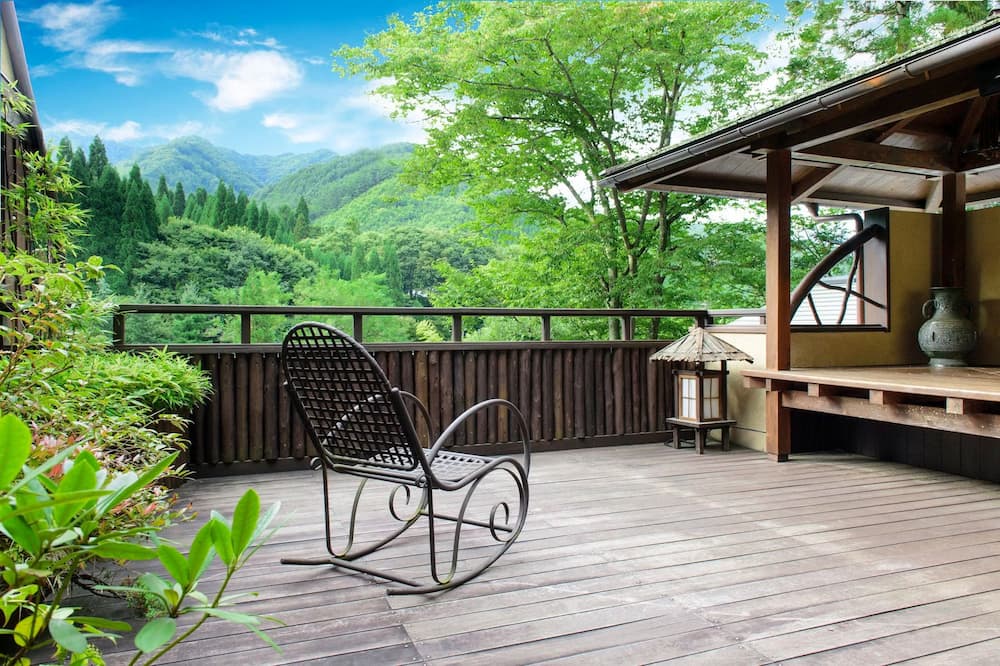
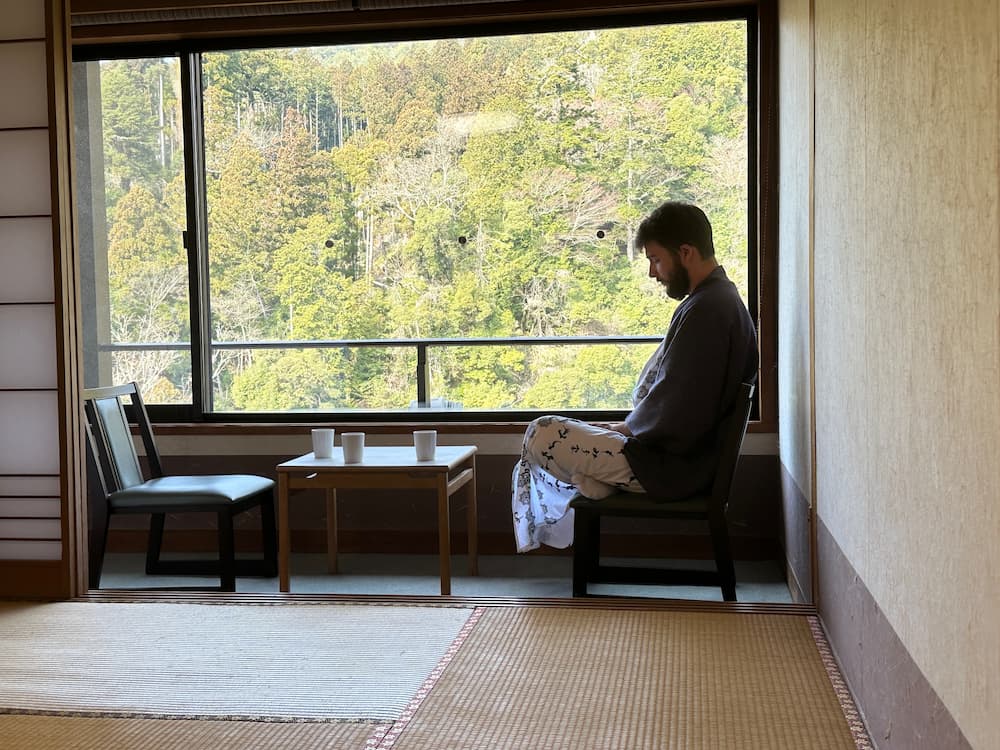
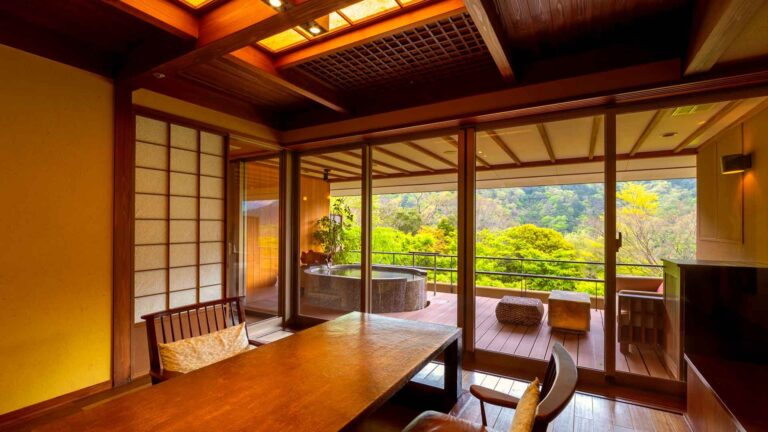
Ryokan room balcony with a table and chairs looking out onto a lush green forest
I loved the forest view from my ryokan

If you are new to this kind of stay, read my ultimate guide to staying in a ryokan in Japan before booking. It explains the practical side in more detail than this Kyoto area guide should.

Some Wabunka Kyoto stays combine accommodation with private cultural access. They are best for travelers who want a premium, private experience and are comfortable spending more for something more personal than a standard hotel booking. Wabunka is not the main hotel solution for most Kyoto trips. It is better as the one night you remember separately.

Sumiya Ryokan

Sumiya Ryokan is one of the strongest central options for a Kyoto ryokan night because it keeps the stay special without pushing you far from the city core. Wabunka’s plan includes a one-night stay, Kyoto-style breakfast, and a private tea experience at the ryokan.

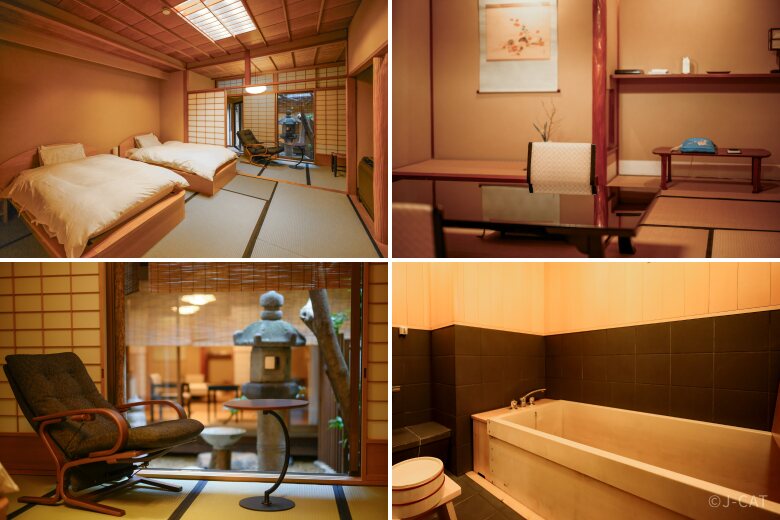
Traditional tatami room and bath at Sumiya Ryokan in Kyoto
Image via Wabunka

This is the kind of stay I would consider after booking a practical main base. It works well if you want one traditional central Kyoto night rather than a full ryokan-led itinerary.

Hiiragiya

Hiiragiya is one of Kyoto’s classic high-end ryokan names. It makes sense for travelers who want a serious ryokan night in a central location and understand that the meal timing, service, and pace are part of what they are paying for.

I would save it for a deliberate special occasion or premium ryokan night. For a rail-heavy or budget-sensitive stay, a regular hotel will be easier.

Yoshida-Sanso

Yoshida-Sanso fits the Northern Higashiyama and Okazaki logic. It is better as a retreat-like night than as a convenience-first base, and the Wabunka stay adds private access and guidance around the property.

I would consider it if you want one slower, culture-led night and you are happy to let the stay set the pace.

Marufukuro

Marufukuro is different from a ryokan. It is a design hotel in the former Nintendo headquarters, so the appeal is story, architecture, and a stay that feels separate from a normal chain hotel.

This can work if you want a special hotel night without switching into ryokan rules. The location is not the same as Gion-at-night, so choose it for the property story rather than east-side walking.

Before You Book a Kyoto Hotel

Kyoto hotel pricing can change a lot by season, weekday, room type, and cancellation rules. A hotel that looks like good value in February can be much harder to justify during cherry blossom season, autumn foliage, or Gion Matsuri.

Kyoto’s accommodation tax also changed on March 1, 2026. The current official Kyoto accommodation tax page lists the tax per person, per night as:

Accommodation Fee per Person per NightTax
Under ¥6,000¥200
¥6,000 to ¥19,999¥400
¥20,000 to ¥49,999¥1,000
¥50,000 to ¥99,999¥4,000
¥100,000 or more¥10,000

That tax is not usually the main cost of the trip, but it becomes noticeable at luxury hotels and ryokan. If you are comparing Kyoto and Osaka hotel prices, or trying to work out whether a special night fits the budget, use the Japan Trip Cost Calculator as a broader planning tool.

Before booking, check these details:

  • Exact station distance: A hotel can say Kyoto Station, Gion, or Higashiyama and still be much less convenient than it sounds.
  • Room size and bedding: Twin rooms, family rooms, sofa beds, and extra-bed rules vary by property.
  • Child policies: Check this especially at ryokan, small luxury hotels, and heritage-style stays.
  • Bath wording: Public bath, onsen, private bath, spa, and in-room bath do not all mean the same thing.
  • Shuttle details: If a hotel mentions a shuttle, verify the current schedule before relying on it.
  • Luggage storage: This is one reason hotels are often easier than apartments in Japan.
  • Bus dependence: If your plan depends on buses during peak seasons, build in extra patience or adjust the route toward rail, subway, walking, taxi, or luggage forwarding.
  • Hotel moves: Moving once for a special night can be worth it. Moving several times inside Kyoto usually needs a very clear reason.

If you are planning a first Japan route and Kyoto is only one part of it, this is also where a broader 14-day Japan itinerary can help. Your Kyoto hotel should fit the whole route, not only the Kyoto section.
If Tokyo is also on your route, use the same base-first logic in my guide to where to stay in Tokyo. The details are different, but the decision is similar: choose the hotel area that makes your hardest days easier.

Final Recommendation

If your Kyoto plan is mixed and you want the safest all-round base, start with Downtown Kyoto. I would compare Cross Hotel Kyoto, THE GATE HOTEL KYOTO TAKASEGAWA, GOOD NATURE HOTEL KYOTO, and Solaria Nishitetsu Hotel Kyoto Premier first.

If the trip has many trains, day trips, suitcases, kids, late arrivals, or early departures, choose Kyoto Station. Hotel Granvia Kyoto, Hotel Vischio Kyoto by GRANVIA, MIMARU Kyoto Station, and Kyoto Century Hotel all fit that logic in different ways.
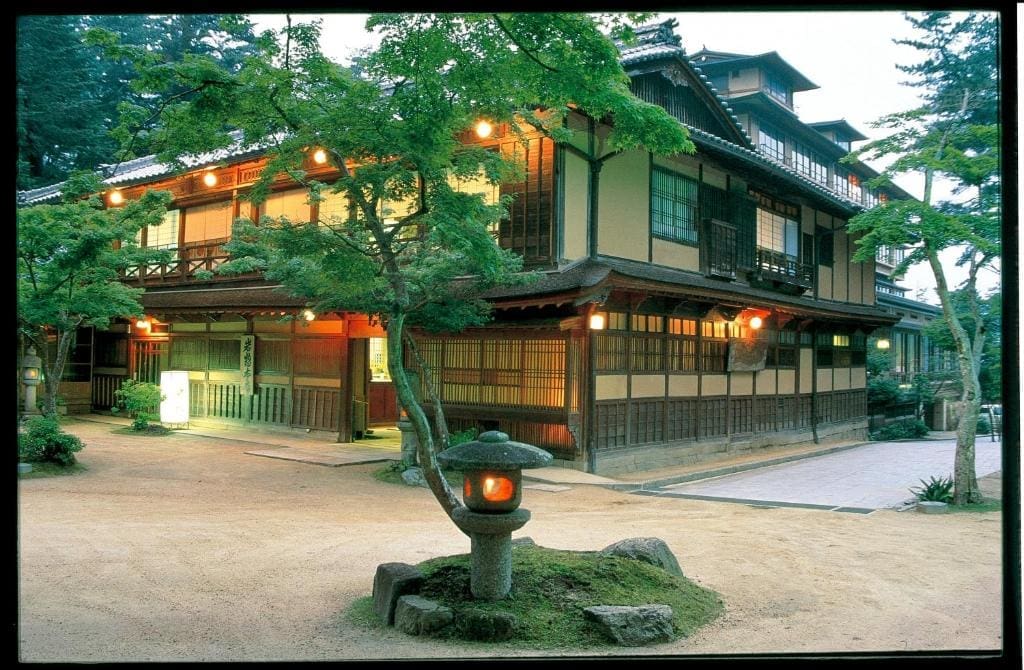
If the trip is mainly about east-side temples, traditional streets, evening walks, and a more Kyoto-specific hotel feeling, choose Gion or Southern Higashiyama. Just accept that you are trading some convenience for that experience.

For longer, calmer, or more premium stays, look at Central Kyoto or Okazaki / Keage. For one special night, consider Arashiyama, a central ryokan, Nishijin Fujita, or another Wabunka-style experiential stay.

My simple rule is this: book the hotel that makes your hardest travel days easier, then add one special Kyoto night only if it improves the trip.

If you’re deciding whether to stay overnight on Miyajima, I think the answer is usually yes. The island gets much better once the last wave of day-trippers leaves. You can walk around after dinner, see the shrine area without the daytime crowd, and get the kind of slower evening that Miyajima is actually good at.

If you are still deciding whether Miyajima belongs in the route at all, my guide to where to go in Japan gives the broader destination context.

The tricky part is choosing the right stay. On Miyajima, the best ryokan for you depends less on star ratings and more on what kind of night you want: old-school ryokan atmosphere, the easiest location, better food, a strong view, or more space for a family stay. If you are still deciding whether a ryokan (traditional Japanese inn) makes sense for your trip at all, read my guide to staying in a ryokan in Japan first.

Some links on YavaJapan are affiliate links. If you book or buy through them, I may earn a small commission at no extra cost to you. It helps support the site, and I only link to places, stays, and experiences I genuinely think are worth recommending.

At a Glance

  • Best overall: Iwaso if you want the classic Miyajima ryokan stay and are willing to pay for it.
  • Best affordable stay: Ryoso Kawaguchi if you want a quieter traditional stay with better food than the price suggests.
  • Best for food-first travelers: Yamaichi Bekkan if dinner is a bigger priority for you than baths or old-school ambiance.
  • Best for one-night couples: Jukeiso if waking up to the shrine-side view is your main reason for staying.
  • Best for families or small groups: Miyajima Seaside Hotel if you want more space and less foot traffic around you.
  • Best modern luxury: Kurayado Iroha if you want real beds, easy access, and a more polished stay.

Where to Stay on Miyajima

If easy arrival is your top priority, stay close to the ferry and Omotesando area. That is where Yamaichi Bekkan and Kurayado Iroha make the most sense. You can drop your bags quickly and walk almost everywhere.

If you want a traditional feel without paying luxury prices, the quieter lanes near the shrine area are a better fit. Ryoso Kawaguchi works well here because it feels removed from the main foot traffic without becoming inconvenient.

If your priority is the view, accept a little extra effort. Jukeiso sits uphill, and that is exactly why it has the strongest sightline on this list.

If you want space, sea views, and an easier family setup, look north instead of staying in the busiest part of town. Miyajima Seaside Hotel is farther from the shrine area, but that tradeoff works in its favor if you are staying with kids or a lot of luggage.

If you want the most classic higher-end overnight, Iwaso is still the place most people should start. If you want a cleaner, more modern version of a ryokan stay, Kurayado Iroha is the better fit.

Quick Comparison Table

PropertyAreaBest forBath setupPrice bandBooking
Yamaichi BekkanNear Miyajima PierFood-first couples or solo travelersPrivate in-room bath, no onsenLower-mid-rangeBooking.com
Ryoso KawaguchiQuiet lane near the shrine areaTraditional value and dinnerReservable private bath, no onsenLower-mid-rangeBooking.com
JukeisoHillside near Itsukushima ShrineOne-night couples and best view seekersShared bath plus reservable private bathMid-rangeBooking.com
Miyajima Seaside HotelNorth coastFamilies, groups, and sea viewsShared bath and open-air tubMid-rangeBooking.com
IwasoMomijidani ParkThe classic Miyajima ryokan stayOnsen and open-air bathHigher-endBooking.com
Kurayado IrohaMain street near the pierModern luxury and easiest accessRooftop public bathHigher-endBooking.com

The Best Ryokan in Miyajima

Yamaichi Bekkan: Best for Food-First Travelers

  • Best for: Couples or solo travelers who care most about dinner and easy ferry access
  • Area: Near Miyajima Pier
  • Stay style: Small family-run ryokan
  • Bath setup: Private in-room bath, not an onsen stay
  • Meals: Dinner is one of the main reasons to book it
  • Price band: Lower-mid-range
  • Access: One of the easiest walks on this list from the ferry
  • Watch-out: If you want a big public bath or a classic old ryokan feel, this is not the right pick

I would start with Yamaichi Bekkan on Booking.com if your main priority is food. It is one of the easiest stays to use on Miyajima, especially if you are arriving late, traveling light, or only staying one night. That convenience goes further here than it would in a bigger destination because Miyajima gets much calmer once the last daytime crowd clears out.

The stay itself is simple. Rooms are small, the setup is low-key, and it does not try to sell you a grand old ryokan experience. What makes it worth booking is that the meal side feels stronger than the price bracket suggests. If you would rather have good food and an easy stay than formal atmosphere, that tradeoff makes sense.

Minimalist Japanese-style room at Yamaichi Bekkan with tatami flooring, hanging scroll, and low display shelf.

It is also one of the more practical choices if you want something personal without making the whole stay feel like work. I would book this for a short Miyajima overnight where you want a good dinner, a straightforward arrival, and a place that still feels warm rather than generic.


Ryoso Kawaguchi: Best Quiet Traditional Value

  • Best for: Travelers who want a calmer traditional stay without paying luxury prices
  • Area: Quiet lane near the shrine area
  • Stay style: Traditional small ryokan
  • Bath setup: Reservable private bath, not an onsen
  • Meals: Strong dinner and breakfast reputation
  • Price band: Lower-mid-range
  • Access: Easy walk to the shrine area, but quieter than the main street
  • Watch-out: The appeal is warmth and food, not polish or resort-style facilities
Traditional tatami room at Ryoso Kawaguchi with low table, zabuton cushions, and a view of trees through the window.

If you want the stay on this list that feels most quietly grounded, I would start with Ryoso Kawaguchi on Booking.com. It is not flashy, and that is part of the point. This is the kind of place that makes sense if you want a more traditional Miyajima overnight without jumping straight to Iwaso prices.

What I like here is the balance. You stay close enough to the shrine area to enjoy the island properly, but you are not planted right in the busiest part of the foot traffic. That gives the stay a calmer feel once evening starts. If your idea of a good ryokan night is tatami room, decent meal, private bath slot, and less noise outside, this is one of the strongest value choices on the island.

Japanese dinner set at Ryoso Kawaguchi with grilled beef, assorted sashimi, soup, and bottles of sake.

I would take this over a more generic hotel if you want the overnight to actually feel different from staying on the mainland. Just do not book it expecting a luxury property. The reason to stay here is that it feels personal and properly Miyajima-sized.


Jukeiso: Best for the View

  • Best for: Couples and one-night travelers who want the best visual payoff
  • Area: Hillside near Itsukushima Shrine
  • Stay style: Mid-range classic ryokan
  • Bath setup: Shared bath plus reservable private bath
  • Meals: Dinner and breakfast plans are part of the appeal, but check current plan details
  • Price band: Mid-range
  • Access: Uphill approach, with a shuttle option worth checking before you arrive
  • Watch-out: You are paying for the view first, not for the largest rooms or the best bath setup

If I were booking Miyajima for a couple and the main goal was to make the overnight feel memorable, I would look at Jukeiso on Booking.com very early. The view is the whole story here. Waking up or eating with that outlook over the shrine side of the island changes the stay.

You do give something up for that. The approach is less convenient than the pier-area stays, and this is not the ryokan I would choose for people who hate stairs, hate carrying luggage uphill, or want the smoothest arrival. But for a short Miyajima stay, that tradeoff is often worth it.

Traditional Japanese-style room at Jukeiso with tatami flooring, low table, and two single beds in a separate sleeping area.

This is also one of the better options if you want a clear sense of place without paying full luxury rates. I would not book it for a bath-led stay. I would book it because Miyajima is one of those places where the right view can carry the whole night.


Miyajima Seaside Hotel: Best for Families and Small Groups

  • Best for: Families, small groups, or travelers who want more space
  • Area: North coast of the island
  • Stay style: Ryokan-style hotel with larger room stock
  • Bath setup: Shared bath and open-air tub, check current hot spring details if that affects your choice
  • Meals: Meal plans are part of the stay logic here
  • Price band: Mid-range
  • Access: Shuttle access helps because it is away from the main ferry area
  • Watch-out: This is the least traditional stay on the list and the farthest from the shrine district
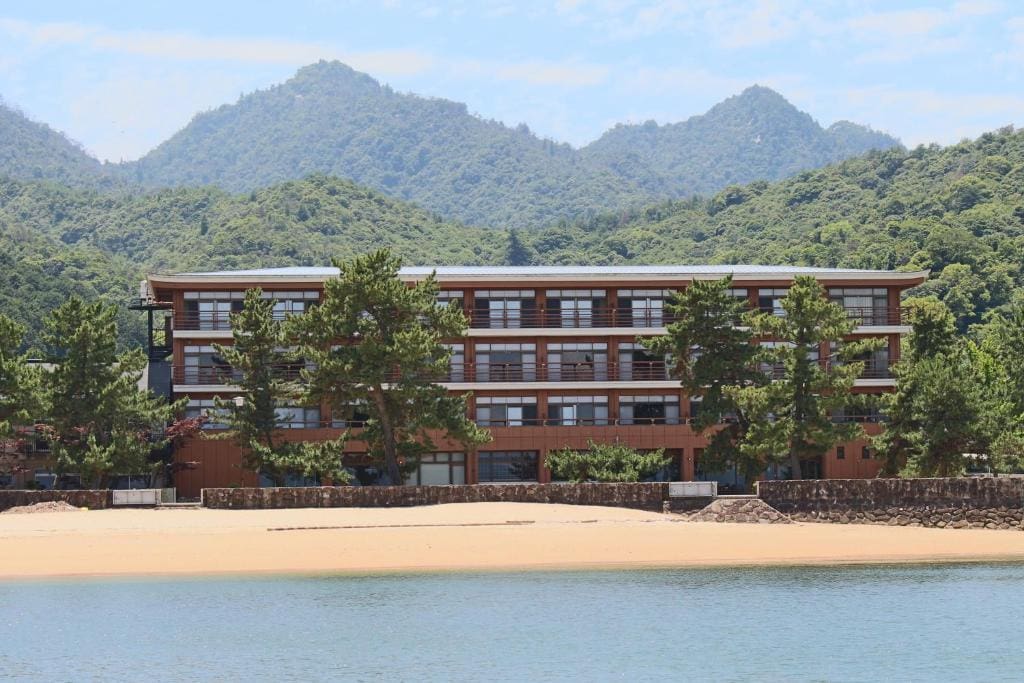
Exterior view of Miyajima Seaside Hotel with balconies facing the water, located along a quiet beach with forested hills behind it.

Miyajima Seaside Hotel on Booking.com makes the most sense when you want space and ease more than classic ryokan character. I would look here first if you are traveling with kids, carrying more luggage, or just do not want your Miyajima overnight to hinge on a tiny room in the center of town.

Its biggest strength is that it solves practical problems well. The rooms tend to feel less cramped, the sea-facing setting gives the stay a more open feel, and you are not dealing with the same amount of foot traffic you get near Omotesando. That makes it a better fit for families and groups than most of the smaller ryokan choices.

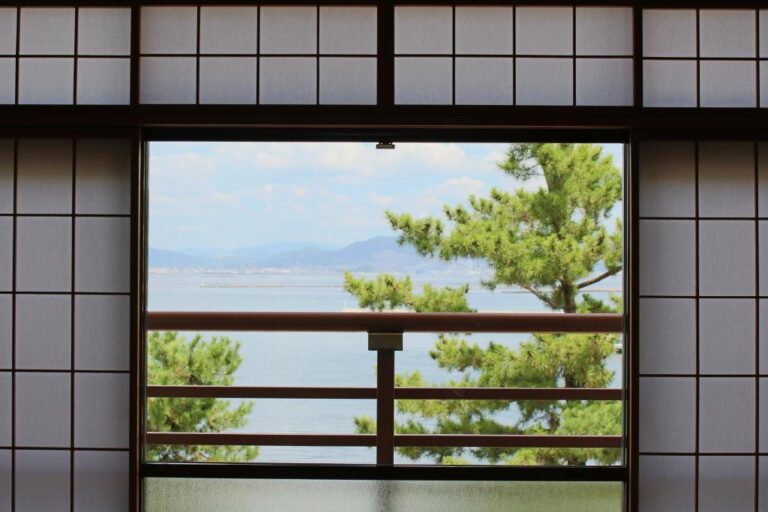
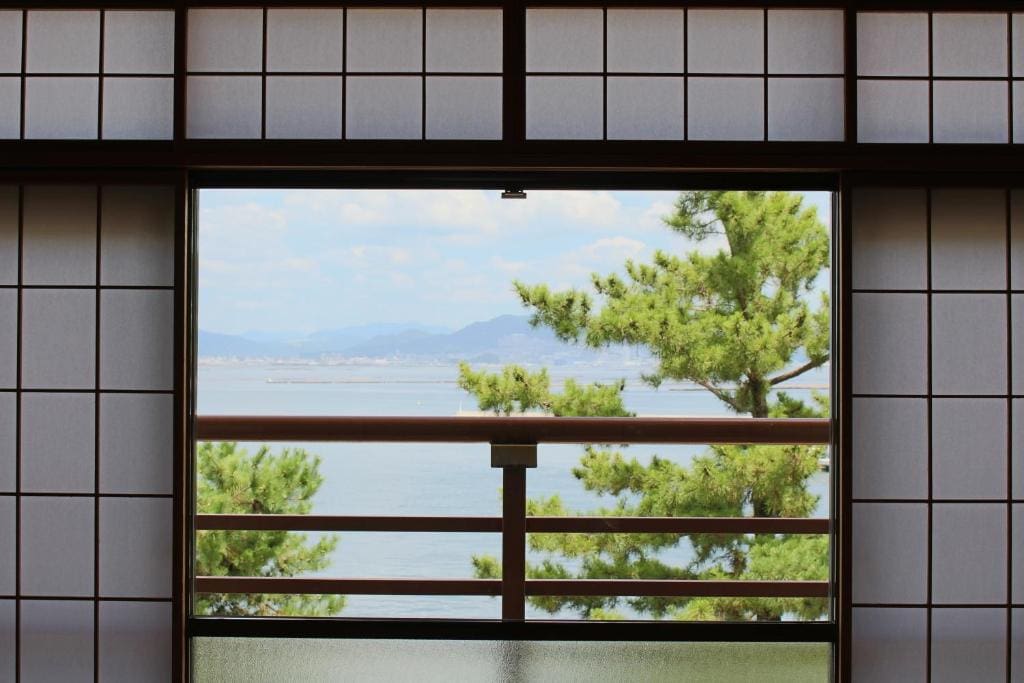
View of the ocean and pine trees seen through the window of a Japanese-style room at Miyajima Seaside Hotel.

I would not book this one if your main goal is a classic traditional inn experience. I would book it if you want the island overnight, dinner built into the stay, and a bath after dinner, but you still care a lot about space, smoother logistics, and a calmer family setup.

Do not assume the bath here fills the same role as a true onsen stay. For a lot of travelers this is a practical island base first, and that is exactly why it earns its place on the list.

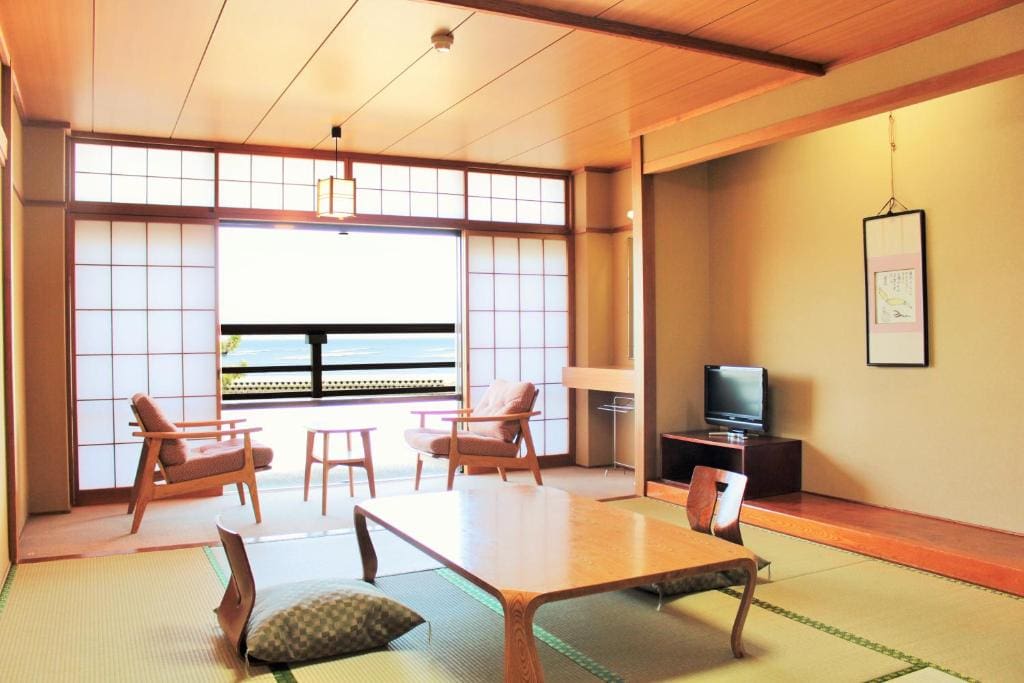
Bright Japanese-style guest room at Miyajima Seaside Hotel with tatami flooring, low table, and a seating area facing the ocean.

Iwaso: Best Overall if You Want the Classic Miyajima Ryokan Stay

  • Best for: Travelers who want the full classic Miyajima overnight
  • Area: Momijidani Park
  • Stay style: Historic ryokan
  • Bath setup: Onsen and open-air bath
  • Meals: Higher-end kaiseki style plans are a major part of the stay
  • Price band: Higher-end
  • Access: Walkable from the shrine area, but it sits in its own corner of the park
  • Watch-out: Room categories vary a lot, and some feel much more classic than others
Traditional wooden exterior of Iwaso ryokan with warm lighting, surrounded by trees and a stone lantern in the front garden.

If you only want one name to start with, I would still start with Iwaso on Booking.com. It is the stay on this list that most fully delivers the version of Miyajima people usually imagine: older grounds, a stronger sense of separation from the day crowd, dinner as part of the experience, and a bath setup that actually feels like a reason to stay overnight.

What makes Iwaso work is that the setting does a lot of the job for it. Staying in Momijidani Park means you feel the island differently in the morning and evening. Here, that counts for more than extra room polish. If you want the overnight to feel like a real break in the trip rather than just a convenient bed near the shrine, this is the one I would put first.

View from a tatami room at Iwaso looking out toward red autumn foliage through wooden balcony railings.

It is not the stay I would choose for everyone. Some travelers will prefer easier access, more modern rooms, or better value. But if your trip budget allows one proper Miyajima ryokan night, this is still the clearest best overall choice.

If a true hot spring matters a lot to you, this is one of the clearest reasons to keep Iwaso near the top of your shortlist.

Indoor and outdoor bath area at Iwaso with open windows looking out to a garden, featuring bamboo blinds and tiled floors.

Kurayado Iroha: Best Modern Luxury

  • Best for: Travelers who want comfort, real beds, and a more polished modern stay
  • Area: Main street near Miyajima Pier
  • Stay style: Modern luxury ryokan
  • Bath setup: Rooftop public bath
  • Meals: Meal style depends on plan, so check the room package carefully
  • Price band: Higher-end
  • Access: Very easy from the ferry and simple to use as a one-night stay
  • Watch-out: It does not give you the same classic ryokan mood as Iwaso
Spacious guest room at Kurayado Iroha with twin beds, a tatami seating area, and large windows overlooking the town.

If you want Miyajima to feel easy, refined, and comfortable from the minute you arrive, Kurayado Iroha on Booking.com is the one I would check. This is the stay for people who like the idea of a ryokan night but do not necessarily want a fully old-school setup with futons, older interiors, or a more formal service style.

That is why I think it works especially well for couples who want a higher-end night on the island without turning the stay into a traditional-inn performance. The design is cleaner, the location is easier, and the whole thing feels more frictionless than Iwaso.

Multi-course kaiseki dinner set at Kurayado Iroha, including sushi, soup, vegetables, grilled seafood, and various side dishes.

I would choose Iroha over Iwaso if modern comfort, easier access, and a simpler one-night luxury stay rank above history or onsen atmosphere for you. I would not choose it if the entire point of the overnight is to chase the most classic version of a Miyajima ryokan stay.

The rooftop bath helps, but this is still the more hotel-like luxury option on the page rather than the most traditional one.

Outdoor rooftop bath at Kurayado Iroha with a view of the sea and surrounding mountains.

If These Sell Out

If the six above are gone for your dates, I would first check Kinsuikan if you want a higher-end stay with a stronger hot spring angle and a very convenient location near the shrine area. After that, I would look at Kikunoya for a central stay with public baths and easier modern comfort, Miyajima Hotel Makoto for a larger traditional-style property near the pier, and Sakuraya if your main goal is a simpler lower-cost stay close to the ferry.

I would still start with Iwaso, Jukeiso, Ryoso Kawaguchi, Miyajima Seaside Hotel, Kurayado Iroha, and Yamaichi Bekkan. After that, those four are the first places I would check next instead of opening ten random listings.

Where I’d Start for Different Travelers

Before You Book

  • Do not assume every bath here is an onsen. Some properties have a regular shared bath, a reservable private bath, or an open-air tub without being a true hot spring stay.
  • Check the meal plan carefully. On Miyajima, dinner and breakfast change the whole value equation. A cheaper room can stop being a bargain very quickly if meals are not included.
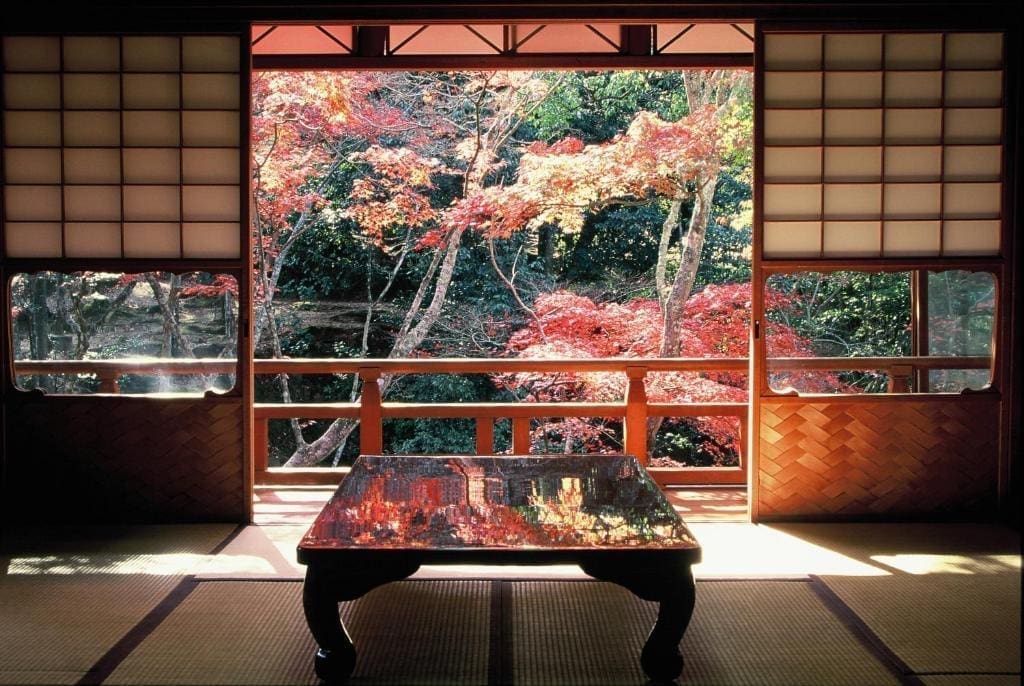
  • Do not assume you will sort dinner out after check-in. Once the day crowd leaves, your evening food options on Miyajima get thinner quickly, so meal plans carry more weight here than they do in a city stay.
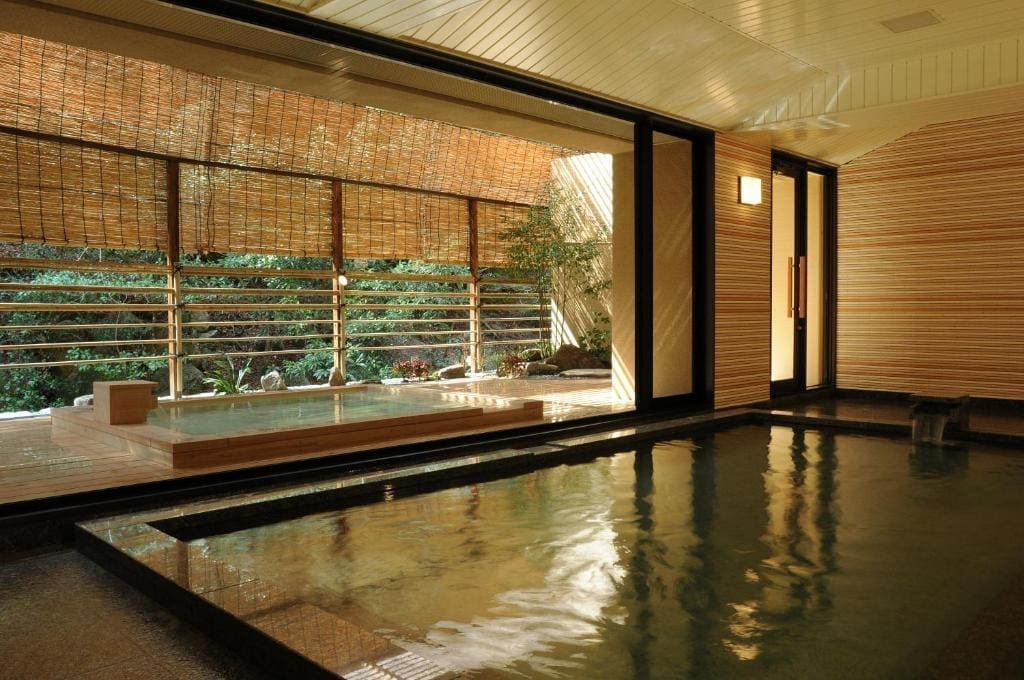
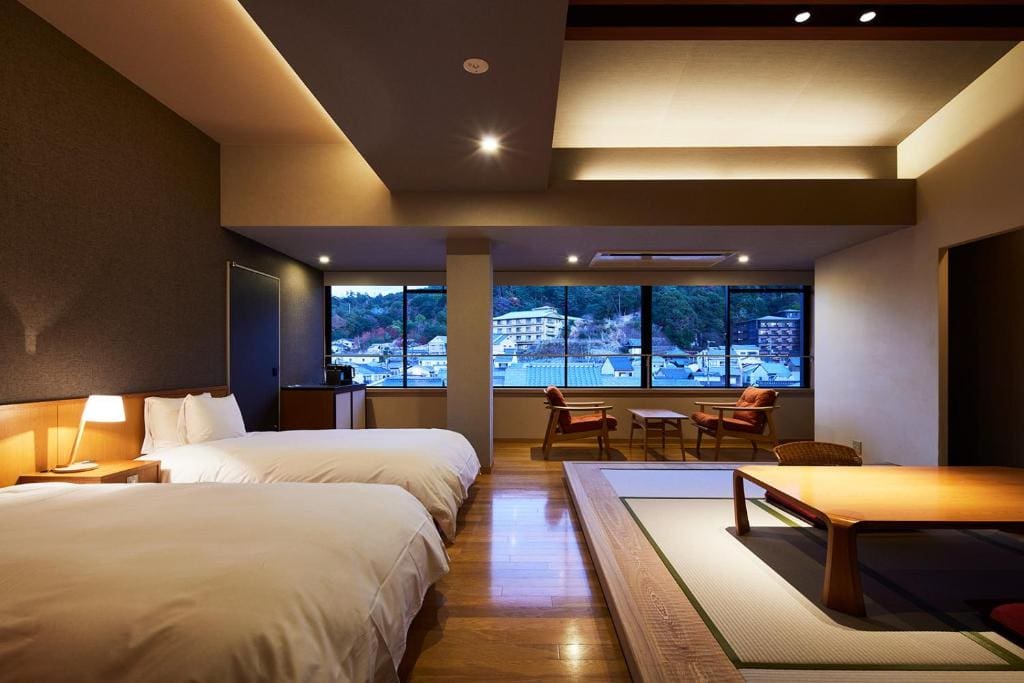
  • Room categories deserve closer attention than usual. The same property can have a much stronger room and a much weaker room under the same hotel name.
  • Access gets more important at night. If you hate hills, stairs, or dealing with luggage after the ferry, stay near the pier or confirm the shuttle details before you book.
  • Lower-cost and easy-location stays can disappear fast. If one of these places is the clear fit, I would not leave the booking to the last minute, especially for weekends and foliage-season dates.

The Bottom Line

For most people, I would start with Iwaso, Jukeiso, or Ryoso Kawaguchi, depending on whether you care most about classic atmosphere, the view, or value and food. If you want the easiest polished stay, go with Kurayado Iroha. If you are traveling as a family or just want more room to breathe, Miyajima Seaside Hotel is the practical choice.

Miyajima does not need a long stay. One night is enough. But if you are going to stay the night, I think it is worth choosing a place that makes the overnight feel like part of the destination rather than just a place to sleep.

Fukuoka is not the place I would choose if my only goal was a classic ryokan stay.

That does not mean it is a bad place to book one. It just means the best choice depends a lot on what you actually want.

If you are still deciding whether this kind of stay fits your trip at all, read my broader guide to staying in a ryokan in Japan first.

If you want something easy and convenient, there are a few decent options in the city.

If you want the kind of stay that really feels like a ryokan trip, the more interesting picks are usually outside central Fukuoka, in places that are still easy enough to reach but feel much more atmospheric once you get there.

That is the main split to keep in mind.

Some links on YavaJapan are affiliate links. If you book or buy through them, I may earn a small commission at no extra cost to you. It helps support the site, and I only link to places, stays, and experiences I genuinely think are worth recommending.

At a Glance

If you want the short version:

PropertyAreaBest ForStylePrivate Onsen?Booking
Zen-Oyado NishiteiFukuoka cityBest city ryokan experienceSmall traditional ryokanNoTripAdvisor
Yamamoto RyokanFukuoka cityBest budget city ryokanSimple traditional city stayNoBooking.com
Kyukamura ShikanoshimaFukuoka city areaBest seaside escape without leaving the city areaResort-like Japanese stayNo private in-room bathBooking.com
Akizuki Spa Ryokan SeiryuanAsakuraBest overall near FukuokaLuxury onsen ryokanYes, in-room at some/all roomsAgoda
Daimaru BessoChikushinoBest historic classic optionLarge established ryokanFamily bath / hot spring optionsTripAdvisor
RoppokanAsakuraBest river-and-onsen feelTraditional ryokan with onsenPrivate in some roomsAgoda
NansuikakuMiyawakaBest if you want more facilitiesTraditional-meets-modern onsen staySome rooms / bath access variesBooking.com
Kominka NeriMiyawakaBest for a more secluded retreatKominka-style stayBath in-room, not classic ryokan feelBooking.com

If your main goal is a private bath, go read my separate guide to Fukuoka ryokan with private onsen, because that is a narrower question and some of the best picks change.

Is Fukuoka a Good Place for a Ryokan Stay?

Yes, but not in the same way as places like Kinosaki, Yufuin, or Kurokawa Onsen.

Fukuoka is a good ryokan base if:

  • you are already visiting the region
  • you want one quieter traditional stay without going far off route
  • you are happy to stay just outside the city for a more atmospheric property

It is less ideal if you are trying to build your whole trip around a classic onsen-town experience.

That is why I think the city-versus-countryside decision matters more here than in many other ryokan guides.

Fukuoka City vs Ryokan Near Fukuoka

This is the first decision I would make before booking anything.

Stay in Fukuoka City If:

  • you want easy access to Hakata, Tenjin, and restaurants
  • this is just one night in a wider Kyushu itinerary
  • you care more about convenience than about an onsen-town atmosphere

Stay Outside the City If:

  • you want a stay that actually feels like a ryokan experience
  • you want stronger scenery, baths, and a slower pace
  • you are fine with a transfer for something more memorable

For most travelers, the best pure ryokan experience on this list is outside the city.

Best Ryokan in Fukuoka City

Zen-Oyado Nishitei

If you want a ryokan-style stay inside Fukuoka city, this is the one I would look at first.

It is small, traditional, and much more intimate than the larger city properties. In Fukuoka, that already sets it apart, because many Japanese-style stays start feeling more like regular accommodation with tatami added on top.

What I like here is that it still feels like a deliberate ryokan stay rather than just a practical hotel substitute. If you want something calm near Hakata without leaving the city entirely, this is the cleanest choice.

zen oyado nishitei ryokan in Fukoka, Japanese style hotel

Yamamoto Ryokan

If your budget is tighter and you mainly want a traditional city ryokan in a useful location, Yamamoto Ryokan is the practical pick.

It is not the most atmospheric property in the group, but it is simple, well located, and much easier on the wallet than the fancier stays. It also makes sense if you just want one ryokan-style night in Hakata without turning the whole stop into a resort detour.

That is really the appeal here. It is straightforward, affordable, and easy to fit into a normal city itinerary.

yamamoto ryokan in Fukoka, Japanese style hotel

Kyukamura Shikanoshima

This one is a bit different.

I would not call it the most classic ryokan on the list, but if you like the idea of staying near the sea while still being in the broader Fukuoka city area, it has a good niche. It is more about the setting and the slower feel than about textbook ryokan purity.

So if the sea matters to you more than old-school ryokan atmosphere, this is the one city-area option here that stands out for a genuinely different reason.

kyukamura shikanoshima ryokan in Fukoka, Japanese style hotel

Best Ryokan Near Fukuoka for Atmosphere

Akizuki Spa Ryokan Seiryuan

If you want the stay on this list that feels most like a proper ryokan escape near Fukuoka, this is probably the strongest pick.

It is in Asakura rather than central Fukuoka, which is exactly why it works so well. If what you want is a quieter ryokan stay, getting outside the city helps a lot.

It is small, upscale, and much better aligned with what many people are actually picturing when they say they want a ryokan in Fukuoka.

Akizuki Spa Ryokan Seiryuan in Fukuoka, Japanese style hotel with private onsen

Daimaru Besso

If you want something that feels more historic and established, Daimaru Besso is one of the obvious names to look at.

It is a larger property and not as intimate as the smallest ryokan on this list, but it brings more classic ryokan credibility than most city options. It also has more of that old-school reputation some travelers are looking for.

That makes it a very good fit if your idea of a ryokan is less about boutique minimalism and more about staying somewhere with weight and history.

Daimaru Besso Ryokan in Fukuoka, Japanese style hotel with private onsen

Roppokan

Roppokan makes sense if you want more of a river-and-onsen atmosphere and you do not mind leaving the city behind.

This is the kind of stay I would consider if your version of a ryokan trip involves slowing down properly rather than just sleeping on tatami one night before going back to urban sightseeing.

It is a good fit for travelers who care more about scenery and relaxation than about staying somewhere polished or especially design-forward.

Roppoko Ryokan in Fukuoka, Japanese style hotel with private onsen

Nansuikaku

Nansuikaku is a good option if you want a ryokan stay with a bit more scale and facilities.

It mixes traditional and more modern elements, which can be a plus or a minus depending on what you want. I would put it slightly behind the most characterful picks above, but it is still worth considering if comfort and amenities are high on your list.

If you want more choice in room style and a property that feels a bit easier to understand at first glance, Nansuikaku is one of the safer options here.

Nansuikaku Ryokan in Miyawaka, Fukuoka, Japanese style hotel with private onsen

Kominka Neri

Kominka Neri is the outlier here.

It suits travelers who want a quieter retreat-style stay, but it does not feel like the clearest answer to the broad best ryokan in Fukuoka question in the same way as Seiryuan or Daimaru Besso.

I would keep it as a niche recommendation for travelers who care more about seclusion and the property atmosphere than about classic ryokan conventions.

Kominka Neri ryokan in Fukoka, Japanese style hotel

What I Would Personally Choose

If I wanted to stay in Fukuoka city, I would choose Zen-Oyado Nishitei.

If I wanted the best overall ryokan experience near Fukuoka, I would choose Akizuki Spa Ryokan Seiryuan.

If I wanted a stay with more historic weight, I would look hard at Daimaru Besso.

And if I were just trying to keep costs sensible while still doing a ryokan-style night in the city, I would choose Yamamoto Ryokan.

If You Want a Private Onsen

If your priority is specifically a private bath, go to my separate guide on Fukuoka ryokan with private onsen. That page looks at the narrower question properly instead of forcing every property here into the same bucket.

Bottom Line

Fukuoka is not the place where I would tell people to chase a fantasy version of the perfect ryokan stay right in the city center.

It is a good place to choose between two realistic options:

  • a convenient city ryokan stay
  • a better ryokan experience a bit outside the city

If you make that decision early, the list becomes much easier to navigate.

If you are looking for a ryokan with private onsen near Fukuoka, the first thing to know is that many of the best options are outside central Fukuoka city.

For this kind of stay, that is usually a good thing.

If privacy, atmosphere, and bath quality are your priorities, getting out of the city a bit usually leads to a much better ryokan experience.

If you also want the broader picture on where to stay, see my guide to the best ryokan in Fukuoka. Here, the focus is specifically on ryokan with private onsen.

Some links on YavaJapan are affiliate links. If you book or buy through them, I may earn a small commission at no extra cost to you. It helps support the site, and I only link to places, stays, and experiences I genuinely think are worth recommending.

At a Glance

If you just want the short version:

What Private Onsen Means Here

Not every listing uses the term in exactly the same way.

Here, private onsen can mean one of two things:

  • an in-room private bath
  • a bath that can be reserved for private use

Those are not the same experience.

If you want to soak in your own bath whenever you want, you need to check for an in-room private bath.

If you are happy reserving a bath for a private session, a property with private-use family baths can still work very well.

I have tried to keep that distinction clear below, because it is one of the main things people get wrong when booking these stays.

If you need the basics before comparing private baths, start with my guide to staying in a ryokan in Japan.

PropertyAreaPrivate Bath TypeBest ForBooking
Akizuki Spa Ryokan SeiryuanAsakuraIn-room private onsenBest overall private-onsen ryokan near FukuokaAgoda
Harazuru no MaiAsakuraIn-room private hot spring bathCouples and privacy-first travelersBooking.com
Akizuki KuoriteiAsakuraIn-room private bath plus communal bathsCountryside retreat feelTripAdvisor
Daimaru BessoChikushinoReservable family bath / hot spring accessTravelers who want classic ryokan atmosphere firstBooking.com
RoppokanAsakuraPrivate baths in some roomsRiver views and onsen stayAgoda
NansuikakuMiyawakaPrivate bath options vary by roomTravelers who want more facilities and flexibilityBooking.com

Best Ryokan with Private Onsen Near Fukuoka

Akizuki Spa Ryokan Seiryuan

If I had to choose just one from this list for the broadest range of travelers, this is the one I would start with.

It has the strongest balance of ryokan atmosphere, privacy, and room appeal, and it fits the private-onsen intent more cleanly than most of the other properties here.

This is also the kind of property that benefits from being outside the city. It feels much closer to what most travelers actually imagine when they picture a private onsen ryokan stay.

Akizuki Spa Ryokan Seiryuan in Fukuoka, Japanese style hotel with private onsen

Harazuru no Mai

If your main priority is having your own private hot spring bath in the room, Harazuru no Mai is one of the strongest couple-friendly picks on this list.

It has a more obviously romantic angle than some of the broader ryokan recommendations, and that makes it particularly appealing for anniversaries, honeymoons, or any trip where privacy is the whole point.

That is really the reason to book it. You are not just looking for a nice room here. You are looking for a stay where the private bath is central to the whole experience.

Harazuru no Mai Ryokan in Fukuoka, Japanese style hotel with private onsen

Akizuki Kuoritei

I would look at this one if your ideal stay is less about polish and more about escaping into the countryside.

The room setup, the private bath, and the more rural surroundings make it feel intentionally removed from city travel. If that sounds like a plus rather than an inconvenience, this one deserves a serious look.

If you want quiet, space, and a stronger sense of being away from everything, this is the most retreat-like option in the group.

Daimaru Besso

Daimaru Besso makes the most sense if you want something more classic than the more retreat-oriented options.

I would not put it first if your only goal is the most straightforward in-room private bath. But if what you really want is a more classic, established ryokan with some private-bath options, it becomes much more interesting.

This is exactly why the bath type matters. The appeal here is not identical to a room where you can dip into your own bath whenever you want.

Daimaru Besso Ryokan in Fukuoka, Japanese style hotel with private onsen

Roppokan

Roppokan is worth looking at if you like the idea of river views, a slower setting, and a property that still feels focused on relaxation rather than pure convenience.

It is not my first pick on the page, but it has a clear niche and makes more sense here than on a broad ryokan list where the private-bath angle is less central.

If the view, the river setting, and the slower pace are part of the appeal for you, Roppokan is one of the easier properties here to picture yourself enjoying.

Roppoko Ryokan in Fukuoka, Japanese style hotel with private onsen

Nansuikaku

Nansuikaku is the most facility-rich option in this group.

If you want a ryokan stay with more room choice, more bath choice, and a bit more flexibility in what kind of stay you are getting, it is a sensible option.

It is not the most distinctive stay here, but it can be one of the easiest to justify if you care about having more options and a bit less uncertainty about the overall setup.

Nansuikaku Ryokan in Fukuoka, Japanese style hotel

Which One I’d Choose by Traveler Type

Is It Better to Stay in Fukuoka City or Outside It?

For this specific question, I would lean outside the city.

That is because private-onsen stays are usually less about city convenience and more about privacy, atmosphere, and slowing down properly. Central Fukuoka is great for food and urban travel. It is not really where this kind of stay shines most.

Before You Book

Before you reserve, check these three things carefully:

  • whether the private bath is in the room or reservable
  • whether all room types include the private bath or only some do
  • how much travel time it actually takes from Hakata or Fukuoka Airport

A place can still be near Fukuoka and yet feel very different in practice depending on whether you are arriving by car, train, or bus.

Bottom Line

If your priority is a private bath and a more memorable ryokan stay, I would usually choose one of the options outside central Fukuoka city.

For most travelers, Akizuki Spa Ryokan Seiryuan is the safest place to start.

If you want the most couple-focused privacy play, I would look at Harazuru no Mai.

And if you care more about old-school ryokan atmosphere than having the most straightforward private in-room setup, Daimaru Besso is still very worth considering.

If your main goal is a classic hot-spring town, I would not force Nara into that role. Nara works better for a different kind of ryokan stay: tatami rooms, a good kaiseki dinner, easy access to Nara Park, and a slower night before or after temple sightseeing.

That is also why I would not choose a ryokan in Nara the same way I would choose one in Kinosaki, Kaga, or Yufuin. Here, the decision usually comes down to location, bath setup, and how much you care about traditional atmosphere versus simple sightseeing convenience. Some stays are best because they put you close to Kintetsu Nara and the old center. Others are better if you want a park-side setting or a hillside view and you are fine taking a taxi.

If you are still deciding whether Nara should be an overnight stop or just a day trip, my guide to where to go in Japan can help frame that route decision.

If you have never stayed in one before, my guide to staying in a ryokan in Japan will help with the basics. Here, the question is simpler: which ryokan in Nara should you actually book?

Some links on YavaJapan are affiliate links. If you book or buy through them, I may earn a small commission at no extra cost to you. It helps support the site, and I only link to places, stays, and experiences I genuinely think are worth recommending.

At a Glance

  • Best overall for a first stay in Nara: Asukasou if you want a ryokan that is central, easy for sightseeing, and still feels like a proper traditional stay.
  • Best traditional luxury stay: Tsukihitei if budget is not your main concern and you want the most special setting in Nara.
  • Best for a higher-end old-school ryokan feel: Kotonoyado Musashino.
  • Best if you want private-bath style and an adults-focused stay: Wakasa Bettei.
  • Best if the view is part of the reason you are booking a ryokan night: Mikasa.
  • Best small budget option: Ryokan Kosen if you care more about location and tatami-room value than higher-end comfort.

How to Choose a Ryokan in Nara

The first choice is where you want to stay.

If this is your first trip to Nara and you want the easiest sightseeing day, I would start with the stays around Kintetsu Nara Station, Sarusawa-ike, and the edge of Nara Park. That puts you in the best position for Todai-ji, Kofuku-ji, Kasuga Taisha, Naramachi, and an easy dinner walk afterward.

The second group sits higher up around Wakakusayama. These places are better if you want a more removed ryokan night with a stronger sense of escape, better views, and dinner carrying more of the experience. The tradeoff is simple: they are less convenient on foot with luggage.

The second choice is bath reality.

Do not assume every Nara ryokan gives you the same bath experience. Some have a large shared bath. Some have a reservable family bath. Some have room categories with better private bathing than others. And if your real priority is a true onsen-town trip, Nara is usually not the strongest place to force that. In Nara, I would choose the ryokan first for location, food, and atmosphere, then use the bath setup to narrow your options.

Comparison Table

PropertyAreaBest forBath setupMealsPrice bandBooking
Kotonoyado MusashinoNara Park sideold-school high-end ryokan stayshared bath, check room-plan details for more private optionsdinner and breakfast plans availablevery highBooking.com
TsukihiteiKasugayama forest sideprivacy and a higher-end staysuite-style rooms with private facilitiesstrong kaiseki focusvery highBooking.com
AsukasouSarusawa-ike / Nara Park edgebest all-round first staypublic bath plus reservable family bathkaiseki dinner plans availablehighBooking.com
Wakasa Betteinorth of Nara Parkadults-only upgraderoom-specific bath differences plus shared bath areakaiseki-focused stayhighBooking.com
MikasaWakakusayama slopecity views and dinner-first staylarge bathhouses, some room categories with open-air bathsdinner is part of the appealhighBooking.com
Kasuga Hotelby Kintetsu Naraeasy sightseeing with ryokan comfortlarge bath with garden open-air sectiondinner plans availablehighBooking.com
Sarusawaike YoshidayaSarusawa-ikecentral stay with more style than a basic city ryokanshared bath plus reservable private bath optionsdinner plans depend on room and planhighBooking.com
Tsubakisoold center / near Nara Parksmall personal stayno major bath draw, but strong old-school feelbreakfast is one of the reasons to bookmid-rangeBooking.com
Ryokan KosenTakabatake side / central Narasimplest budget ryokanpublic bathbreakfast plans availablebudget to lower mid-rangeBooking.com

The Best Ryokan in Nara

Kotonoyado Musashino – Best for a High-End Traditional Stay

  • Best for: travelers who want an old-school ryokan feel and are happy to pay for it
  • Area: Nara Park side
  • Stay style: traditional high-end ryokan
  • Bath setup: shared bath, with more private bathing depending on room or plan
  • Meals: kaiseki dinner and Japanese breakfast plans
  • Price band: very high
  • Access: easiest by taxi from Kintetsu Nara rather than on foot with luggage
  • Watch-out: expensive, and not the most practical choice if your priority is train convenience

This is one of the clearest choices if you want a proper ryokan night in Nara. Kotonoyado Musashino leans hard into the part of the experience people usually want from a ryokan: tatami rooms, strong meal focus, careful service, and a setting that feels tied to Nara Park rather than to the station area.

I would look here first if you want the traditional side of the stay to carry the whole night rather than using the ryokan mainly as the place where you sleep after sightseeing. It is not the cheapest or easiest stay in Nara, but it is one of the strongest if you want the stay itself to feel memorable.

Why Stay Here

  • one of the best fits for a classic ryokan experience in Nara city
  • better atmosphere than the more convenience-first central stays
  • strong choice if dinner is part of the reason you are booking a ryokan

Watch Outs

  • the location is better for atmosphere than station access
  • you should check the room and bath details closely before booking

Tsukihitei – Best Traditional Luxury Stay

  • Best for: travelers who want privacy, forest setting, and a special-occasion stay
  • Area: behind Kasuga Taisha in the Kasugayama forest area
  • Stay style: small luxury ryokan
  • Bath setup: suite-style rooms with private facilities rather than a big public-bath focus
  • Meals: kaiseki dinner and breakfast
  • Price band: very high
  • Access: about 10 minutes by taxi from Kintetsu Nara
  • Watch-out: this is an expensive booking, and the access is not built around easy station walking

Tsukihitei sits behind Kasuga Taisha in the Kasugayama forest area and has only three rooms. That scale changes the feel of the stay immediately. It feels smaller, more private, and more special than the average Nara stay, and that alone will make it the right choice for some trips.

If you want the most special ryokan night in Nara city and your budget allows it, this is where I would start. I would not book it just because it is famous. I would book it because the location and scale make it feel different from the more standard city-side options.

Why Stay Here

  • one of the strongest luxury ryokan stays in Nara
  • only a few rooms, which changes the feel of the stay immediately
  • excellent fit for a calmer night after temple sightseeing

Watch Outs

  • not the right value play for a short low-budget stop in Nara
  • taxi access is part of the stay logic here

Asukasou – Best Overall for Most Travelers

  • Best for: first-time visitors who want the easiest blend of ryokan feel and sightseeing convenience
  • Area: Sarusawa-ike / edge of Nara Park
  • Stay style: classic city ryokan
  • Bath setup: large public bath plus reservable family bath
  • Meals: kaiseki dinner plans available
  • Price band: high
  • Access: about 8 to 10 minutes on foot from Kintetsu Nara
  • Watch-out: this is a bigger property than the more intimate ryokan above

If you only read one section before booking, read this one. Asukasou is the ryokan I would show most people first because it solves the Nara problem well: close to the main sights, easy enough from the station, and still clearly a ryokan stay rather than just a normal hotel with tatami rooms.

The property also gets the bath side mostly right for a general traveler. You have a shared bath, and there is a reservable family-bath option if private bathing is part of the appeal. That makes it much easier to recommend than a stay that looks good in photos but leaves the important bath details vague.

Why Stay Here

  • easiest all-round choice for a first Nara ryokan stay
  • strong location for Kofuku-ji, Nara Park, and Naramachi
  • better balance of convenience and traditional feel than most alternatives

Watch Outs

  • not as exclusive as Tsukihitei or Musashino
  • check the exact dinner plan and bath option when booking

Wakasa Bettei – Best Adults-Only Upgrade

  • Best for: couples or adults who want a higher-end, private-feeling stay
  • Area: north of Nara Park
  • Stay style: adults-only ryokan-style property
  • Bath setup: room-category differences plus shared bath area
  • Meals: Yamato kaiseki-style dinner focus
  • Price band: high
  • Access: 10-minute walk or short taxi from Kintetsu Nara
  • Watch-out: check-in runs through the Hotel New Wakasa main building

Wakasa Bettei works best as an adults-focused hideaway near the main sights. This is not the ryokan I would book for a low-key budget night. It is better for a couple trip, an adults-focused upgrade, or a stay where privacy is part of the appeal.

The adults-only framing makes it much clearer who this stay suits. That alone makes it easier to recommend to couples than to mixed-age family groups.

Why Stay Here

  • better fit for couples than for mixed family trips
  • good location without feeling as exposed as the station-side options
  • stronger premium feel than the simpler central stays

Watch Outs

  • not the best match for families with young kids
  • bath and room differences are important, so check the plan carefully

Mikasa – Best for Views and a Dinner-First Night

  • Best for: travelers who want a hillside ryokan with a stronger sense of escape
  • Area: Wakakusayama slope
  • Stay style: view-focused ryokan
  • Bath setup: two bathhouses, with some room categories offering private open-air baths
  • Meals: dinner is one of the main reasons to book
  • Price band: high
  • Access: short taxi ride from Kintetsu Nara; not the most luggage-friendly option on foot
  • Watch-out: the location is part of the appeal, but also the main inconvenience

Mikasa makes the most sense if the view is part of why you are booking a ryokan night. If you picture dinner, bath, and then city lights from higher ground, it makes more sense than the flatter central options.

I would choose it over a more central ryokan only if that tradeoff is deliberate. For some trips, it is absolutely worth it. For others, the better move is to stay lower down and keep Nara Park within easier walking range.

Why Stay Here

  • one of the strongest view stays in Nara
  • good choice if your ryokan night is supposed to feel separate from the sightseeing day
  • stronger dinner-and-bath appeal than the basic city options

Watch Outs

  • the access is less convenient than it looks on a map
  • not the best choice if you want to walk everywhere from your door

Kasuga Hotel – Best for Easy Sightseeing With Ryokan Comfort

  • Best for: travelers who want a traditional stay without giving up location
  • Area: next to Kintetsu Nara Station and the Nara Park approach
  • Stay style: classic city ryokan-hotel hybrid
  • Bath setup: large bath with a garden open-air section
  • Meals: Japanese dinner plans available
  • Price band: high
  • Access: one of the easiest central options
  • Watch-out: the experience is more practical than intimate

Kasuga Hotel makes sense if you want a traditional stay without making the sightseeing side of the trip harder than it needs to be. You can get the tatami-room, ryokan-style feel and still stay in one of the most practical parts of the city. That is not glamorous, but it is useful.

It is a better fit for people who care about easy station access, family practicality, and not overcomplicating the itinerary. If you want the most memorable ryokan night possible, I would aim higher. If you want a reliable Nara base that still feels traditional, it is a solid option.

Why Stay Here

  • one of the easiest ryokan choices for station convenience
  • practical for families or short one-night stays
  • good location if you want to cover the main Nara sights efficiently

Watch Outs

  • weaker sense of escape than park-side or hillside stays
  • not the best choice if you want the stay itself to feel especially special

Sarusawaike Yoshidaya – Best Central Stay With More Character

  • Best for: travelers who want to stay central but not in the most generic option
  • Area: Sarusawa-ike
  • Stay style: central ryokan with a bit more style than a basic city stay
  • Bath setup: shared bath plus reservable private bath options
  • Meals: depends on room type and plan
  • Price band: high
  • Access: easy on foot from Kintetsu Nara
  • Watch-out: check the room plan closely, because the stay can feel different by room category

Sarusawaike Yoshidaya combines a long-established ryokan feel with reservable private-bath options in one of the most convenient parts of central Nara. You are right by Sarusawa-ike and within easy reach of the old center, which makes it a strong base if you want to explore on foot.

This is a good middle ground for people who want something more memorable than a basic city hotel, but do not need the bigger luxury jump of Tsukihitei or Musashino. Just keep your expectations tied to the exact room you are booking, not only to the headline photos.

Why Stay Here

  • strong central location without feeling totally generic
  • a good choice if you want private-bath options in a city-side stay
  • easy fit for short Nara visits

Watch Outs

  • room-category differences are important here
  • some classic Sarusawa-ike sightlines around the area can change while Kofuku-ji restoration work continues

Tsubakiso – Best Small Old-School Stay

  • Best for: travelers who want a small, personal, older ryokan feel
  • Area: old center / near Nara Park
  • Stay style: compact traditional inn
  • Bath setup: not a bath-led ryokan choice
  • Meals: breakfast is one of the stronger reasons to book
  • Price band: mid-range
  • Access: easy enough from Kintetsu Nara on foot
  • Watch-out: simpler and older than the higher-end ryokan above

Tsubakiso is the type of place I would recommend to someone who cares more about warm old-school character than luxury facilities. It is not trying to compete with Nara’s bigger ryokan on baths or more formal premium service. Its strength is that it feels smaller, older, and more personal.

That also means you need to book it with the right expectations. If you want the full ryokan package with a strong communal bath and a big dinner set piece, this would not be my first choice. If you want a simpler traditional inn with a better sense of personality, it becomes much more appealing.

Why Stay Here

  • stronger personality than a lot of mid-range alternatives
  • good fit if you want a smaller and less formal stay
  • useful choice for travelers who care more about feel than luxury extras

Watch Outs

  • not a bath-focused recommendation
  • less refined than the higher-end ryokan above

Ryokan Kosen – Best Budget Ryokan Option

  • Best for: travelers who want tatami-room value in a central location
  • Area: Takabatake side / central Nara
  • Stay style: simple budget ryokan
  • Bath setup: public bath
  • Meals: breakfast plans available
  • Price band: budget to lower mid-range
  • Access: around 10 minutes on foot from Kintetsu Nara
  • Watch-out: this is a simpler stay, so do not book it expecting a premium ryokan experience

Ryokan Kosen makes sense if you want a budget-conscious ryokan-style stay in a good location. Not everybody booking Nara wants to turn the night into a luxury event, and this is one of the more realistic ways to keep the traditional format without paying high-end rates.

I would only book it if the lower price and central location are the main reasons. If your real priority is memorable atmosphere, better baths, or dinner quality, the other options above are stronger. But if you still want a ryokan night in Nara without paying premium rates, Kosen is one of the more honest answers.

Why Stay Here

  • useful budget option in a category that gets expensive fast
  • central enough for sightseeing
  • easier to justify for a short one-night stop

Watch Outs

  • much simpler than the stronger ryokan above
  • the bath and room experience are functional rather than special

Best Fits by Traveler Type

  • If this is your first ryokan stay in Nara: start with Asukasou.
  • If you want the most special luxury stay: start with Tsukihitei.
  • If you want a more classic high-end ryokan feel in the park area: start with Kotonoyado Musashino.
  • If you care most about a private-feeling adults trip: start with Wakasa Bettei.
  • If the view is part of the point: start with Mikasa.
  • If you want the smallest old-school feel: start with Tsubakiso.
  • If budget is your main limiter: start with Ryokan Kosen, then compare it against Asukasou before booking.

Before You Book a Ryokan in Nara

1. Check the Bath Wording Carefully

This is the biggest place people misread Nara ryokan listings. A public bath, a reservable family bath, a room bath, and a room with an open-air bath are not the same thing. If bath privacy is part of the reason you are booking a ryokan, read the room plan line by line.

2. Do Not Assume Dinner Is Automatically Included

Many ryokan look much better value once breakfast and dinner are built in, but that also means the wrong room-only plan can make the stay feel much less worth it. If the meal is part of the appeal, verify the exact plan before you pay.

3. Be Realistic About Access

The central stays are much easier if you are arriving by train and carrying luggage. The hillside stays are worth it only if the view and calmer setting are part of the reason you booked them.

4. Know What Nara Is Good At

Nara is excellent for a one-night traditional stay tied to temples, park walks, and good food. If you mainly want a classic hot-spring-town trip, I would look elsewhere and treat Nara as a sightseeing stop instead.

Final Recommendation

For most travelers, I would start with Asukasou. It gives you the easiest balance of ryokan feel, location, and booking practicality.

If budget is wide open and you want the stay itself to feel special, I would move straight to Tsukihitei or Kotonoyado Musashino. If you care more about views and a more removed night, look at Mikasa. If you want something smaller and more personal, Tsubakiso is the one I would not overlook.

The main thing I would not do is book a Nara ryokan as if every listing is interchangeable. In this city, the right choice changes a lot depending on where you want to sleep, how much you care about baths, and whether the ryokan night is the highlight or just a smart base for sightseeing.

I still remember my first trip to Nagano. I was there for skiing, and the part that stayed with me most was what happened after the slopes: getting into hot spring water while the air outside was cold enough to bite. Nagano is very good at that contrast.

If you want a ryokan with a private bath in Nagano, the main decision is not really budget. It is where you want to stay and what kind of privacy you actually want. Some places give you an in-room open-air bath. Others have a reservable family bath. Others let you use small private bath houses on a first-come basis. Those are not the same experience, and they are not spread evenly across the prefecture either.

Some links on YavaJapan are affiliate links. If you book or buy through them, I may earn a small commission at no extra cost to you. It helps support the site, and I only link to places, stays, and experiences I genuinely think are worth recommending.

At a Glance

Where a Private-Onsen Ryokan Stay Makes the Most Sense in Nagano

If you are searching from abroad, it is easy to assume Nagano City is where most of the best private-onsen ryokan are. It usually is not. The strongest options are mostly in Yudanaka, Shibu Onsen, Takayama Village, Bessho Onsen, Lake Suwa, and a few more remote mountain pockets.

Those places do different jobs:

  • Yudanaka and Shibu Onsen are the easiest choice if you want a classic hot-spring town, easy Snow Monkey Park access, and several ryokan with either reservable private baths or rooms with their own baths.
  • Takayama Village is better if you want to stay put, use the bath several times, and treat the ryokan itself as the main point of the trip.
  • Lake Suwa and Bessho Onsen work well if you want private-bath options without committing to the same Yamanouchi cluster everyone ends up in.
  • The most expensive retreat-style stays are the least convenient for sightseeing, but they do the best job on privacy.

So if your real priority is bath privacy first, I would usually start in Yudanaka, Shibu, or Takayama Village. If your priority is a broader Nagano route with a ryokan stay built in, Lake Suwa or Bessho may fit better.

If you are still comparing Nagano with other regions before choosing a stay, start with my guide to where to go in Japan.

Comparison Table

PropertyAreaBest ForBath SetupPrice BandBooking
Aburaya TousenYudanaka OnsenModern luxury without losing the ryokan feelSome rooms with private open-air baths, plus reservable private bathsFrom around JPY 40,000+ for twoBooking.com
Shibu Onsen KokuyaShibu OnsenClassic onsen-town stay with the strongest bath varietySome rooms with private baths, plus reservable private bathsFrom around JPY 40,000+ for twoBooking.com
Ryokan WarabinoTakayama VillageStaying put and using private baths several timesMultiple first-come private bathsFrom around JPY 25,000+ for twoBooking.com
Wafu-no-Yado MasuyaYudanaka OnsenFirst or second ryokan staySome rooms with private open-air baths, plus a reservable private bathFrom around JPY 30,000+ for twoBooking.com
Kamesei RyokanTogura-KamiyamadaBest value with personalityReservable private outdoor bathFrom around JPY 20,000+ for twoBooking.com
Ichinoyu KateiShibu OnsenSmall-scale traditional stayReservable private indoor bathFrom around JPY 45,000+ for twoBooking.com
Kanbayashi Hotel SenjukakuKanbayashi OnsenSnow Monkey Park base with a more polished feelReservable family bath, with some higher-category rooms adding private bath featuresFrom around JPY 50,000+ for twoBooking.com
Kamisuwa Onsen ShinyuLake SuwaLake view rooms with private bath optionsEight rooms with private open-air baths, plus three private onsen bathsFrom around JPY 35,000+ per person in private-bath roomsOfficial site
Bessho Onsen MidoriyaBessho OnsenShort stay in a smaller ryokan with private bathsThree private hot-spring bathsFrom around JPY 30,000+ for twoRakuten Travel
Seni Onsen IwanoyuSuzaka mountainsFull retreat modeMultiple first-come private bath houses, with some room categories adding private bathsFrom around JPY 90,000+ for twoIkyu

Best Ryokan with Private Onsen in Nagano

Aburaya Tousen: Best Overall

  • Best for: Couples or adults who want privacy, comfort, and a more modern take on the ryokan format
  • Area: Yudanaka Onsen
  • Stay style: Contemporary ryokan
  • Bath setup: Some rooms have private open-air baths, and the property also has reservable private baths
  • Meals: Usually dinner and breakfast plans, with more polished meal presentation than most mid-range ryokan nearby
  • Price band: High-end, usually from around JPY 40,000+ per night for two
  • Access: Easy from Yudanaka Station, plus good access to the Snow Monkey Park area
  • Watch-out: If you want old-school wooden-inn charm above everything else, this is not that kind of stay
Spacious tatami room with twin beds, a large window, and mountain view at Aburaya Tousen

Aburaya Tousen is the easiest recommendation for most people because it gets the balance right. You still get the ryokan basics, but the rooms, shared spaces, and bath design feel more current than the classic Shibu options. If you care about privacy but do not want to give up comfort to get it, this is where I would start.

Why stay here

  • Strong private-bath appeal without needing to go fully remote
  • Easy to pair with Snow Monkey Park sightseeing
  • Better fit than a classic ryokan if you want a stay that feels polished, not old-fashioned
Private open-air bath with a mountain view and lounge seating on the balcony at Aburaya Tousen

Watch-outs

  • Less historic character than Kokuya or Kamesei
  • Best bath setups depend on room category, so you need to check carefully before booking

Meals are one of the stronger reasons to book Aburaya. Dinner and breakfast plans are usually more polished than what you get at the mid-range ryokan nearby, and the shared spaces feel closer to a boutique hotel than a classic inn. The location also makes route planning easy if you want a comfortable Yudanaka base with a straightforward station approach.

Private onsen bath on a wooden deck with wicker sofa seating, connected to a tatami room at Aburaya Tousen

Shibu Onsen Kokuya: Best Classic Onsen-Town Stay

  • Best for: Travelers who want the strongest classic onsen-town atmosphere with a serious bath lineup
  • Area: Shibu Onsen
  • Stay style: Historic ryokan
  • Bath setup: Some rooms include private baths, and the ryokan also has reservable private baths
  • Meals: Strong kaiseki-style dinner plans and a proper ryokan breakfast
  • Price band: Upper mid-range to high-end, usually from around JPY 40,000+ per night for two
  • Access: Easy for Shibu Onsen walks, public bathhouse visits, and monkey-park side trips
  • Watch-out: This is not the place to book if you want a minimalist, design-hotel feel
Outdoor private bath with wooden walls and bamboo screens at Shibu Onsen Kokuya

Shibu Onsen Kokuya is where I would send someone who wants the fullest version of the traditional Shibu stay. It has history, it has range, and it gives you more bath variety than almost any other ryokan in this part of Nagano. If your trip is partly about staying in a classic onsen town and not only about the room itself, Kokuya makes a lot of sense.

Why stay here

  • One of the best choices if you want bath variety and traditional atmosphere together
  • Great location for walking Shibu in a yukata
  • Stronger sense of place than the more modern Yudanaka options
Tatami room with low table, shoji doors, and private bath visible through the window at Shibu Onsen Kokuya

Watch-outs

  • It is not the cheapest way into this area
  • Room and bath differences between plans are important, so casual booking is a bad idea here

Meals are another strong point, and Kokuya works especially well if you want to stay in a ryokan that feels rooted in the town around it. It is one of the better fits for people who want both private-bath options and the larger Shibu Onsen experience, instead of treating the inn as an isolated retreat.


Ryokan Warabino: Best Countryside Privacy

  • Best for: Couples or adults who want the ryokan itself to be the trip
  • Area: Takayama Village
  • Stay style: Small countryside ryokan
  • Bath setup: Multiple private baths used on a first-come basis
  • Meals: One of the stronger food experiences on this list, with a more local, seasonal feel
  • Price band: Mid-range, usually from around JPY 25,000+ per night for two
  • Access: Easier with a car or a planned transfer than as a casual train stop
  • Watch-out: A weak fit if you want to move around a lot or use the ryokan as a sightseeing base
Tatami room with shoji screens and seating area facing a garden at Ryokan Warabino

Ryokan Warabino is the stay I would choose if bath privacy mattered more than convenience. You go here to slow down, use the bath more than once, eat well, and stay put. That makes it a better privacy-first option than several technically easier ryokan that do less with the actual bathing experience.

Why stay here

  • The strongest stay-put retreat on the list outside the ultra-expensive end
  • Private baths are a core part of the experience, not an afterthought
  • Better fit than Yudanaka or Shibu if you want less foot traffic and less onsen-town bustle

Watch-outs

  • Transport is less forgiving
  • Bad fit for people trying to squeeze Nagano into one rushed night

Warabino also has one of the stronger food reputations in this range, with a more local and seasonal feel than the easier-access Yudanaka stays. The atmosphere is quieter, and that is the point. If your ideal ryokan night is built around bathing, dinner, and silence, Warabino fits that brief very well.

Private onsen bath with wooden interior and garden view at Ryokan Warabino

Wafu-no-Yado Masuya: Best for a First Ryokan Stay

  • Best for: Travelers who want a traditional ryokan stay that still feels easy to book and easy to use
  • Area: Yudanaka Onsen
  • Stay style: Traditional ryokan with a polished finish
  • Bath setup: Some rooms include private open-air baths, and the property also has a reservable private bath
  • Meals: One of the better food-and-service combinations in this area
  • Price band: Mid-range to upper mid-range, usually from around JPY 30,000+ per night for two
  • Access: Convenient for Yudanaka Station and monkey-park planning
  • Watch-out: If you want the strongest town atmosphere, Shibu still has the edge
Tatami room with low table, shoji screens, and seating area by the window at Wafu-no-Yado Masuya

Wafu-no-Yado Masuya is where I would send someone who wants their first ryokan stay to go smoothly. It still feels like a ryokan, but the service, room comfort, and private-bath options make it less intimidating than more old-school properties. It works especially well if you are curious about ryokan stays but do not want your first one to feel like work.

Why stay here

  • One of the easiest first-time ryokan recommendations in Nagano
  • Better polish than the cheaper options nearby
  • Strong fit for couples who want privacy without going fully luxury
Indoor private wooden bath with flowing onsen water at Wafu-no-Yado Masuya

Watch-outs

  • Private-bath appeal depends on room choice more than the title alone suggests
  • Less memorable than Warabino if you want a full countryside reset

Masuya is also one of the better food-and-service combinations in this part of Nagano. If you want a stay that feels polished, welcoming, and easy to slot into a broader route, it is a strong call. The private-bath setup is good, but you still need to check the room type carefully before you book.

Traditional kaiseki dinner with sashimi, grilled fish, hotpot, and side dishes at Wafu-no-Yado Masuya

Kamesei Ryokan: Best Value with Personality

  • Best for: Travelers who want a warm, human-scale ryokan and do not need polished luxury
  • Area: Togura-Kamiyamada Onsen
  • Stay style: Family-run traditional ryokan
  • Bath setup: Reservable private outdoor bath, plus communal baths
  • Meals: Traditional ryokan meal plans with a more personal, host-driven feel than larger properties
  • Price band: Lower mid-range to mid-range, usually from around JPY 20,000+ per night for two
  • Access: South of Nagano City, workable by rail and transfer but not as plug-and-play as Yudanaka
  • Watch-out: The building is older, and that shows
Exterior view of Kamesei Ryokan at dusk with lit entrance and traditional signage

Kamesei Ryokan offers something many ryokan do not: real personality. If you want the most polished private-onsen stay, look elsewhere. If you want a ryokan that feels personal, welcoming, and less packaged, Kamesei is one of the better value calls in the prefecture.

Why stay here

  • Best value-plus-personality combination in this selection
  • Easier recommendation for travelers nervous about their first traditional ryokan
  • A better fit than slicker options if host interaction is part of the appeal for you
Traditional tatami room with low table and garden view at Kamesei Ryokan

Watch-outs

  • Old-building tradeoffs are real
  • The area is less of an obvious first choice than Shibu or Yudanaka for many travelers

Kamesei still earns its place because the private outdoor bath, the host-driven feel, and the more personal atmosphere give it a different kind of value. It is one of the few ryokan on this list that I would recommend partly for the people who run it, not only for the bath setup itself.

Private outdoor onsen bath surrounded by stones and garden plants at Kamesei Ryokan

Ichinoyu Katei: Best Small Traditional Ryokan

  • Best for: Couples who want a smaller traditional ryokan without jumping to the very top end
  • Area: Shibu Onsen
  • Stay style: Boutique ryokan
  • Bath setup: Reservable private indoor bath, plus shared bath access
  • Meals: Strong dinner-and-breakfast plans, usually in a less crowded setting than larger ryokan
  • Price band: Upper mid-range, usually from around JPY 45,000+ per night for two
  • Access: Easy once you reach the Shibu/Yudanaka area
  • Watch-out: Private-bath scale is smaller than what some travelers picture when they search this topic
Tatami room with low table, shoji screens, and garden view at Ichinoyu Katei

Ichinoyu Katei is the option I would pick for someone who wants Shibu without the bigger-name, bigger-feel experience of Kokuya. It is smaller, simpler, and easier to settle into. That makes it a strong couple stay if pace and privacy come before a huge bath menu.

Why stay here

  • Better than Kokuya if you want smaller scale and less foot traffic
  • Good balance between privacy, meals, and classic ryokan basics
  • Strong Shibu location without feeling too busy
Indoor private bath with tiled walls and hand shower at Ichinoyu Katei

Watch-outs

  • Not the strongest option if your main goal is bath variety
  • Less dramatic than Warabino or Iwanoyu if the stay itself is the whole trip

The appeal here is the scale. If you want a quieter Shibu stay with good meals and a straightforward private-bath setup, Ichinoyu Katei does that well. It is a better fit for couples who want something calmer rather than more spectacular.

Open-air onsen bath with stone surround and mountain view at Ichinoyu Katei

Kanbayashi Hotel Senjukaku: Best near the Snow Monkey Park

  • Best for: Travelers building the stay around Jigokudani and wanting a refined ryokan nearby
  • Area: Kanbayashi Onsen
  • Stay style: Refined traditional ryokan
  • Bath setup: Reservable family bath, with some higher-category rooms adding private bath features
  • Meals: High-quality ryokan dining with a more formal feel than many comparable stays in Nagano
  • Price band: High-end, usually from around JPY 50,000+ per night for two
  • Access: Excellent for the Snow Monkey Park area, with shuttle support
  • Watch-out: Bath privacy is not the strongest reason to choose it
Exterior of Kanbayashi Hotel Senjukaku with stone path and garden

Kanbayashi Hotel Senjukaku makes sense if the monkeys are a real priority and you still want a very good ryokan stay. I would not rank it first on private-bath strength alone, but it is one of the best all-round stays near that part of Nagano. If location near Jigokudani matters a lot to you, that tradeoff is easy to justify.

Why stay here

  • Best fit if you want a Snow Monkey Park base with more polish
  • Strong service and room quality
  • More memorable than many generic monkey-park-area hotels

Watch-outs

  • Private-bath privacy is narrower here than at Aburaya, Warabino, or Iwanoyu
  • Best room-and-bath combinations need careful booking

Senjukaku still belongs on this list because the overall stay quality is high, the location works very well, and the family bath gives you at least one privacy-forward option near the park. If you want the strongest bath setup alone, look elsewhere. If you want the best polished ryokan base in this specific area, this is the one I would start with.

Outdoor onsen bath surrounded by rocks and trees at Kanbayashi Hotel Senjukaku

Kamisuwa Onsen Shinyu: Best Lake Suwa Alternative

  • Best for: Travelers who want lake views, easier access, and a less obvious Nagano ryokan option
  • Area: Lake Suwa
  • Stay style: Ryokan-hotel hybrid with a more polished, contemporary room mix
  • Bath setup: Eight guest rooms with private open-air baths, plus three private onsen baths
  • Meals: Private-room dining is a big plus here
  • Price band: Mid-range to high-end, especially in the private-bath rooms
  • Access: Much easier to slot into a wider Nagano route than a remote mountain ryokan
  • Watch-out: It feels less like a classic old ryokan than Kokuya or Kamesei

Kamisuwa Onsen Shinyu is one of the better options if you want private-bath rooms without committing to Yudanaka, Shibu, or a remote mountain inn. It gives you a Lake Suwa stay with easier route-building than the more isolated ryokan in the prefecture.

Why stay here

  • Better fit if you want Lake Suwa instead of another Yamanouchi stay
  • Strong fit for a wider Nagano route rather than a monkey-park-first trip
  • The private open-air bath rooms are a real reason to book this property

Watch-outs

  • Less traditional than the stronger classic ryokan stays in Yudanaka or Shibu
  • Private-bath rooms are the reason to book this property, so standard-room bookings need lower expectations

Shinyu solves a different problem from the Yamanouchi stays. If you want a Nagano ryokan night with private-bath options but you do not want your route to revolve around Snow Monkey Park or Shibu Onsen, this is one of the cleaner alternatives.


Bessho Onsen Midoriya: Best Bessho Onsen Option

  • Best for: Travelers who want a smaller ryokan in a lower-key onsen town than Shibu
  • Area: Bessho Onsen
  • Stay style: Small contemporary ryokan
  • Bath setup: Three private hot-spring baths
  • Meals: Strong reviews for meal quality, but this is still a compact property rather than a grand ryokan
  • Price band: Mid-range, usually from around JPY 30,000+ per night for two
  • Access: Good for Ueda-side routing and short-stay planning
  • Watch-out: Some rooms look more practical than special, so the private baths do a lot of the value work

Bessho Onsen Midoriya makes sense if you want a smaller onsen town and do not need the usual Yamanouchi or Snow Monkey route. Bessho Onsen is easier to recommend than many people realize, and Midoriya looks like one of the cleaner private-bath fits there right now.

Why stay here

  • Good option if Shibu and Yudanaka feel too obvious for your route
  • Small enough to feel more personal than a larger hotel-like stay
  • Better fit if you want Bessho Onsen instead of Shibu or Yudanaka

Watch-outs

  • Not the strongest choice if you want the most memorable room design
  • Bath and room details should still be checked at booking time because the property is compact and plan differences matter

Midoriya is the kind of stay that broadens your Nagano options without forcing you into the same cluster most lists default to. If your trip already passes through Ueda or Bessho Onsen, it is one of the more useful private-bath stays to have on your radar.


Seni Onsen Iwanoyu: Best Full Retreat

  • Best for: Adults who want the strongest privacy-and-retreat feel in Nagano
  • Area: Mountain area above Suzaka
  • Stay style: High-end retreat ryokan
  • Bath setup: Multiple first-come private bath houses, with some room categories also adding private baths
  • Meals: High-level kaiseki with the kind of pacing you expect at this price
  • Price band: Very high-end, usually from around JPY 90,000+ per night for two
  • Access: Remote enough that you should treat the stay itself as the destination
  • Watch-out: Hard to book, expensive, and not practical if you want to move around a lot
Outdoor wooden terrace with mountain view and a single chair at Seni Onsen Iwanoyu

Seni Onsen Iwanoyu is the least practical stay here and one of the easiest to remember years later. If your only goal is to get the most privacy-oriented, retreat-style ryokan experience in this part of Nagano, this is where I would look first. I would not use it as a base. I would use it as the point.

Why stay here

  • Best fit for people who want a retreat, not a standard hotel night with a bath
  • Strongest privacy-first mood in this selection
  • Better than easier-access options if the stay itself comes before the route
Round private onsen bath in a wooden room with large windows at Seni Onsen Iwanoyu

Watch-outs

  • Very limited flexibility if you are building a busy itinerary
  • Price and booking difficulty immediately rule it out for most travelers

The appeal is not convenience. It is the whole retreat logic: multiple private bath houses, a more secluded setting, and the kind of stay you remember as a full reset rather than a night on the way somewhere else. If privacy is the point and budget allows it, Iwanoyu is one of the strongest answers in Nagano.

Tatami room with chairs and large window facing a forest at Seni Onsen Iwanoyu

Where I Would Start for Different Travelers

  • If this is your first ryokan stay, start with Masuya or Aburaya Tousen.
  • If you want the best classic onsen-town feel, start with Kokuya.
  • If privacy comes before convenience, start with Warabino or Iwanoyu.
  • If the Snow Monkey Park is the anchor of your trip, start with Senjukaku or one of the Yudanaka or Shibu stays.
  • If you want a Nagano ryokan stay but not the most predictable route, start with Kamisuwa Onsen Shinyu or Bessho Onsen Midoriya.

Before You Book

  • Check whether the private onsen is in your room, reservable, or first come, first served. Those are very different offers.
  • Check whether your room plan includes dinner and breakfast. Ryokan prices vary a lot once meals drop out.
  • Look at the access carefully. A great privacy-first ryokan can become a bad fit if you are trying to use it as a fast sightseeing base.
  • If tattoos, mobility needs, or bathing with family are part of the decision, read the bath rules before booking instead of assuming the setup will work for you.

Final Recommendation

For most travelers, I would start with Aburaya Tousen. It is the cleanest balance of privacy, comfort, location, and overall ease. If you want something more traditional, move to Kokuya. If you want the stay itself to be the whole point, move to Warabino or Iwanoyu.

And if you are still deciding whether a Nagano ryokan stay is the right move at all, read my broader guide to staying in a ryokan in Japan before you book.

If you are visiting Japan for the first time, I think staying in a ryokan at least once is worth it.

Not because every ryokan is incredible, and not because you should replace every hotel night with one. But a good ryokan stay gives you something a normal hotel usually does not: a slower rhythm, better meals, a stronger sense of place, and a version of Japanese hospitality that actually feels different.

The mistake is thinking any ryokan will do.

Some are unforgettable. Some are just older inns with tatami floors and a higher price tag. So before booking one, the real question is not only what a ryokan is. It is where it makes sense, what kind to choose, and whether it fits the trip you are actually planning.

Some links on YavaJapan are affiliate links. If you book or buy through them, I may earn a small commission at no extra cost to you. It helps support the site, and I only link to places, stays, and experiences I genuinely think are worth recommending.

At a Glance

  • A ryokan is a traditional Japanese inn, but the best ones feel like much more than a place to sleep.
  • Yes, I think most first-time visitors should try one once if the budget allows.
  • The best ryokan stay is usually in an onsen town, countryside setting, or carefully chosen cultural city stop, not just any random city property.
  • If you only care about convenience, a hotel is often the better choice.
  • If you want a stay that feels distinctly Japanese, a good ryokan can easily become one of the most memorable parts of the trip.
foreign tourist wearing a yukata in a ryokan relaxing in his room in front of a window with view over the surrounding valley in Kyoto, Japan
Slow life.

What a Ryokan Actually Is

A ryokan is a traditional Japanese inn. In practical terms, that usually means tatami floors, futon bedding, a more formal service style, and meals and baths that are part of the experience rather than just extra amenities.

Many first-time visitors imagine ryokan as a room type. It is closer to a style of stay.

The room matters, of course. But what makes a ryokan feel like a ryokan is the whole rhythm around it: taking off your shoes at the entrance, changing into a yukata, soaking in a bath before dinner, then coming back to a room that has been quietly reset for the night.

Not every ryokan is old-fashioned, though. Some are very traditional. Some are more modern. Some are so polished and hotel-like that they barely feel like the romantic version people picture in their heads.

That is why choosing the right one matters more than simply choosing the label.

inside a tatami-floored room inside a ryokan in Gifu, Japan
Traditional Japanese-style room in a ryokan in Gifu, Japan

Is Staying in a Ryokan Worth It?

Yes, for most first-time visitors, I think it is.

But I would usually treat it as one intentional part of the trip, not the default way to stay everywhere.

A ryokan makes the most sense when you want the stay itself to feel like part of the experience. That usually means a hot spring town, a countryside stop, or a quieter place where the bath, the dinner, the room, and the setting all work together.

If you are mostly trying to maximize convenience in big cities, a normal hotel is often the smarter choice. That is especially true in places like Tokyo, where a ryokan can be beautiful but still feel less rewarding than using that budget on a better-located hotel and spending the extra time out in the city.

So my usual advice is simple: do one well-chosen ryokan stay, in the right place, instead of forcing ryokan into every stop on the trip.

What Makes a Ryokan Different From a Hotel

The easiest way to think about it is this:

  • a hotel is mainly a base
  • a ryokan is usually part of the day itself

That difference shows up in a few ways.

The Room

Most ryokan rooms are built around tatami flooring, a low table, and futons prepared at night. Some now mix in Western beds or more modern furniture, especially in city properties or newer luxury places, but even then the space usually feels calmer and more stripped back than a standard hotel room.

The Meals

Meals are often one of the main reasons people book a ryokan in the first place. Dinner is usually the bigger event, often a kaiseki-style multi-course meal built around seasonal ingredients. Breakfast is often Japanese too.

That is one reason ryokan pricing can look high at first. You are often paying for dinner, breakfast, service, baths, and atmosphere together, not just the room.

kaiseki dinner meal in a ryokan in Kyoto
This is what you can expect from a dinner course in a ryokan

The Baths

Not every ryokan has natural hot spring baths, but many do. If the property is in an onsen town, the bath experience is often a huge part of the appeal. Some places have communal baths only. Some have reservable private baths. Some higher-end ryokan have private open-air baths attached to the room.

The Service

This is usually where people feel the difference most clearly. Good ryokan service often feels more deliberate, more personal, and more attentive than a normal hotel stay. It is not always flashy. Often it is the opposite. The best places make things feel smooth without making a show of it.

Where a Ryokan Stay Makes the Most Sense

This is the part many ryokan guides leave too vague.

The best ryokan stay is usually not about finding the single most famous property in Japan. It is about matching the ryokan to the right location and the right kind of trip.

If your priority is…Best ryokan setupWhy it works
the classic first ryokan stayan onsen townthis is where the full rhythm makes the most sense
scenery and slower travelcountryside ryokanbetter setting, stronger atmosphere, less city noise
culture with urban convenienceKyoto ryokaneasier to fit into a classic first trip
luxury in a major citycity luxury ryokancan be beautiful, but not always the most traditional feeling
just easy logisticshotel instead of ryokanconvenience matters more than tradition here

Onsen Towns

If you want the classic ryokan version most people imagine, this is where I would usually look first.

Places like Hakone, Kinosaki, Yufuin, and other hot spring towns make the whole format click. You arrive, slow down, take a bath, have dinner, sleep well, wake up to another bath or a traditional breakfast, and the whole stay feels coherent.

That is why ryokan and onsen towns pair so well. The setting supports the style of stay.

Countryside Ryokan

This is my other favorite option.

A countryside ryokan often gives you the strongest sense that you have stepped out of the usual tourist rhythm. Better views, less noise, and a setting that actually rewards staying in instead of using the room as a place to crash.

This does not mean you need to go somewhere wildly remote. Even a ryokan one or two hours outside a major city can feel far more special than staying in a city-center property just because it is easier.

Kyoto

Kyoto is the city where a ryokan usually makes the most sense as an urban option.

You still get the cultural-city energy, but the traditional setting does not feel as disconnected from the destination as it can in some other large cities. If someone tells me they want one ryokan stay on a standard Tokyo-Kyoto-Osaka trip, Kyoto is one of the first places I would consider.

Tokyo and Other Big Cities

City ryokan can still be excellent. Some are beautiful. Some are extremely luxurious. But I would usually choose them more carefully.

In a big city, you are often paying a premium for the style without getting the full environmental payoff that makes a ryokan stay so memorable elsewhere. That does not make city ryokan a bad idea. It just means they are not automatically the best first choice.

Arai Ryokan in Shuzenji Onsen, Izu Peninsula

How to Choose the Right Ryokan

Once you know where you want the stay to happen, I would focus on these five things.

1. Bath Setup

Do you want:

  • a communal bath
  • a reservable private bath
  • an open-air bath attached to your room

This changes both price and experience more than many first-time travelers expect.

If you are worried about tattoos, privacy, or just feeling awkward the first time, this is one of the first filters I would apply.

2. Meals

Meals are a huge part of the stay, so do not treat them as a side detail.

Check:

  • whether dinner and breakfast are included
  • whether dinner is served in-room or in a dining area
  • whether dietary restrictions can be handled
  • whether the meal style is one you actually want

If you are not interested in the meal side at all, that is not necessarily a dealbreaker, but it does make some ryokan much worse value for you.

dinner in a ryokan in Kyoto
This is just a part of the dinner

3. Room Style

Some people want the full tatami-and-futon setup. Others would rather keep the atmosphere but sleep in a Western bed.

Neither choice is wrong. Just do not assume every ryokan room works the same way.

4. Location Logic

Many disappointing ryokan stays start here.

If the property is beautiful but awkwardly placed in a part of the trip where you mainly need efficient sightseeing logistics, you may end up appreciating it less than you expected.

Try to choose a ryokan when the surrounding destination supports slowing down.

5. One Night or Two

For most travelers, one night is enough to get the ryokan experience.

Two nights can be great if the property or location is especially strong and you genuinely want the slower pace. But if you are trying to pack a lot into the trip, one well-chosen night usually makes more sense than stretching the budget across two.

What to Expect During the Stay

This part is less complicated than first-timers often fear.

Arrival

You usually take off your shoes at the entrance, change into indoor slippers, and get a short introduction to the property. The formality level varies. Some ryokan are very polished. Others are more relaxed.

The Room

During the day, the room is a sitting space. At night, the futons are laid out. If it is your first time seeing a traditional room, it can look a bit sparse at first. That is normal.

Yukata

Most ryokan provide a yukata for guests. You can usually wear it around the property, to dinner, and on the way to the baths. It is optional, but most people do wear it.

foreign tourist wearing a yukata in a ryokan in Kyoto, Japan
I enjoy wearing yukata

Baths

If your ryokan has an onsen or large bath, you wash first, then soak. Communal baths are enjoyed naked. That surprises some first-time visitors, but once you know the rule, it is straightforward.

If that sounds stressful, look for ryokan with private or reservable bath options.

Meals and Timing

Ryokan meals often run on a tighter schedule than hotel breakfasts or restaurant drop-ins. Dinner times matter. Breakfast times matter. If you book a ryokan, treat those times as part of the experience, not an inconvenience attached to it.

outside onsen communal bath with view over the surrounding forest in a ryokan in the Japanese countryside
Private outside bath. Also called heaven (by me).

Common Mistakes to Avoid

Booking a Ryokan in the Wrong Place

This is the biggest one.

If the trip segment is all about speed, convenience, and long sightseeing days, a ryokan may not feel as rewarding there as it would in a slower setting.

Choosing Only by Price

The cheapest ryokan is not automatically the best value. But the most expensive one is not automatically the best fit either. Look at the bath setup, meal quality, room style, and location logic together.

Treating It Like a Standard Hotel

If you show up late, skip the meals, ignore the bath setup, and only use the room to sleep, you are missing a big part of why people choose ryokan in the first place.

Underestimating the Meal Side

For some people, the dinner is a highlight. For others, it can feel intimidating or overly formal. Think honestly about how much that side of the experience appeals to you.

A Few Ryokan That Show the Range

These are good examples of the different kinds of ryokan stays you might want to look at, not a complete booking shortlist.

Hoshinoya Tokyo

If you want to see what a very polished, luxury city ryokan looks like, Hoshinoya Tokyo is one of the clearest examples.

It is beautifully designed and the service is excellent. I still think city ryokan require more careful judgment than countryside or onsen-town ryokan, but if your budget is high and you want a refined Tokyo stay with ryokan sensibility, this is one of the strongest names to know.

Tawaraya Ryokan in Kyoto

This is one of the names that comes up again and again for a reason. Tawaraya has the reputation, the history, and the kind of setting that makes Kyoto such a natural city for a ryokan stay.

If your goal is a deeply refined Kyoto stay rather than a more casual first ryokan experience, this is the sort of property people dream about.

Hakone Ginyu

If what you really want is the hot-spring version of the ryokan experience, Hakone Ginyu shows exactly why people get so excited about doing a ryokan stay in Hakone.

Private open-air baths, mountain scenery, and a setting where the slower rhythm actually makes sense. This is much closer to the kind of ryokan stay I usually imagine when I tell people it is worth doing once.

Motoyu Ishiya Near Kanazawa

This is a good reminder that a ryokan stay does not need to be built around only the most famous onsen destinations. A place like Motoyu Ishiya can give you a much more personal rhythm while still working neatly into a broader trip.

Wanosato in Takayama

Wanosato is the kind of stay that makes sense if what you really want is atmosphere, old architecture, and a slower countryside setting rather than convenience first.

If I were choosing between stay in a ryokan just because it sounds Japanese and doing one ryokan stay that actually feels special, this is much closer to the second category.

FAQ

Are Ryokan Good for a First Trip to Japan?

Yes, as long as you choose the right one. I would usually recommend one ryokan night in a location that supports slower travel rather than trying to build your whole trip around them.

Are Ryokan Expensive?

They can be. But they often include dinner, breakfast, baths, and a more complete experience than a normal hotel. The real question is not just price. It is whether the full package is something you actually want.

Are Ryokan Okay if You Do Not Speak Japanese?

Usually yes. Many ryokan in popular areas are used to foreign guests, and even when English is limited, the process is often still manageable.

Are Tattoos a Problem?

Sometimes, especially in communal baths. If tattoos are relevant for you, check the bath rules before booking and consider properties with private bath options.

Are Ryokan Good for Kids?

Some are. Some are much better for couples or adults looking for a quieter stay. Always check the property’s policy and atmosphere rather than assuming all ryokan are family-friendly.

Final Recommendation

If your budget allows, I think a ryokan stay is one of the best things to add to a Japan trip.

Just do not book one blindly.

Choose the right location, choose the right type, and treat it as one intentional part of the trip rather than a generic hotel alternative. If you do that, there is a good chance it ends up being one of the most memorable nights of the whole trip.

If you want destination-specific ideas next, I would start with my guides to best ryokan in Fukuoka, best ryokan in Miyajima, and the best ryokan with private onsen in Nagano.