
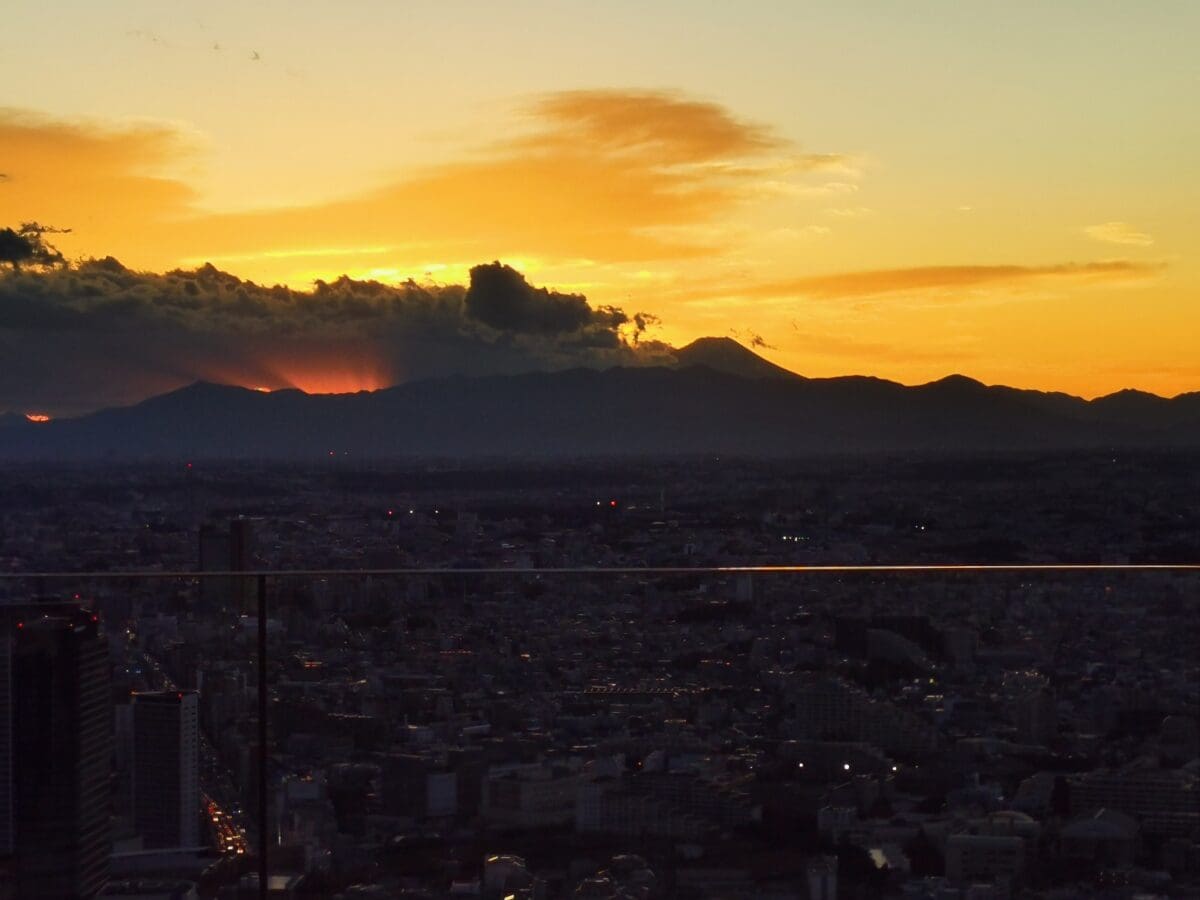
For a first visit to Tokyo, I recommend Shibuya Sky around sunset. You can walk around the outdoor rooftop while it’s still light, then stay to watch the city lights come on. It’s my favorite of Tokyo’s observation decks, especially on a clear evening when Mount Fuji is visible beyond the buildings. I suggest giving yourself time for that change from day to night rather than making it a quick photo stop.
The outdoor setting is a large part of the appeal, but it also means the roof can close in bad weather. If you’d prefer an indoor deck, Tokyo City View at Roppongi Hills is a good alternative, particularly for photos with Tokyo Tower in the skyline. And if you’d rather save the admission money for something else, the Tokyo Metropolitan Government Building gives you a wide view over the city for free.
Some links on YavaJapan are affiliate links. If you book or buy through them, I may earn a small commission at no extra cost to you. It helps support the site, and I only link to places, stays, and experiences I genuinely think are worth recommending.
At a Glance
- My favorite overall: Shibuya Sky for the outdoor rooftop and sunset. Reserve a timed ticket in advance.
- For Tokyo Tower photos: Tokyo City View in Roppongi, or the free Yebisu Garden Place Sky Lounge.
- For height and daytime views: Tokyo Skytree. Personally, I prefer seeing the tower from outside.
- For a free panorama: Tokyo Metropolitan Government Building, especially if you’re already in Shinjuku.
- For an indoor visit with children: Sunshine 60 Tenbou-Park, with space to sit and other things to do in Sunshine City.
- Access limits: Roppongi’s rooftop is closed to the public. Bunkyo Civic Center’s observation lounge is closed for renovation, with reopening planned for early December 2026.
Compare Tokyo's main observation decks, skyline viewpoints, hotel views, and quieter alternatives on one map.
Which Tokyo Observation Deck Should You Choose?
Height changes what you’ll see quite a lot. From Skytree, you can follow the rivers across a huge area of Tokyo, but individual streets look distant. Tokyo Tower and Tokyo City View keep you closer to the buildings below, so I recommend them if you want to make out more of the city after dark.
| Viewpoint | Admission | Why I Recommend It | Main Limitation |
|---|---|---|---|
| Shibuya Sky | Paid | Outdoor views from 229m above Shibuya | Sunset tickets can sell out; the roof can close in bad weather |
| Tokyo City View | Paid | Tokyo Tower in the skyline, from indoors in Roppongi | Reflections after dark; rooftop access is unavailable |
| Tokyo Skytree | Paid | Very high views from its 350m and 450m decks | Streets and buildings look distant |
| Tokyo Tower | Paid | Visiting the landmark itself, with decks at 150m and 250m | The tower won’t be in your skyline photo |
| Sunshine 60 Tenbou-Park | Paid | Indoor views and space to sit during a day in Ikebukuro | Less convenient if your plans are elsewhere in Tokyo |
| Tokyo Metropolitan Government Building | Free | A panorama from 202m in Shinjuku | Elevator queues and regular closure days |
| Yebisu Garden Place Sky Lounge | Free | Tokyo Tower views before or after a meal in Ebisu | A small viewing area behind glass |
If Shibuya Sky Is Sold Out
If Shibuya Sky tickets are sold out, I recommend Tokyo City View for an evening visit. You still get a high view over central Tokyo, with Tokyo Tower illuminated nearby. Sunshine 60 is another option if you’ll be spending time in Ikebukuro, the district around Sunshine City.
If you’d prefer to stay in Shibuya, you could stop at Hikarie’s Sky Lobby for a free view over the station area, or sit down for food or drinks at CÉ LA VI. They’re much lower than Shibuya Sky, so you’ll be looking across the surrounding buildings rather than over such a large part of Tokyo.
The Main Tokyo Observation Decks
Shibuya Sky
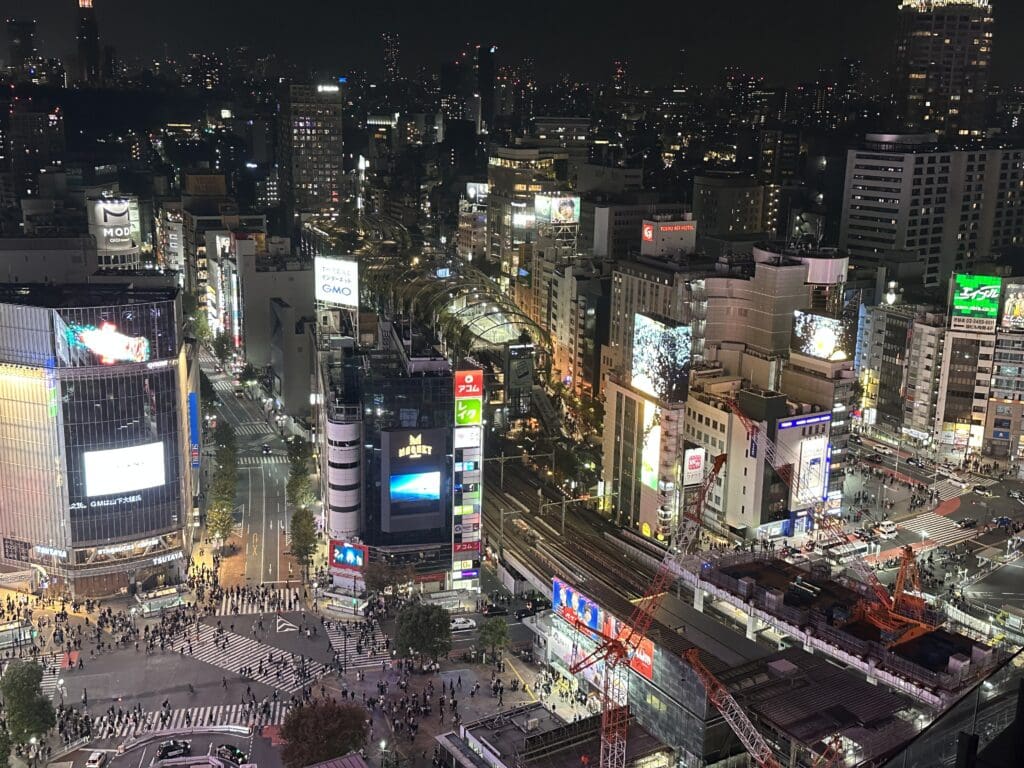
Shibuya Sky is above Shibuya Scramble Square, directly connected to Shibuya Station. The rooftop is 229 m above ground, with views toward Shinjuku’s towers, central Tokyo, and Mount Fuji when visibility allows. You can also look down toward Shibuya Crossing, although people are tiny from this height.
I recommend booking an entry time 60 to 90 minutes before sunset. You’ll have time for the entrance checks and lockers before walking around in daylight, then you can stay for the city lights. Your ticket time is when you can enter, so allow enough time to reach the entrance even though the building is connected to the station.
You can buy tickets through the official ticket page or compare availability on Klook. The usual hours are 10:00 to 22:30, but the available entry times vary. If sunset is the reason you’re going, check the time on the ticket before buying, as some offers are for earlier daytime visits.
Because you’re outside at this height, there are strict rules on bags and loose items. You’ll need to put your bag in a locker on the 46th floor before going onto the roof. Phones are allowed, while larger cameras need a neck strap, and tripods and selfie sticks aren’t allowed. I suggest leaving large luggage at your hotel or in a station locker so you only have a small bag to deal with here.
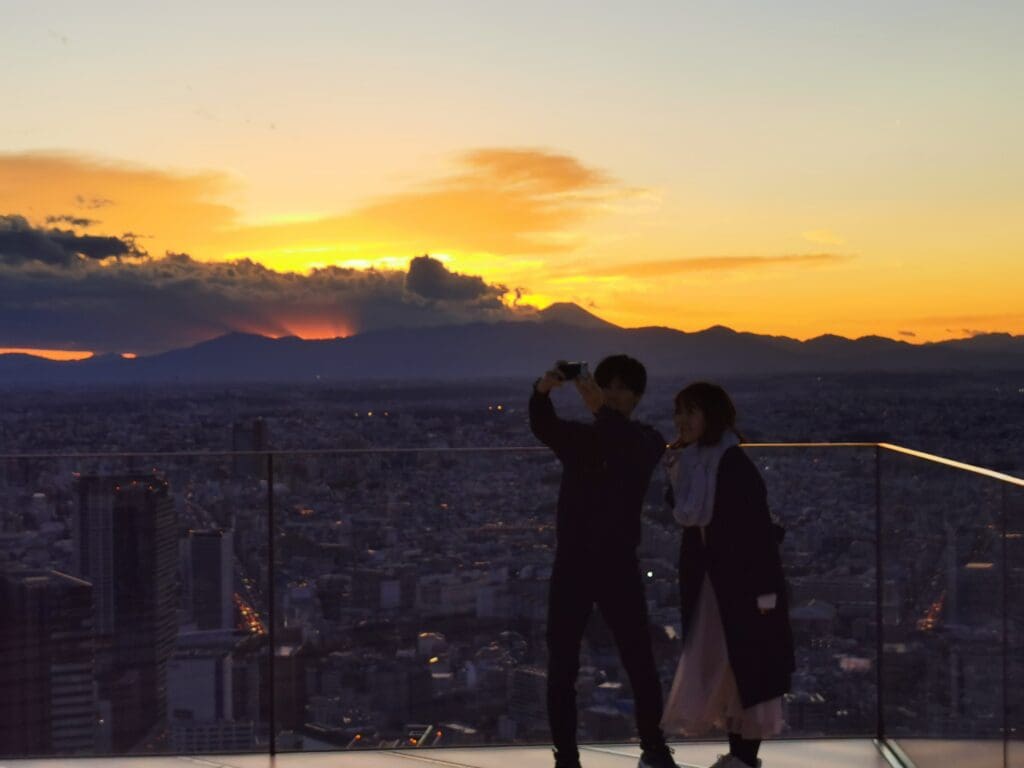
Wind, rain, and other weather conditions can close the rooftop. You can still use the indoor viewing area, but if being outside is the reason you’re booking, check how your seller handles rooftop closures before paying. If you’d like reserved seating on the roof, look for a plan that includes it, as it’s sold separately when available.
Tokyo City View at Roppongi Hills
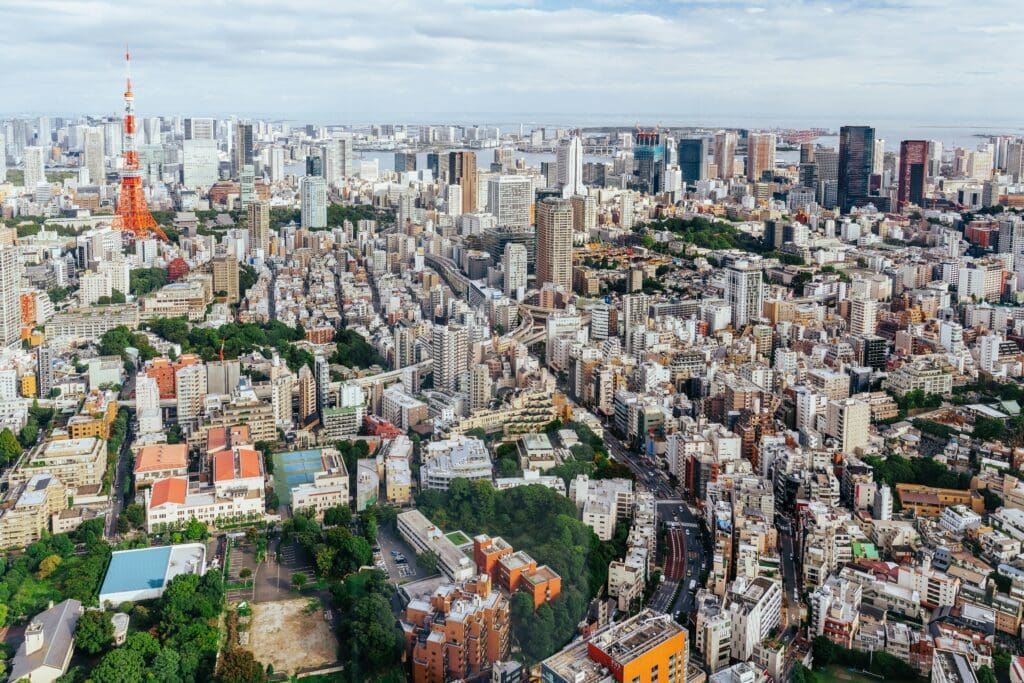
For a skyline photo with Tokyo Tower clearly in the frame, I recommend Tokyo City View. The indoor observatory is on the 52nd floor of Roppongi Hills Mori Tower, with large windows looking over central Tokyo.
I’ve often found it more relaxed than Shibuya Sky or Skytree, particularly on weekdays or later in the evening. I recommend coming after dark, when you can see Tokyo Tower illuminated while still making out individual buildings and roads below.
The usual hours are 10:00 to 22:00, with last admission at 21:30. You can compare tickets on GetYourGuide and Klook, though it’s also worth checking what’s on at the observatory for your date. Exhibitions and events can change the admission price or limit access to parts of the floor.
The rooftop Sky Deck is closed to the public, so the visit is indoors. That means you’ll be taking photos through glass, with reflections to work around after dark. A large tripod isn’t suitable here, and I suggest reading the equipment rules if you’re planning to bring more than a camera.
If the exhibition at the Mori Art Museum interests you, the two make a good afternoon and evening together. Visit the museum first, then head to the observatory after sunset. They have separate admission, so you’ll need to check that your tickets cover both.
Tokyo Skytree
Tokyo Skytree has the highest observation decks of these options: the Tembo Deck at 350 m and Tembo Galleria at 450 m. From there, you can see the Sumida River and a huge area of Tokyo, with Mount Fuji in the distance on clear days. The Galleria includes a sloping glass corridor that takes you farther up the tower.
Choose Skytree if you’re excited about the height or want to see how far Tokyo extends. I recommend a daytime visit because it’s easier to follow the rivers and recognize neighborhoods. At night, the streets are so far below that I find the view less interesting than the closer perspective from Roppongi or Shibuya.
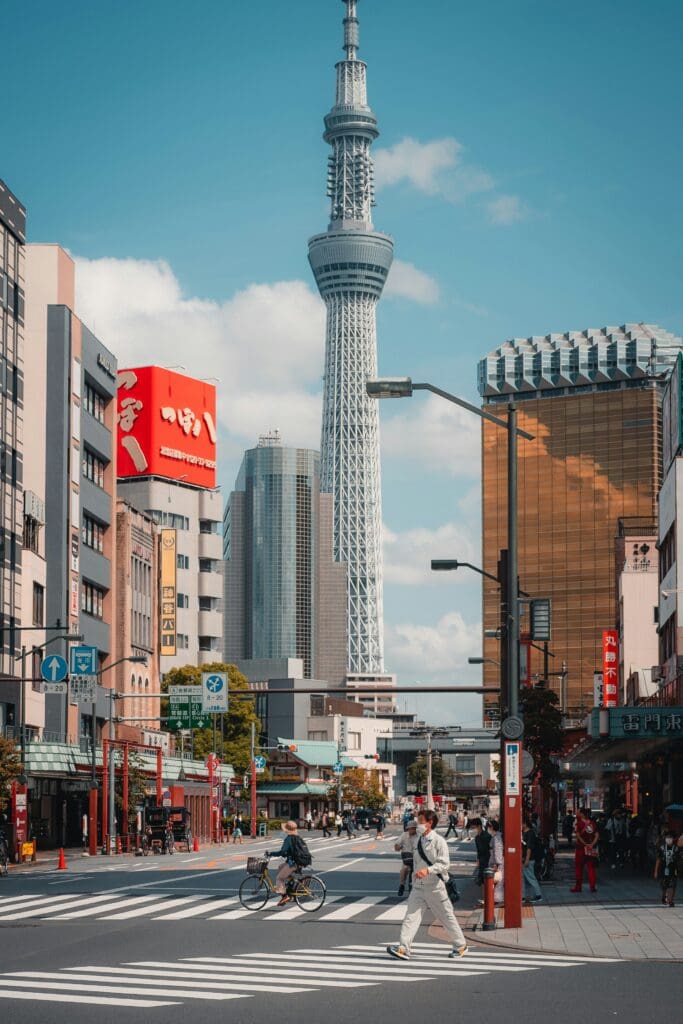
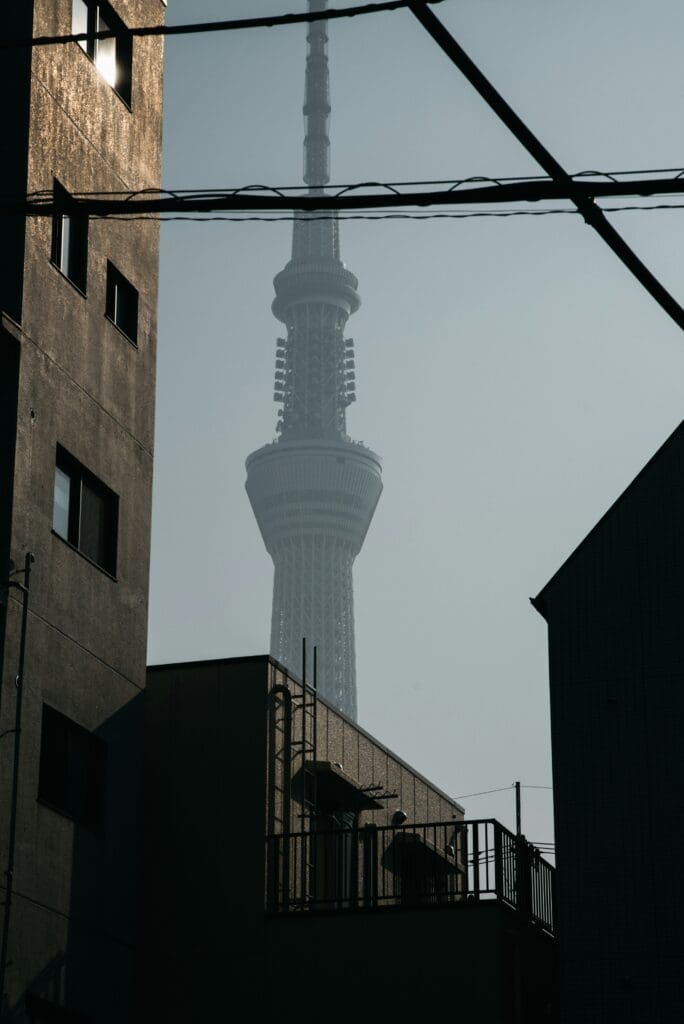
Personally, Skytree is probably my least favorite of the main observatories, even though I think the tower itself is the most impressive structure. I can see it from the balcony of my four-story building about 10 km away. I’ve spotted it from so many streets that I’ve thought about making my own version of the artist Hokusai’s print series Thirty-six Views of Mount Fuji, with Skytree instead.
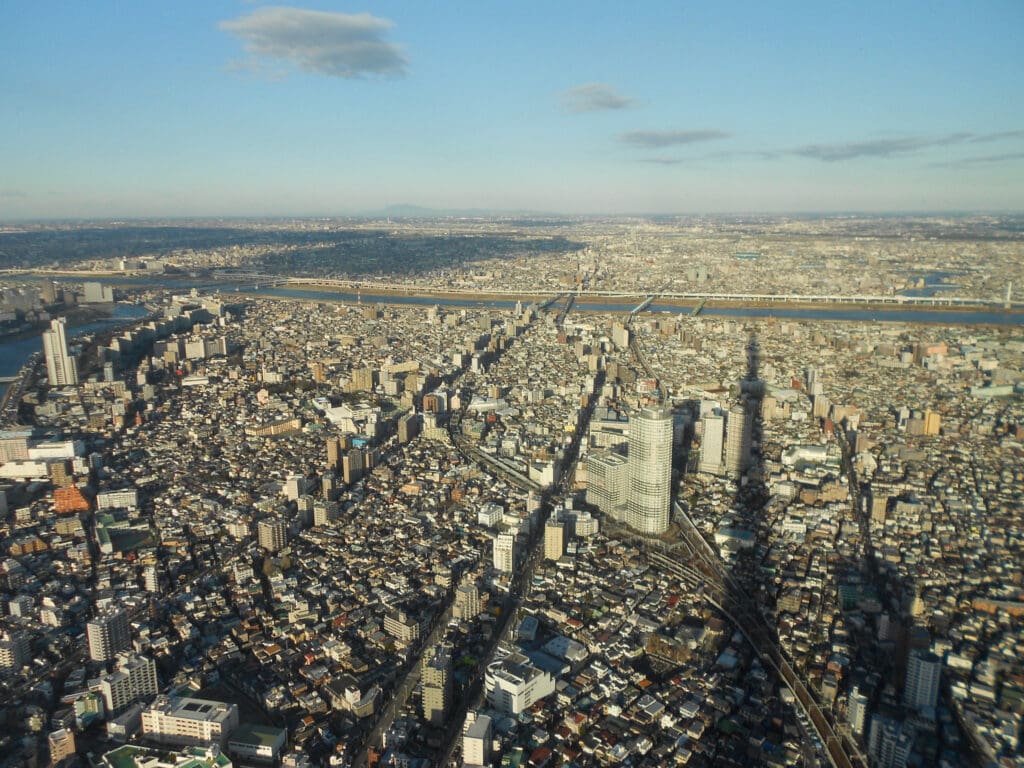
From inside, I found the view almost like looking at a drone photograph. For photos of the tower itself, I recommend the streets of Asakusa or the banks of the Sumida River, where you can see its full shape above the city.
Ticket prices vary by date, and you can choose the Tembo Deck alone or a combined ticket for both decks. Compare those options on Klook or Viator for the day you plan to go. The official ticket FAQ explains the booking arrangements if you’re buying directly.
Skytree fits well into a day around Asakusa, the neighborhood around Sensoji Temple. You could visit the temple in the morning, then head toward the tower. If clouds hide the view, Solamachi’s shops and restaurants are nearby, along with Sumida Aquarium and the Tenku Planetarium. The aquarium and planetarium require separate tickets.
Tokyo Tower
Tokyo Tower is a good choice if visiting the red-and-white tower itself is something you’ve been looking forward to. Its Main Deck is at 150 m, and the Top Deck is at 250 m. From inside, you’re surrounded by central Tokyo, with Zojoji Temple below.
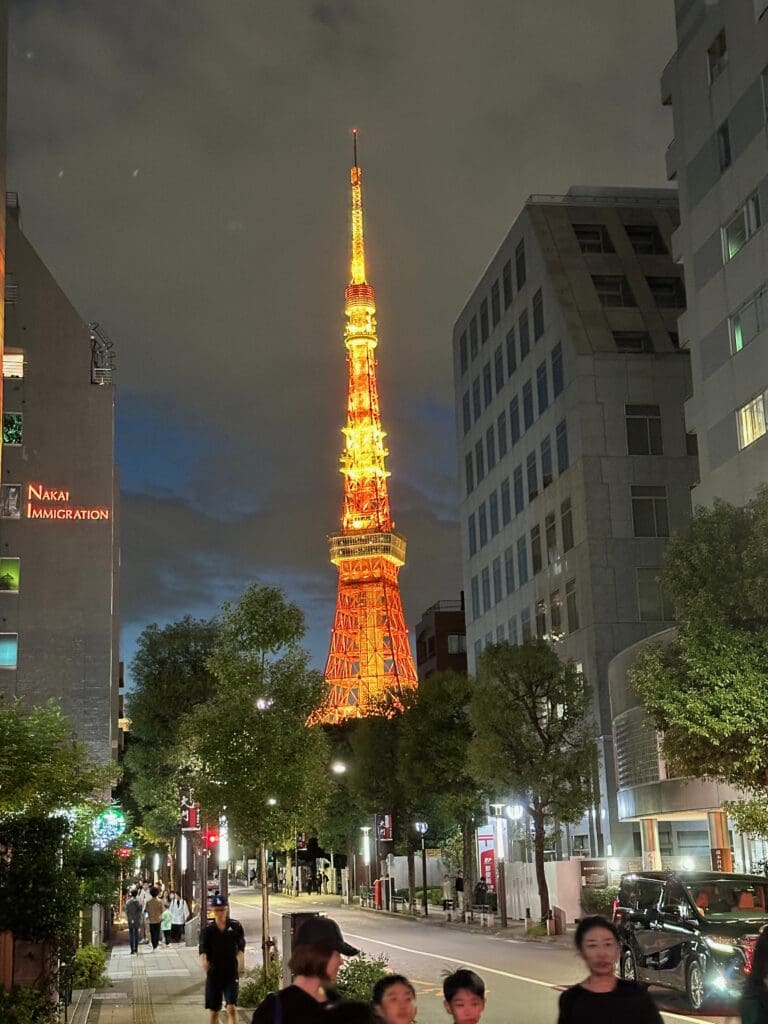
The view from inside is good, but personally, I think the tower is more impressive when you can see its full shape and color in the skyline. For that, I recommend Tokyo City View, Yebisu Garden Place, or the streets around Shiba Park, especially after the tower lights up at night.
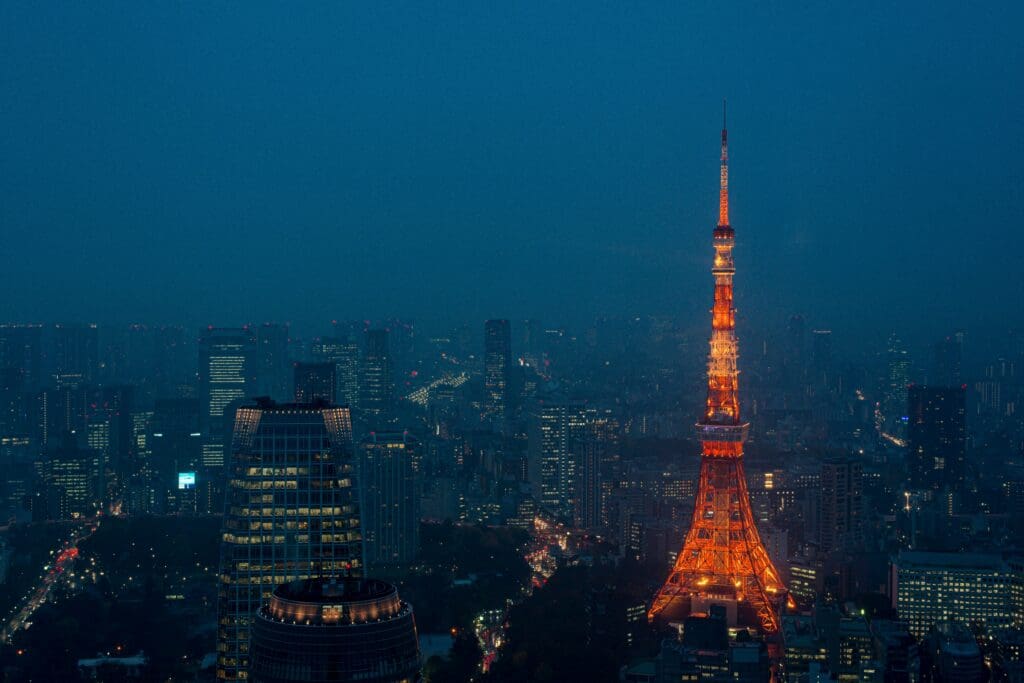
Choose between the Main Deck ticket and Top Deck Tour based on how high you want to go. The Top Deck Tour includes both observatories. The more expensive Tokyo Diamond Tour adds a dedicated lounge and extra service.
The Main Deck usually opens from 9:00 to 23:00, with last admission at 22:30, so you have plenty of time for an evening visit. The Top Deck Tour has timed entry, and I suggest reserving it if you want a particular slot. If you’re happy with the Main Deck, it’s easier to decide once you’ve seen the weather forecast.
There are shops and places to eat in the building at the base. For an afternoon nearby, combine the tower with Zojoji Temple and Shiba Park, then stay in the area to see the tower illuminated.
Sunshine 60 Tenbou-Park
Sunshine 60’s observatory in Ikebukuro is now called Tenbou-Park. The old Sky Circus attraction with VR rides has been replaced by an indoor space with artificial grass, seating, and a cafe.
I suggest it for a visit with young children or if you’d like somewhere to sit between looking out of the windows. You can combine it with Sunshine City’s shops, character stores, and restaurants without traveling to another district.
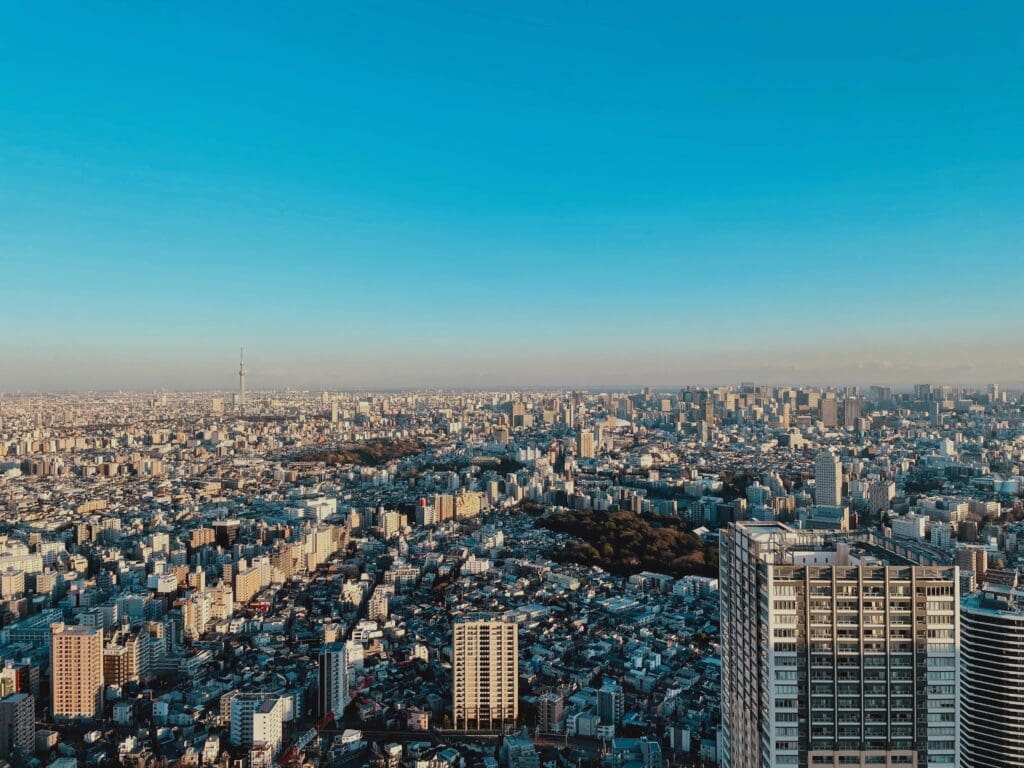
The usual hours are 11:00 to 21:00, which leaves time for both shopping and a late-afternoon visit to the observatory. Since prices and final entry times can vary, check the day’s visiting information before making plans for the evening.
If you want to take long-exposure photos at night, Sunshine 60 is worth considering because folding tripods are allowed under certain conditions. The photography rules require you to leave space for others, and staff may restrict tripod use when it’s busy. Bring something compact and be prepared to move after taking your photos.
Free Tokyo Viewpoints
Tokyo Metropolitan Government Building
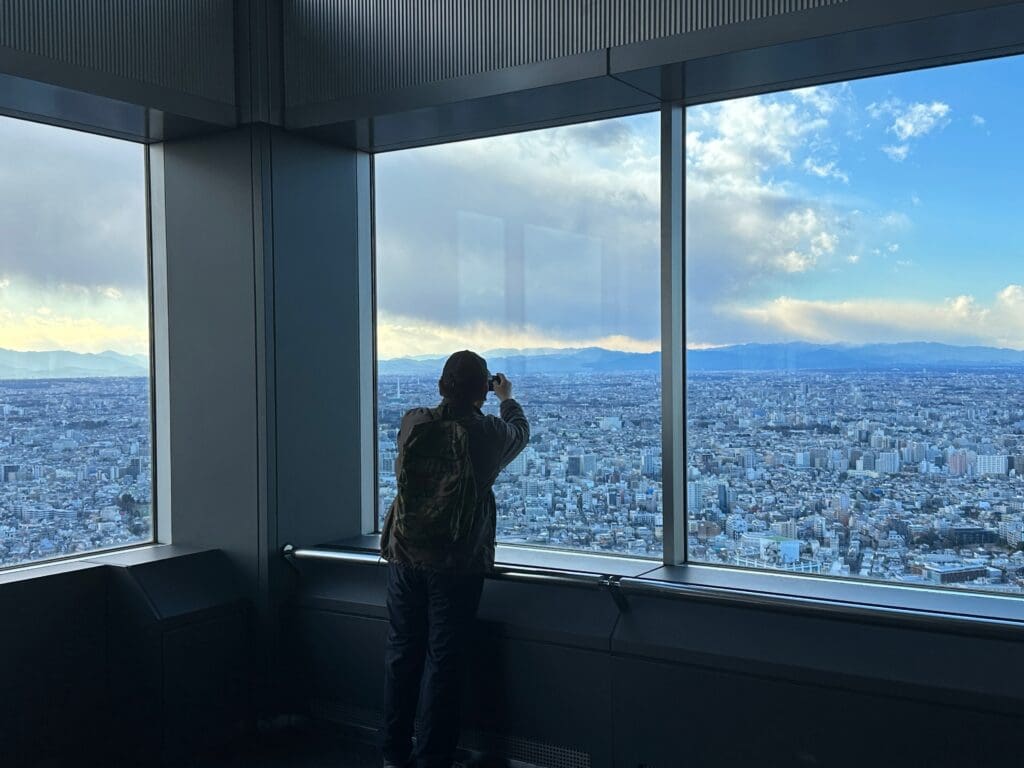
I recommend the Government Building’s observatories for a free view over Tokyo, especially if you’re staying in Shinjuku. Both are at 202 m, looking out from among the district’s tall buildings. Mount Fuji is visible to the west when the air is clear.
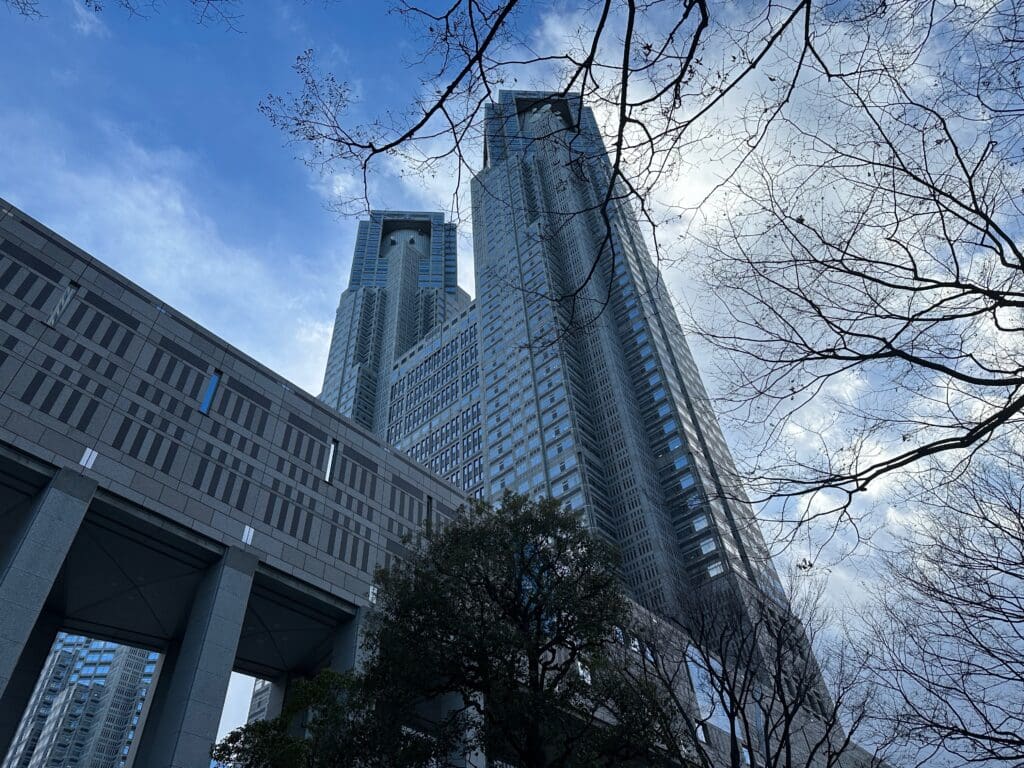
The South Observatory usually opens from 9:30 to 22:00. The North Observatory normally closes at 17:30, extending to 22:00 when the south side is closed. Last entry is 30 minutes before closing. Both have regular closure days, so check the official schedule before going.
I’ve stopped here for about 20 minutes on clear winter days and seen Mount Fuji. Since admission is free and there’s no reservation to make, you can leave the visit until a day when visibility looks good. Late afternoon also gives you a chance to stay for sunset.
The observatory elevator leaves from the first floor of the main building. Allow time for a possible queue and bag check, even if you’re only planning a short visit, and keep in mind that tripods aren’t allowed.
Yebisu Garden Place Sky Lounge
If you’re spending the evening in Ebisu, I recommend stopping at Yebisu Garden Place Tower’s free 38th-floor Sky Lounge before dinner. Through its large windows, you can see Tokyo Tower beyond the lower buildings of the neighborhood. Shortly after sunset is a good time for photos, while there’s still some blue in the sky behind the illuminated tower.
Take the elevators for Top of Yebisu. The lounge usually opens from 11:00 to 23:30, although it’s worth checking the building’s notices for temporary closures. The viewing space is small, so you may have to wait for a window even when the rest of the building isn’t busy.
Shibuya Hikarie Sky Lobby
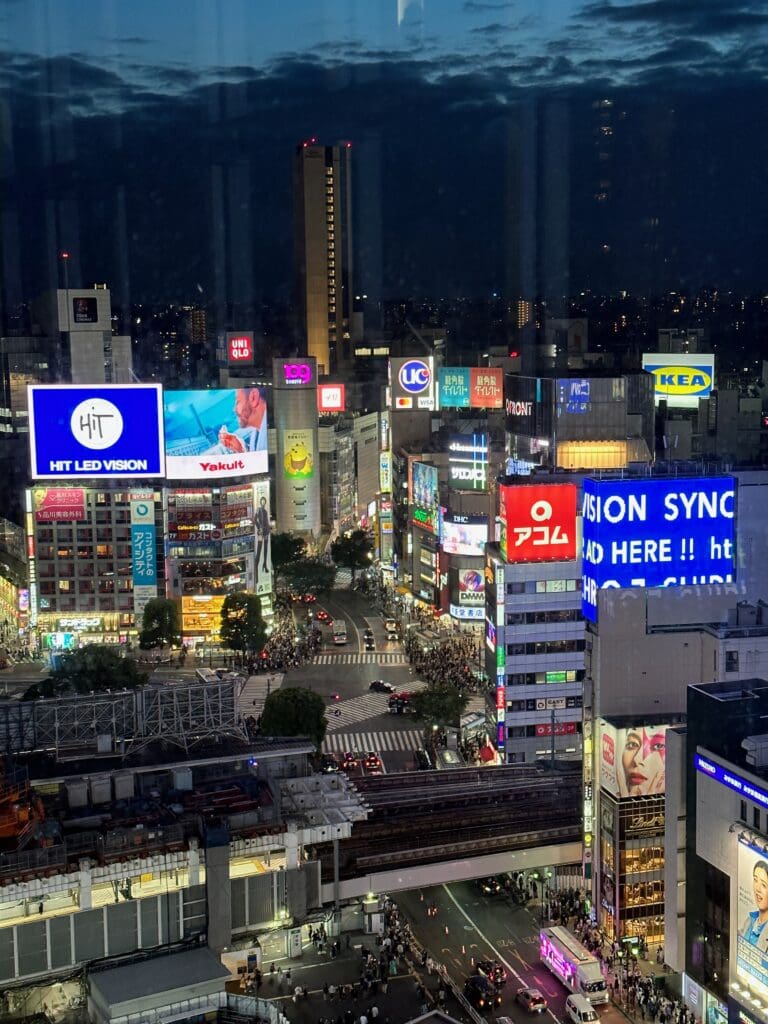
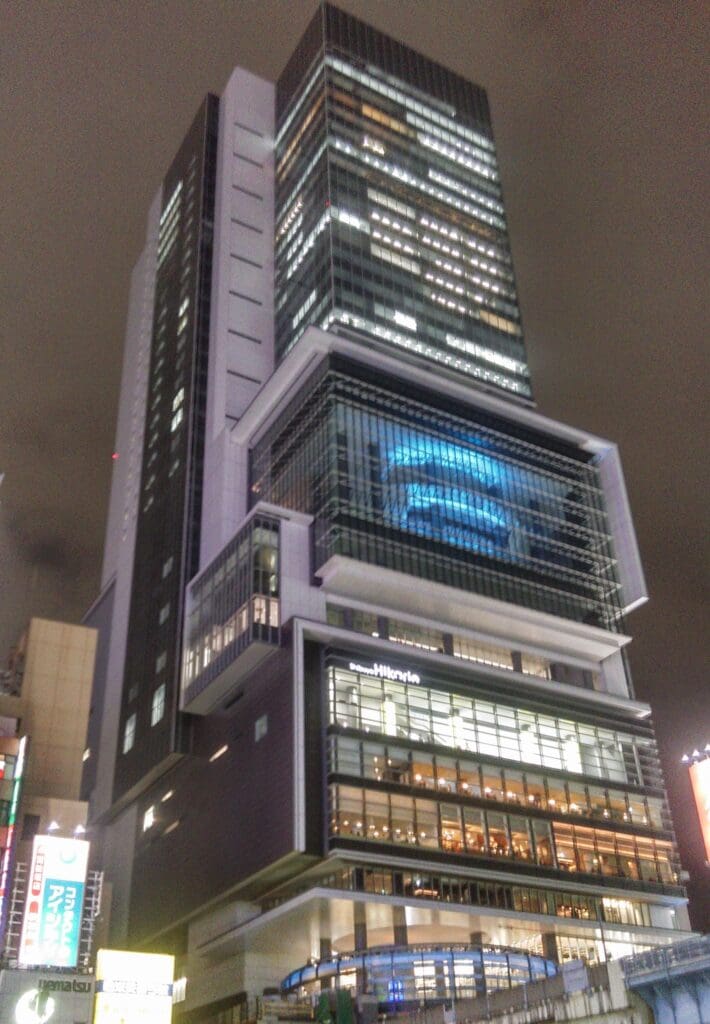
Hikarie’s 11th-floor Sky Lobby gives you a much lower view across Shibuya’s station area. The buildings, trains, and traffic are closer than they are from Shibuya Sky, which can be more interesting if you want to see the streets themselves.
I sometimes stop here to look at the weather before deciding whether to visit a higher observatory. You can visit without an observation-deck ticket, although people also use the lobby to reach the theater and event spaces. Leave room for them to pass and follow any signs restricting access.
Asakusa Culture Tourist Information Center
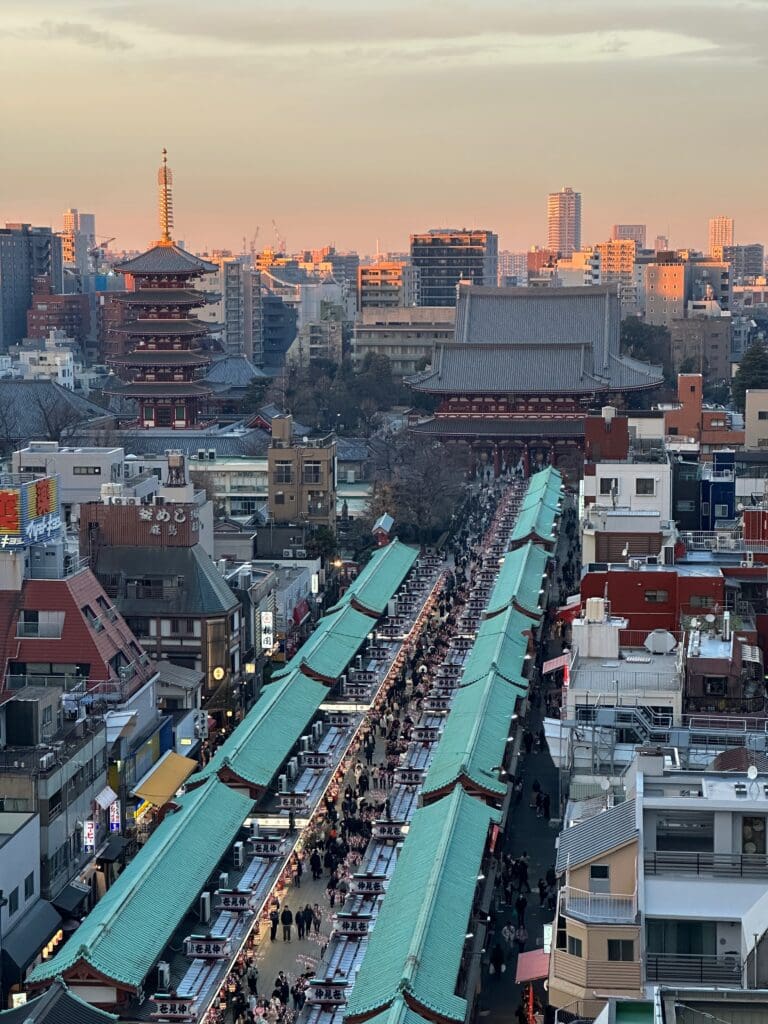
This is the building opposite Kaminarimon, the large entrance gate leading toward Sensoji Temple. Its free eighth-floor terrace looks over Nakamise shopping street and toward Skytree.
I usually stop by when I’m in Asakusa, and I’ve found the view from the adjoining cafe even better. It’s a good option if you’re ready for a break and happy to order a drink. Otherwise, you can visit the terrace on its own for free, normally from 9:00 to 22:00. The cafe closes earlier, so check its hours in the center’s visitor information if you want to sit down there.
Tower Hall Funabori and Carrot Tower
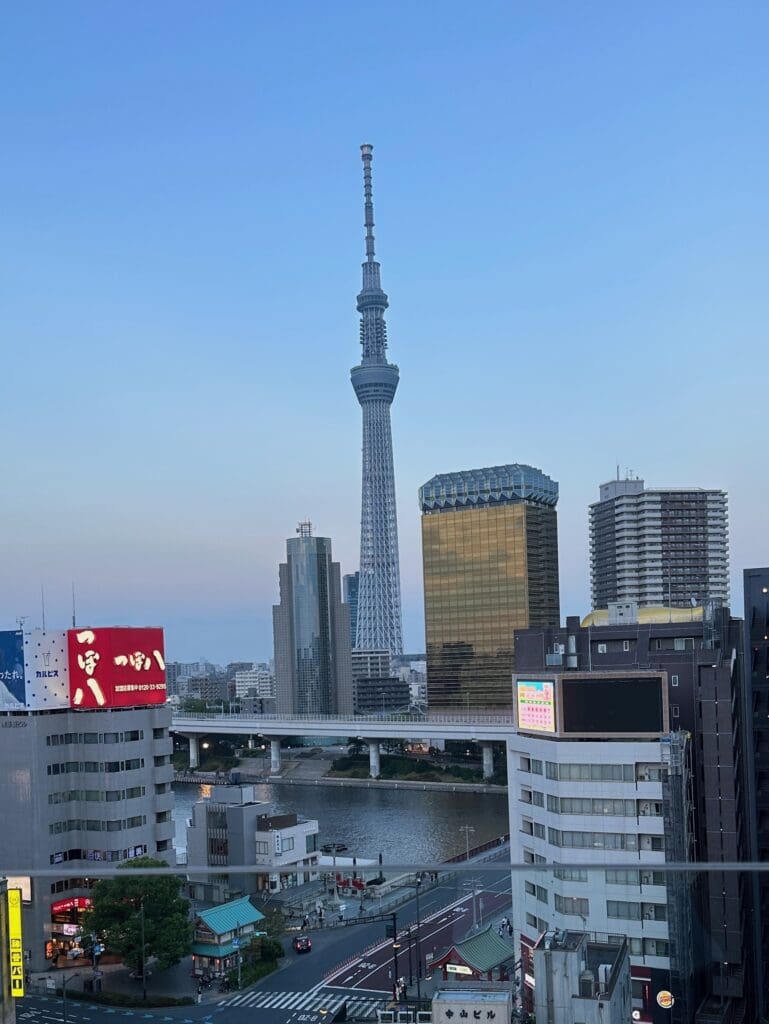
I wouldn’t cross Tokyo just for Tower Hall Funabori on a short trip, but it’s a good stop if you’re already in eastern Tokyo or staying along the Toei Shinjuku subway line. The free observatory looks across the lower buildings of Edogawa toward Skytree, so a zoom lens helps if you want photos of the more distant landmarks. It usually opens from 9:00 to 21:30, subject to weather interruptions.
For a day in Sangenjaya, a neighborhood west of Shibuya, you could stop at Carrot Tower’s 26th-floor observation lobby. There are cafe and restaurant areas on the floor, and the western view can include Mount Fuji. As with Funabori, I suggest visiting while you’re in the neighborhood rather than making a separate journey just for the view.
Bunkyo Civic Center: Closed for Renovation
The 25th-floor observation lounge is closed, with reopening planned for early December 2026. Check for confirmation before including it in a trip around that time.
I used to bring visiting friends here after Tokyo Dome City. We’d spend about 15 minutes looking toward Shinjuku and Skytree through the sloping windows before continuing the day. It was an easy free stop to add to an afternoon, but it will need to wait until the renovation is finished.
Bars, Restaurants, and Hotel Rooms with Views
An observation deck gives you room to walk around and take photos, but a bar or restaurant can be more comfortable if you’d prefer to sit with a drink and watch the city. I suggest combining the two if you want to see Tokyo from more than one place. You’ll pay for food or drinks, and sometimes a seating charge, so this can cost more than another observatory ticket.
For a meal or drink with a particular view, book the seating as well as the venue. Some places offer a specific window or terrace category, while a general reservation may get you a table elsewhere in the room.
Bars and Lounges
For a drink with Tokyo Tower close to your table, I recommend Stellar Garden at The Prince Park Tower Tokyo. The bar’s position beside the tower makes it a good place to see it illuminated, and you can choose a seating plan that guarantees the view.
For cocktails outside, Andaz Tokyo’s Rooftop Bar has a partly open terrace on the 52nd floor, looking toward Tokyo Bay and Odaiba. It’s 20+ only, so this is an option for an evening with other adults. Terrace seating charges can apply depending on the season and arrival time, and I suggest checking the bar’s current terms when deciding when to go.
If you’d prefer afternoon tea indoors, consider Oriental Lounge at Mandarin Oriental Tokyo, on the 38th floor in Nihonbashi. I’ve seen Mount Fuji beyond the city from here on clear winter days, though visibility and the position of your table will affect what you see. The lounge’s menu and dress code will help you decide whether to make this a longer afternoon stop.
If you’ll be in Shibuya, Bellovisto at Cerulean Tower has views from the 40th floor. In Shinjuku, New York Bar at Park Hyatt Tokyo combines the skyline with live jazz. New York Bar is for guests aged 20 and above and takes walk-ins only, so you can’t reserve a table for a particular time. There’s also a cover charge depending on when you arrive.
For a lower outdoor view in Shibuya, CÉ LA VI has dining and terrace spaces where you can sit closer to the surrounding buildings. The restaurant, club lounge, and music terrace have different age and entry rules, so choose the space that suits the evening you have in mind.
A Meal Near Skytree or Tokyo Tower
If you’re near Skytree around lunchtime or in the evening, consider a meal on Solamachi’s restaurant floors, on levels 30 and 31. You can see the area from above without buying an observatory ticket, although the view depends on which restaurant and table you choose.
Near Tokyo Tower, you can visit Azabudai Hills’ skylobbies as a customer of Dining 33, Sky Room Cafe & Bar, or the associated patisserie. Access is limited to these customers and eligible building users, so plan to use one of the venues if you want to go up. The access information for the 33rd and 34th floors explains the arrangements.
Hotel Rooms with a View
For a night overlooking Tokyo Tower, I recommend comparing The Prince Park Tower Tokyo and Tokyo Prince Hotel. Both have rooms facing the tower, but the angle and how much you can see differ by room. If you’re paying extra for that view, choose a room category or plan that includes it, since a request alone doesn’t guarantee what you’ll see.
Park Hyatt Tokyo has high views from Shinjuku, while Andaz Tokyo Toranomon Hills has large windows looking over central Tokyo. These are also worth comparing if you want a night with a city view, but I suggest paying extra only if you’ll have time to enjoy the room. One night when you’ll be back early enough to watch the city light up could be enough.
For choosing a hotel for your whole stay, my Tokyo accommodation guide explains which areas I recommend and how they affect your journeys around the city.
Timing, Weather, and Photography Tips
Sunset or a Clear Morning?
For daylight, sunset, and night views in one visit, choose an entry time that lets you reach the viewing area while it’s still light. I also suggest leaving time afterward for the elevator journey down. A dinner reservation immediately after sunset can mean having to leave just as the city lights come on.
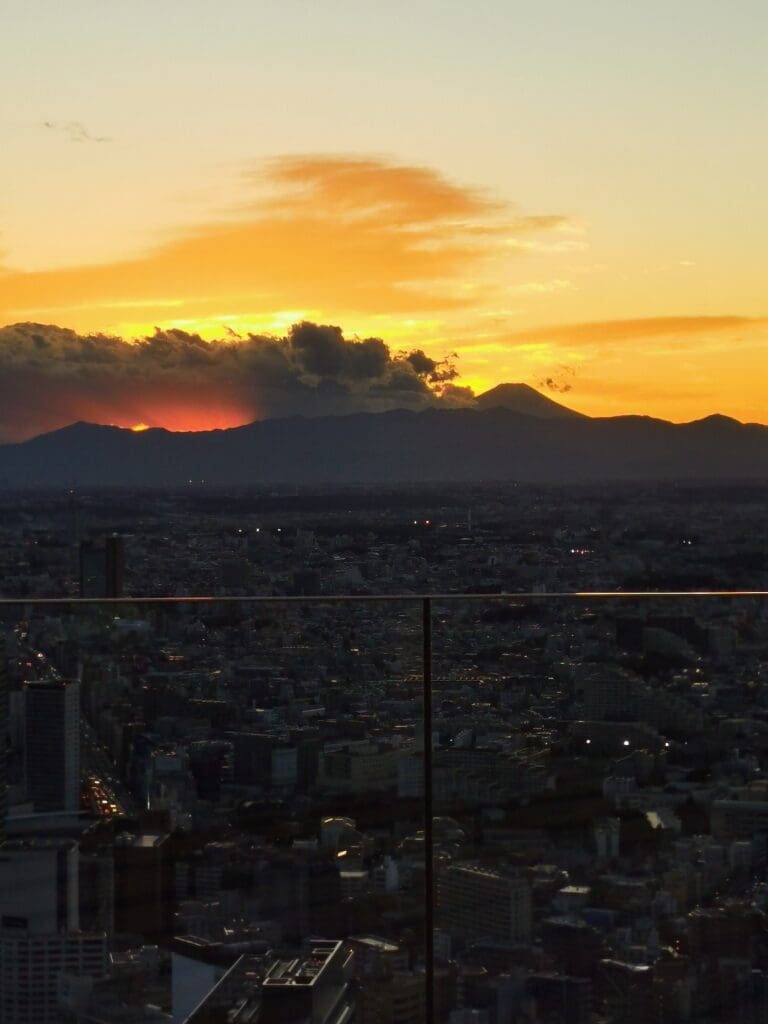
If Mount Fuji is your priority, look for a clear, cold day, especially from December to February when visibility from Tokyo is often better. Pleasant weather at street level doesn’t always mean you’ll see the mountain, so it’s worth keeping the day flexible. My guide to the best time to visit Japan covers the wider seasonal differences to consider when choosing your travel dates.
A clear morning is also a good choice for Skytree because daylight helps you distinguish the rivers and neighborhoods below. For night views, I recommend the lower perspective of Tokyo City View or Shibuya Sky. If your schedule allows it, consider a weekday outside holidays, though popular sunset slots can still be busy.
Tickets and Bad Weather
I suggest reserving the viewpoint you’re most excited about, then leaving a second visit for a day when you’re nearby and the weather looks good. That could be a free observatory, a rooftop drink, or dinner beside a window. You’ll have one visit to look forward to without committing to several tickets before you know the forecast.
Before paying, check how the seller handles changes, low visibility, and rooftop closures. The rules can differ for each situation, so a cloudy view and a closed roof may not give you the same options for changing or refunding your ticket.
For timed attractions more generally, my guide to what to book in advance for Japan explains how I decide which bookings to make first.
Taking Photos Through Glass
At indoor decks, lights and objects inside the room can show up in your photos after dark. Wearing dark clothes and moving the lens close to the window can help, and you can shade the edge with a hand or sleeve to block some reflections. Keep the flash off, and lower your screen brightness if you can see it reflected in the glass.
Shibuya Sky’s outdoor rooftop avoids those indoor reflections, though you’ll still need to follow its equipment rules. I suggest planning for handheld photos at most viewpoints. Sunshine 60 is an option if you want to use a folding tripod, provided you leave space for others and follow staff instructions when it’s busy.
If low cloud hides the view from the high decks, you could photograph the towers from street level instead. The streets of Asakusa and the banks of the Sumida River give you views toward Skytree, while the area around Shiba Park is good for Tokyo Tower. Roppongi and Ebisu give you other angles on Tokyo Tower if you’re already nearby.
Visiting with Children or a Wheelchair
With young children, I recommend choosing somewhere you can take a break without immediately traveling to another district. Sunshine 60 has indoor seating, and Skytree has shops, places to eat, and other attractions around its base. Allow for separate tickets if you want to add the aquarium or another attraction to the visit.
If you use a wheelchair, check the venue’s lift route and facilities before going so you know how to reach the viewing areas. At Shibuya Sky, wheelchair and stroller arrangements differ, and the accessibility and rooftop information explains what to check for each. Allow a little extra time on arrival if you’ll need staff to show you the route.
Comments are closed.