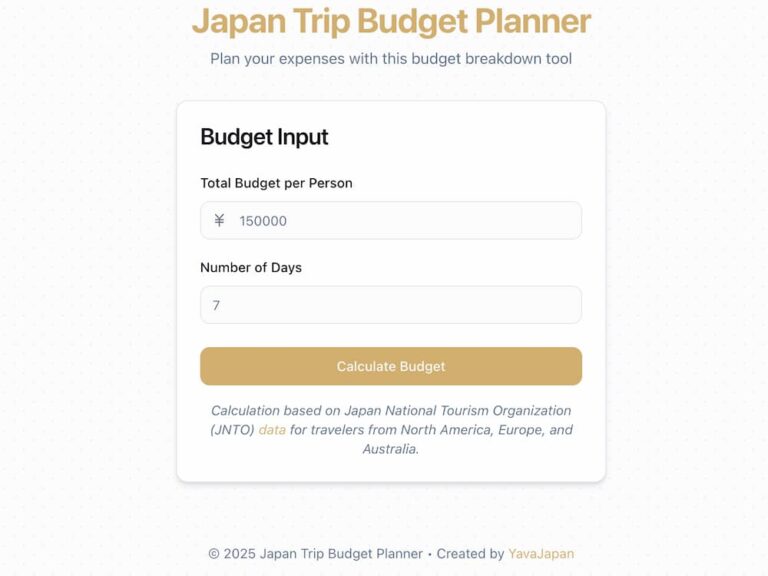
I created a free planner to help you plan your budget and estimate your costs per spend category for a trip to Japan.
The tool gives you a realistic estimate of your total and daily spending, broken down into all the major expense categories: accommodation, food, transportation, experiences, and shopping.
If you are still planning the full trip, start with my guide to planning a trip to Japan before you use the budget breakdown planner.
I made this tool for:
People who aren’t sure how much to budget for Japan. Try out different budgets and trip lengths to see what kind of travel style fits your plans.
People who already have a budget but don’t know if it’s enough, or how to divide it. The calculator will show you exactly how much to allocate to each category, along with what you can afford.
It’s super simple to use: just enter your total budget per person and your trip duration. The tool will break down your expenses by category and tell you what’s realistically within your range.
This is not a generic travel cost calculator—I designed it specifically for trips to Japan. The breakdown is based on real spending data from recent travelers, using official statistics from the Japan National Tourism Organization (JNTO).
For a comfortable two-week trip to Japan, I suggest starting with ¥300,000 to ¥450,000 per person before flights, assuming you’re sharing a hotel room. That covers accommodation, meals, transport within Japan, activities, and some shopping, with a little left over for unexpected costs. Flights and travel insurance need a separate allowance.
I’ve lived in Tokyo since 2019 and take several trips around Japan each year, so I regularly budget for hotels, transport, and activities myself. Your travel dates, route, and choice of hotels can make a big difference to the total. You can spend less with simple accommodation and fewer long train journeys, while luxury stays and private experiences can take the budget well above that range. I’ll go through three example budgets, then break down the main costs so you can work out how much to allow for your own trip.
At a Glance
On a smaller budget: Around ¥180,000-¥250,000/person before flights, with simple accommodation, inexpensive meals, and mostly low-cost activities.
A comfortable trip: Around ¥300,000-¥450,000/person, or ¥600,000-¥900,000 for two people sharing a room.
More expensive stays and experiences: Start around ¥500,000/person, then check the prices of the places you want to book.
Traveling alone: Expect to spend more on your room. Meals, train tickets, and admissions usually cost the same per person.
Train tickets: Use the JR Pass calculator to compare a pass with individual tickets.
Some links on YavaJapan are affiliate links. If you book or buy through them, I may earn a small commission at no extra cost to you. It helps support the site, and I only link to places, stays, and experiences I genuinely think are worth recommending.
Three Examples of a Two-Week Japan Budget
Here are three ways a two-week budget could look, from ¥210,000 to ¥760,000 per person. The middle budget leaves room for comfortable hotels and a couple of expensive meals, because those can make a bigger difference than the price of everyday food or subway tickets. You can move money between the categories to suit what you’re looking forward to.
Each example covers 14 days and 13 nights, with two adults sharing a room. It includes food, travel within Japan, activities, souvenirs, and some spare money. International flights, travel insurance, and large purchases such as a camera or designer bag are extra.
Expense per Person
Lower-Cost Trip
Comfortable Trip
More Expensive Trip
Accommodation: 13 nights, sharing
¥78,000
¥195,000
¥390,000
Food and drinks
¥42,000
¥100,000
¥140,000
Trains, buses, and airport transfers
¥40,000
¥45,000
¥65,000
Activities and admissions
¥15,000
¥60,000
¥100,000
Shopping and souvenirs
¥10,000
¥20,000
¥30,000
Small extras and local hotel taxes
¥8,000
¥10,000
¥15,000
Spare money
¥17,000
¥20,000
¥20,000
Total before flights and insurance
¥210,000
¥450,000
¥760,000
Daily average, rounded
¥15,000/day
¥32,100/day
¥54,300/day
The hotel examples use room prices of ¥12,000, ¥30,000, and ¥60,000 per night, split between two people. The cheapest example takes some searching and may mean smaller rooms or less central locations. The higher allowance gives you more choice of room size, location, and hotel facilities. If you’re staying 14 nights, you’ll also have one more hotel night to pay for.
With ¥100,000 for food and ¥60,000 for activities in the middle example, there’s room for a few special bookings. You might prefer to spend more on restaurants and less on shopping, or choose a simpler hotel so you can book a private workshop. I think it’s worth deciding which of those things you’re most excited about before committing most of the budget to accommodation.
If you’re still deciding where to go, my 14-day Japan itinerary can help you work out the journeys involved. The Japan trip-planning guide then takes you through the bookings and other preparations.
What Other Visitors Spend
The Japan Tourism Agency’s 2025 survey gives another point of comparison. These were the averages for people visiting Japan on holiday:
Visitors From
Spending per Person, Rounded
Average Stay
US
¥350,000
10.7 nights
UK
¥411,000
12.8 nights
Australia
¥404,000
13.2 nights
The trips weren’t all the same length, so these figures aren’t exact two-week budgets. Use your own hotel and travel prices when deciding how much to save.
International Flights
Flights are separate from these budgets because the price depends so much on where you’re coming from. I suggest looking at fares from your own departure city early, including baggage and other charges, so you know how much of your total you can spend in Japan.
I’ve booked flights between Japan and Europe both months ahead and only a few days before departure, without finding a reliable rule for getting the cheapest fare. Once I know my dates, I’d rather book a price and journey I’m happy with than keep waiting for a possible saving. Prices could come down, but they could go up too.
For a trip that includes Tokyo and Kyoto or Osaka, flying into Tokyo and home from Kansai Airport can work well. Kansai Airport serves Osaka and Kyoto, so you avoid going all the way back to Tokyo at the end. Even if the flight costs a little more, you may save overall after removing that return train journey and any extra hotel night. The airport transfers still need to be included on both sides of the comparison.
The cheapest fare can be less appealing once you look at the flight times. A long connection can take a day out of your holiday, while an arrival after the trains and buses stop may mean paying for a taxi or airport hotel. If your dates are flexible, compare the hotel costs too: cherry blossom season, autumn foliage, and major Japanese holidays can make the stay more expensive. My guide to the best time to visit Japan explains when I recommend going.
Accommodation
Hotels are where I suggest leaving yourself some flexibility. A room that costs an extra ¥5,000 per night adds ¥65,000 over 13 nights, or ¥32,500 each if two people share. That might be worth it for a location you prefer or a room you’ll enjoy spending time in, but it can also use money you’d rather put toward meals or experiences.
For Tokyo and Kyoto, I suggest budgeting ¥20,000 to ¥40,000 per room per night for a comfortable city hotel. Cheaper stays are possible, including at business hotels, but I wouldn’t rely on finding the lowest advertised price for every night of a two-week trip. Some other cities can offer more room for the same money.
Type of Stay
Budget per Night
Per Person or Room?
Hostel dorm or capsule
¥4,000-¥7,000
Per person
Simple private hotel room
¥10,000-¥20,000
Per room
Business hotel
¥15,000-¥30,000
Per room
Comfortable city hotel in Tokyo or Kyoto
¥20,000-¥40,000
Per room
More spacious hotel with extra facilities
¥40,000-¥80,000
Per room
Major luxury hotels in Tokyo or Kyoto
¥100,000-¥200,000+
Per room
Traditional inn with dinner and breakfast
¥20,000-¥50,000+
Per person, often with two sharing
These are amounts to plan around, with some overlap between categories. A business hotel usually has small, practical rooms, while a higher price may buy more space, better facilities, or simply a more expensive address. The room size, bed arrangement, and location will tell you more than the hotel’s star rating alone.
For the well-known luxury hotels in Tokyo and Kyoto, I suggest allowing ¥100,000 to ¥200,000 or more per room per night. At ¥100,000 per room, 13 nights cost ¥650,000 per person when two people share, before food, trains, or activities. Some luxury hotels offer lower rates, especially in other cities, so the total will depend on the properties and dates you choose.
Sharing a Room or Traveling Alone
Sharing a room makes a noticeable difference. At ¥30,000 per night for two adults, you each pay ¥15,000 per night, or ¥195,000 over 13 nights. That’s the hotel budget in the comfortable example above.
If you book the same room alone at the same price, you pay ¥390,000, bringing that example from ¥450,000 to ¥645,000 before flights. You may find a cheaper single room, so I suggest checking those before adding the full difference. Hotels can charge different rates for one or two guests, and meals are often charged per person.
For a family, the cost will depend on whether one larger room works for you or you need two separate rooms. It’s worth searching with everyone’s ages and the correct number of guests, rather than trying to estimate the family total from a couple’s budget.
Choosing the Location and Room
I usually recommend a simple room in a convenient area over a nicer room with a long journey every day. After walking around Tokyo or Kyoto for hours, being able to have dinner nearby and get back to the hotel easily is something you’ll appreciate. A smaller station can work just as well as a major one if it has direct trains to the areas you want to visit.
My guides to where to stay in Tokyo and where to stay in Kyoto explain the neighborhoods I recommend. I suggest starting with the area, then looking for a room you can comfortably use, including somewhere to open your luggage.
I generally recommend hotels over Airbnb in Japan, partly because having someone at the front desk makes a first trip easier. Staff can help with luggage, taxis, and local questions. An apartment may still suit you if you want a kitchen or more space for a family, as long as the full price, location, and arrival arrangements work for your trip.
Adding a Ryokan Night
A ryokan is a traditional Japanese inn, and I think one night with dinner and breakfast is worth considering if the stay appeals to you. The food is a big part of the experience, along with the room, bath, and service. It’s a night to arrive early and enjoy being there, with less sightseeing planned for that afternoon.
For the budget, that night replaces an ordinary hotel night. If you’ve allowed ¥15,000 per person for a hotel and choose a ¥35,000 ryokan plan, the extra accommodation cost is ¥20,000 each. Having dinner and breakfast included also reduces what you’ll spend on separate meals.
The main things to compare are whether the price is per person or per room, which meals are included, and the type of bath. A room with a private bath can cost much more, so the cheapest rate may be for a different stay from the one you had in mind. My guide to staying in a ryokan explains how to choose one.
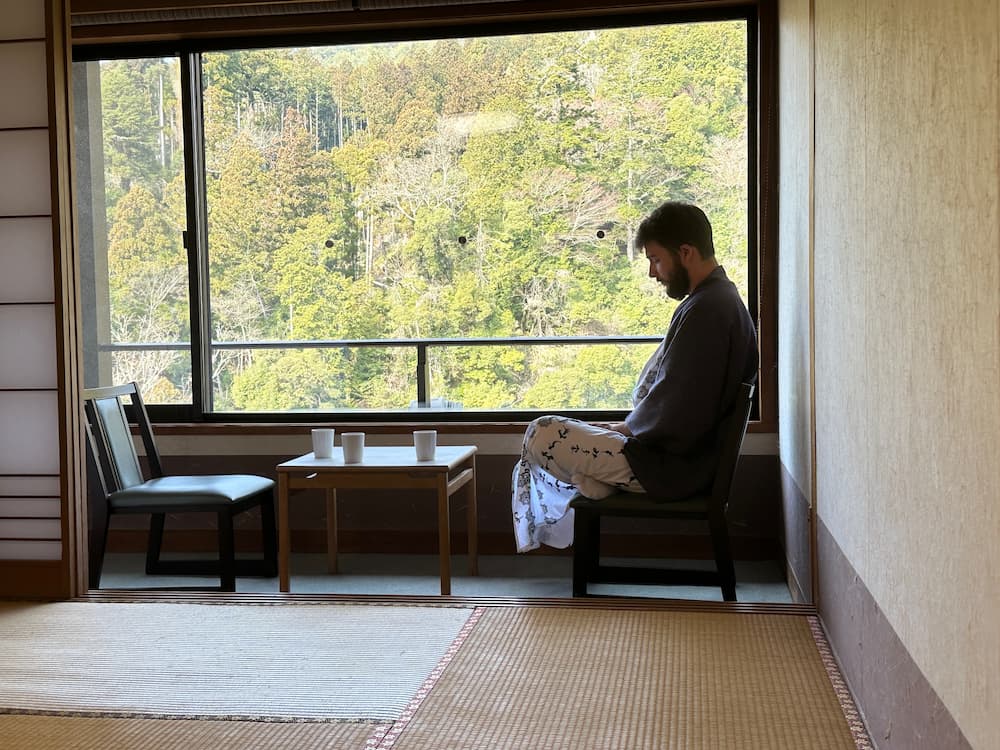
During my stay at Momijiya Honkan Takao Sansou in Kyoto
Where to Book
I recommend starting with Trip.com because it’s easy to use and the prices are often good. Booking.com and Agoda are also worth comparing, along with the hotel’s own website.
The same dates and number of guests can still produce different prices, though sometimes the cheaper offer is for another room, fewer meals, or a booking you can’t cancel. While you’re still deciding the route, I think a little extra for flexible cancellation can be money well spent.
For a special stay, you can also browse Wabunka’s accommodation. They arrange cultural experiences and stays in Japan, and some stays include visits with artisans or other hosts. Check what’s included when comparing the price with an ordinary hotel.
Food and Drinks
Food is one of the reasons I think Japan can offer such good value. I’ve had plenty of satisfying meals in inexpensive restaurants, so I’m happy to keep some meals simple and spend more on a dinner I’m looking forward to. If there’s an expensive sushi restaurant or another special meal you have in mind, I think it deserves a place in the budget from the start.
For everyday meals, ¥3,000 to ¥5,000 per person per day is a useful starting point. That’s ¥42,000 to ¥70,000 over two weeks, with more room for cafes, drinks, and casual dinners at the upper end. A couple of fine-dining meals should be worked out separately, rather than squeezed into that daily amount.
Meal or Drink
Budget
Simple breakfast
¥500-¥1,000
Rice bowl, noodles, curry, or inexpensive set meal
¥700-¥1,500
Casual restaurant meal
¥1,500-¥3,000
Dinner with drinks at a casual Japanese pub
¥3,000-¥7,000/person
Coffee, dessert, or a snack
¥300-¥800
Special sushi or other restaurant dinner
¥15,000-¥30,000/person
More expensive tasting menu or sushi dinner
¥30,000-¥60,000+/person
The two expensive-dinner ranges are for the food. Drinks, service charges, and any booking fees can add a fair amount, and some restaurants cost much more than the ranges above.
Making Room for One or Two Expensive Meals
An expensive sushi dinner or tasting menu may be one of the meals you’re most looking forward to. Even if you’re staying in ordinary hotels and eating simple meals the rest of the time, I think it’s worth setting money aside for one or two restaurants you’re excited about.
For example, two dinners at ¥20,000 each need ¥40,000 per person, before any extras. In the ¥450,000 trip example, the ¥100,000 food budget would leave ¥60,000 for all your other meals and drinks. If you’re choosing more expensive menus or adding wine pairings, increase the food budget accordingly. When doing your own calculation, those special dinners replace two ordinary dinners, so count each meal once.
An omakase menu leaves the choice of dishes to the chef. The price can vary considerably between restaurants, so I recommend looking at the actual menu and what’s included before booking. A service charge can also change the final bill: a ¥30,000 menu with a 15% service charge becomes ¥34,500 before drinks. If dinner is beyond what you want to spend, lunch may be a less expensive way to try the same restaurant.
Eating Well on the Other Days
For casual evenings, an izakaya, or Japanese pub, lets you order drinks and several dishes to share. It’s an enjoyable way to spend a few hours, though the bill will usually be higher than at a restaurant where you order one set meal.
At the inexpensive end, Matsuya’s regular beef bowl costs ¥460, although prices vary by branch. Chains such as Matsuya, Yoshinoya, and Sukiya are useful when you’re hungry and want something quick. Opening hours vary, so it’s worth checking the particular branch if you’re eating late.
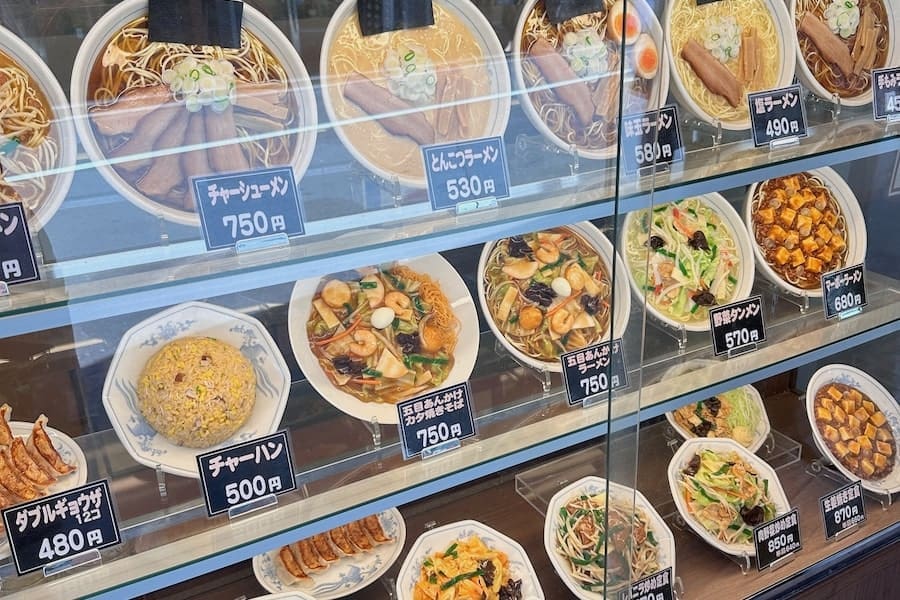
Food models outside an inexpensive Chinese restaurant in Japan
I recommend mixing these simple meals with the restaurants you’re especially keen to try. You might have breakfast from a convenience store, a set lunch, and a much more expensive dinner, without making every meal a big booking. My Japan food checklist has ideas for what to try along the way.
I also suggest leaving some meals undecided. I’ve enjoyed older neighborhood restaurants with friendly owners and regular customers, and they may never appear on a list of famous places. If there’s one restaurant you really want to try, give it time. Otherwise, I think exploring somewhere nearby is often a better use of the evening than spending an hour in a queue just because a place is popular.
Transport
For a trip that includes Tokyo and Kyoto or Osaka, I suggest starting with ¥40,000 to ¥60,000 per person for transport, including the journeys between cities, local travel, and airport trains or buses. The total rises as you add longer journeys or more taxis, which is why I prefer working out the main route before choosing a rail pass.
Train Fares Between Cities
The shinkansen, Japan’s bullet train, is a convenient way to travel between major cities. These are one-way adult prices for a reserved seat in a standard carriage on Nozomi trains, the fastest services on these routes:
Journey
One-Way Adult Fare
Tokyo to Kyoto
¥13,970
Tokyo to Shin-Osaka
¥14,520
Shin-Osaka to Hiroshima
¥10,750
These are regular-season prices booked through SmartEX. They cover the shinkansen journey, but local trains at either end cost extra. The price can change with your travel date or choice of train.
At these fares, Tokyo to Kyoto and back costs ¥27,940, leaving local journeys and airport transfers to add on top. That gives you a useful starting point if those are the two main cities you want to visit.
For a first two-week visit, I recommend spending about 9 to 10 days in Tokyo, Kyoto, and other popular destinations, with 4 to 5 days somewhere less familiar. My guide to choosing destinations in Japan has suggestions for that part of the trip. Somewhere along your existing route will often be easier to include than a place that takes you across the country, both for the budget and for the time you’ll spend on trains.
Is a JR Pass Worth It?
The nationwide Japan Rail Pass lets you use many trains run by the JR railway companies for a set number of days in a row. For a Tokyo-Kyoto return trip, individual tickets cost much less than a pass.
These are adult prices for Ordinary class, which means standard seats. From October 1, 2026, overseas agencies will charge more than the official website:
If you have several long journeys planned, my JR Pass calculator will help you compare the costs. For the pass to save money, enough of those journeys need to be covered and fall within its 7, 14, or 21 days. There is also an extra charge for Nozomi and Mizuho trains, which require an additional ticket with the nationwide pass.
If you’re going to Hiroshima and returning to Osaka, the Kansai-Hiroshima Area Pass is worth comparing. At ¥17,000 per adult for 5 days, it covers the bullet train between Shin-Osaka and Hiroshima and may save you money without needing the nationwide pass.
From Kyoto, you can use the covered regular JR trains to reach Shin-Osaka, but the bullet train on that short section is excluded. The pass is available to travelers with a foreign passport who enter Japan with Temporary Visitor status.
For shinkansen journeys between Tokyo, Kyoto, Osaka, and destinations farther west, SmartEX lets you book online, while station machines and counters are useful if you’d rather buy after arriving. Klook’s train booking service is another option to compare, including the final price and cancellation terms.
I usually prefer to keep ordinary train bookings flexible while I’m still deciding the route. That changes if you need seats together, have a fixed departure, or are traveling during a busy holiday period such as Golden Week in late April and early May, Obon in mid-August, or New Year. In those cases, I recommend reserving earlier. My advance-booking guide explains what to arrange before you arrive.
Local Trains and Buses
For getting around a city, ¥700 to ¥1,000 per day is a useful amount to allow, with airport transfers and longer day trips added separately. Most adult paper tickets for Tokyo Metro cost ¥180 to ¥330, though a journey that also uses another railway company’s trains may involve another fare.
I recommend a prepaid IC card, such as Suica or ICOCA, because it saves buying a ticket for each journey. You add money and tap at the gate or on the bus, with the fare taken from your balance. The same card also works in many shops, although transport coverage varies outside the main cities.
A physical card is an option, or you can use the Welcome Suica Mobile app on a compatible iPhone. I suggest adding money as you go, since some visitor cards and apps won’t refund the balance left at the end of the trip.
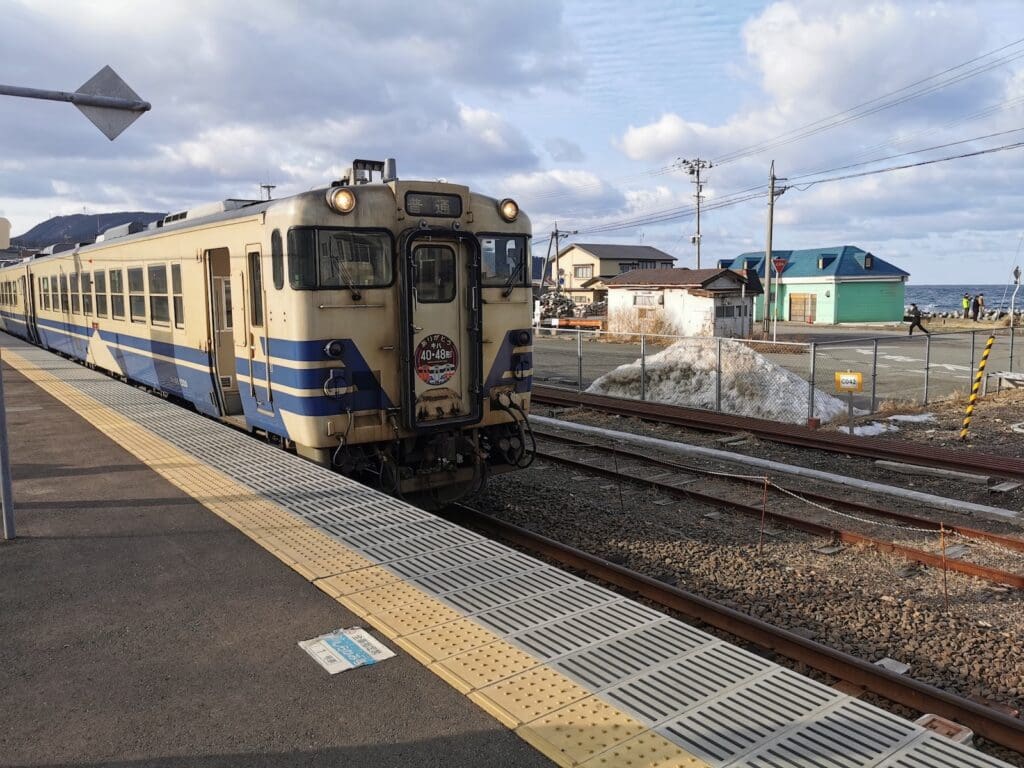
A local train at Fukaura Station on the Gono Line in Aomori
Activities and Cultural Experiences
A day spent walking around neighborhoods, browsing markets, and visiting parks can cost very little beyond food and transport. Museums and temples can also be inexpensive: the Tokyo National Museum’s regular collection, for example, costs ¥1,000 per adult, with special exhibitions charged separately.
If your plans mainly involve sightseeing and a few paid visits, ¥10,000 to ¥20,000 per person over two weeks is a starting budget. A theme park or workshop will need its own allowance, and for theme parks the full day can cost considerably more than the admission ticket once you add food, transport, souvenirs, and optional extras. Ticket prices may vary by date too.
For private cultural experiences, I recommend allowing ¥50,000 to ¥100,000 per person for activities, then checking the bookings you want for your dates and group size. That gives you more freedom to choose something you’re interested in than leaving only the money left over after hotels and shopping.
After working with tours and activities in Japan since 2019 and trying dozens myself, I think this is a good place to spend a little more. A craft workshop gives you time with the person who makes the work, with a chance to ask questions and try it yourself. If that’s something you’d enjoy, I recommend choosing a simpler hotel room or buying fewer souvenirs so you can leave room for it.
Where to Book Cultural Experiences
For private cultural experiences, Wabunka is the company I recommend most if you’re willing to spend more. They work with artisans, monks, artists, and other hosts to arrange experiences for you and your own group, with an interpreter when the host doesn’t speak English. That lets you spend time together and ask questions without joining a larger tour.
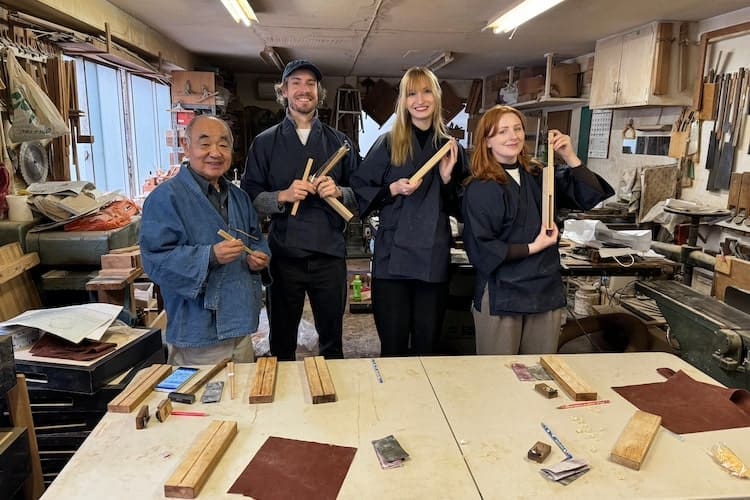
I’ve worked with Wabunka and have also joined several of their experiences myself, including making chopsticks at Mogami Kogei and learning to repair broken pottery in a kintsugi workshop in Tokyo. Those visits are part of why I’m comfortable recommending them.
Prices can depend on how many people are booking together, so check the total for your group and what’s included.
For attraction tickets and group tours, Klook and Viator are useful places to compare. A shorter group class can be a good way to try something for less, particularly if you’re curious about it but don’t want to spend a large amount. Who teaches it, the group size, and the time you get can explain much of the price difference. My guide to cultural experiences in Japan has more suggestions.
Shopping and Souvenirs
For snacks, gifts, and a few things for yourself, I suggest starting with ¥10,000 to ¥30,000 per person. If you’ve already got your eye on Japanese denim, a kitchen knife, ceramics, or collectible figures, it’s worth adding those separately. A single purchase could use most of the souvenir budget.
Don Quijote, Daiso, and Hands are useful for finding lots of different things in one place, but I also recommend leaving time for smaller shops and flea markets. You may come across pottery, prints, or something made by a local craftsperson that you hadn’t thought of buying before arriving.
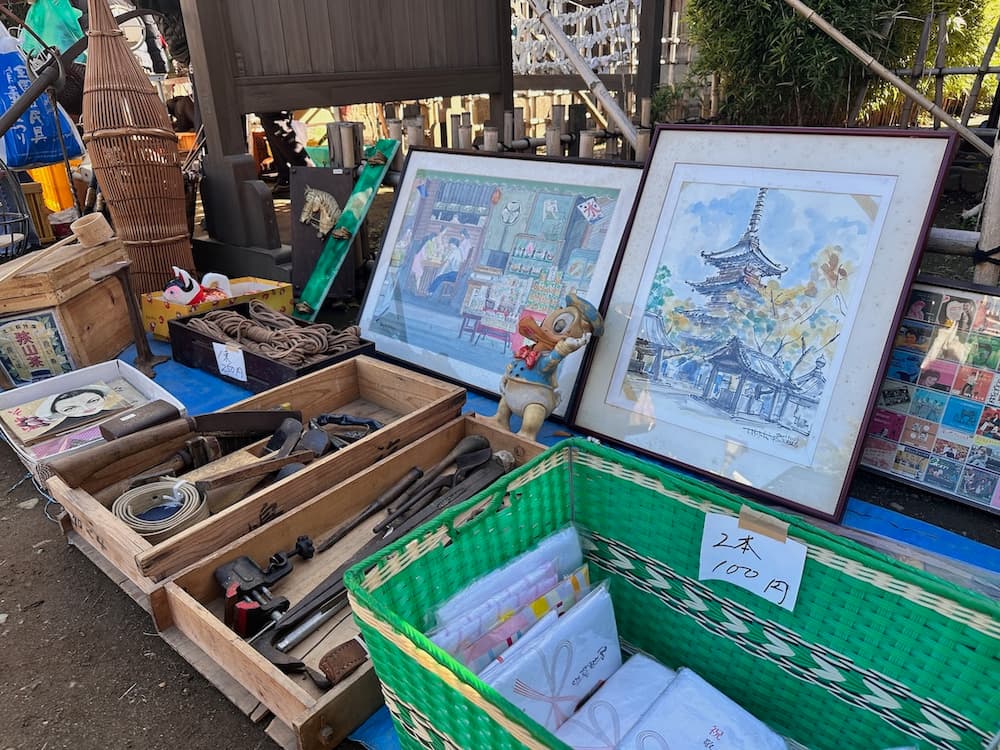
At a flea market in Nakano. The frame on the right is now mine.
Clothes from Japanese brands can be worth looking for, though the sizes, product range, and exchange rate can change how good a purchase is for you. For a kitchen knife, you might prefer a knife-making experience where you take your work home. I suggest checking what you’ll make before choosing it over a shop purchase, since it may be a different type of knife from the one you wanted.
I recommend leaving some room in your luggage for these purchases. Ceramics need protective wrapping, and collectible boxes can take up much more space than expected. If that means another checked bag for the flight home, the airline’s fee belongs in the shopping budget too.
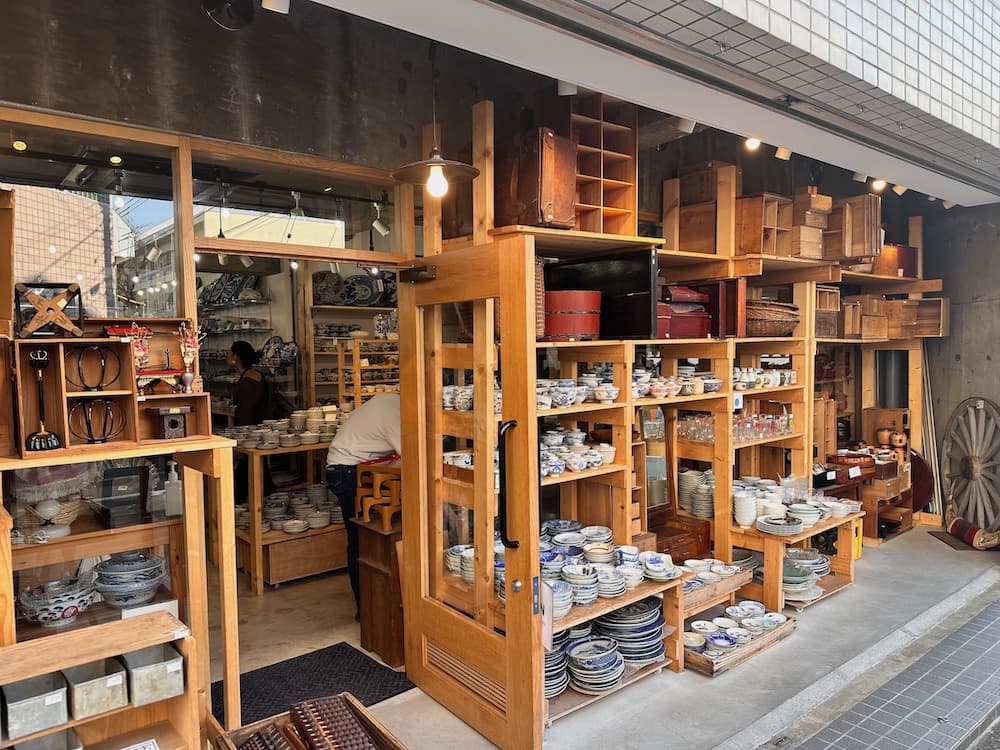
A ceramics shop in Kichijoji, Tokyo
Other Costs and Spending Money
By the time you’ve added hotels, meals, trains, and activities, most of the budget is accounted for. A little extra for mobile data, laundry, luggage storage or delivery, and local hotel taxes will help with the smaller costs that come up during the trip.
Mobile Data and eSIMs
I recommend an eSIM over pocket Wi-Fi if your phone supports it. An eSIM is a digital SIM you install on your phone, so there’s no separate router to carry, charge, or return. I find that much simpler, especially when traveling with other people: everyone can go their own way without depending on whoever has the Wi-Fi device.
Airalo’s Japan eSIM plans are one option to compare, with fixed-data and unlimited packages. For a two-week trip, choose a plan that covers the full stay and suits how much data you expect to use. Your phone needs to support eSIMs and be unlocked, meaning it can use another mobile provider. The compatibility check on Airalo’s website is worth doing before you buy.
Some hotels collect a local accommodation tax when you arrive, even if you’ve already paid for the room. In Kyoto, a room charge of ¥10,000 per person per night adds ¥400 in accommodation tax, or ¥2,000 each over 5 nights. That calculation uses the room charge before meals and consumption tax, Japan’s sales tax. Your booking may already include the local tax, and Kyoto’s accommodation-tax guide explains the rates if you want to check.
Beyond those known costs, I suggest keeping at least ¥15,000 to ¥20,000 per person as spare money. You may want a taxi in heavy rain, find another activity, or see something you’d love to bring home. Having a little left over makes those decisions easier without having to rethink the rest of the trip.
Travel insurance belongs alongside your international flights as a separate cost, since the price depends on your age, home country, trip length, and what the policy covers.
How Much Money Should You Have Left After Booking?
Once some bookings are paid for, you only need to keep the unpaid part of the budget available. In the ¥450,000 example, paying ¥195,000 for hotels and ¥30,000 toward train tickets would leave ¥225,000 for the rest of the trip. Any activities you’ve already paid for can come off that amount too.
Most of that money can stay in your bank account until you use it. I still recommend carrying enough cash for meals and small purchases, because some places won’t accept your card, especially smaller shops and restaurants. Your bank’s charges for overseas payments and withdrawals are worth checking before you leave.
You can use the Japan trip cost calculator to see how the total changes with different hotels, journeys, and activities. If it’s more than you want to spend, I suggest looking first at a simpler room, one fewer long train journey, or less shopping. That may save enough to keep the dinner or experience you’re most looking forward to.