
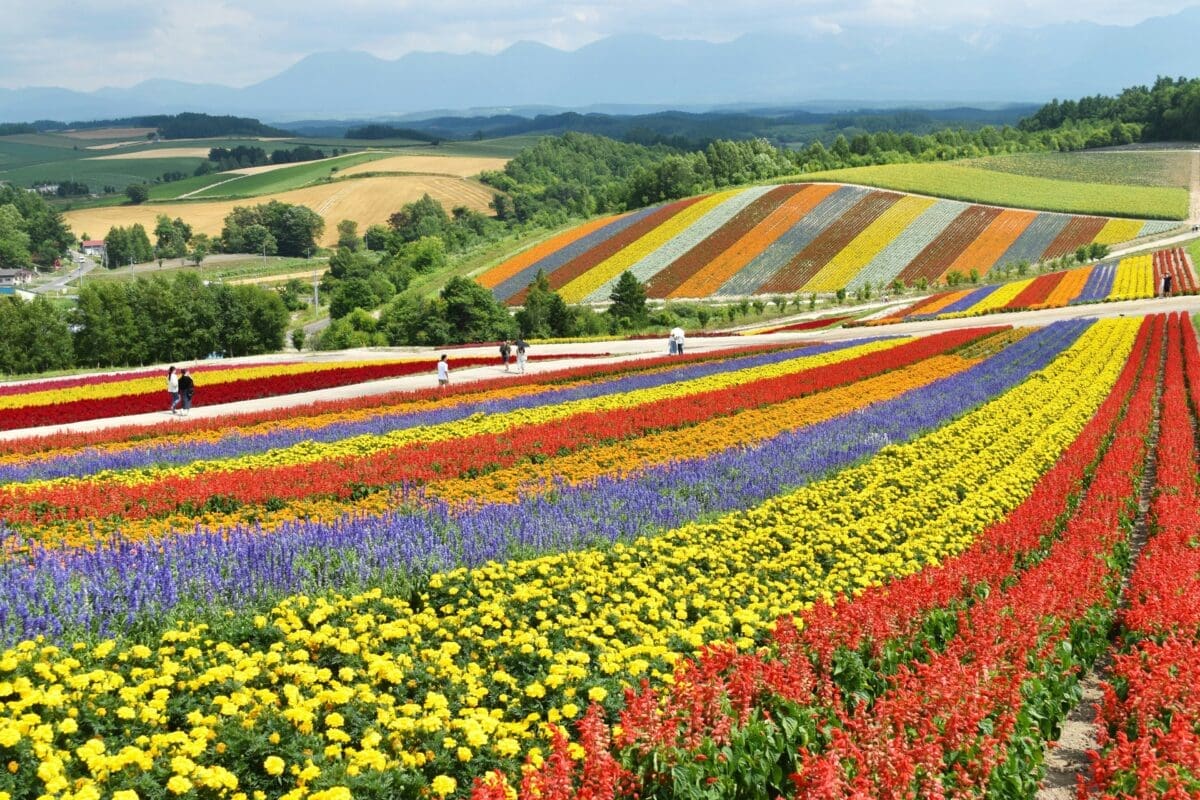
I recommend Hokkaido for a summer trip if you want time in the mountains, flower fields, and lakeside hot springs, with plenty of good food along the way. On Japan’s northernmost main island, you can combine outdoor days with evenings trying Sapporo’s restaurants or a stay in Hakodate for its seafood market and harbor views.
To enjoy that mix, I’d keep the trip to a few areas. The distances between them can be long, and you’ll get more out of a mountain walk or a hot spring hotel if you have time to stay for a while. Hokkaido can also be cooler than Tokyo or Kyoto, which helps when you’re spending days outdoors, though July and August can still be hot.
Some links on YavaJapan are affiliate links. If you book or buy through them, I may earn a small commission at no extra cost to you. It helps support the site, and I only link to places, stays, and experiences I genuinely think are worth recommending.
What Summer in Hokkaido Is Like
If you’re coming mainly for cooler weather, think about where you’ll spend your days. An afternoon in Sapporo can be hot, while a mountain walk or a windy day on a northern island may call for an extra layer.
The Japan Meteorological Agency’s Sapporo climate averages put the monthly mean temperature at about 17°C in June, 21°C in July, and 22°C in August. These figures include the cooler nights, so afternoons can be considerably hotter. I suggest bringing summer clothes along with a warm layer and a waterproof jacket, especially if you’re heading into the mountains.
July is the month I recommend for lavender. June can suit a trip focused on cities and walks at lower elevations, but some mountain trails still have snow. August also works for outdoor travel, though you should expect warm days and check which flowers will still be blooming. If you’re weighing up several regions, my guide to the best time to visit Japan explains how the season changes across the country.
Summer also brings crowds to the famous flower fields and viewpoints. For lavender season or Obon, the mid-August period when many people in Japan travel to visit family, I suggest booking accommodation early so you have more choice near the places you want to visit.
Where to Go for Mountains, Lakes, and Flowers
For a first visit, consider the Furano, Biei, and Asahidake area in central Hokkaido if you want flowers and mountain walks, or the lakes southwest of Sapporo for time by the water and hot spring hotels. The islands in the far north need several days of their own because of the extra travel.
Daisetsuzan National Park and Asahidake
I recommend Daisetsuzan if you’d like to see alpine flowers and volcanic scenery on foot. This mountain area in central Hokkaido has both short walks near the ropeway and longer, more demanding hikes, so you can choose how much of the day to spend walking.
The Asahidake Ropeway takes you to Sugatami Station, around 1,600 m above sea level. From there, a circuit around Sugatami Pond passes ponds and steam vents beneath the mountain. At about 1.7 km and roughly 1 hour in suitable conditions, it’s a way to see the area without climbing to the summit.
The circuit is a good option for a shorter outing if you’re comfortable on uneven ground. You’ll still need shoes with good grip, and I suggest checking conditions before going up because snow can remain into summer and wind or poor visibility can make the walk harder. Climbing to the summit takes much more preparation.
Mount Yotei and Niseko
For experienced hikers, Mount Yotei, near the resort area of Niseko, offers a demanding day in the mountains. I recommend the climb only if you’re comfortable with a long, steep walk up and back down. There are shorter walks around Niseko if you’d prefer to see the mountain from below.
If you want to reach the summit, prepare your route and equipment in advance but leave some flexibility over the day you climb. That gives you a chance to choose better weather, using the forecast and local trail advice to decide whether to go.
Before You Go Hiking
Hokkaido’s mountains are brown bear habitat, including areas with popular walking routes. Before setting out, ask the local visitor center about trail closures, recent bear sightings, and the precautions and equipment recommended for your walk. The national park visiting guidance is useful preparation, alongside current local advice. On the trail, keep to designated paths and keep food and rubbish secure.
Lake Shikotsu and Lake Toya
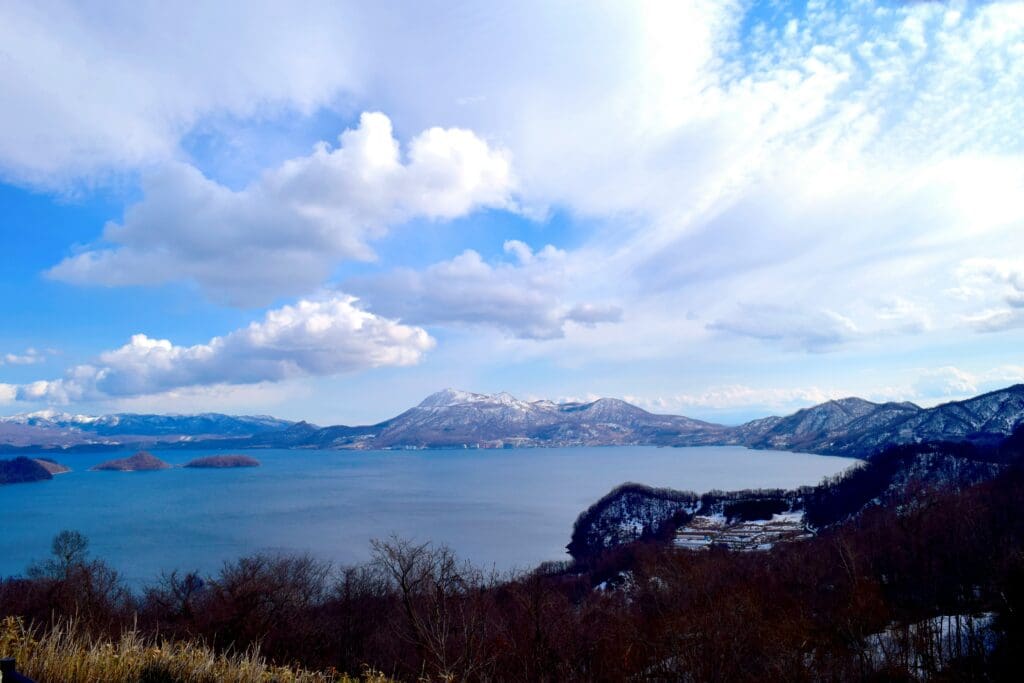
Lake Shikotsu and Lake Toya are separate volcanic lakes southwest of Sapporo. This is a part of Hokkaido I recommend for a walk by the water followed by time at the hotel, especially if you’d enjoy an onsen (hot spring). The two lakes are far enough apart that it’s worth looking at the journey before deciding to visit both.
At Lake Toya, Nonokaze Resort is a good choice if you want a room overlooking the lake. I suggest leaving time for the hotel as well as the surrounding area, with a bath and a lakeside walk before or after dinner.
Biei and Furano
For lavender, I recommend Farm Tomita in the Furano area. Early to late July is the usual viewing period, though the timing changes with the weather and variety. The farm’s current flower updates can help you choose when to visit if there’s a particular field you want to see.
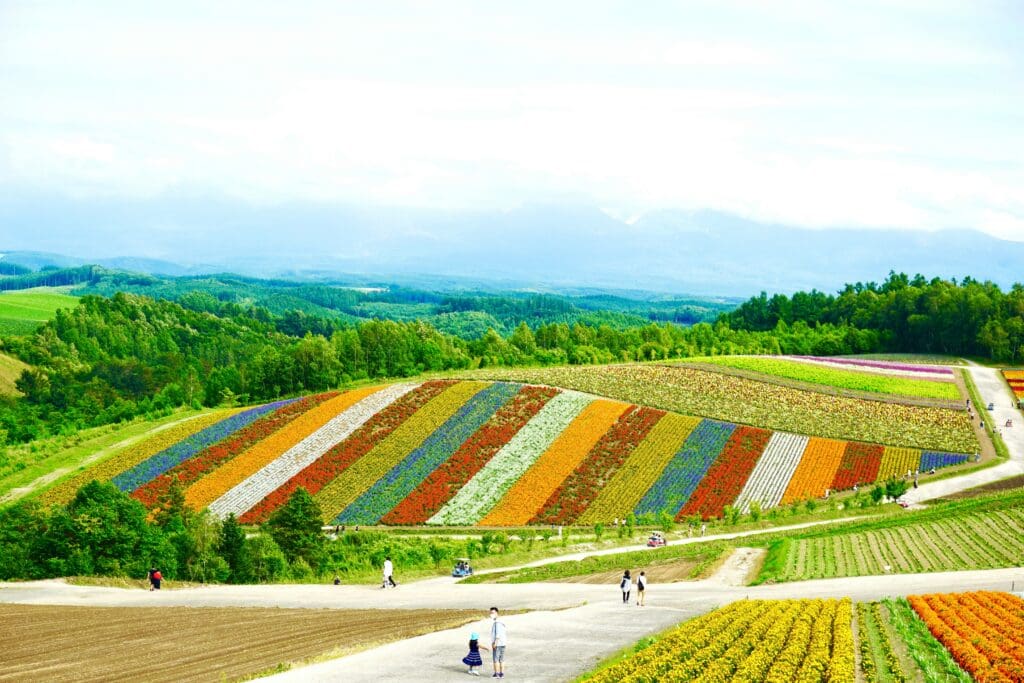
Shikisai-no-oka in Biei has broad stripes of flowers across rolling hills, with several varieties to see beyond lavender. You can explore on foot or use the garden’s rental carts for less walking. The rides take cash, so bring some if you’d like to use them.
Both places are popular, but I think they’re worth visiting if you’ve come to Hokkaido for the flower fields. Give yourself time to walk around by keeping the rest of that day’s stops nearby. Without a car, a tour can help you visit the fields, though you’ll want to compare the departure points and stops to find one that suits your plans.
If your trip through central Hokkaido also includes Asahikawa, northeast of Sapporo, Asahiyama Zoo is an option for an afternoon. I suggest visiting when you’re already staying in that area.
Wakkanai, Rishiri, and Rebun
From Wakkanai at Hokkaido’s northern tip, ferries take you to Rishiri and Rebun. These islands are worth considering if you’d enjoy several days of coastal walks, flowers, and hiking, and are happy to spend more time traveling to get there.
I suggest leaving them for another trip if you only have a short stay focused on Sapporo and Furano. If you do go north, use Heartland Ferry’s timetables and service information to plan your stays. Wind and sea conditions can disrupt sailings, so allow some flexibility around your connections.
Food and City Days in Sapporo and Hakodate
Sapporo is a good place to spend a few evenings trying Hokkaido food. You can have soup curry one night, ramen another, and still have plenty of seafood to try. I suggest leaving some meals unplanned so you can choose what you want that day.
- Soup curry: A Sapporo specialty with a spiced broth, vegetables, and usually meat, served with rice on the side.
- Miso ramen: Try a bowl with butter and corn if that appeals. Ramen Alley in Susukino, Sapporo’s restaurant and nightlife district, is an option, though popular shops can have queues.
- Dairy: Soft-serve ice cream, milk, and cheese are all worth trying, with ice cream making a good break between sightseeing stops.
- Seafood: Look for crab, ikura (salmon roe), uni (sea urchin), and seasonal fish.
For a more expensive sushi meal in Sapporo, consider Sushi Arima. Its current menu and reservation options are worth checking before you decide to go. If your route includes Otaru, west of Sapporo, I also recommend Naruto Honten for fried chicken.
Between meals, the Sapporo Beer Museum is a good stop if you’re interested in the beer’s history. You can look around the exhibits, or check the guided tour and tasting options before going if you’d like to try the beer during your visit.
For sweets and souvenirs, Shiroi Koibito Park is a fun, touristy stop connected to Hokkaido’s well-known chocolate sandwich cookies. You can put your own photo on one of its personalized souvenir tins if you’d like a gift to take home.
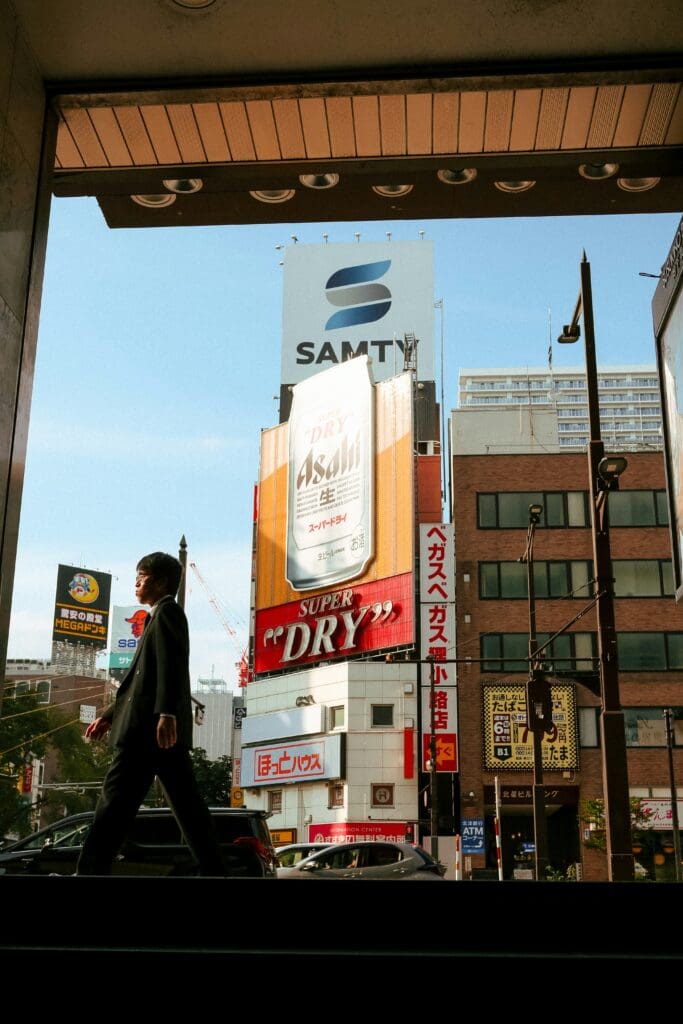
Spending Time in Hakodate
Hakodate is in southern Hokkaido, a long journey from Sapporo, so I suggest staying overnight to enjoy the waterfront and the evening view from Mount Hakodate. The next morning, you can have a seafood breakfast at the Morning Market. For sea urchin in particular, I recommend Uni Murakami.
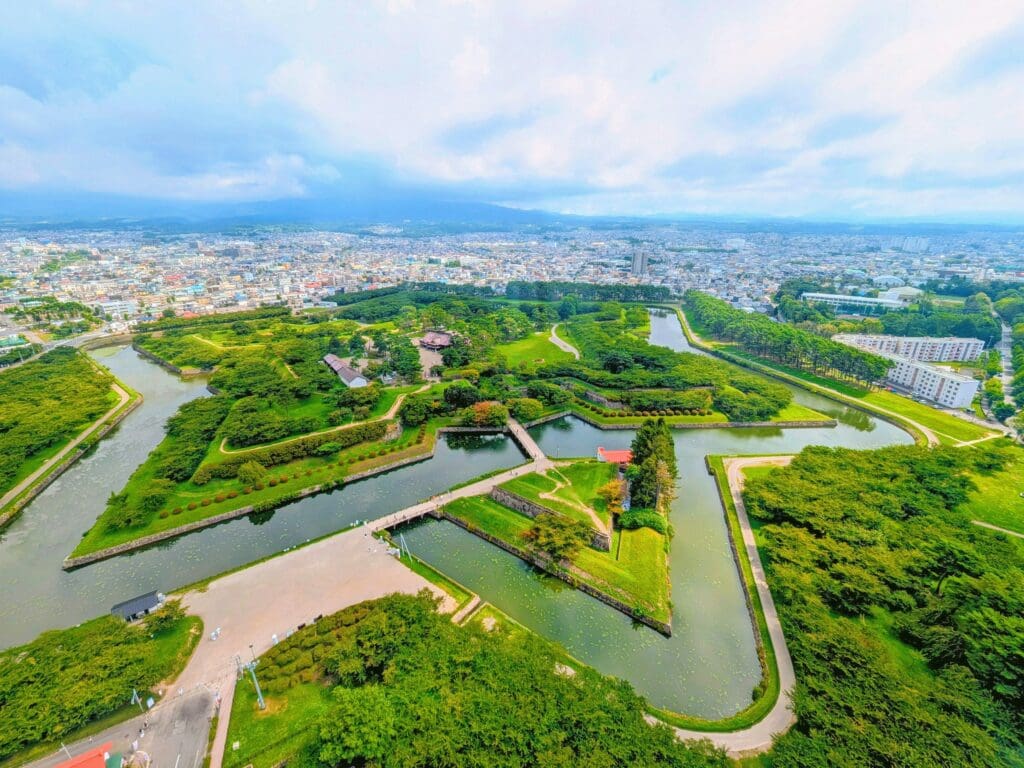
During the day, you can explore the shops and restaurants in the red-brick warehouses or visit Goryokaku, the star-shaped former fort visible from the nearby tower. For a casual meal, try Lucky Pierrot, Hakodate’s local burger chain with elaborate restaurants and large burgers.
The Mount Hakodate Ropeway takes you up for the night view, which is best saved for an evening with good visibility. Queues can be long around sunset, so allow time for the journey and check the return service before heading up. If you’d also like to hike the mountain, I suggest doing that in daylight as a separate outing.
Where to Stay for Hot Springs and Views
I recommend spending 1 night at an onsen hotel if you’d enjoy having the baths, dinner, and breakfast as part of your trip. Many of Hokkaido’s well-known properties are large modern hotels or resorts, so they can be quite different from a small ryokan (traditional Japanese inn). Look at the building, rooms, and dining arrangements to find somewhere you’d want to spend an afternoon and evening.
Lake Toya and inland Kitayuzawa have options for time away from the cities, while Century Marina lets you enjoy hot springs during a stay in Hakodate. Lake Akan is much farther away in eastern Hokkaido, so the hotel there suits a different route.
Nonokaze Resort at Lake Toya
I recommend Nonokaze Resort for lake views and good food. Its rooms face Lake Toya, and the outdoor hot spring bath overlooks the water too, so you can enjoy the location throughout your stay.
There are several dining options, including a buffet, and the dinner you get depends on the plan you book. It’s worth comparing them before choosing a room, especially if the meal is a large part of why you want to stay here.
Midorinokaze Resort Kitayuzawa
For a comfortable stay surrounded by trees, I recommend Midorinokaze Resort Kitayuzawa, particularly if you enjoy spending time in large shared hot spring facilities. Its outdoor bathing areas include a large open-air bath and smaller wooden baths beside the forest. The smaller tubs are within the shared areas, so they aren’t private baths you reserve for your own group.
The hotel is inland at Kitayuzawa Onsen, rather than on Lake Toya. Allow for the journey from your previous stop when deciding how much sightseeing to do before arriving.
Akan Yuku no Sato Tsuruga at Lake Akan
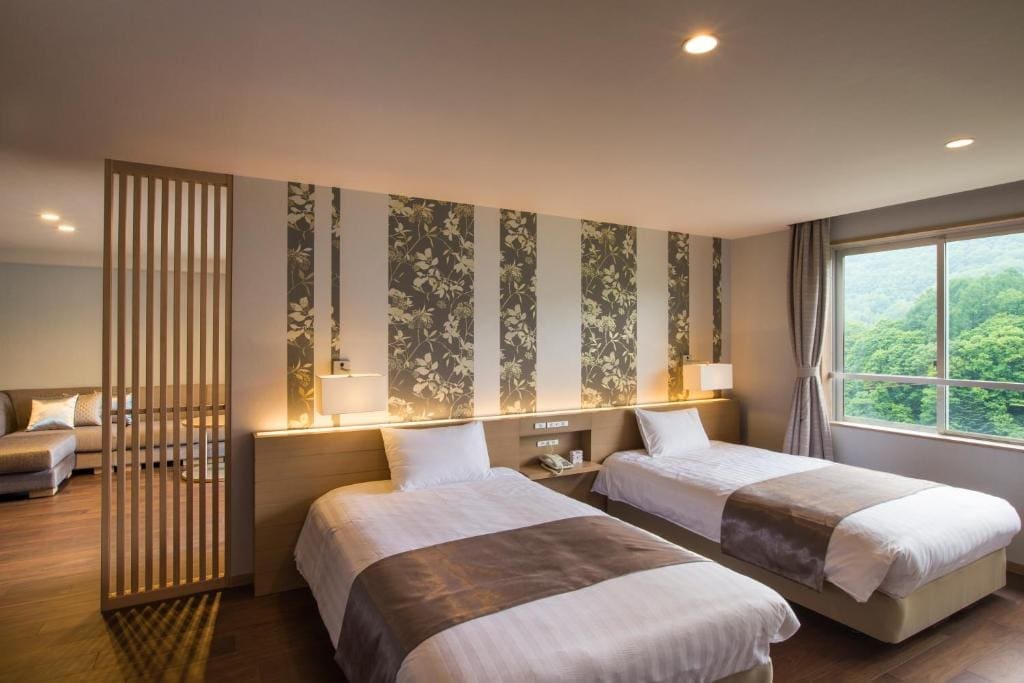
Akan Yuku no Sato Tsuruga is worth considering for a more expensive stay in eastern Hokkaido. Its lakeside location and hot spring facilities make it a good place to spend time between outings around Lake Akan.
If you’re hoping for your own open-air bath, pay particular attention to the room categories before booking. Only selected rooms have one, and the views and other facilities differ too. I suggest choosing the room for those details if they’re the reason you’re spending more on the stay.
Century Marina Hakodate
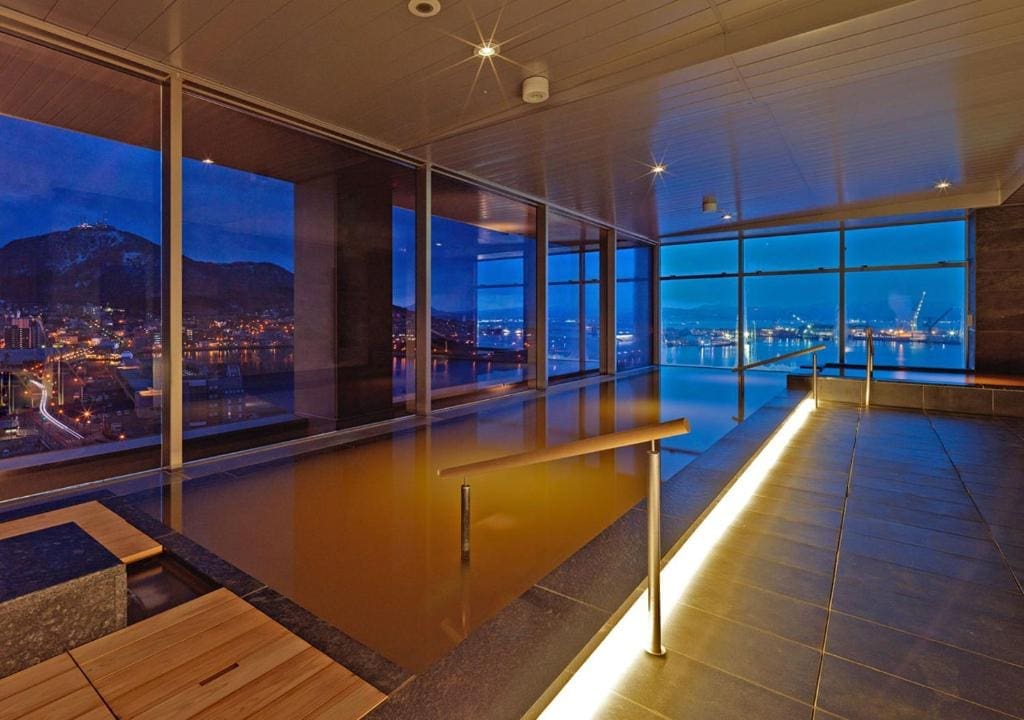
Century Marina Hakodate is a hotel I recommend for hot springs during a city stay. Its upper-floor indoor and rooftop open-air baths overlook the city and surrounding bay area, with a particularly good view in the evening.
These are shared hotel baths. If you’d like to bathe together as a couple, check whether the hotel has a room or another bath you can book for private use.
Choosing a Room and Meal Plan
For a private bath, you can look for a room with its own onsen or a hotel where you can reserve a bath for your group. A private bathroom may only have an ordinary bathtub, so the room description should confirm that it uses hot spring water if that’s what you want.
Dinner and breakfast are a large part of why I recommend this kind of stay. When comparing prices, look at the total for your group and which meals are included, as the room category, food, and dates can change the cost considerably. Once you’ve chosen somewhere, confirm where you’ll eat and the latest arrival time for dinner so you can plan the day with time for the baths and room beforehand.
Summer Festivals and Hokkaido’s Culture
If your trip falls between roughly late July and mid-August, you may catch the Sapporo Summer Festival. The Odori Park beer garden is a major part of it, alongside events around the city and the Hokkai Bon Odori, a traditional community dance event. The dates differ between events, so look up the ones you want to attend before planning your stay.
Farther south, the Hakodate Port Festival takes place from August 1 to 5, with fireworks and parades. If big traditional summer festivals are your main reason for traveling north, I also recommend considering Tohoku, the northern region of Japan’s main island, Honshu. Aomori Nebuta and Akita Kanto are both in early August, but the journey from Hokkaido needs time of its own in your itinerary.
Outside the festivals, Hakodate’s churches and port buildings reflect its international trading history. Hokkaido is also home to the Ainu, an Indigenous people whose history and living traditions are central to the region. To learn about Ainu culture, you can visit Upopoy, the National Ainu Museum and Park, in Shiraoi on the southern coast, for its museum and cultural programs.
Getting Around and Planning Your Days
For a week in Hokkaido, I suggest two main places to stay, with outings nearby. You could combine Sapporo with time around Furano and Biei, or split your stay between Hakodate and Lake Toya. Lake Akan or the northern islands would need more travel days or replace part of that plan. My guide to choosing where to go in Japan can help if you’re deciding how Hokkaido fits into a longer trip.
For the rural part, renting a car gives you more choice of flower fields, lakes, and trailheads. I suggest checking the driving time between the places you most want to visit before booking accommodation, as they can look close on an island-wide map and still be a long way apart.
Sapporo and Otaru are straightforward to explore without a car, and the Hokuto limited express connects Sapporo and Hakodate. It has reserved seating, so arrange your tickets using JR Hokkaido’s ticket and seat-reservation guidance. If you want to stop along the way, allow for the tickets and reservations needed for each part of the journey.
If you’re arriving from elsewhere in Japan, compare flights as well as trains once you’ve chosen the areas you want to visit. Flying into one Hokkaido airport and leaving from another may save a long return journey, especially when you’re traveling between distant parts of the island.
Comments are closed.