
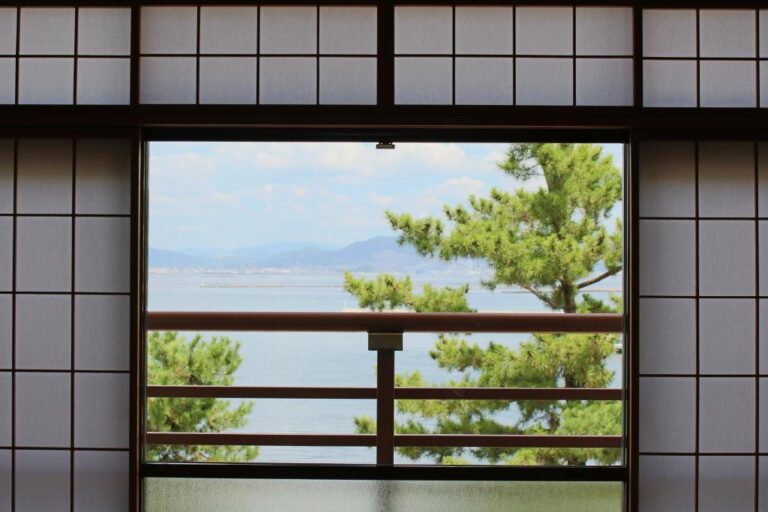
If you’re visiting Miyajima, the island near Hiroshima, I recommend staying 1 night. Once the daytime visitors leave, you can walk along the waterfront and around Itsukushima Shrine without the same crowds. Staying overnight also leaves you another morning to explore before taking the ferry back to the mainland.
A ryokan (traditional Japanese inn) is a good way to spend that night, especially if you’d enjoy a Japanese dinner and time at the inn. I recommend Iwaso for its traditional buildings, hot spring baths, and location beside Momijidani Park. Jukeiso is particularly good for views of the shrine and its large red gate. For a smaller inn with Japanese meals, consider Ryoso Kawaguchi or Yamaichi Bekkan.
Some links on YavaJapan are affiliate links. If you book or buy through them, I may earn a small commission at no extra cost to you. It helps support the site, and I only link to places, stays, and experiences I genuinely think are worth recommending.
At a Glance
- For a traditional ryokan night: Iwaso, with its park setting, Japanese meals, and hot spring baths.
- For a smaller traditional inn: Ryoso Kawaguchi, near the shrine and shopping streets.
- For food and an easy walk from the ferry: Yamaichi Bekkan.
- For views of the shrine and gate: Jukeiso, on the hillside above town.
- For families sharing a room: Miyajima Seaside Hotel, with larger rooms overlooking the sea.
- For modern comfort and Western beds: Itsukushima Iroha, formerly Kurayado Iroha. Its shared rooftop bath is closed for renovation.
Where to Stay on Miyajima
All six places I introduce in this article are on the island. If you book a hotel in Miyajimaguchi, the port area on the mainland, you’ll still need to take the boat to reach Miyajima. I recommend staying on Miyajima itself so you can spend the evening around the shrine without having to catch a ferry back to your hotel.
Yamaichi Bekkan is near the island’s ferry terminal, so there’s only a short walk with your bags after you arrive. Itsukushima Iroha is farther along Omotesando, the main shopping street leading toward Itsukushima Shrine. Both are convenient if you want to drop your bags and head out to explore.
Closer to the shrine, Ryoso Kawaguchi lets you stay near the shops and sights in a smaller traditional inn. Iwaso is beside Momijidani Park, a wooded park behind the shrine. You can walk to the shrine from either inn.
Jukeiso is uphill beyond the shrine, while Miyajima Seaside Hotel is along the coast on the other side of the ferry terminal from the shrine. These are good options for views of the shrine or sea, but getting to your room involves a longer walk. I suggest using their shuttles when you arrive with luggage.
Check the map below to see where each Miyajima stay is located:
Miyajima Ryokan Comparison
| Ryokan | Best For | Rooms and Baths | Main Limitation |
|---|---|---|---|
| Iwaso | A traditional stay beside Momijidani Park, with Japanese meals | Main building, annex, and cottages; shared indoor and open-air hot springs | Some main-building rooms have no bath or shower |
| Ryoso Kawaguchi | A smaller traditional inn near the shrine | Japanese rooms with mattresses on the floor; separate baths for private use | Dinner isn’t available every night |
| Yamaichi Bekkan | Japanese meals and a short walk from the ferry | Japanese rooms or a Western twin; private bathrooms | No shared bath or elevator; no single-person accommodation plan |
| Jukeiso | Views of the shrine and large red gate | Type C rooms have twin beds and a gate view; shared indoor baths and a reservable private open-air bath | Uphill from the ferry; trees block the gate view from Type B rooms |
| Miyajima Seaside Hotel | Families or friends sharing a room by the sea | 36 m² Japanese rooms sleep up to six; larger rooms with twin beds; shared indoor baths | Farther from the shrine and shops; shuttle hours are limited |
| Itsukushima Iroha | Modern rooms near Omotesando shopping street | Twin, double, or Japanese rooms with private bathrooms | Shared rooftop bath closed for renovation |
Compare the total price for your group with the same meals included. A room-only rate can look much cheaper than a booking with dinner and breakfast.
The Best Ryokan in Miyajima
Yamaichi Bekkan: For Japanese Meals Near the Ferry
Yamaichi Bekkan serves seasonal Japanese course dinners, including local conger eel dishes and oysters in winter. I recommend it for couples who want a small inn with Japanese meals and are happy with a simple room. Being close to the ferry also makes it convenient for a short visit.
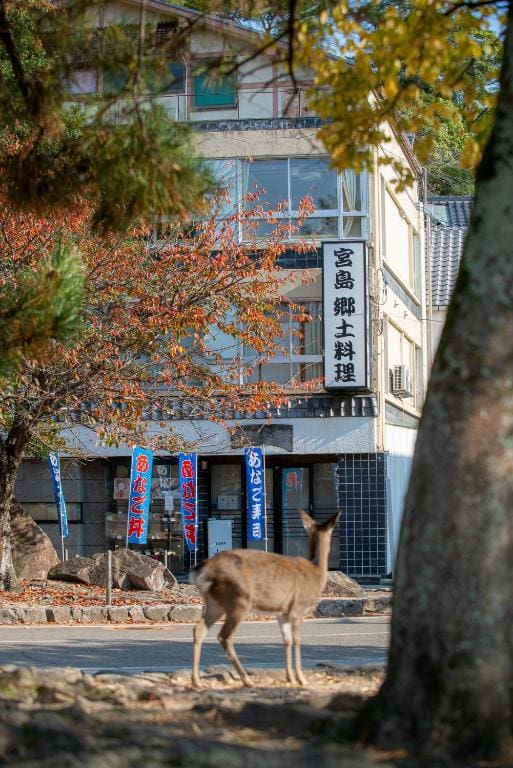
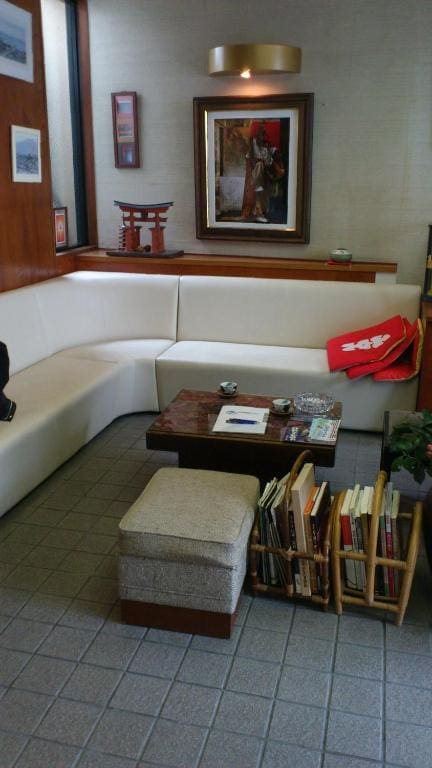
You can choose a Japanese room or a Western twin room, and each has its own bathroom. There’s no shared bath, so you’ll bathe in your room. I suggest reserving dinner when you book the accommodation, so you can choose your meal and see the total price for the night.
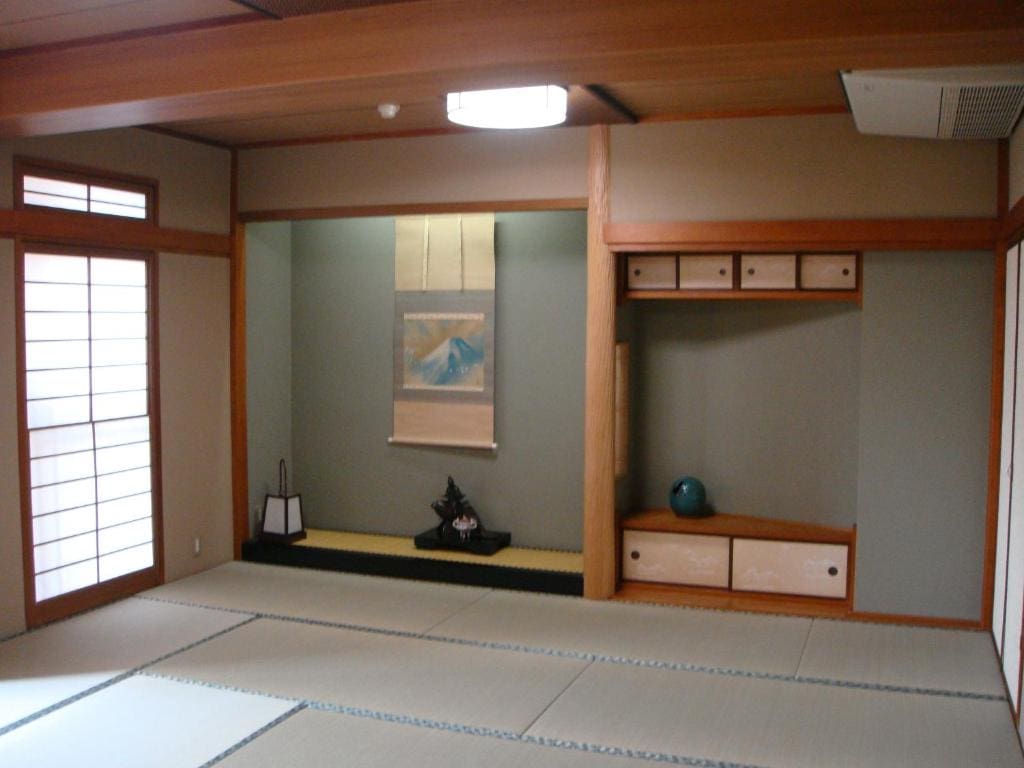
Plan to arrive between 15:00 and 17:00 for check-in. There’s no elevator, so I recommend another stay if stairs are difficult for you. If you’re traveling alone, I suggest choosing another inn, as Yamaichi doesn’t offer a single-person accommodation plan.
Ryoso Kawaguchi: A Small Traditional Inn Near the Shrine
I suggest comparing Ryoso Kawaguchi with Iwaso if you want a traditional inn and are hoping to spend less. Kawaguchi is smaller and close to the shrine and shopping streets, so you can walk around town and return to your room whenever you want a break.
The rooms have tatami (woven floor mats), a low table, and futon mattresses laid out on the floor for sleeping. If you’re looking for a small inn with traditional rooms and home-cooked Japanese food, Kawaguchi is a good choice.
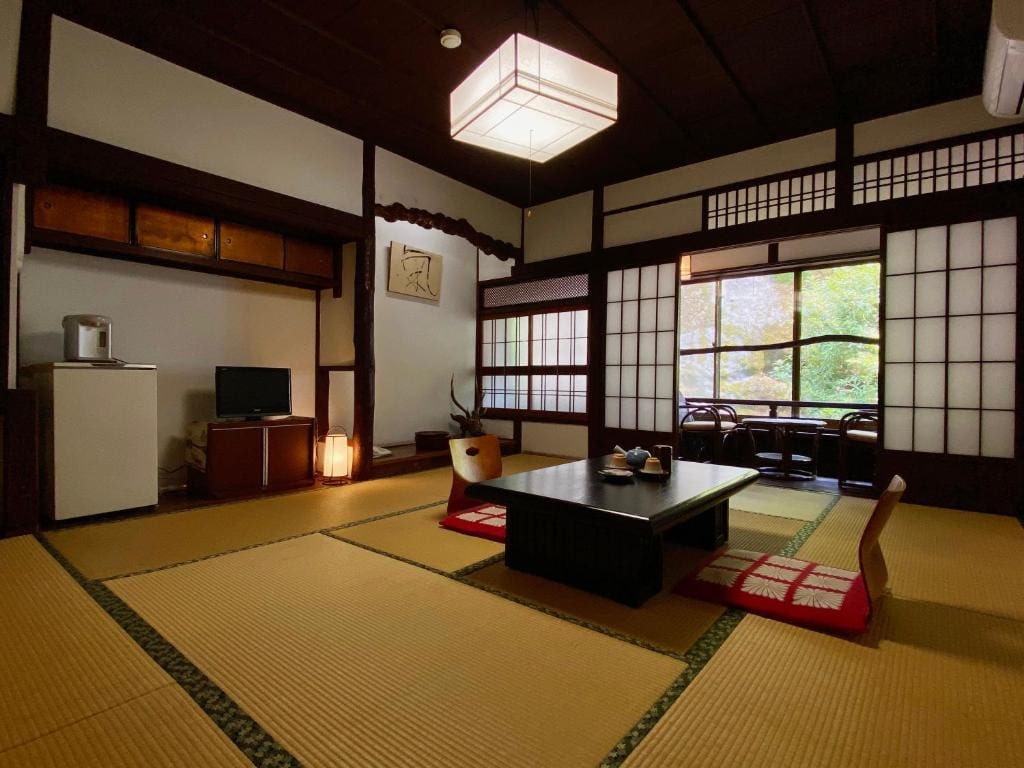
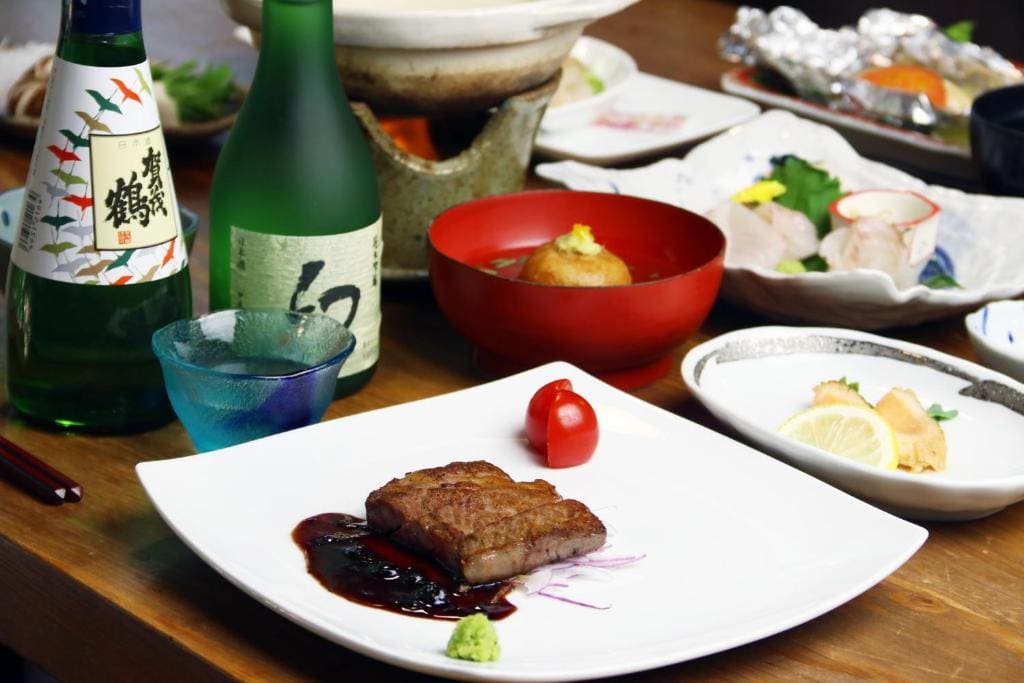
I recommend booking dinner and breakfast with your room. Dinner isn’t available every night, so make sure it’s included in the booking if you’re choosing Kawaguchi for the food.
The inn has baths you can use privately with the people you’re traveling with. They’re separate from the guest rooms, and the inn can explain how to arrange a time. I suggest Kawaguchi over Yamaichi Bekkan if you’d prefer to reserve a larger bath instead of bathing in your room.
Jukeiso: For Views of Itsukushima Shrine
Jukeiso is on a hillside overlooking the rooftops, Itsukushima Shrine, and the sea. I recommend it for a couple who wants a room with a view and plans to spend some time enjoying it. You’ll have a longer journey from the ferry than at the inns near the pier, but the view can make that worthwhile.
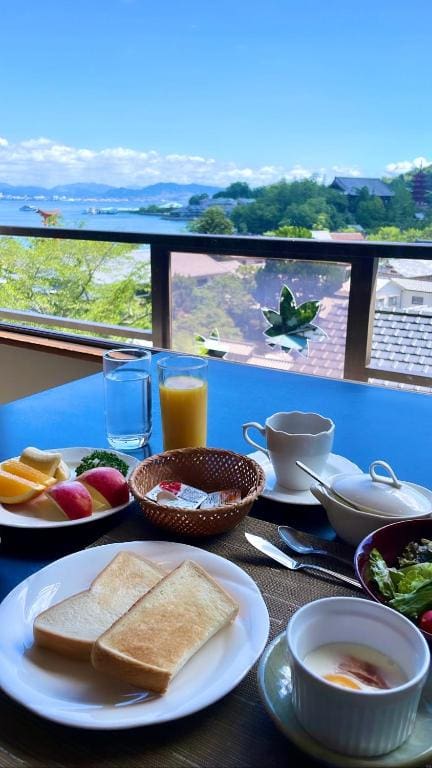
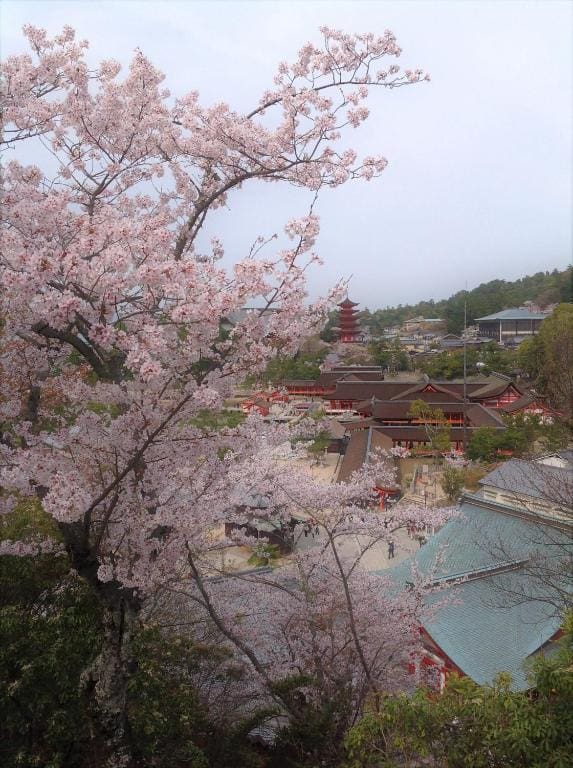
For a view of the shrine and large red gate, I suggest the Type C rooms, which have twin beds alongside a Japanese room. Type B rooms also have a sea view, but trees obscure the gate. If seeing the gate from your window is important to you, I recommend Type C over Type B.
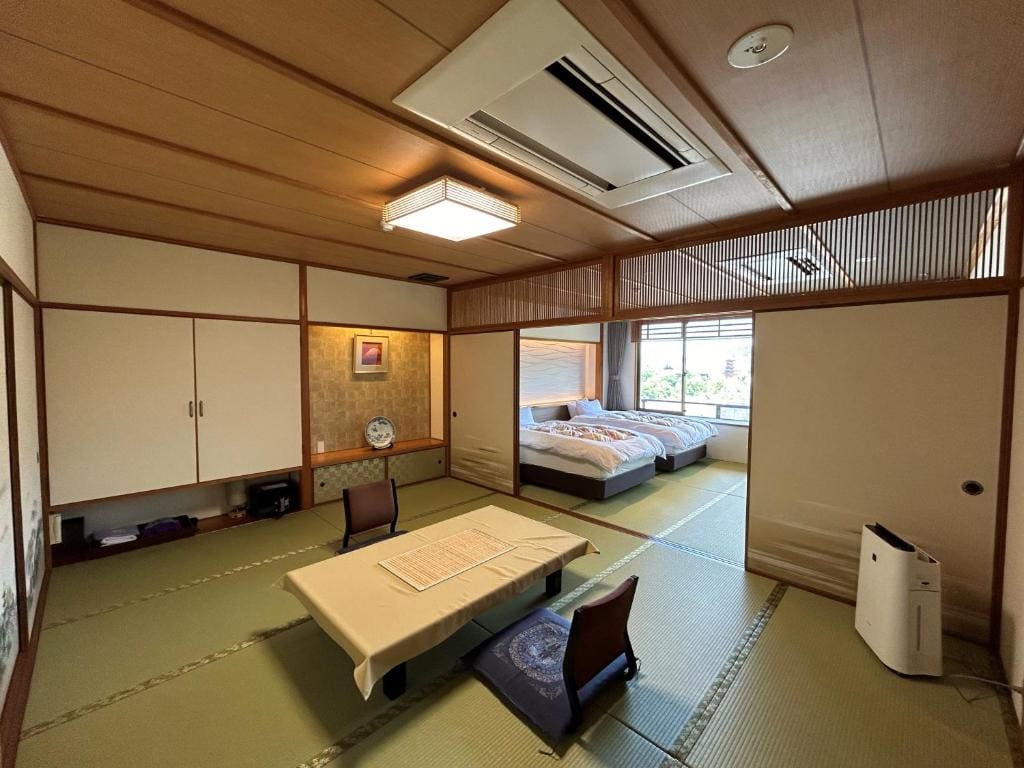
There’s also a private open-air bath overlooking the shrine and gate. At check-in, you can reserve 30 minutes for your own use. Times are allocated in order of arrival, so arriving early gives you a better chance of getting a slot. The inn also has separate men’s and women’s indoor baths shared with other guests.
The walk from Miyajima’s ferry terminal takes about 20 minutes and includes an uphill stretch. With suitcases, I recommend the inn’s shuttle from the terminal. Call before boarding the ferry to Miyajima so the staff know when to expect you.
Miyajima Seaside Hotel: For Families and Small Groups
For a family or group of friends sharing a room, I recommend Miyajima Seaside Hotel. Its 36 m² Japanese rooms sleep up to six people. There are also larger rooms with twin beds and space for futons, which can help if some of you prefer beds.
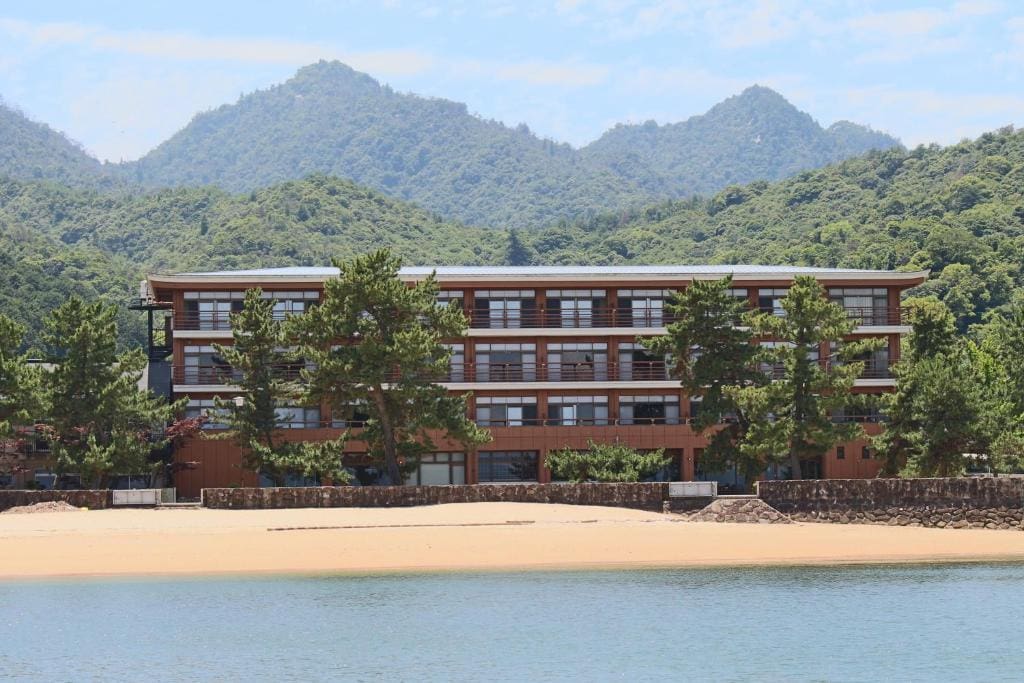
The hotel is on the coast, away from the main shopping streets, with space to sit together and look out at the water. It’s a good option if you expect to spend part of the afternoon at the hotel with your family. Book a room with a sea view, as some rooms don’t have one.
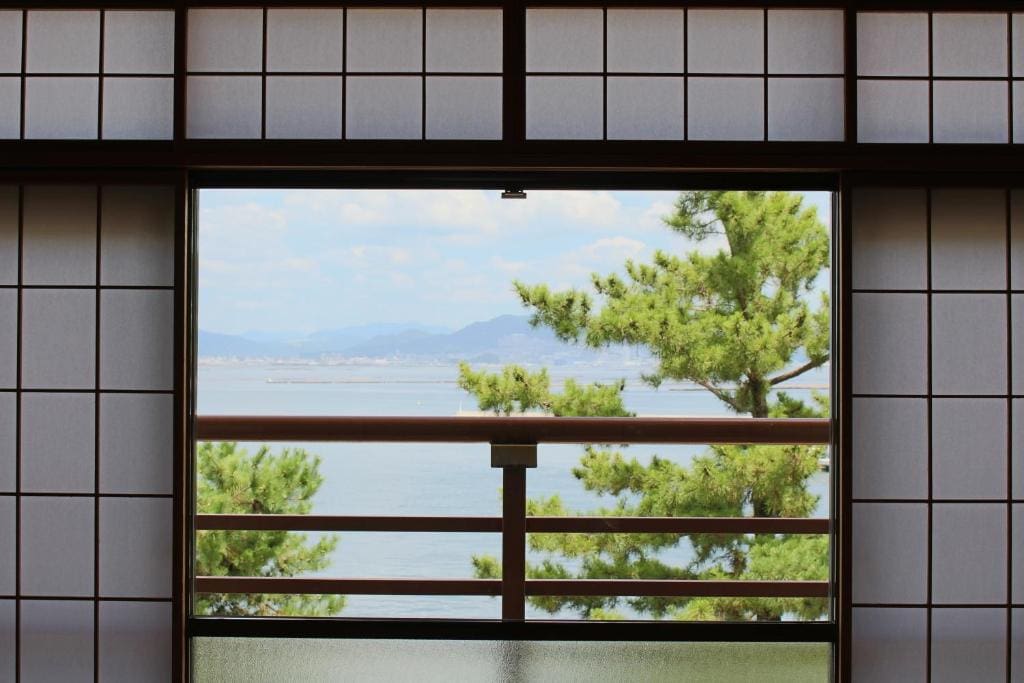
Although it’s a larger hotel, you can still enjoy a Japanese room, a course dinner, and the shared indoor baths. I suggest including dinner, particularly with children, so you can spend the evening at the hotel without another journey to the restaurants in town.
The free shuttle between the hotel and the island’s ferry terminal runs 8:00 to 10:00 and 15:00 to 18:00. If you go to the shrine after dinner, ask the hotel how to get back outside those hours. For frequent walks between your room, the shops, and the shrine, Kawaguchi or Iroha would be more convenient.
Iwaso: For Traditional Rooms and Hot Springs
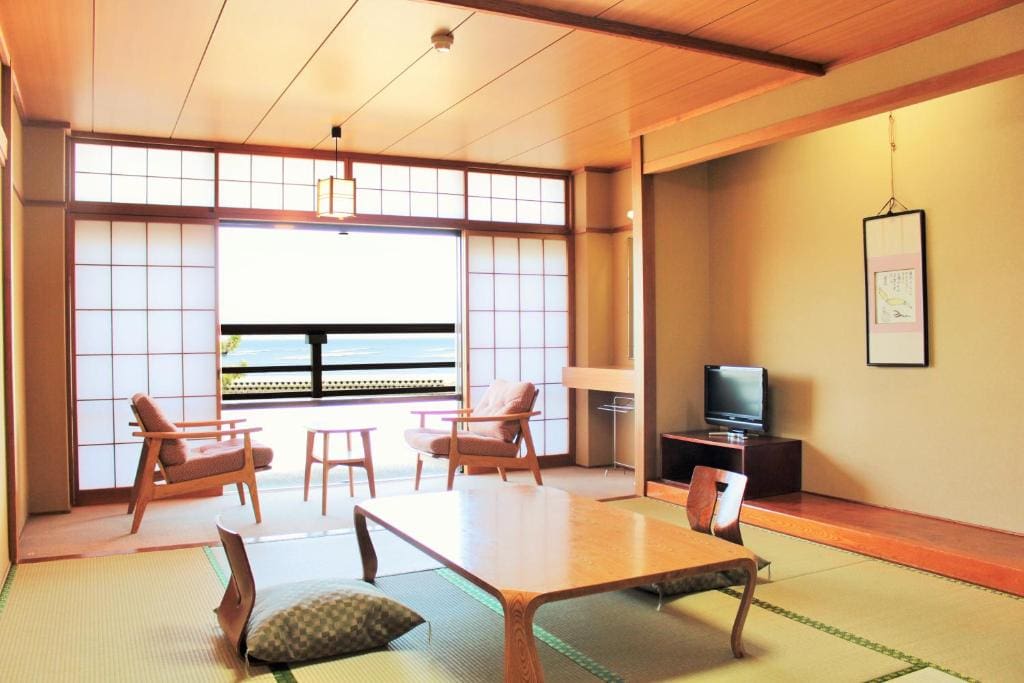
I think Iwaso is the best choice for a traditional ryokan stay on Miyajima if your budget allows it. Its buildings sit among trees beside a stream, close to Momijidani Park and Itsukushima Shrine. With Japanese meals and hot spring baths at the inn, I recommend giving yourself an afternoon here as well as the evening.
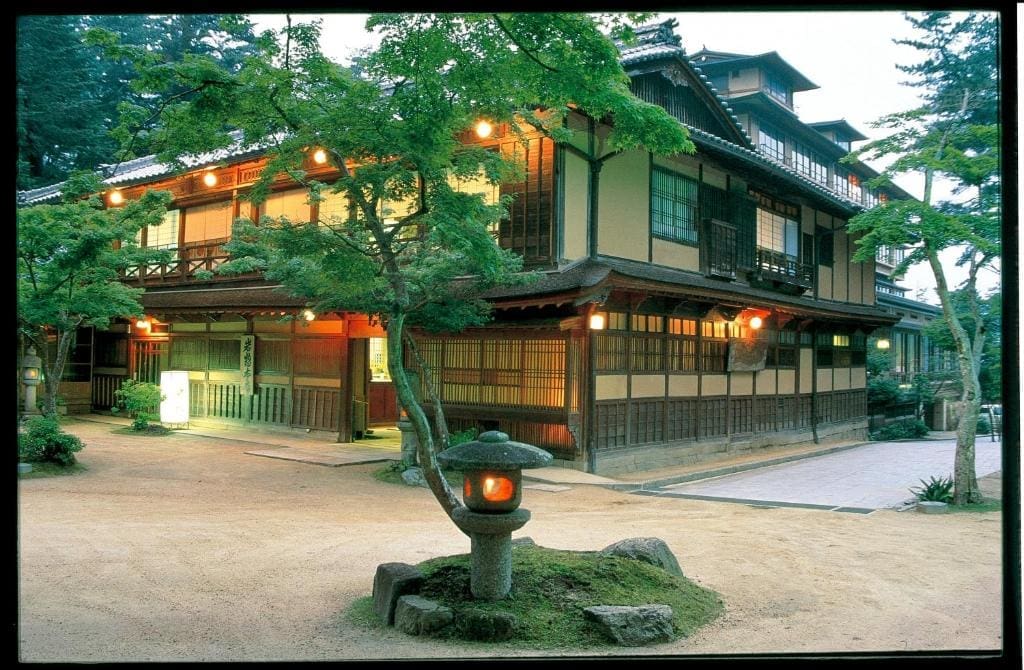
For the older wooden interiors, look at the main building and detached cottages. There are also rooms in a more modern annex, so compare the buildings when choosing where to sleep. Some rooms in the main building have no private bath or shower; choose a room with a bathroom if you prefer to wash in private.
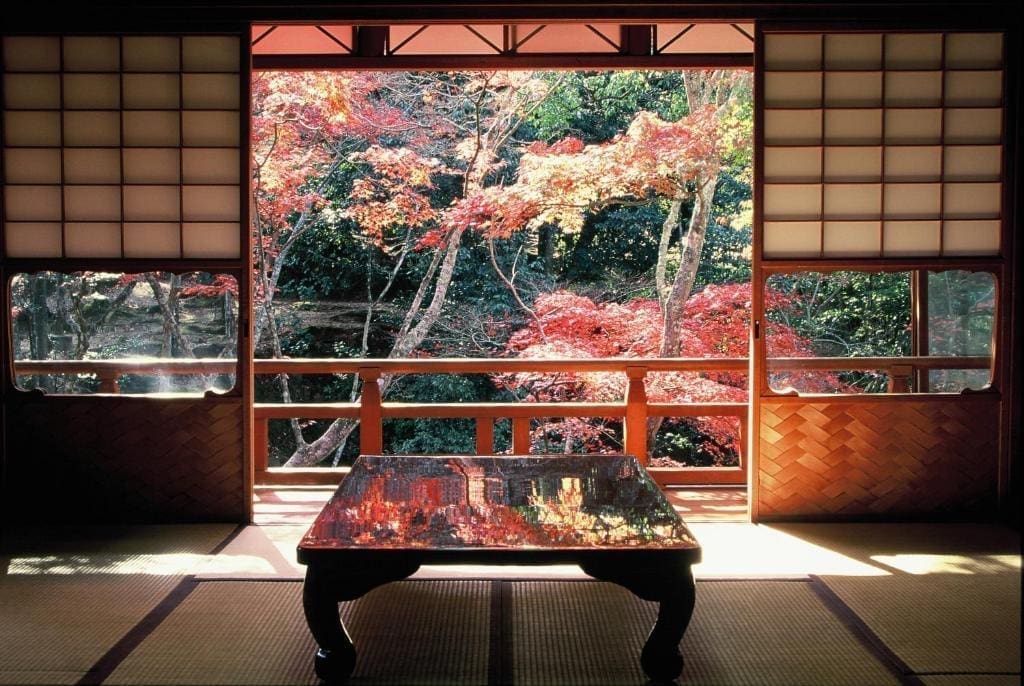
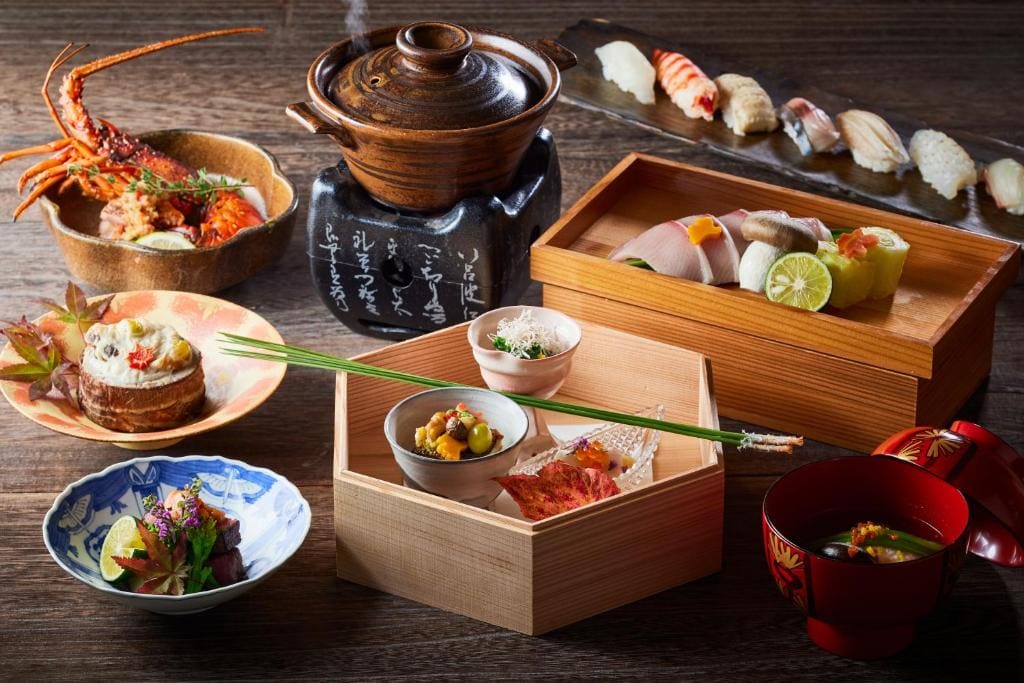
I recommend a plan with dinner and breakfast. Dinner is kaiseki, a Japanese meal served in several courses, using seasonal ingredients that can include local seafood. The Japanese breakfast includes dishes such as rice, soup, egg, and grilled fish.
The Wakamiya baths use onsen (natural hot spring) water and include indoor and open-air baths. They’re separated for men and women and shared with other guests. Iwaso doesn’t have a private onsen; the private bathrooms in some cottages are separate from these hot spring baths.
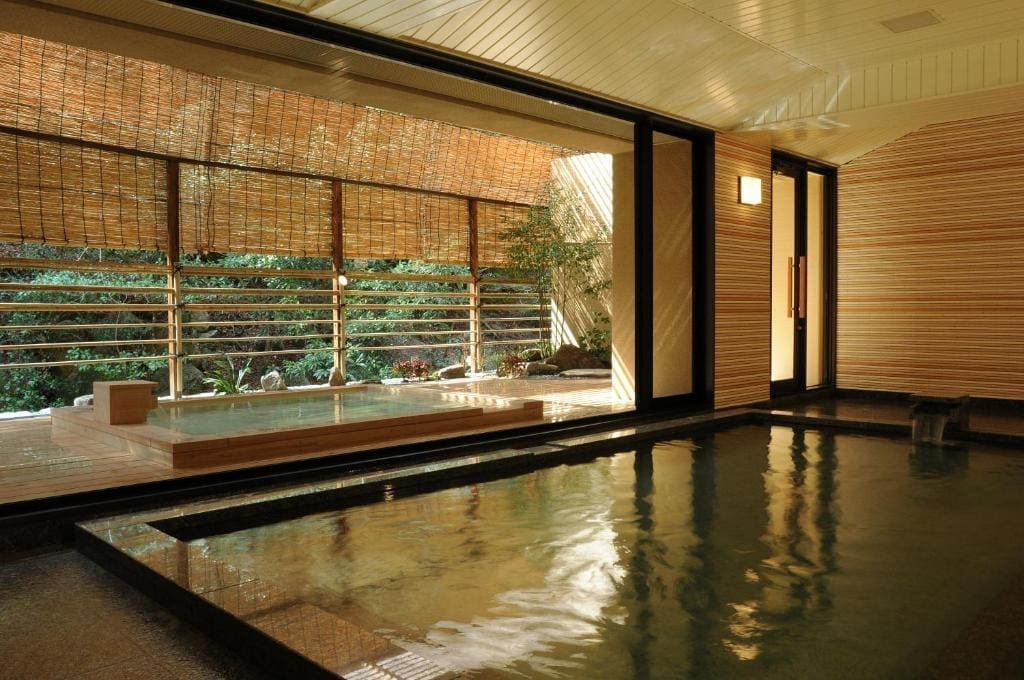
I suggest leaving some sightseeing for the next morning so you have time for a bath before dinner.
Itsukushima Iroha: For Modern Rooms and Western Beds
I recommend Itsukushima Iroha, formerly Kurayado Iroha, if you’d like Japanese interiors with the comfort of a modern hotel. It’s near Omotesando shopping street and has rooms with twin or double beds and a private bathroom. You can go out to browse the shops or walk toward the shrine without a long journey back.
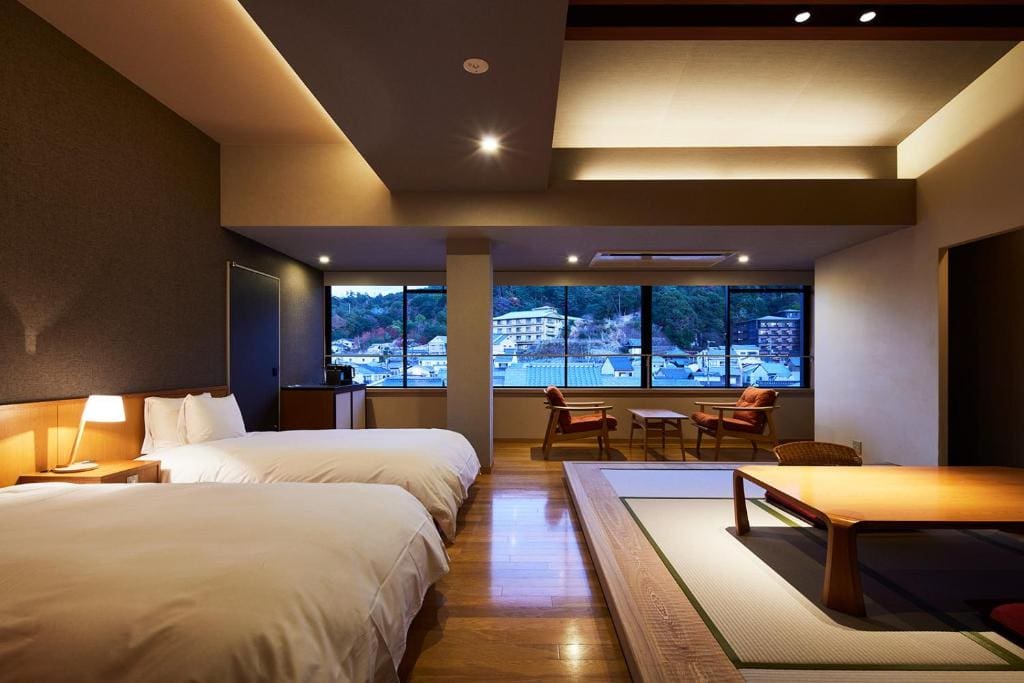
The rooms have views of the sea, mountains, or courtyard. Some Japanese rooms have futons, so choose a twin or double if you want Western beds. I suggest Iroha over Iwaso when a modern room and a bed are more important to you than the older buildings or hot spring baths.
The shared rooftop bath is closed for renovation, so plan to use the bath in your room. I recommend Iroha for its modern rooms and location, but if you’re choosing a stay for an outdoor bath with a view, consider Jukeiso instead.
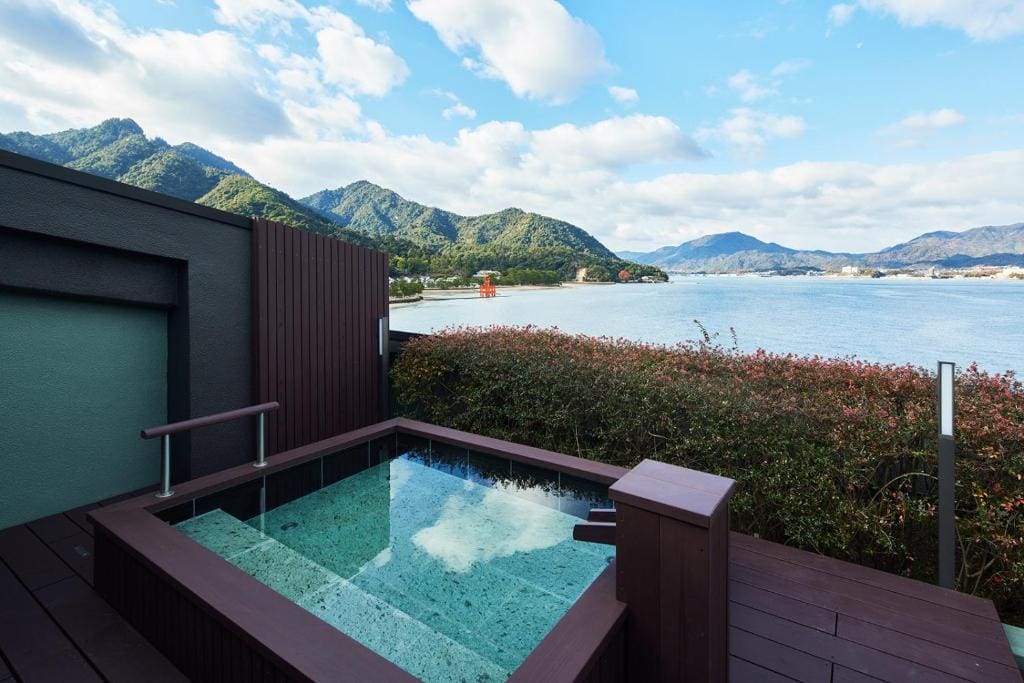
Iroha’s rooftop bath, currently closed for renovation.
Include the meals you want when comparing Iroha’s price with other ryokan.
If These Stays Are Full
Kinsuikan is another central ryokan with natural hot spring baths that I recommend considering. You could also look at Kikunoya for shared indoor and open-air baths, Miyajima Hotel Makoto for a larger Japanese-style hotel near the pier, or Sakuraya for a simpler stay near the ferry.
If the island’s room prices are beyond your budget, you can stay in Hiroshima and visit Miyajima for the day. For help deciding how much of your trip to spend around Hiroshima and Miyajima, see my guide to where to go in Japan.
Planning Your Ryokan Night
I usually suggest 1 night on Miyajima with dinner and breakfast at the inn. Try to arrive in the afternoon, leaving time to settle into your room before dinner. If this is your first ryokan stay, my guide to staying in a ryokan explains the meals, sleeping arrangements, and bathing customs.
Take a look at the menu before booking, since breakfast and dinner are usually Japanese. If you have dietary requirements, ask the inn to confirm that it can accommodate them. When comparing prices, include everyone’s meals, children’s bedding, and any taxes, and read the cancellation terms.
If you’d like to bathe together, look for a bath you can reserve for your own use, such as Jukeiso’s open-air bath. A private or outdoor bath may use ordinary heated water, though. For natural hot spring water, I recommend Iwaso, where you’ll share the baths with other guests.
Once you’ve chosen where to stay, I suggest booking early if your dates are fixed, especially if you want a particular view or room with Western beds. Small inns have fewer rooms to choose from. My guide to what to book in advance for Japan explains which other reservations to make before your trip.