Tag

Crafts

Browsing

If you want to spend a day making a knife in a working forge, I recommend Asano Kajiya in Gifu. You’ll learn from Taro Asano or a trained apprentice and make a utility knife to take home. Allow a full day for the workshop and the journey from Nagoya or Kyoto.

For a visit focused on watching sword forging, consider Katanakaji Fusahiro near Tokyo. Masahiro Tantojo near Kyoto also offers small-knife making with a swordsmith. If you’d prefer to work with a finished katana, the polishing experiences in Tokyo offer a different way to learn about the craft.

There are no tourist workshops in Japan where you can make a full-size katana from start to finish. A katana is the curved Japanese sword associated with the samurai, and producing one involves several specialist crafts. Workshops let you try selected stages under supervision or make a smaller object, such as a utility knife.

These experiences are expensive, but if sword-making is something you’re excited about, I absolutely recommend considering one. For me, the biggest reason to go is the time with a practicing swordsmith or specialist polisher: you can ask questions about their work and learn how they look at a finished blade.

Some links on YavaJapan are affiliate links. If you book or buy through them, I may earn a small commission at no extra cost to you. It helps support the site, and I only link to places, stays, and experiences I genuinely think are worth recommending.

Compare Katana Experiences in Japan

ExperienceLocationWhat You DoDuration
Asano KajiyaHashima, Gifu, near NagoyaMake a utility knife in a working forge6 hrs
Katanakaji FusahiroKamikawa, Saitama, outside TokyoWatch sword forging and try the bellows3 hrs
Masahiro TantojoKameoka, outside Kyoto cityMake a small utility knife with a swordsmith4 hrs
BuneidoSetagaya, TokyoTry polishing a finished katana2 hrs
Nagaoka Nihonto KenmajoRyogoku and Asakusabashi, TokyoVisit the Sword Museum and watch polishing, with optional participation2 hrs 20 min

These experiences are available through Wabunka, a website offering cultural experiences and experiential stays in Japan. They work directly with artisans and other hosts to arrange visits for international travelers, often with an interpreter. I’ve worked with Wabunka in the Japan travel industry and recommend them for the chance to spend time with people practicing these crafts.

Wabunka specializes in private experiences, but Asano Kajiya and Masahiro’s workshops can include other guests, so check the arrangement for your date if privacy is important to you.

See where the forge visits and katana-polishing experiences take place.

Asano Kajiya: A Full Day of Knife Making in Gifu

I recommend Asano Kajiya if you want plenty of time working at the forge. In a traditional farmhouse in Hashima, Taro Asano or a trained apprentice guides you through making a utility knife, from forging to finishing. You take your completed knife home that day.
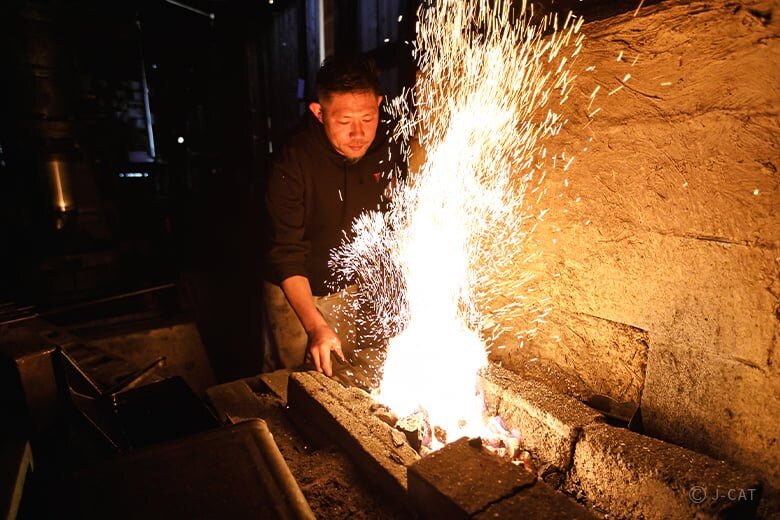
Swordsmith working beside the furnace at Asano Kajiya in Gifu
Image via Wabunka

The 6-hour workshop includes English instruction and a bento lunch. Give yourself the full day, including travel to Gifu-Hashima Station and the onward journey to the forge. It’s one bullet-train stop from Nagoya, so this is a good option if you’re spending time in that part of Japan. You can also travel from Kyoto.

Some sessions may include other guests. Confirm the group arrangement when booking if you want a private visit.

Katanakaji Fusahiro: A Swordsmith Visit Near Tokyo

At Fusahiro Shimojima’s forge, you’ll learn about Japanese swords, watch a forging demonstration, and try operating the bellows, the tool that supplies air to the fire. The visit also covers how to examine a finished sword and includes a photograph holding one.
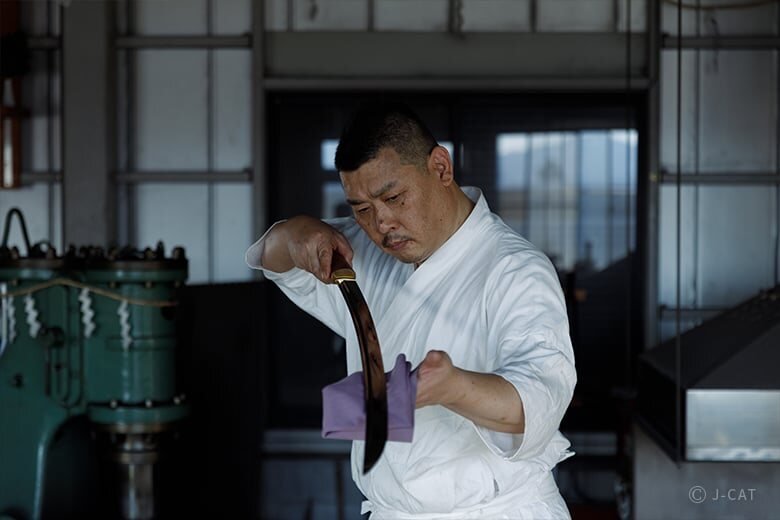
Fusahiro Shimojima examining a katana at his swordsmith workshop in Saitama
Image via Wabunka

I recommend this if seeing a swordsmith at work is your main interest. The hands-on part is limited; choose Masahiro if you want to hammer out your own small blade.

The visit is private and includes an English-speaking guide. The forge is in Kamikawa, Saitama. Allow more than an hour from Tokyo Station, and check the meeting instructions before arranging transport. I suggest leaving plenty of time on either side of the workshop rather than fitting it between appointments in Tokyo.

Masahiro Tantojo: Make a Small Knife Near Kyoto

At Yuya Nakanishi’s forge, you make a kogatana (small utility knife). You’ll help shape it and choose its blade pattern, then Nakanishi finishes and engraves it. You can collect the finished knife that day.
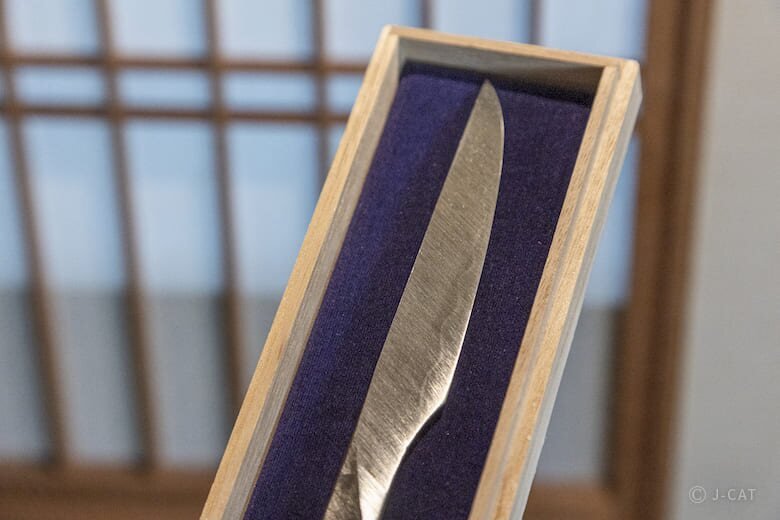
A small knife in a wooden presentation box at Masahiro Tantojo in Kameoka
Image via Wabunka

This is the workshop I suggest if you want to spend more of the visit making something yourself. You also get an introduction to Japanese swords, so it suits someone interested in the craft who would enjoy keeping their own small knife.

The forge is in Kameoka, about an hour from central Kyoto, and an English-speaking guide is included. With the workshop and return journey, I recommend leaving most of the day available. Check the material options when booking if you specifically want traditional sword steel.

Katana Polishing Experiences in Tokyo

These visits take place in polishing workshops rather than forges. You’ll learn how specialists care for finished swords, and you can try polishing under supervision. I recommend them if you’re curious about the blades themselves and would prefer a shorter experience within Tokyo.

Buneido: Try Katana Polishing in Setagaya

At Buneido, Masaru Nemoto introduces you to katana and demonstrates his polishing work before guiding you as you try polishing a real sword. The workshop also displays historic blades and sword fittings, so there’s plenty to examine while learning about the craft.
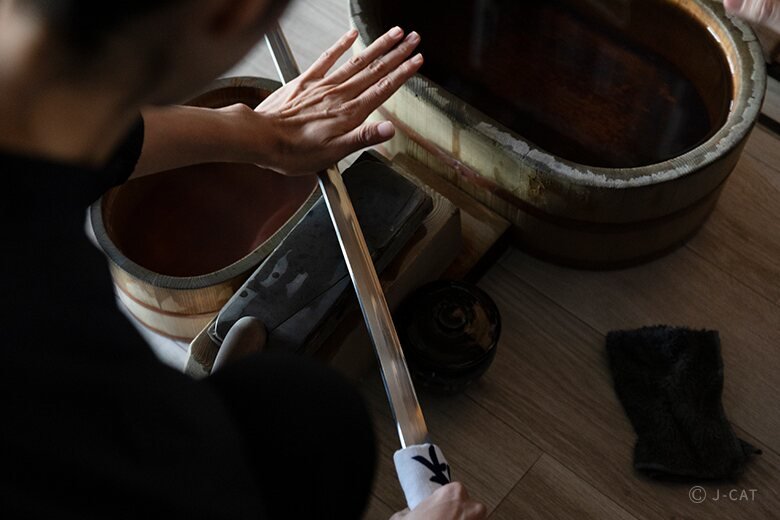
Hands polishing a katana at Buneido in Setagaya, Tokyo
Image via Wabunka

This is a good choice if hands-on polishing is the main reason you want to go. The private visit lasts 2 hours, with an English-speaking host, and ends with time for tea and conversation.

Polishing involves sitting low to the floor. If that’s difficult for you, ask about seating arrangements in advance. You’ll be working with an existing sword, so this visit doesn’t include making a blade to keep.

Nagaoka Nihonto Kenmajo: Sword Museum and Polishing Workshop

This visit combines the Japanese Sword Museum in Ryogoku with a polishing workshop in Asakusabashi. You’ll explore the museum with an English-speaking guide, then travel by taxi to meet Yasumasa Nagaoka and watch him work on a blade.
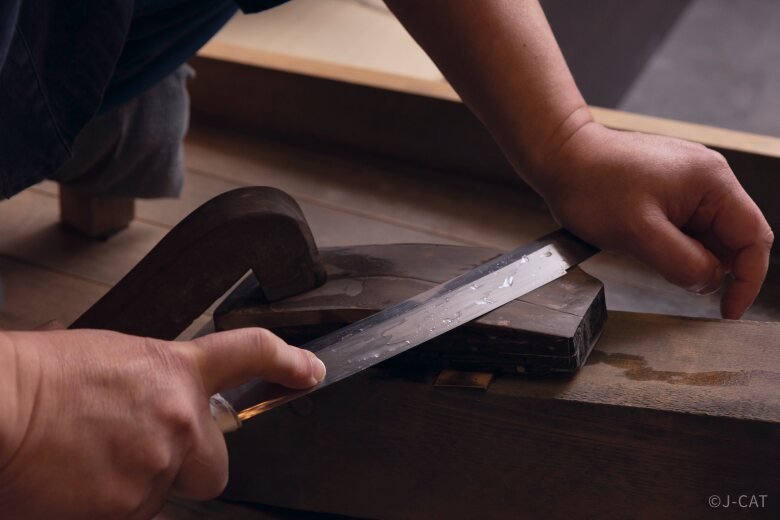
Hands polishing a katana at Nagaoka Nihonto Kenmajo in Asakusabashi, Tokyo
Image via Wabunka

I recommend this if you want to understand what you’re looking at in a sword exhibition as well as see how the blades are maintained. Nagaoka explains how to examine the sword’s shape, the grain of its steel, and the pattern along its edge.

The private experience lasts 2 hours 20 minutes. If you’d like to try polishing yourself, request it when booking. Meet at the location in your confirmation, since the visit starts at the museum rather than at the workshop marked on the map.

Before You Book

I suggest checking workshop availability early, especially if meeting a particular swordsmith is one of the things you’re most looking forward to. Give yourself time for confirmation before arranging the rest of that day. My guide to what to book in advance for Japan explains how I prioritize these kinds of experiences.

Use the booking pages to compare the total price for your party, the cancellation terms, and the meeting location. For children or anyone with mobility needs, confirm the participation requirements with the organizer before paying. For forge visits, read the clothing instructions before you go.

For Asano Kajiya and Masahiro, ask how the knife will be packed and check the transport and import requirements for your journey home. Collecting it at the forge and taking it into another country are separate arrangements.

A Short History of Samurai Swords

Japanese swords changed considerably over time. Early examples were straight, while curved swords developed during the Heian period, which began in 794. The Japanese Sword Museum’s history of Japanese swords traces those changes through different periods and styles.

The tachi, an earlier type of curved sword, was followed by the katana worn edge-up through the belt. Katana became widespread as fighting on foot developed during the later Muromachi period. The swords you see in museums therefore aren’t all the same type, even when they look similar at first.

Swords also became closely associated with samurai status. Restrictions on wearing swords in 1876 disrupted the swordsmiths’ livelihoods, but the craft continued and is still practiced today.

That continuity is part of why I recommend meeting a swordsmith if the subject interests you. You can ask how their own training and approach relate to the older swords you’ve seen on display.

How Japanese Swords Are Made

Traditional sword-making brings together steel production, forging, hardening, and finishing. The details vary between smiths and schools; the Japanese Sword Museum explains the craft and its specialist polishing work.

Making the Steel

The traditional material is tamahagane, a steel produced from iron sand and charcoal through tatara smelting. This is a separate craft from forging the blade. The Nittoho Tatara in Shimane produces steel for swordsmiths across Japan and trains people to continue the smelting tradition.

Forging and Folding

The swordsmith works the steel through repeated heating, hammering, and folding. This helps adjust its carbon content and remove impurities. Combining harder and softer steel allows different parts of the blade to serve different purposes, including a hard cutting edge and a tougher core.

Hardening the Blade

Controlled heating and cooling give the blade different hardness in different areas. This also produces the hamon, the visible pattern along the hardened edge. When you examine a sword, the hamon is one of the details to look for.

Polishing and Fittings

A specialist polisher refines the blade’s shape and brings out the steel’s grain and hamon. Other craftspeople make the mountings and fittings, including the scabbard and hand guard. These can be finely worked objects in their own right, so I suggest looking at them too when they’re displayed alongside a blade.

If You’d Prefer Another Craft Workshop

If you’d enjoy making a blade but these visits cost more than you want to spend, compare the knife-making workshops in Japan. Check what each class involves: some focus on forging, while others give you a different part of the making or finishing process.

For other ways to meet artisans and try a traditional skill, my guide to cultural experiences in Japan includes workshops beyond sword-making. I recommend choosing something you’re curious enough about to spend a few hours learning, whether that’s metalwork, calligraphy, or another craft.
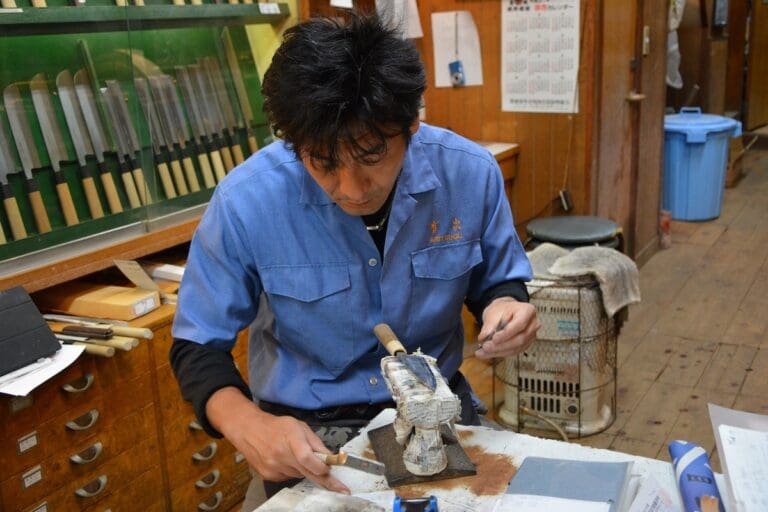
You can make your own knife in Japan, whether you’d like to forge a blade with a blacksmith or finish a kitchen knife to use at home. Those are quite different experiences, so I recommend choosing based on what you want to do yourself. If you enjoy cooking, Wada Shouten in Sakai, Osaka lets you sharpen a kitchen knife and attach its handle, learning skills you can use to care for it afterward.

If you’re looking forward to hammering heated steel, I suggest Masahiro Tantojo near Kyoto, where you’ll make a small utility knife with a swordsmith. You’ll need about 4 hours for the class, plus time to travel there. For someone who wants to spend most of a day on the craft, Asano Kajiya in Gifu takes you through the main stages from forging to finishing.

Some links on YavaJapan are affiliate links. If you book or buy through them, I may earn a small commission at no extra cost to you. It helps support the site, and I only link to places, stays, and experiences I genuinely think are worth recommending.

Choosing a Knife-Making Workshop

The knife you take home may be quite different from the one you use in your kitchen. A kogatana (small utility knife), for example, suits jobs such as cutting paper or sharpening pencils. If you want a knife for preparing dinner, check the type of blade you’ll make, as well as the parts of the process you’ll do yourself.

Group size and language support also affect how much time you can spend talking with the artisan. Several of these workshops are offered through Wabunka, which works directly with artisans and other hosts to create cultural experiences for international visitors. They focus on private experiences and experiential stays, with an interpreter when needed so you can follow the explanations and ask questions. There are exceptions to the private format, including Masahiro’s workshop, which can include other guests.

I’ve worked with Wabunka as part of my work in the Japan travel industry and know them personally. In my opinion, they offer the best cultural experiences I’ve come across in Japan. I regularly recommend them for the chance to spend time with an artisan and learn about their work, though their private sessions can be expensive. If you’re happy joining other travelers, a group workshop may suit your budget better.

Comparing the Seven Workshops

WorkshopLocationWhat You’ll Work OnTime to Allow
Wada ShoutenSakai, OsakaKitchen knife sharpening and handle fitting2 hrs
Natural Whetstone and Hone MuseumKameoka, west of KyotoA sharpening stone and kitchen knife2 hrs, plus travel
Kanetaka Hamono RouhoCentral KyotoForging a knife; finished work shipped later1 hr 30 min; optional activities extra
Masahiro TantojoKameoka, west of KyotoForging a small utility knife with a swordsmith4 hrs, plus travel
Studio NINYase, northeastern KyotoForging and finishing a small knifeAbout 3 hrs, plus travel
Kikyo HayamitsuAioi, HyogoMaking a small knife at a swordsmith’s forgeDepends on the course; allow for travel
Asano KajiyaHashima, GifuForging a knife through the main stagesMost of a day

Group size and optional extras can change the price substantially, so compare the total for your party on each booking page. If the workshops you want are beyond your budget, chopstick making is another way to make something you’ll use at home. My guide to cultural experiences in Japan has other crafts to consider too.

Compare the knife-making workshops by region so you can see which ones fit naturally into your Japan route.

Wada Shouten: Finish a Kitchen Knife in Sakai

At Wada Shouten, you’ll work on sharpening and fitting a handle to an existing blade. In Sakai, south of central Osaka, different artisans traditionally handle different stages of knife production. This workshop introduces you to the finishing work that turns the blade into a kitchen knife, rather than forging it yourself.

The 2-hour private experience includes a visit to the nearby knife museum and an English-speaking guide. You can choose from three kitchen knife types and take yours home that day. I recommend it if you’d enjoy learning to maintain a knife you cook with regularly. Name engraving is available too, but needs to be arranged in advance.

Here’s the video I made about the workshop, which shows what the session involves:

@yavajapan

📍Location: Wada Shouten, Sakai, Osaka Booking & info: https://wabunka-lux.jp/experiences/en_wada-shouten-2/?ref=TMGcZ9MIeoK_4R&utm_content=tiktok-wada-shouten (link in bio as well) This is a completely private workshop where you’ll learn directly from renowned Japanese craftsmen. An interpreter will be with you to translate everything, and you’ll leave with a personalized knife, engraved with your name. The workshop is only available for booking on Wabunka. Reservations are required so be sure to book in advance. You can choose from three types of knives: Santoku, Deba, and Sashimi. They’ll also teach you how to maintain your knife so you can keep it for years and years. I personally loved it and the reviews of other customers for this experience are excellent (check them out on the website). Highly recommended if you’re a knife enthusiast🤌 About Wabunka: they offer the most authentic experiences in Japan. They partner with top Japanese artisans, artists, and teachers in local venues to provide high-end, private workshops for international tourists. If you’re looking for unique, non-touristy things to do, check out their website — they have so many incredible experiences I want to try them all 😳 (Not a sponsored post but i do share my affiliate link – meaning if you book through my link I’ll get a small percentage as commission (but at no extra cost for you)) #japantravel #japaneseknife #explorejapan #osaka #thingstodoinjapan #explorejapan #visitjapan #japan #wabunka

♬ original sound – 🤎

Natural Whetstone and Hone Museum: Learn to Sharpen in Kameoka

For a closer look at sharpening, consider the Natural Whetstone and Hone Museum in Kameoka, west of Kyoto. Here, you prepare your own whetstone, also called a hone, and learn to use it to sharpen a kitchen knife. You take both home, so you can keep practicing afterward.

Museum director Aki Tanaka leads the private tour and speaks English, giving you the opportunity to ask about the stones as well as the sharpening technique. The experience lasts 2 hours and includes knife personalization. I suggest allowing extra time for the journey out of Kyoto, since the museum is in Kameoka rather than the city center.

Kanetaka Hamono Rouho: Forge a Knife in Central Kyoto

Kanetaka Hamono Rouho lets you try forging without leaving central Kyoto. The smithy is behind its cutlery shop in the Oike area, making it a good choice if you want to work with a blacksmith but have limited time for a trip into the countryside.

The private session lasts 1 hour 30 minutes, during which you’ll try heating and hammering the steel with help from the artisan. An English-speaking guide is included to help you follow the explanations.

The finished knife is delivered later, and shipping, a handle, and optional hands-on sharpening are charged separately. Before booking, I recommend confirming that shipping to your country is available and checking the total for the knife you want, including your choice of handle.

Masahiro Tantojo: Make a Small Knife with a Swordsmith

At Masahiro Tantojo in Kameoka, swordsmith Yuya Nakanishi guides you through making a small utility knife, including hammering and choosing its blade pattern. I recommend it if you’re interested in Japanese swords and want to learn from someone who makes them. The knife you’ll create is for small everyday tasks, rather than preparing food.

An English-speaking guide joins the session, and you can take the engraved knife home the same day. Allow about 4 hours for the workshop itself, with extra time for the journey to Kameoka.

You may share the session with other guests, so confirm the arrangement before booking if you want a private experience.

Studio NIN: Small-Group Forging in Kyoto

Studio NIN’s knife-making class lets you try forging in a small group in Yase, in northeastern Kyoto. Over about 3 hours, you’ll work on forging, sharpening, and finishing a small knife alongside other travelers. It’s worth comparing with the private workshops if you’d enjoy learning in a group.

The standard small knife differs from the kitchen knives at Wada Shouten, so check its size and handle options if you hope to use it for cooking. The operator also runs a separate ninja weapon-making class, so be sure to select the knife workshop when booking.

Kikyo Hayamitsu: Visit a Swordsmith in Hyogo

If you’re traveling west of Himeji, Kikyo Hayamitsu’s forge gives you another opportunity to make a small knife with a swordsmith. It’s in Aioi, Hyogo Prefecture, despite the Klook title mentioning Osaka. I suggest checking the journey to the forge before choosing a session time, as this isn’t an activity in central Osaka.

You can choose between different knife-making courses, including one using tamahagane, the traditional steel used for Japanese swords. When comparing them, check the duration and whether English instruction or an interpreter is included, so you know how you’ll communicate with the swordsmith.

Asano Kajiya: Spend a Day Making a Knife in Gifu

I recommend Asano Kajiya if you want to give most of a day to making a knife. At the workshop in Hashima, Gifu Prefecture, you’ll work through the main stages from forging to finishing, with more time devoted to the craft than in the shorter classes.

The knife-making experience takes about 5 to 6 hours, including a lunch break. The Rakuten package includes lunch and pickup and drop-off at Gifu-Hashima Station on the bullet train line, so plan your train journey around the pickup time in your confirmation.

Booking and Preparing for Your Workshop

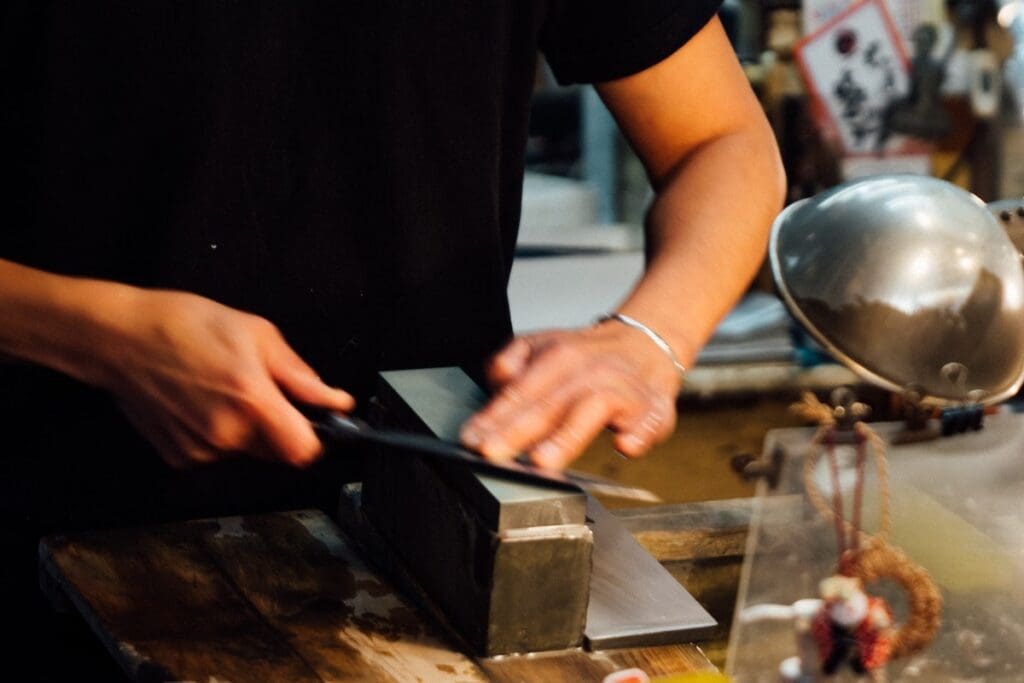
Hands of a man in a black t-shirt sharpening a Japanese knife on a sharpening stone
Photo by Lucas Law

If there’s an artisan you’re particularly looking forward to meeting, I recommend checking availability a couple of months ahead. Smaller workshops may need to confirm with the host before accepting a booking, so keep nearby travel plans flexible until your session is confirmed. The cancellation terms are worth reading before you pay, especially if you’re arranging a separate journey for the workshop. My guide to what to book in advance for Japan explains how I prioritize these bookings.

If you’re traveling with children or someone who wants to watch, check the minimum age and whether non-participating companions can attend. Forging can involve standing and hammering for some time, so let the host know about any physical limitations in advance. They can explain what’s possible for the class you’re considering.

You’ll be working near heat, sparks, and tools at a forge, so follow the host’s clothing instructions and use the protective equipment as directed. Long cotton trousers, covered skin, and closed shoes are sensible starting points. I also suggest bringing water and checking whether food is included if you’ll be there over lunch.

Leave room to ask questions during the session too. You could ask how the artisan chooses steel, which knife suits a particular task, or how to sharpen the one you’re taking home. That conversation is part of what makes spending time with an artisan worthwhile.

Taking Your Knife Home

If you’re taking your knife home by plane, keep it out of your cabin baggage and ask the workshop to package it securely. Check your airline’s requirements for checked baggage, such as ANA’s rules for blades on international flights, along with your destination’s import rules for the exact item. This is especially important if you choose the ninja weapon-making alternative.

If you’re traveling with cabin baggage only, discuss shipping before booking, since each workshop has its own arrangements. You’ll need to know whether it can send the knife to your country and what delivery will cost before paying for the experience.