
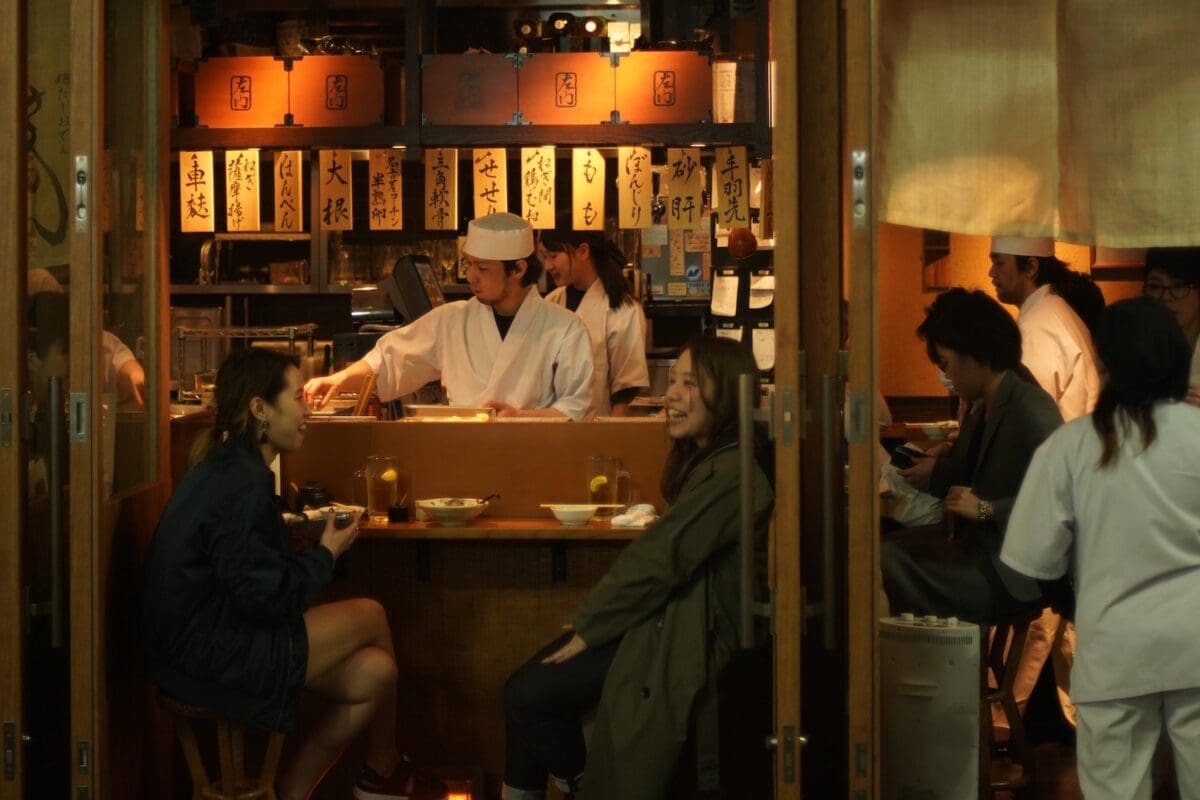
Eating out in Japan is usually straightforward, but the first few meals can take a little getting used to. You might be waiting for someone to take your order when there’s a call button on the table, or wondering why the bill has arrived before you’ve finished eating. Both are normal: the button calls the staff, and the bill is often left for you to take to the register when you’re ready to leave.
I think knowing these small details helps you relax and enjoy the meal. For a first trip, I suggest getting familiar with how to order, where to pay, and a few basics for using chopsticks. The arrangements vary between restaurants, so when something isn’t clear, ask the staff rather than trying to guess.
Some links on YavaJapan are affiliate links. If you book or buy through them, I may earn a small commission at no extra cost to you. It helps support the site, and I only link to places, stays, and experiences I genuinely think are worth recommending.
Arriving and Finding a Seat
When you walk in, you’ll often hear irasshaimase, meaning “Welcome!” A smile or nod is enough in response. The staff will usually ask how many people you’re with, and if answering in Japanese is difficult, you can just hold up the right number of fingers.
I recommend waiting near the entrance for someone to show you where to sit, even if you can see empty tables. Some small restaurants let you choose your own seat, but the staff can let you know. If the place is busy, there may be a queue, a waiting list, or a machine that gives you a numbered ticket. It’s worth checking which one the restaurant uses before you settle in to wait.
If you’re shown to a table on tatami (woven floor mats), take your shoes off before stepping onto the mats and leave them where the staff indicates. At a counter, a basket may be provided for your bag. Otherwise, keep it close to you so the person next to you has room to sit.
Ordering Your Food
Once you’re seated, you’ll often get water or tea free of charge. If nobody brings it, have a look for a jug on the table or a dispenser nearby. You may also receive an oshibori, a wet towel for cleaning your hands before eating. Chopsticks are usually laid out already or kept in a box on the table.
Ordering With Staff, a Tablet, or a Meal Ticket
When you’re ready to order, you can raise your hand slightly and say sumimasen, which means “Excuse me.” If there’s a call button on the table, use that instead. I recommend calling someone over once you’ve decided, as staff may be waiting for you to let them know you’re ready.
Some restaurants use a tablet or a menu you open on your phone by scanning a QR code. Look for a language setting, then choose your dishes. Before putting the device down, check that you’ve sent the order. On some systems, adding food to the basket is only the first step.
At a restaurant with a meal-ticket machine, you’ll generally choose and pay before eating. The ticket may need to go to the staff, or you may be asked to wait for your order. If there’s a queue, check whether you should buy the ticket before joining it. I also suggest having some cash with you, because the payment options vary.
Reading the Menu and Asking for Help
If the menu is only in Japanese, ask whether there’s an English version. Photos and food displays can help you choose, and a translation app is useful when you want to know more about a dish. Once you’ve decided, pointing to it on the menu is often enough to order.
You can also ask osusume wa nan desu ka?, meaning “What do you recommend?” I suggest checking what comes with the dish and how much it costs before ordering it.
An omakase meal, where the chef chooses what to serve, can be a set course with a substantial bill. If that sounds appealing, check the menu and price first so you’re comfortable with what you’re agreeing to.
Dietary Needs and Changes to a Dish
If you’d prefer a dish without a particular ingredient, ask before ordering. Some kitchens can make small changes, while others serve the dish exactly as described on the menu. In that case, it may be easier to choose something else.
With allergies, tell the staff before you order. If you’re reserving a meal, I recommend contacting the restaurant ahead of time so the kitchen can confirm whether it can accommodate you. Having your requirements written in Japanese can help with that conversation. Tokyo’s food allergy communication sheet is one resource you can use.
Ask about preparation as well as ingredients, since a translated menu won’t tell you whether cooking oil or equipment is shared. For vegetarian, vegan, or other dietary requirements, explain which ingredients you avoid. If the restaurant can’t confirm that it can meet your needs, choose somewhere that can.
Using Chopsticks
If you’re still learning to use chopsticks, I recommend practicing a little before the trip. Keep the lower one still and move the upper one as though you’re holding a pencil. And if a fork or spoon would make the meal easier, ask whether the restaurant has one available.
When you pause, put your chopsticks on the chopstick rest. If there isn’t one, you can fold their paper sleeve into a small rest. This gives you somewhere to put them while you have a drink or talk with the people at your table.
Two habits are especially worth remembering: avoid leaving chopsticks standing upright in rice or passing food directly from your chopsticks to someone else’s. Both are associated with funeral customs in Japan. To give someone a piece of food, put it on their plate instead.
For shared dishes, use the serving chopsticks or spoon provided, or ask for some if needed. Put your own chopsticks down when gesturing, and move bowls with your hands rather than pulling them closer with the chopsticks.
If you’d enjoy making a pair to take home, there are also chopstick-making workshops in Japan.
Sharing Food, Soup, and Drinks
At an izakaya (a Japanese pub serving food), you can order several dishes to share, taking portions onto your own small plate before eating. At a ramen shop or somewhere serving individual set meals, each person generally orders their own meal instead.
Before people start eating, you may hear itadakimasu, an expression of gratitude for the meal. As you eat, it’s fine to slurp noodles, though you can eat them quietly too. If your miso soup comes in a small bowl, lift it to drink the broth and use your chopsticks for the pieces inside.
If your group is having a toast, wait until everyone has a drink for kanpai, meaning “Cheers!” When you’re sharing a bottle, it’s considerate to offer to pour for the others. I suggest following the people you’re eating with here, since a casual dinner with friends can be quite different from a formal meal with hosts.
Understanding Extra Charges
At an izakaya, you may be brought a small appetizer you didn’t order. This is called otoshi, and it usually comes with a cover charge. You may therefore see it on the bill even though you didn’t choose it from the menu.
Some places also have a separate seating or service charge, or a minimum order. If you’re only planning to have a drink or a small snack, I recommend asking about these when you arrive. That way, you can decide whether you’re happy with the cost before sitting down.
Paying and Thanking the Staff
If the staff leaves a bill face down on your table during the meal, keep it there until you’re ready to leave, then take it to the register near the exit. At restaurants where you need to ask for the bill, you can say okaikei onegaishimasu: “The bill, please.” You might also be able to request it through a tablet or use a payment machine, depending on the restaurant.
I still recommend carrying enough cash for meals and small purchases, even in Tokyo. Many restaurants accept cards, but you’ll also find places that take only cash or payment services you may not use. If you’re relying on a card for that meal, check before ordering.
For a group, you can ask whether separate payments are possible. Paying together and settling up afterwards can be simpler, especially if you’ve shared several dishes. At the register, use the payment tray if there’s one.
Tipping isn’t customary, so pay the amount on the bill. As you leave, you can say gochisosama deshita to thank the staff for the meal. A thank-you and a nod are plenty.
When to Plan a Meal in Advance
For ordinary lunches and casual dinners, I usually recommend choosing somewhere near the places you’re visiting that day. It leaves you free to spend longer in a neighborhood or eat when you’re hungry, without having to get across town for a reservation.
If there’s a particular restaurant you’re excited about, a group booking, or dietary needs to discuss, it’s worth arranging the meal ahead of time. Check the restaurant’s reservation options and cancellation terms, along with any instructions about arrival time, dress, or photography. Let the restaurant know promptly if your plans change.
A dinner included in a ryokan (traditional Japanese inn) stay also needs some planning. There may be a set serving time and a menu arranged in advance, so mention dietary requirements when booking. My guide to staying in a ryokan explains how the meals fit into the stay. If you’re deciding which other meals and activities to arrange before the trip, see my advice on what to book in advance.
Comments are closed.