Tag

Kintsugi

Browsing

I’ve never been good with my hands. 

I remember trying pottery as a teenager, and my creations ended up looking like a baby had smashed some clay into random shapes.

So, naturally, I was a little worried when I decided to join a 2-hour private kintsugi experience at Utsuwa Omusubi HANARE, located in the heart of Omotesando, Tokyo. Would I be able to create my own piece of kintsugi or would I end up with a disaster on my hands?

Kintsugi, a traditional Japanese art form, repairs broken pottery with lacquer and powdered precious metals, creating something more beautiful than before. Kintsugi is deeply related to wabi-sabi (the beauty of imperfection). But to truly understand its philosophy, you need to practice it yourself.

Beyond philosophy, I’d often heard that kintsugi could put you in a state of active meditation, but I didn’t quite get it. Until I tried it.

This Kintsugi Class in Tokyo is Offered by Wabunka

If you haven’t heard of Wabunka, I highly recommend checking them out. They provide some of the most authentic Japanese cultural experiences, all in private settings. No crowded classes or strangers—just you and an expert guiding you through the art (and an interpreter when the expert does not speak English, which only adds to the immersion). And all their instructors are highly skilled professionals well-known in their industry. If you’re looking for non-touristy and cultural things to do in Japan, they have the best selection by far. 

Since I work with Wabunka regularly as part of my job in the Japan travel industry, I was fortunate enough to be invited to this kintsugi workshop.

And since I recently moved into a new apartment and was just thinking about upgrading my $2 IKEA tableware, I jumped at the opportunity. Ready for the challenge.

First Impressions: The Setting

I knew this was going to be a special experience when I saw the workshop was in Omotesando, a modern district in Tokyo known for luxury brands, art galleries, and stylish shops. It’s one of my favorite areas to explore.

The kintsugi class takes place at Utsuwa Omusubi HANARE, a beautiful gallery run by Utsuwa Omusubi, a major kintsugi shop in Tokyo. Utsuwa Omusubi itself is over 128 years old and is a must-visit shop for anyone who loves ceramics (Google Maps link here). The kintsugi workshop is held in the gallery space nearby, adding to the charm of the experience.
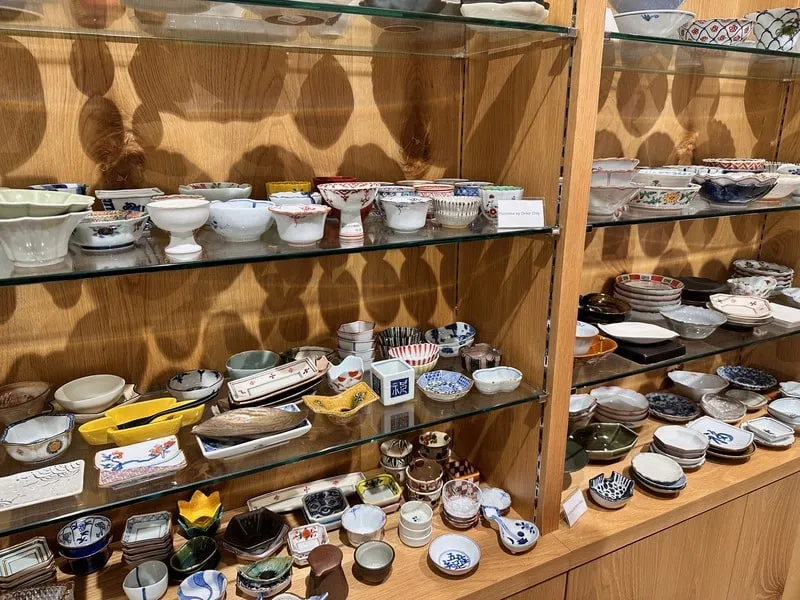
Pottery on display on shelves at Utsuwa Omusubi HANARE in Omotesando, Tokyo
The shelves of Utsuwa Omusubi HANARE are filled with beautiful pottery

And that’s where we were greeted by Aya-san, our instructor.

Aya-san, dressed beautifully in a kimono, warmly welcomed us and showed us around. The walls were lined with stunning pottery, offering a glimpse of what we might achieve—hopefully, I thought, despite my lack of skills.

We were soon invited to sit around a gorgeous wooden table (the nicest I’ve ever seen!), where we got to choose the piece of ceramics we wanted to repair.
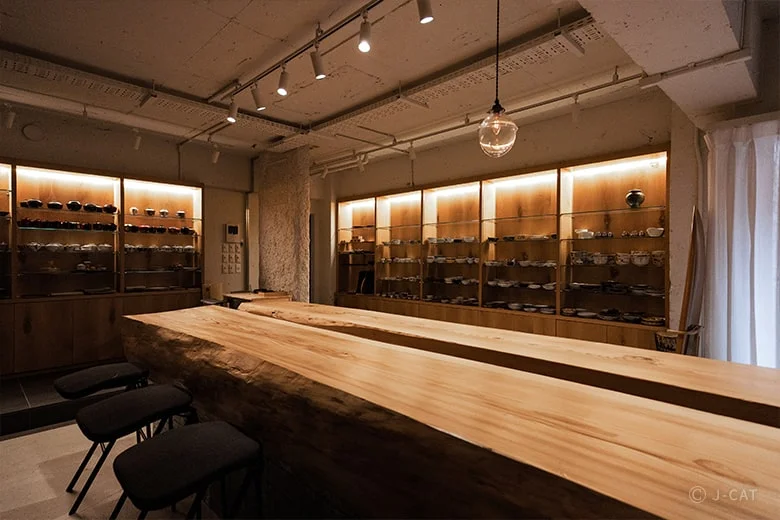
Big wooden table used for Kintsugi workshops at Utsuwa Omusubi HANARE
This wooden table looks amazing. Photo by Wabunka

The Kintsugi Experience Process: Step-by-Step

Choosing Your Piece of Japanese Broken Pottery

If you’re attending the workshop as a couple or family, I’d recommend choosing the same item in different sizes or colors. Aya-san mentioned that traditionally, blue is often associated with men and red with women in Japanese culture. The blue items were also slightly larger than the red ones, which added to the symbolism. But since I was with a friend, I chose a red cup that I thought would be perfect for my after-lunch coffee.
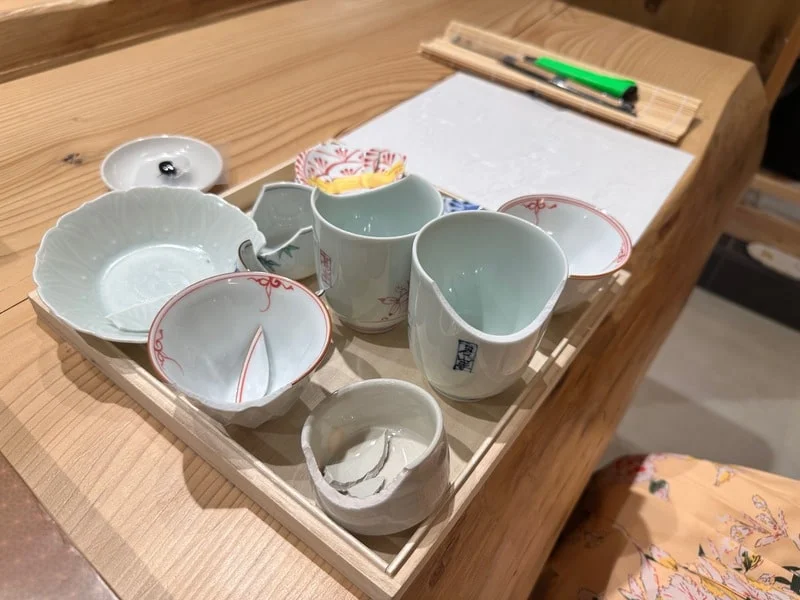
Choice of broken Japanese pottery at a kintsugi workshop
I could choose any of these broken pottery for this kintsugi class

Gluing it Back Together

The first step was to sand the broken edges of the ceramic piece, which we did under Aya-san’s gentle guidance. Then we mixed the glue ourselves—no need to worry, though, as Aya-san had pre-measured everything for us. I applied the glue to the broken area and pressed the pieces together.
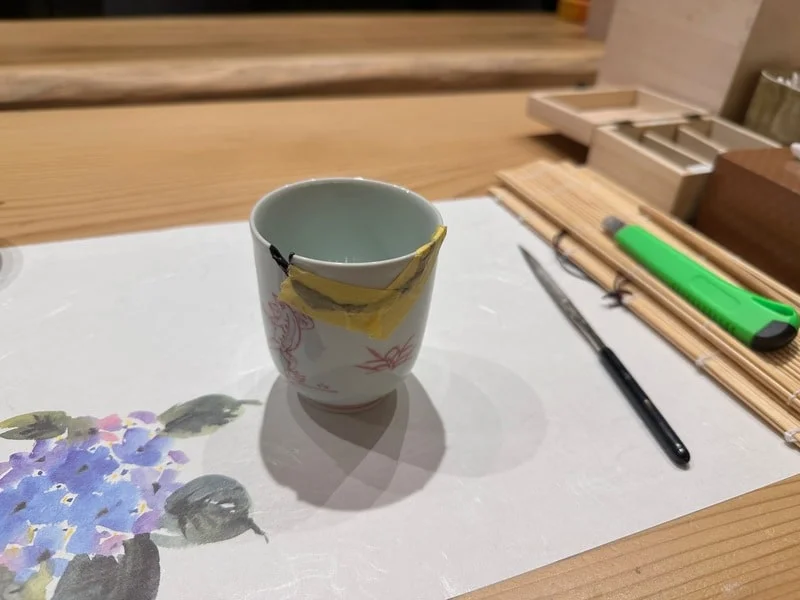
Broken pottery with glue for Kintsugi
The glue is black

Once the glue dried, Aya-san showed us how to use a small knife to remove any excess glue around the break. It looked simple when she did it, but giving the right amount of pressure with the knife was actually challenging. But after a few tries (and Aya-san’s help), I finally got it and managed to remove all the excess glue.
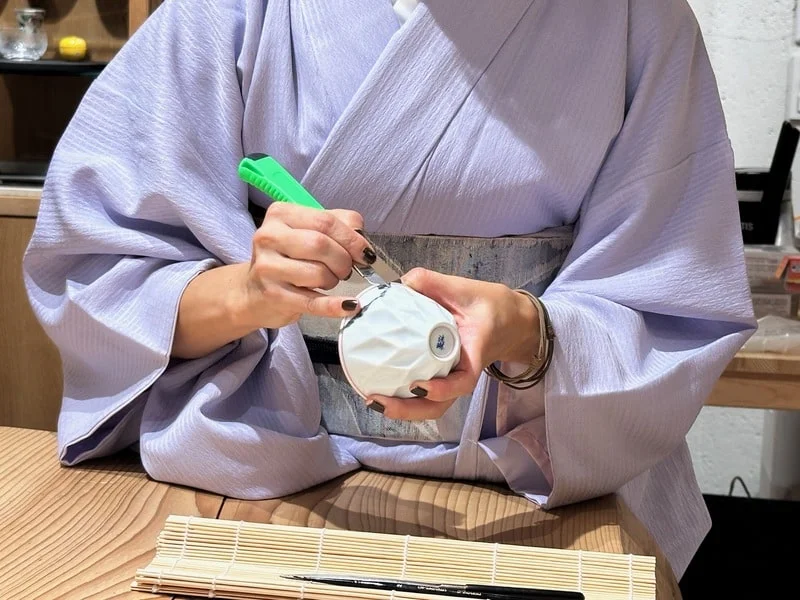
Broken pottery being repaired with kintsugi
Removing the excess glue was not as easy as it seemed

The Grind and the Putty

At this point, you might be wondering (I definitely was), what happens if the cracks are too small, or if we’ve lost a piece entirely, or it’s shattered into so many tiny fragments that there’s nothing left to glue? How do we fix that? We can’t just piece together a thousand shards!

That’s when Aya-san showed us the solution—putty. She carefully demonstrated how to apply it to the areas where parts of the ceramic were missing. 

At first, the putty looked like a rough little bump sticking out of the pottery, not quite part of the piece yet. To fix that, Aya-san explained we needed to smooth it down and make it look seamless with tiny pieces of sandpaper. 
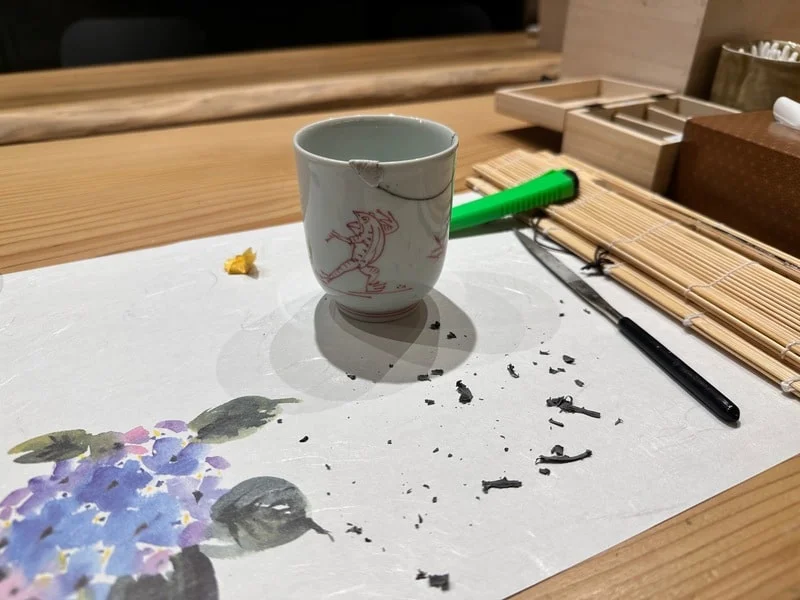
Broken pottery glued back together with putty to fill empty holes
The chunky putty is clearly visible on the cup

But before that, we needed to let the putty dry for about 15 minutes.

During this wait, Aya-san shared fascinating insights about the history of kintsugi, the different techniques and lacquers, and we discussed the philosophy behind the art.

Once the putty hardened, we sanded it to even out the surface between the ceramics and the putty. This was the most time-consuming step, but also the one that helped me enter that meditative state everyone talks about.

Minutes flew by. The process was simple enough—just gentle, repetitive motions—but it required patience. By running my fingers over the cup, I could feel how much of a bump was left. Each time, I could tell I was getting closer to that smooth, unified surface between the putty and the ceramics. With every pass of the sandpaper, the difference grew fainter, until my fingers could no longer detect the bump. That’s when I knew it was ready.
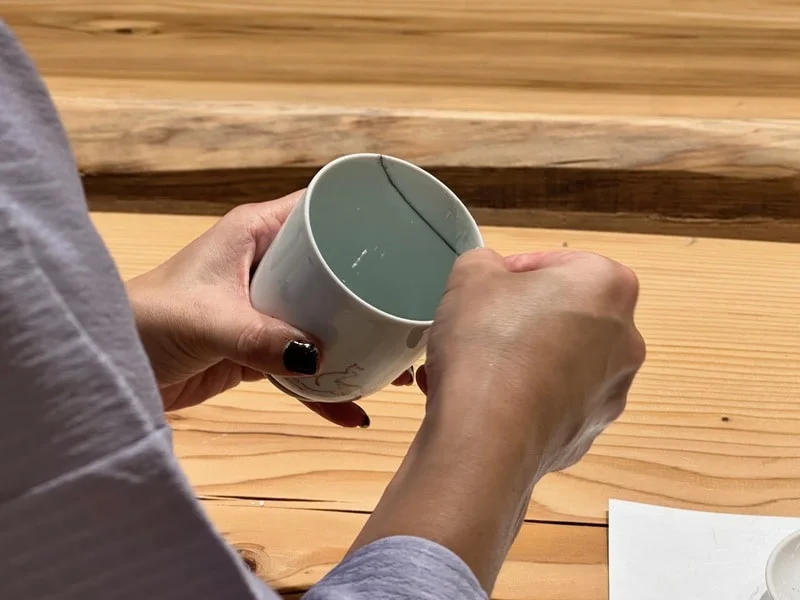
Instructor sanding the putty at a kintsugi workshop
Sanding the putty was the longest process of the workshop

It was now time for the most iconic part of kintsugi: applying the lacquer.

Finishing Touches: The Lacquer and Gold

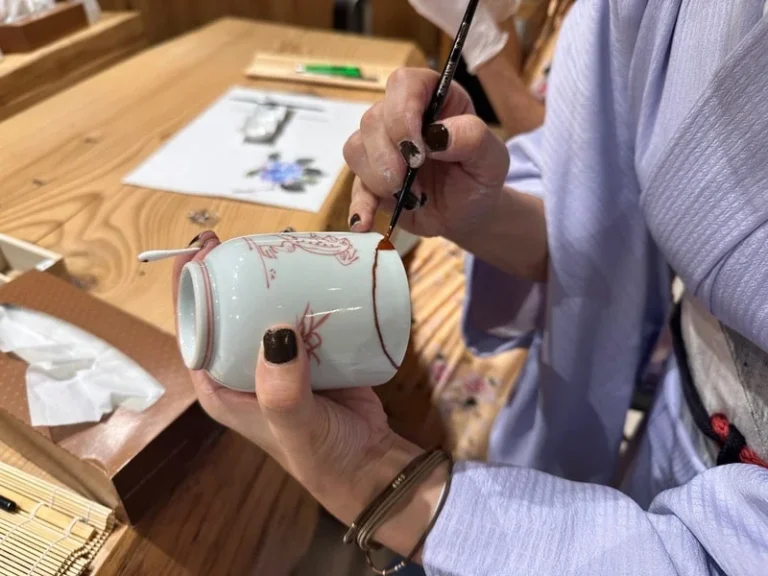
Using a fine brush dipped in red lacquer, I carefully traced the cracks and covered the putty with the iconic deep red lacquer. Then, I wiped off the excess with damp cotton swabs.
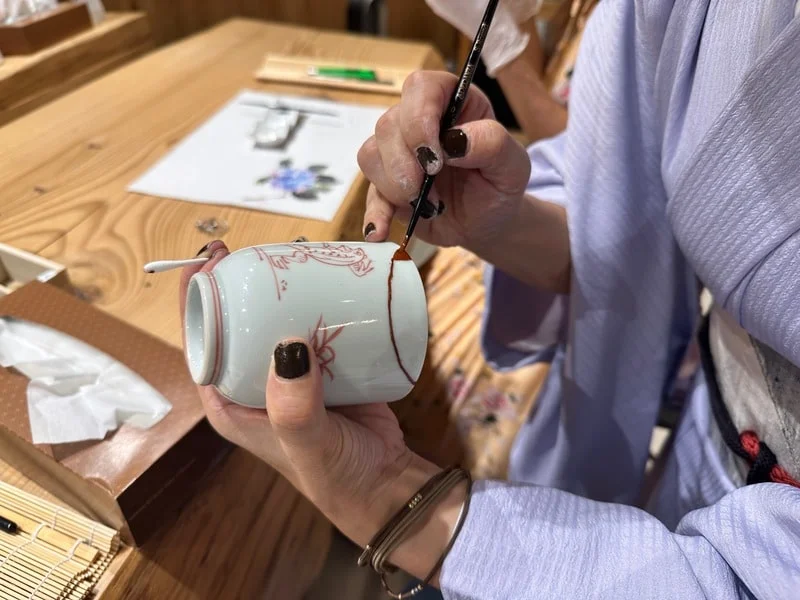
Broken pottery being repaired with lacquer at kintsugi class
The iconic red lacquer

While waiting for the lacquer to dry, Aya-san served us traditional Japanese sweets and hot green tea. We chatted about her experiences, the history of the shop, and she offered us additional tips for future projects.

After the lacquer had dried, it was time for the final step: applying the dust powder to the lacquer. Aya-san offered us a choice between silver and gold powder. I went with gold, thinking it would look perfect with the red patterns on my cup.
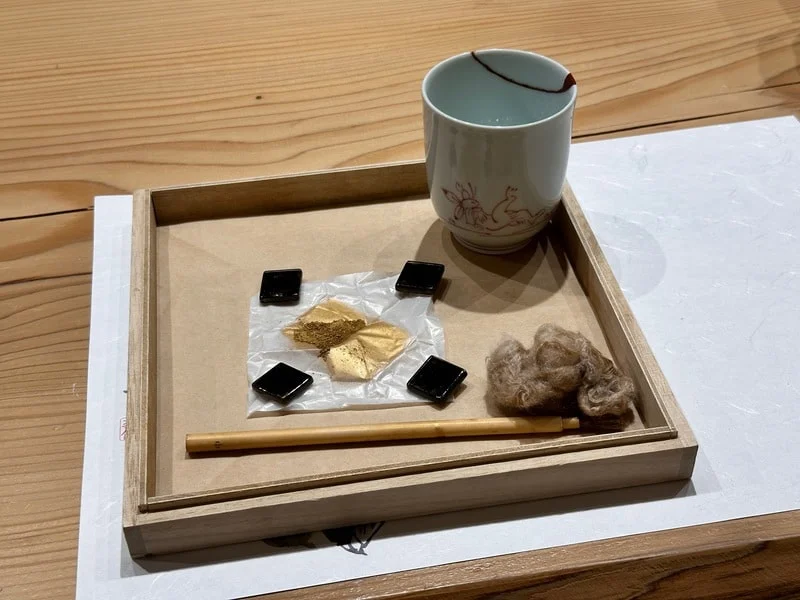
Gold powder to be applied on broken cup at kintsugi experience
We will cover the red lacquer with this gold powder

This part was simple but incredibly satisfying. Using a small ball of wool, I gently dabbed it into the gold powder and lightly brushed it over the lacquer. The powder stuck effortlessly, clinging to the lacquer and filling in the cracks. Watching the red lacquer gradually disappear beneath a shimmering layer of gold was mesmerizing. In that moment, I finally saw my finished kintsugi piece come to life—my own, unique kintsugi creation.
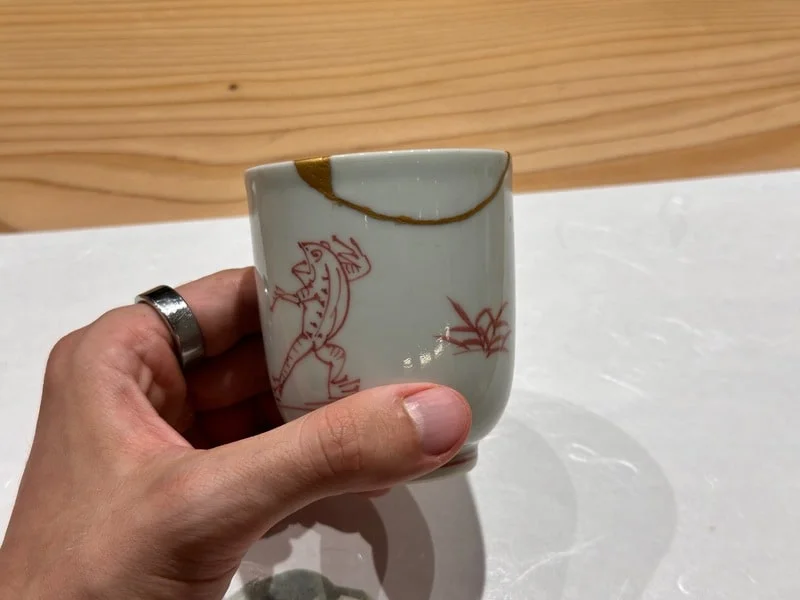
Broken Japanese pottery up repaired with kintsugi
I can’t wait to use this cup

Just like that, two hours flew by. Aya-san packed our new kintsugi pieces in a sturdy wooden box, perfect for safely bringing them home (and yes, it’s airplane-friendly).
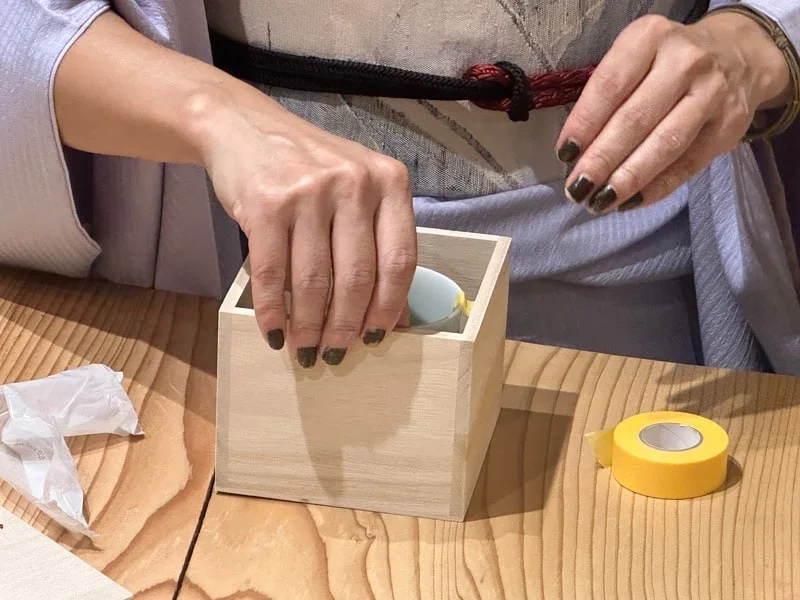
Broken Japanese pottery up repaired with kintsugi being packed for shipping
Aya-san carefully packed my finished item

We said our warm goodbyes, and I proudly headed home, already thinking about where to display my new cup for all to see.

A Special Kintsugi Workshop in Tokyo

So, is this kintsugi experience in Tokyo worth it? 

Absolutely. 

It’s a really cool souvenir, made even more special because you created it yourself. Learning directly from Aya-san in such a beautiful setting made the experience unforgettable. And remember that this experience is completely private. You won’t have any strangers with you, and you can ask all the questions you want to Aya-san.
Mission accomplished

The only downside is that now I have no choice but to replace all my plain IKEA plates with something more unique to match my new cup.

By the way, you can bring your own broken pottery to repair during the kintsugi class—just send photos in advance to make sure it’s suitable.

You might also like:

Kintsugi is one of those things that you can only truly experience in Japan. If you’re interested in this form of art, then a visit to a kintsugi workshop is a must-do. And I’ve listed the best classes you can attend while in Japan, including the one I personally went to in Tokyo (one of the best you can find).

If you’re interested in Japanese traditional art forms, you might want to check my article about cultural and traditional things to do in Japan, where I list all the best activities to do during while visiting.

What is Kintsugi: Philosophy and History

Kintsugi, also known as “golden joinery,” is a unique Japanese art form that transforms broken pottery into a new, beautiful work of art. It is done by repairing cracks with lacquer mixed with powdered precious metals like gold, silver, or platinum.

This art is based on the Japanese philosophy that the history of an object is important, so kintsugi not only restores the item but also enhances the object’s aesthetic and sentimental value.

By highlighting the cracks, kintsugi reflects the concept of mushin (無心), which means “no mind.” This idea encourages us to live in the moment and accept change and imperfection as natural parts of life.

Kintsugi is believed to have started in the 15th century when a Japanese shogun, Ashikaga Yoshimasa, sent a broken Chinese tea bowl back to China for repair. He didn’t like the metal staples used to fix it, which led Japanese artists to develop a more beautiful way of repairing pottery.

This technique is closely connected to the Japanese tea ceremony and ideas like wabi-sabi, which values imperfection, and “mono no aware,” which is about appreciating the beauty in things that don’t last forever.

But enough talking. Now it’s time for hands-on practice. The best way to do that is a kintsugi workshop in Tokyo or Kyoto. Just like with workshops to make your own chopsticks in Japan, you’ll be able to meet master kintsugi practitioners and dive deep into this art.

Why Hands-On Experience is Important for Understanding Kintsugi

When you join a kintsugi workshop, you go beyond theoretical knowledge. By actually working with the materials—feeling every imperfection in the ceramic, every nuance of the putty, and the transformative power of the lacquer that fills in the cracks—you finally truly understand the philosophy behind kintsugi.

Small plate amended using the Japanese kintsugi repair technique
Photo by Riho Kitagawa

In a kintsugi class, you also get hands-on guidance. Making mistakes is part of the learning process, and here you can correct them in real time with the help of an experienced instructor. And learning from a kintsugi expert who has dedicated their life to the craft makes the experience far more enjoyable and engaging than just reading books or watching DIY videos.

So, how do you choose the right kintsugi class? Let’s see the key things to consider.

What to Look for in a Kintsugi Workshop

Expertise of the Instructor

A well-qualified and experienced instructor can make a huge difference. They should have a solid background in both the practice and philosophy of kintsugi. You’ll want an instructor happy to answer your questions, and willing to provide personal guidance and help you transform your item into a piece of art. Read the reviews of the experience on the booking website to see what other people say about that.

Quality of Materials Used

From the ceramic pieces to the adhesive and the gold powder, quality matters. The materials used should be authentic and of high quality to ensure that you’re getting an authentic kintsugi experience. But except if the class is suspiciously cheap, this is not something you should be worried about in Japan.

Gold powder to be applied on broken cup at kintsugi experience
Real gold power, 10x more expensive than silver powder. Only more expensive workshops will have this option.

Accessibility and Location

The workshop should ideally be easy to find and accessible by public transportation. Try to check its location on Google Maps before booking to make sure it is easily accessible. The venue also adds to the overall experience; for instance, a workshop in a traditional Japanese setting will provide a more authentic atmosphere.

Private or mixed class

Unsurprisingly, a private class will be more expensive than a mixed class with strangers. I tend to prefer private classes when I can afford them because I can really talk with the instructor and ask all the questions I want. I’m also less embarrassed about asking stupid questions or sharing personal experiences.

Broken pottery being repaired with lacquer at kintsugi class
Applying lacquer on the putty – one of the many steps of kintsugi

In any case before booking a kintsugi class in Tokyo or Kyoto, try to check the reviews and ratings. This will give you an idea of what previous participants thought of the workshop.

If this kind of deep, hands-on experience appeals to you, why not also make you own Japanese knife in a similar workshop setting? It’s another craft deeply connected to Japanese culture.

Top Kintsugi Workshops in Tokyo

I personally went to the first workshop in this list, Utsuwa Omusubi HANARE. You can read my full review here, but long story short: it was fantastic. Aya-san our instructor was a great teacher, I learned a lot, and left with a beautiful Japanese-style cup that I couldn’t be more proud of.

Workshop NameLocationPriceNoteworthy DetailsReservation Link
Utsuwa Omusubi HANAREMinami-Aoyama, Tokyo¥29,000/personPrivate class (no mixed group)
– Workshop location looks stunning
– Utsuwa Omusubi is one of the top pottery shop in Tokyo
– Japanese tea and snacks included
– Duration: 120 minutes
– Bring your item home after the lesson (carefully packed in a small wooden box)
Wabunka
TNCA Minami-Aoyama StudioOmotesando, Tokyo¥9,000/personWear traditional work clothes
– You can bring your own item for the class
Mixed class with 10 participants
– Duration: 60 minutes
– Minimum age: 15yo
– Bring your item home after the lesson
Viator or
Klook
Kintsugi SoukeToshima, Tokyo¥33,000/personFour hours workshop
– Hosted by award-winning artist Showzi
Mixed class
– 24-karat gold powder included in the price
– Also offers 6-day and 12-day masterclasses
Airbnb Experience

Kintsugi Experience in Kyoto: Top Workshops

Workshop NameLocationPriceUnique FeaturesReservation Link
Shitaka UrushiShimogyo Ward, Kyoto¥26,000/personPrivate class (no mixed group)
– An interpreter will accompany you
– Very authentic and local venue
– 161 years old establishment
– Sign your item
– Duration: 150 minutes
– Bring your item home after the lesson
Wabunka
Custom workshopHigashiyama Ward, Kyoto¥45,100/personPrivate class (no mixed group)
Acclaimed English-speaking kintsugi artist Mio Heki as instructor
– Takes place in historic villa Akagane Resort Kyoto Higashiyama 1925
– Most premium kintsugi class available on the market
– Duration: 120 minutes
– Bring your item home after the lesson
Wabunka
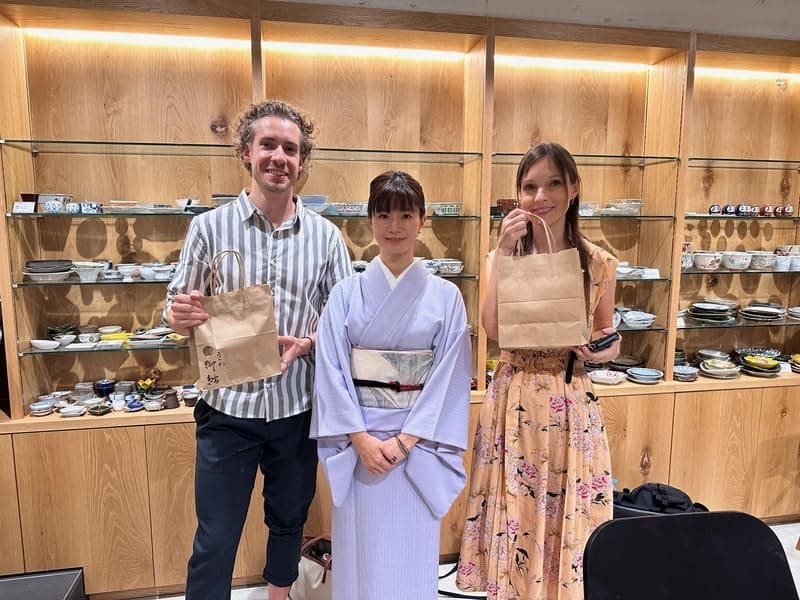
Posing with our instructor Aya-san (in the middle) after proudly repairing a small broken cup at Utsuwa Omusubi HANARE

I’m not really good with my hands, but I loved the kintsugi workshop I did in Tokyo. It was challenging enough to be interesting, but not so difficult that it became frustrating. I was surprised by how easily I could slip into that “active meditation” state that kintsugi practitioners talk about: being absorbed in the task at hand that you forget your surroundings. If you’re looking for a unique experience to learn more about Japanese culture, and a souvenir to take back home, kintsugi will be the perfect workshop for you.