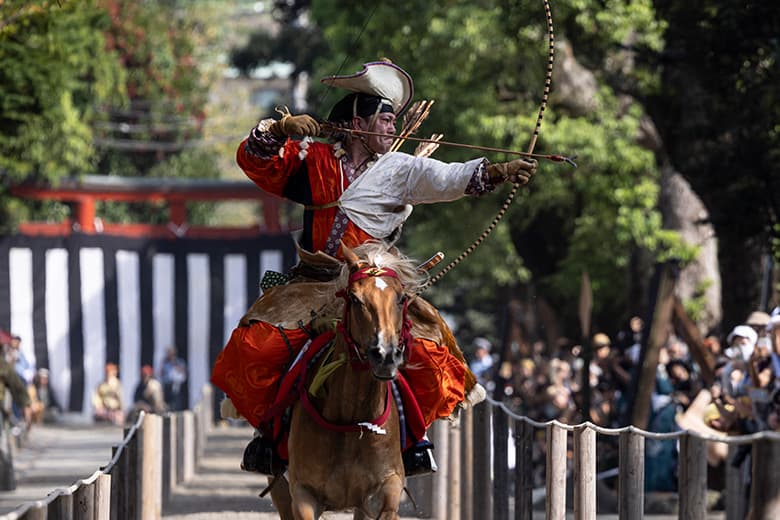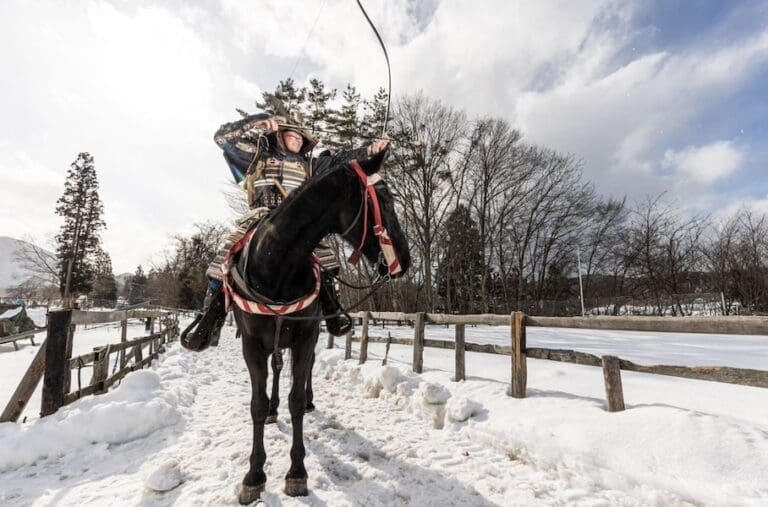
You can try yabusame, Japan’s traditional horseback archery, even if you’ve never ridden a horse. You’ll learn how to handle the bow and practice your balance before attempting to put the two together.
Personally, I think it could be one of the most memorable activities on a Japan trip, especially if you already enjoy horses, archery, or samurai history. It does take a little more planning than a workshop in central Tokyo, though. The venues are outside the main city centers, and you’ll want enough time to enjoy the lesson without rushing back for the next thing on your itinerary.
For a private experience, I recommend the horseback archery lesson in Nikko through Wabunka. Nikko is a city north of Tokyo, and this experience combines the lesson with a guided visit to Toshogu Shrine. It’s expensive, so I suggest it if you’re interested in the history as well as trying archery. If you’d prefer a shorter lesson, you can book directly with the stables or try a brief introduction in southern Japan.
Some links on YavaJapan are affiliate links. If you book or buy through them, I may earn a small commission at no extra cost to you. It helps support the site, and I only link to places, stays, and experiences I genuinely think are worth recommending.
At a Glance
- Private archery and a shrine visit: The Nikko experience on Wabunka, with English support and beginners welcome.
- A lesson without the shrine visit: Compare Shogun Stables’ direct bookings in Nikko.
- A short introduction in southern Japan: Takeo Shrine in Saga, where a staff member leads the horse.
- Watching a ceremony: Tsurugaoka Hachimangu, a shrine in Kamakura near Tokyo, holds its annual yabusame ceremony on September 16.
Where to Try Yabusame in Japan
If you’re staying in Tokyo, I suggest comparing the two Nikko options below. Takeo is much farther away, on Kyushu, Japan’s southwestern main island. Its shorter lesson is worth considering if you’re already traveling there, but the journey from Tokyo would cost more than you’d save on the activity.
Private Lesson and Shrine Visit in Nikko
The private Nikko experience through Wabunka lasts 3 hours for one to six people, with an English-speaking host. I recommend it if you’d enjoy learning about the tradition with your own group and visiting a shrine afterwards.
Your instructor practices Ogasawara-style archery, a tradition that includes formal ways of standing, bowing, and handling the bow. You begin by learning these movements, then practice your posture on a wooden horse before shooting from a real horse. The horse walks while you shoot, so beginners can learn without having to manage speed as well.
After the lesson, you visit Toshogu Shrine with a guide and take part in a prayer ceremony. I think this combination is worth paying more for if you want time to ask questions about the customs you’re learning. If you’d rather spend your time practicing archery and explore Nikko independently, the direct lesson below may suit you better.
Wabunka is a website for private cultural experiences and experiential stays in Japan. They work with artisans, teachers, monks, and other hosts to create visits for your own party, so you won’t be joining a group of strangers. I’ve worked with them through my role in the Japan travel industry and know them personally. You can read more about that connection in my Tokyo pottery-repair workshop article.
Rain means archery on foot instead of riding. You’ll practice kyudo, a form of Japanese archery. If you mainly want to shoot from horseback, consider whether you’d still enjoy the experience with that change before booking.
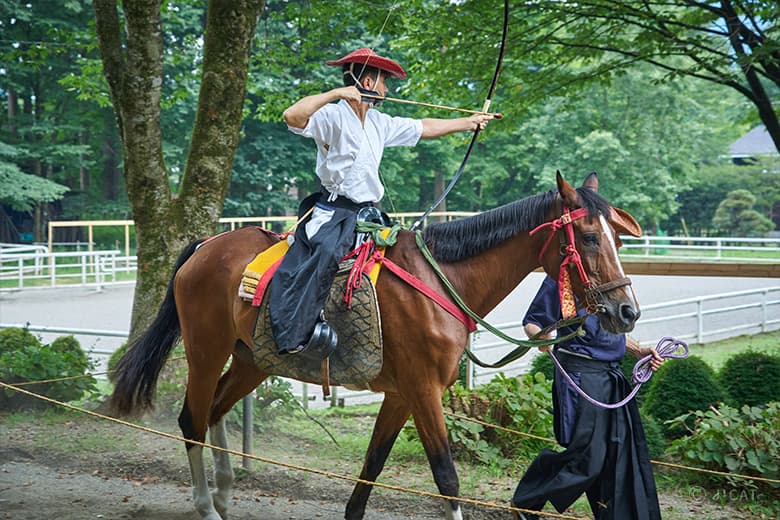
Archery Lessons at Shogun Stables in Nikko
If you’d prefer a lesson without the guided shrine visit, Shogun Stables offers 2-hour and 3-hour sessions for beginners aged 10 and older. English support and equipment are included, and you practice on the ground and on a wooden horse before trying archery on horseback.
The longer session gives you additional instruction and practice. For a first attempt, I think the shorter lesson is a reasonable choice unless you’re particularly keen to spend more time learning. If you’d like a private session, confirm that when booking.
The venue is Nikko Baji Center, an equestrian center about a 5-minute taxi ride from JR Nikko or Tobu Nikko Station. Here, light rain may still allow riding, while worse weather can mean indoor archery and wooden-horse practice. Check the conditions for your booking, as they differ from the Wabunka package.
Takeo Shrine in Saga: A Short Introduction
If you’re already visiting Saga Prefecture in Kyushu, the Takeo Shrine experience is a good way to try yabusame without committing to several hours of instruction. It’s also less expensive than the Nikko lessons, which makes it easier to consider if you’re curious but unsure how much you’ll enjoy it.
A staff member leads the horse at walking pace, so you can take part without riding experience. The session lasts about 40 minutes and accepts participants aged 12 to 70, with one or two people per booking. Sessions run on Sundays at 11:00 and 12:00.
You meet on the shrine’s horseback archery course, about a 15-minute walk from Takeo-Onsen Station. Rain cancels the activity, so leave some flexibility in your plans. If you’ll need English instruction, confirm that with the provider before you pay.
Booking and Preparing for Your Lesson
For a Nikko lesson, I recommend allowing a full day from Tokyo. You’ll have the train journey and station transfer as well as the activity, so booking another experience back in Tokyo that afternoon could make the day unnecessarily rushed. Staying overnight is worth considering if you’d also like time to explore Nikko on your own.
If yabusame is something you’re really looking forward to, ask about dates early and wait for confirmation before fixing your travel plans. Through my work in the Japan travel industry, I’ve seen travelers miss out on unusual cultural experiences because they expected to book them as easily as a hotel. These activities can depend on a particular instructor and a small number of available dates. My guide to what to book in advance explains how I prioritize them.
When you enquire, mention any riding experience and ask how much time you’ll have on horseback. The total session length also includes instruction and practice off the horse, so a longer session doesn’t necessarily mean that much longer riding.
For clothing, follow the instructions for your booking and wear something you can move in comfortably. The Nikko school recommends full-length trousers, and Takeo doesn’t allow skirts.
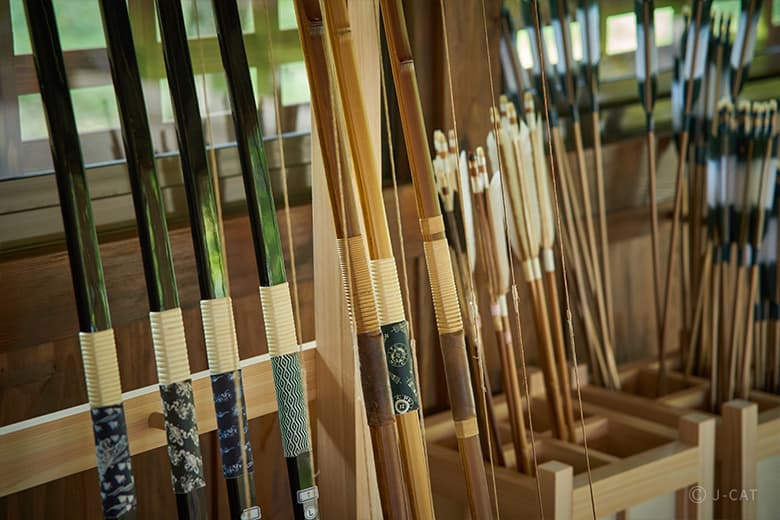
Watching Yabusame at a Shrine
If it’s the sight of an archer shooting from a galloping horse that draws you to yabusame, I recommend watching a ceremony. You’ll see trained riders perform in traditional dress, and it may suit you better than spending the afternoon learning the movements yourself.
That can also be a good compromise if you and your travel companions have different interests. You can watch together when a ceremony fits your dates, then choose another cultural experience in Japan that you’d all enjoy taking part in.
One place to watch near Tokyo is Tsurugaoka Hachimangu, a shrine in the city of Kamakura. Its annual yabusame ceremony takes place on September 16. Check the shrine’s English festival calendar and latest announcements for the time and viewing arrangements before going.