Tag

Crafts

Browsing

The Samurai sword—or katana—was once a symbol of prowess in feudal Japan. With their strong yet flexible curved steel blades, the swords were used by the Japanese Samurai. Even today, samurai sword-making uses the same labor-intensive way as centuries ago (not talking about the replicas made at a fraction of the cost!)

Keep reading as I share all about Samurai swords, their history, how they’re made—and the top sword-making experiences in Japan!

You might also like: 67 Unique Cultural and Traditional Things To Do in Japan

The History of Samurai Swords

Japanese swords, the iconic symbols of samurai culture, trace their origins back to the early Heian period, around 700 CE.

Initially, these blades were straight and influenced by Chinese and Korean designs. The transition to the classic curved katana occurred during the late Heian period, reflecting advancements in metallurgy and changing warfare tactics.

By the Kamakura period (1185-1333), the katana had evolved with a distinct curve, a sharper edge, and a longer blade, better suited for the samurai’s need for a quick and efficient draw in battle.
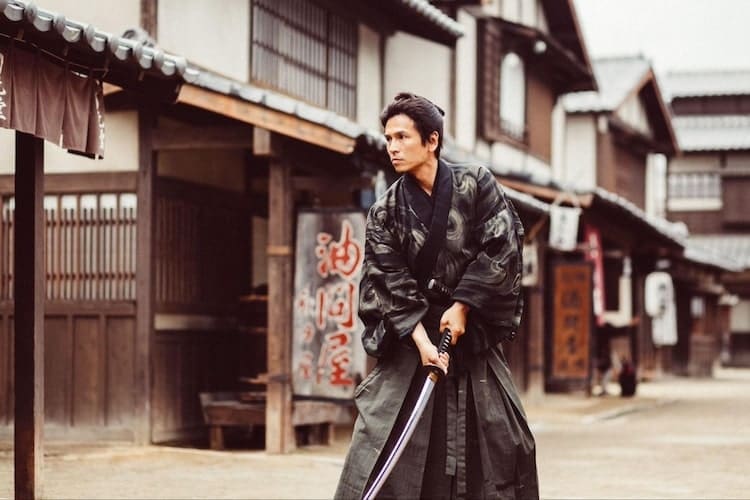
Japanese samurai with sword in hands in a street in old Japan

This evolution mirrored the rise of the samurai class, as these swords became the samurai’s version of a smartphone – always at their side. And well, also a symbol of their social status and warrior ethos.

Throughout the feudal era, especially during peaceful times, sword-making developed into a refined art form, with famous swordsmiths achieving legendary status. The katana remained a vital part of the samurai’s identity until the end of the Edo period in 1868, embodying both martial prowess and aesthetic beauty.

After the Edo period ended in 1868, the samurai class and their swords faced a bit of an identity crisis. The Meiji Restoration, with its rush towards modernization, meant that carrying swords became about as fashionable as wearing armor to a business meeting. By 1876, the Haitōrei Edict had samurai hanging up their katanas for good, relegating these weapons to ceremonial roles or, sadly, the attic.

How to Make a Samurai Sword

Samurai sword-making involves craftsmanship and attention to detail. And while the process may be labor-intensive, the end result is an artistic masterpiece!

1. Smelting

Swordsmiths and their assistants begin by using a clay furnace (tatara) to layer iron sand and pine charcoal for three days. During the process, temperature is controlled to allow high-carbon and low-carbon steel to separate. This step results in 2 tons of steel (kera)—divided into soft hocho-tetsu and hard tamahagane. The former is a flexible core, while the latter is used to make the sword’s razor-sharp edges.

The materials for the process are now ready to be transformed into a Samurai sword.

2. Forging and Folding

The swordsmith folds and hammers the steel up to 16 times (creating up to 30,000 layers!). Doing so spreads the carbon throughout the steel and draws out any impurities. It also lets you combine different kinds of steel—achieving a soft but flexible and sharp but brittle material. You may be surprised to know that after you forge katana, only one-tenth of the original mass is left.

Different folding methods, such as kobuse, honsanmai, and soshu kitae, are used to achieve varying blade characteristics. As an added bonus, folded steel looks super cool—and the patterns on the steel are unique to each sword. 

The sword prepared at this point is pretty much straight. This is because katana aren’t bent into their shape; they get their curve from heat treatment.
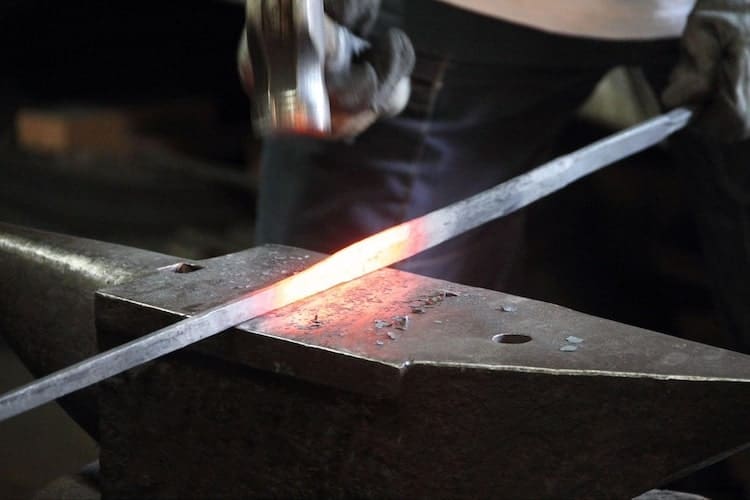
Samurai sword-making process

3. Heat Treatment

Next, you cool the sword by plunging it in water or oil. However, it’s not as simple as dipping it into the liquid. You have to cool different parts of the sword at different rates, called “differential heat treatment”. For the purpose, the swordsmith paints a clay mixture on the sword (covering the main blade but leaving the edge). He then quenches the sword in water at about 800ºC. This is a critical point, as one in three swords can be ruined at this point. Proper heat treatment results in the iconic katana curve—and the distinctive line along the sword, called the ‘hamon’.

4. Polishing

The final step, polishing, is done by a specialist using seven different stones—and taking over up to a month for a single blade. The cost for museum pieces can be significant, up to $1,000 per inch of blade. Fittings, such as the scabbard and handle, are also typically made by a different craftsman. However, these are not considered as important in Japanese culture; in the museum, you’ll usually just see the blade displayed.

The State of Katana-Making Nowadays

Today, the art of Japanese sword-making is far from extinct. It’s like the vinyl record of weaponry: classic, revered, and in the midst of a cultural comeback. These swords are no longer tools of war but rather works of art, meticulously crafted by master swordsmiths, known as ‘tosho’, who spend decades honing their skills. In today’s Japan, there are around 300 of them, but only a few can live from swordsmithing only.

The path to becoming a master swordsmith is long and arduous, often exceeding a decade of rigorous training. This ensures that every aspect of the sword-making process is executed with skills and precision.

Today, katanas are made for martial artists and enthusiasts who value the craftsmanship and historical significance behind each blade, with prices ranging in the tens of thousands of US dollars.

Best Sword-Making Experiences in Japan Today

When traveling to Japan, it’s possible to meet, observe, and learn from master swordsmiths. Prices can be high, but with such a deep history and only a few hundred active swordsmiths, we can understand why. So is it worth it? If you’re interested in this craft, I’d say yes, absolutely.

Below, I listed the best place to experience sword-making in Tokyo, and the best one in Kyoto:

Forge NameLocationPriceUnique FeaturesBooking Link
Katanakaji FusahiroHonjo-Waseda, Saitama (near Tokyo)¥74,000 / person– Watch a demonstration by Fusahiro, one of Japan’s last katana makers
– Hands-on experience with making a Samurai sword
– Wind up with a photo session with a katana made by Fusahiro
– Duration: 3 hours
– 50 minutes from center Tokyo
View on Wabunka
Masahiro TantojoKameoka City, KyotoFrom ¥54,000 / person– Learn from a certified Japanese swordsmith
– Make your own knife (not a sword-making experience)
– Private group (only your group) for an intimate experience
– An English/Japanese interpreter will accompany you
– Duration: 4 hours
– 60 minutes from center Kyoto
View on Wabunka

The best part of this kind of experiences is to be able to converse and learn from some of the only Japanese master swordsmiths still in activity, carrying on their shoulders the weight of hundreds of years of skill honing and history. This is a unique chance to meet those masters for those interested in sword-making.

If the price is too high for you but you’re looking for a similar experience, you can check my guide on the best workshops to make your own knife in Japan. This type of experience is usually more affordable, and although you won’t learn about swords, you will still forge your own knife under the instructions of a master swordsmith.

If:

  • You have an interest in knives,
  • You’re a cooking enthusiast or a chef who uses knives daily,
  • Or you appreciate craftsmanship with deep history,

Then a knife-making experience in Japan is something you’ll love.

Visiting a forge and crafting a knife from raw steel is an experience for those with a true passion for the craft. Most forges are in the countryside, and workshops are more expensive and can last half a day or even a full day. But if you’re looking for something more accessible, there are also knife-making workshops in big cities where you can learn about Japanese blades, meet skilled artisans, and take home a knife of your own. Let me show you the best workshops currently available.

You might also like: 67 Unique Cultural and Traditional Things To Do in Japan where I introduce the best cultural experiences Japan has to offer.

Many knife enthusiasts dream of working alongside a master craftsman to make their own knife. And Japanese craftsmen and the knives they produce have a particularly high reputation.

First of all, Japanese knives are exceptionally sharp, durable, and lightweight. Made from high-quality steel, they hold their edge longer and allow for precise, clean cuts. Chefs appreciate their design too: thinner, sharper, and the handles are often wooden and lighter, giving better balance.

But they’re also popular because their craftsmanship is rooted in centuries of sword-making tradition. And knife enthusiasts appreciate and have a deep respect for this craftsmanship, making the knife all the more valuable. Over time, Japanese knives have become a symbol of great quality.

Choosing a Knife Making Class

When choosing a knife-making workshop in Japan, don’t just look at the location. Budget, group size, language support, and the workshop’s atmosphere can really change your experience. Whether it’s a private session with a master blacksmith, a budget-friendly group class, or a workshop offering English support, each setup offer something different.

Here is a video I made about a private knife making class in Osaka at Wada Shouten, offered through Wabunka (this workshop is part of my selection of the best workshops available in Japan, more info in the next section):

@yavajapan

📍Location: Wada Shouten, Sakai, Osaka Booking & info: https://wabunka-lux.jp/experiences/en_wada-shouten-2/?ref=TMGcZ9MIeoK_4R&utm_content=tiktok-wada-shouten (link in bio as well) This is a completely private workshop where you’ll learn directly from renowned Japanese craftsmen. An interpreter will be with you to translate everything, and you’ll leave with a personalized knife, engraved with your name. The workshop is only available for booking on Wabunka. Reservations are required so be sure to book in advance. You can choose from three types of knives: Santoku, Deba, and Sashimi. They’ll also teach you how to maintain your knife so you can keep it for years and years. I personally loved it and the reviews of other customers for this experience are excellent (check them out on the website). Highly recommended if you’re a knife enthusiast🤌 About Wabunka: they offer the most authentic experiences in Japan. They partner with top Japanese artisans, artists, and teachers in local venues to provide high-end, private workshops for international tourists. If you’re looking for unique, non-touristy things to do, check out their website — they have so many incredible experiences I want to try them all 😳 (Not a sponsored post but i do share my affiliate link – meaning if you book through my link I’ll get a small percentage as commission (but at no extra cost for you)) #japantravel #japaneseknife #explorejapan #osaka #thingstodoinjapan #explorejapan #visitjapan #japan #wabunka

♬ original sound – 🤎

Where to Find Knife Making Courses in Japan

Below you will find the best classes where you can make your own knife in Japan, that you can book online. These workshops have different price ranges to satisfy all budgets. And for all of them, you will leave with a knife to take home with you. And don’t worry about airport security. It will be perfectly fine if the knife is packed in your checked-in baggage.

Workshop NameLocationPriceUnique FeaturesBooking Link
Studio NINKyoto¥23,000 / personGroup class
– Easy to access (located in Sakyo Ward)
– Make a 15cm blade (not a kitchen knife)
Designed for tourists
– Also offers a ninja weapon making class for the same price
GetYourGuide
Kikyo HayamitsuHyogo¥26,550 / person– Certified Swordsmith
Visit a forge
– The master might not speak English, but use an English translation device
– Make a 15cm blade (not a kitchen knife)
– Duration: 3 hours
Klook
Natural Whetstone and Hone MuseumKameoka, Kyoto¥33,000 / person– Your private instructor will be the museum’s director
– Get a private tour of the museum
– Craft your own natural hone/whetstone
– Sharpen an engraved your own Japanese kitchen knife
– Leave with both your natural hone/whetstone an your kitchen knife
Private tour (no mixed group)
– Duration: 2 hours
Wabunka
Wada ShotenSakai, OsakaBetween ¥48,000 and ¥78,800/person depending on group size– Sakai has been a city known for its knife-making for six centuries
– In a historic 150-year knife store
– Leave with a real kitchen knife
– Engrave the knife with your name
– Personal interpreter
– Private class
(only your group)
– Duration: 2 hours
Wabunka
Kanetaka Hamono RouhoNakagyou Ward, Kyoto¥46,000 / personHistoric smithy workshop with centuries of history
Forge and hammer the steel yourself
– Learn techniques for cutlery maintenance
– Leave with a real kitchen knife
Private workshop (no mixed group)
– Duration: 90 minutes
Wabunka
Asano KajiyaGifu– Between ¥41,000 and ¥58,000/person depending on group size
– ¥5,000 for non-participating companions
– Certified Swordsmith
Visit a forge
– Includes pick-up and drop-off at the nearest station
– Small group class
– Includes lunch
– Duration: 7 hours
Rakuten Travel Experiences
Masahiro TantojoKameoka, Kyoto– ¥54,000/person for a group of three people or more
– ¥58,000/person for a group of two
– ¥70,000 for solo travelers
– Certified Swordsmith
Visit a forge
– Make a 15cm blade
Personal interpreter
– Private class (no mixed group)
– Duration: 4 hours
Wabunka

If you’ve read other articles on this blog, you know I particularly affectionate Wabunka as I constantly recommend them. I’ve been working in the Japanese travel industry since 2019 and they offer by far the best experiences I’ve ever seen. Except stated otherwise, all their experiences are private, meaning only your group will be there. You will be accompanied by a private guide-interpreter, allowing you to connect with the artisans (and Wabunka only works with the best artisans in Japan) on a much deeper level than any other experiences available on the market.

What to Expect During a Japanese Knife-Making Experience

Hands of a man in a black t-shirt sharpening a Japanese knife on a sharpening stone
Photo by Lucas Law

Japanese knife-making workshops vary depending on the class you choose. Some take place in forges, where you’ll work with heated steel, while others focus on finishing techniques like sharpening and handle-making. Some even take place in museums, offering a more historical perspective. Here’s a general idea of what your session might include:

Introduction and Safety Briefing

  • Classes often start with an introduction to Japanese knives, their history, and their role in craftsmanship and culture.
  • If you’re working in a forge, you’ll get safety instructions on handling hot metal and sharp tools. If you’re in a shop or museum, the focus may be more on the materials and techniques used in traditional knife-making.

Demonstration by the Master

  • In hands-on classes, a skilled blacksmith or artisan will demonstrate key techniques like forging, hammering, shaping, or sharpening.
  • If your class focuses on finishing, you might watch a demonstration on how to refine an edge or attach a handle properly.

Hands-On Experience (Varies by Class)

  • Forge-Based Classes: You might heat and hammer steel to shape a blade, working through the process step by step.
  • Finishing Workshops: Some classes focus on sharpening a pre-made blade, polishing it, or attaching a handle using traditional techniques.
  • Museum or Theory-Based Classes: These may offer interactive discussions or guided tours on the history and evolution of Japanese blades.

Final Steps

  • If you’re crafting a knife, you might refine the blade, sharpen the edge, and possibly customize the handle.
  • In sharpening workshops, you’ll learn proper whetstone techniques to maintain and enhance a blade’s edge.
  • Some classes wrap up with a discussion on care and maintenance, ensuring your knife lasts for years to come.

    Preparing for Your Knife Making Class

    The best way to prepare depends on the type of class you’re taking:

    Clothing

    • Forge Classes: Wear long sleeves and pants made of cotton to protect against sparks. Closed-toe shoes are a must.
    • Shop or Museum Classes: Comfortable clothing is fine, but avoid anything too delicate, as you may still handle sharp objects.

    Safety Gear

    • Forges will provide appropriate protection when needed. If you have personal preferences, bring your own.
    • For sharpening or handle-making classes, expect to work with hand tools but not heavy equipment.

    Hydration and Snacks

    • Some sessions, especially forging, can last for several hours and be physically demanding. You can bring water and a light snack just in case, but most workshops will provide those for you.

    Mindset

    • The craftsmen welcoming you have dedicated their entire lives to this work. It means a lot to them, and it shows. If you come in with curiosity and enthusiasm, they’ll really appreciate it — and they’ll be all the more happy to share their knowledge and talk with you.

    The Bottom Line

    If you’re serious about making a knife in Japan, plan ahead. Some of the best workshops require booking a few weeks or ideally a couple of months in advance. Also, consider what kind of experience you want (full forging, sharpening, or handle-making) since each class offers something different.

    And if a knife-making class isn’t in your budget, there are other hands-on crafts like chopstick-making that still let you engage with Japan’s craftsmanship without the higher price tag. Either way, taking part in a traditional workshop is one of the best ways to bring home something truly unique, whether it’s a knife, a skill, or just a great story.