Tag

Chopsticks

Browsing

If you are looking for the best chopstick-making workshop in Tokyo, this is probably it.

It is also clearly not the right pick for everyone.

Mogami Kogei costs much more than the simpler chopstick classes around Tokyo. The question is whether you want a more private, more personal experience in a real craftsman’s workshop, or if a shorter and cheaper class would suit you just fine.

I did it myself through Wabunka, and I loved it.

Some links on YavaJapan are affiliate links. If you book or buy through them, I may earn a small commission at no extra cost to you. It helps support the site, and I only link to places, stays, and experiences I genuinely think are worth recommending.
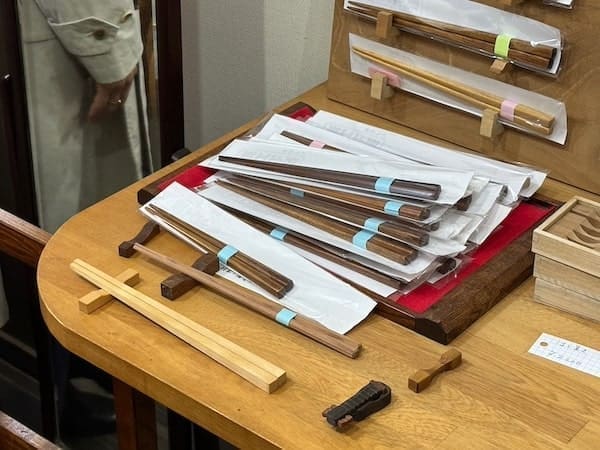
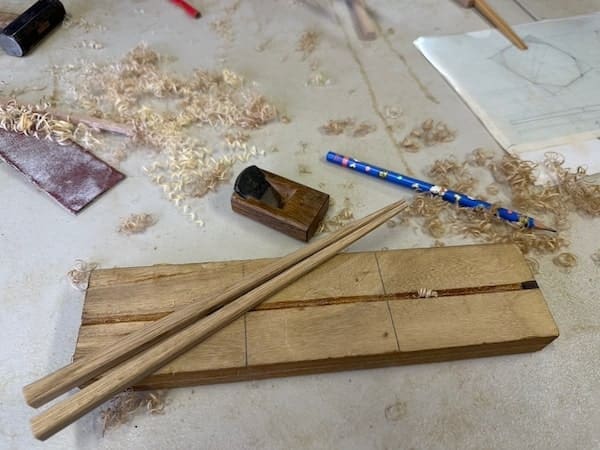
Chopstick on a table in Mogami Kogei workshop in Kuramae, Tokyo
Hand-made chopsticks at Mogami Kogei workshop

Quick Verdict

Yes, I think Mogami Kogei is worth it if you want the best version of this kind of activity in Tokyo.

I would not recommend it to every traveler. If you just want a fun and affordable class where you make a pair of chopsticks and move on with your day, there are cheaper options that make more sense.

But if you want something private, more personal, and much less touristy, this is the one I would look at first.

If you want to compare it with the cheaper alternatives first, I have a separate roundup on the best chopstick-making workshops in Japan.

What This Experience Actually Is

This is a private chopstick-making experience in Kuramae with Mogami-san, a traditional woodworker who works in the Edo sashimono world.

I was invited by Wabunka, which I recommend often on YavaJapan for this kind of experience. Wabunka focuses on private cultural experiences and stays in Japan for international travelers, usually built around respected hosts, meaningful settings, and a much more personal format than the usual tourist class. Here, that means private time in Mogami-san’s real workshop, plus interpreter support when it helps the conversation go deeper.

You are not just booking a slot in a generic class. You are booking time in a real workshop, with a real craftsman, in a format that feels much more personal than the usual tourist-facing version of this kind of activity.

Why I Joined This Experience

I have been living in Japan since 2019 and working around Japan travel for just as long, so I have seen a lot of workshops and activities that sound great online and feel forgettable in real life.

This one did not have that problem.

What interested me was not just the chopsticks. It was the chance to spend time in a proper workshop, talk with Mogami-san, and see whether the premium angle actually translated into a better experience on the ground.

It did.

The Short Version of How It Felt

The best way I can describe it is this: it felt like visiting someone’s working world, not dropping into a tourist product.

That difference is exactly why I would pay more for something like this.

Here is a short video I made about this experience:

@yavajapan

I think i just found the ultimate souvenir to bring back from Japan😳 Mogami-san was such a kind soul, honestly the experience is as much talking and learning from him as it is about making chopsticks 😌 Mogami-san’s English is not bad but limited so we had an (amazing) guide with us translating and helping us discuss with the master ✌️ Honestly it was the best workshop I’ve done so far in Japan, really impressed👌 If you want to do it when you’re in Tokyo you need to book ahead inline, the website name is Wabunka #japantravel #tokyotravel #handwork #woodworking #chopsticks #japanthingstodo

♬ original sound – yavajapan

Visiting the Workshop

My group met our guide first, then headed into Mogami-san’s workshop in Kuramae.

The space immediately felt right. Small, lived-in, full of tools, full of wood, and clearly not designed from scratch to look polished for visitors.

Mogami-san showed us the storefront and some of his creations before taking us further in. He works with Edo sashimono, a traditional Japanese woodworking technique built around joinery rather than nails, and even if the chopsticks themselves are simpler than a full sashimono piece, that background gives the workshop much more character.
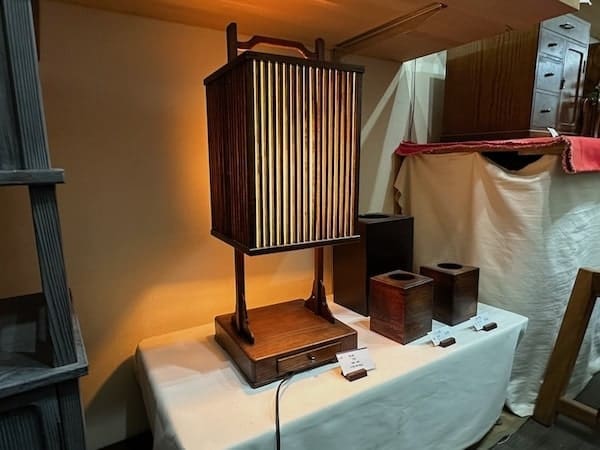
Lamp made with edo sashimono technique at Mogami Kogei workshop in Kuramae, Tokyo
This lamp was made using Edo Sashimono technique

One of the reasons the visit stayed with me is that it never felt rushed. It felt like we were being welcomed into a real place of work.

Making the Chopsticks

Before we started, Mogami-san offered traditional workwear, which of course I accepted immediately because I looked far more competent in it than I actually was.
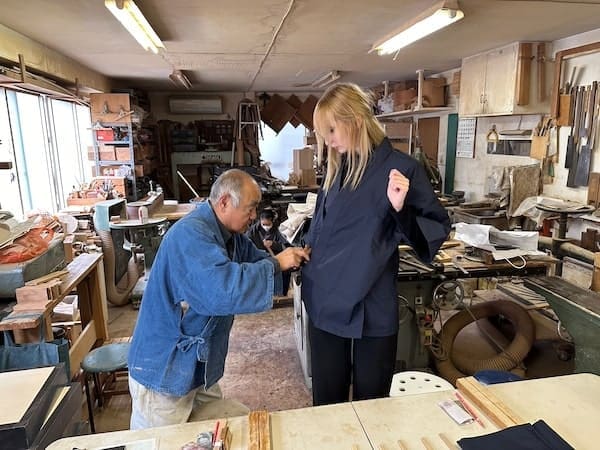
Mogami Kogei workshop in Kuramae, Tokyo
We all got to wear a traditional workwear outfit

The workshop itself is beginner-friendly, but it is not so simple that your hands can go on autopilot.

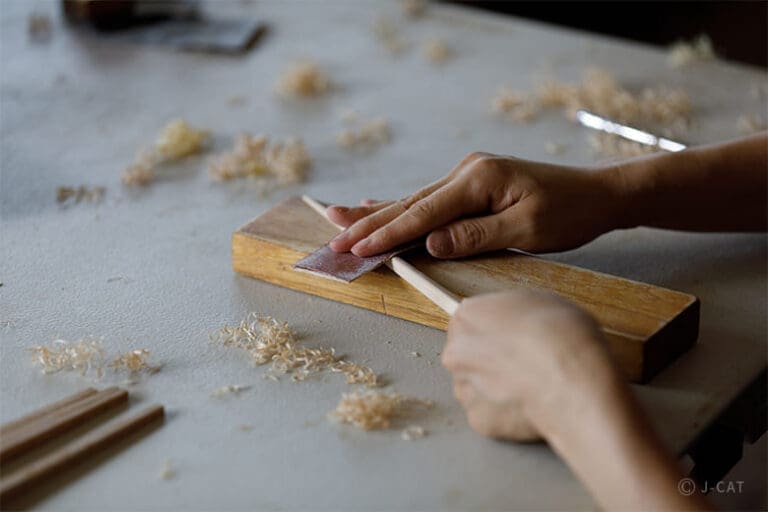
You choose your wood first, then shape the chopsticks by cutting down the corners step by step, then sand them smooth, then finish them.

Mogami-san and the interpreter guided us through it clearly, which was lucky for me because I was nowhere near as naturally gifted as I had imagined in my head.

I really thought I would breeze through it.

Absolutely not.

At several points, I managed to make mistakes that would have turned my chopsticks into something much less elegant if Mogami-san had not stepped in and quietly rescued the situation.

So if you are reading this and worrying that you are too clumsy for it, do not.

You will be fine.
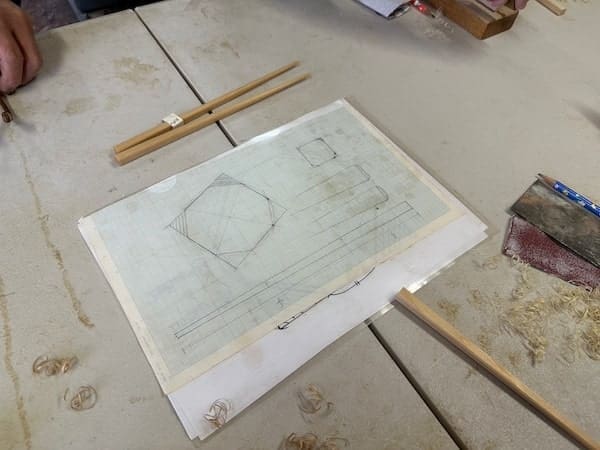
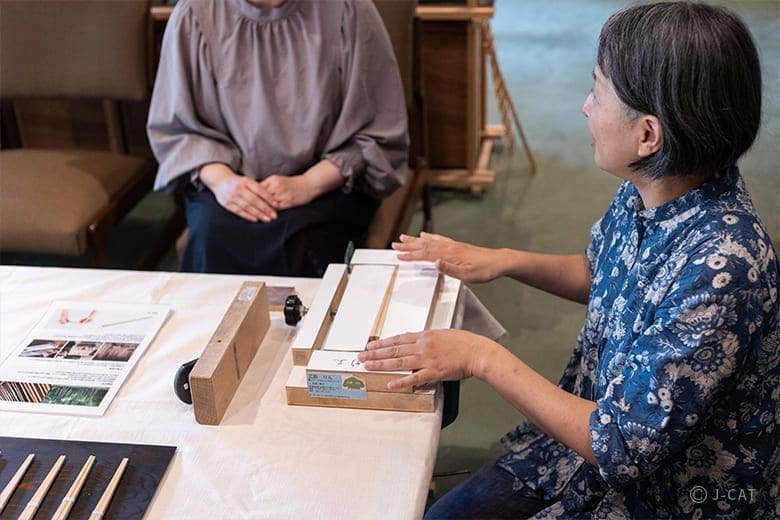
Chopstick making manual Mogami Kogei workshop in Kuramae, Tokyo
Visual explanations of the chopstick-making process

The Best Part Was Not Just the Craft

The biggest difference between this and a cheaper class is not that the chopsticks magically become ten times better.

It is that the whole thing feels more human.

While we worked, we were able to talk with Mogami-san about his craft, his family, his workshop, and the industry itself. That part is much harder to get in a bigger, more standardized class.

The interpreter helps for a very simple reason: it lets the exchange breathe. You are not stuck smiling politely through a language wall. You can actually ask things, follow up, and learn more.

The Finishing Touch

The last stage was the lacquer, which is where everything suddenly looked much more impressive than it had a few minutes earlier.
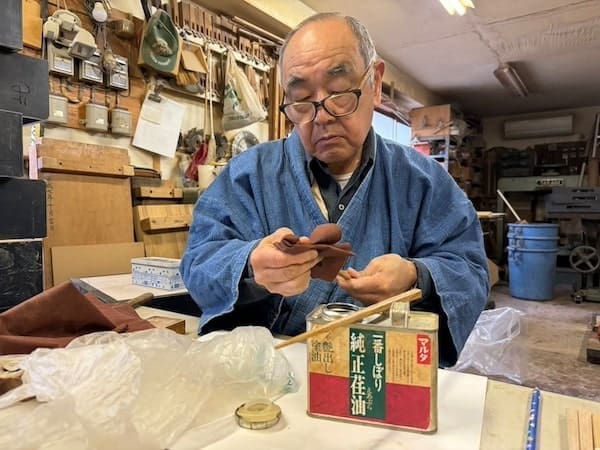
Mogami-san, owner of Mogami Kogei workshop in Kuramae, Tokyo
Mogami-san applying lacquer to his chopsticks

By the end, I was holding a pair of chopsticks that looked far better than they had any right to given my own contribution to the process.

That is still one of my favorite things about the experience. It is hands-on, but you are not left alone to ruin the final result.

What Makes Mogami Kogei Different

Here is the real value proposition as I see it:

  • Private format
  • Interpreter support
  • A real workshop setting
  • A host who genuinely feels worth meeting
  • A more personal overall experience

It is a different kind of experience from the quick, inexpensive classes around Tokyo. If you mainly want a fun activity and a handmade souvenir, those can work perfectly well. If you want the strongest premium version of this idea in Tokyo, this is the one I would recommend first.

Who This Is For

I would recommend this most to:

  • travelers who want a special craft experience, not just a quick activity
  • couples or small groups who value privacy
  • people who care about traditional craftsmanship
  • travelers doing a milestone trip, honeymoon, or one big splurge experience
  • families with older kids or teenagers who enjoy hands-on activities

Who Should Skip It

I would skip this if:

  • you are mainly trying to keep costs down
  • you just want a quick class and do not care much who is teaching it
  • you would rather do several cheaper activities than spend more on one
  • you are already very experienced in woodworking and mainly want technical challenge

If you are already highly skilled with your hands, you may not find the chopstick-making itself difficult enough to be the main attraction. In that case, the value is much more about the workshop visit and the human side of the experience.

Is It Worth the Price?

For me, yes.

Not because chopsticks are inherently worth a premium price. They are not.

It is worth it because this is one of those rare cases where spending more changes the feel of the experience in a real way.

You are paying for:

  • a private setup
  • better host access
  • interpretation
  • a stronger sense of place
  • an experience that feels very different from a standard class

If budget is not your main concern and you want the best overall chopstick-making experience in Tokyo, I think the price makes sense.

How to Book

You can book the experience directly on Wabunka.

If you are booking during a busy travel season, I would not leave it until the last minute.

Bottom Line

I have done enough activities in Japan at this point to know when something feels genuinely special and when something is just well packaged.

This one felt genuinely special.

If I had to recommend just one premium chopstick-making experience in Tokyo, this would be it.
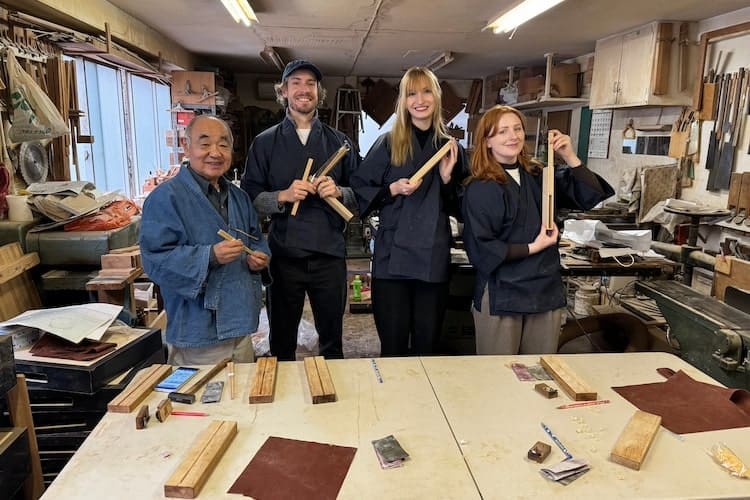
Chopstick-making experience in Mogami Kogei workshop in Kuramae, Tokyo
Posing proudly with our finished chopsticks

If you want a cultural activity in Japan that is easy to enjoy, actually memorable, and leaves you with a souvenir you will keep using later, making your own chopsticks is a very good choice.

It is practical, beginner-friendly, and a lot more fun than just buying a random pair at Don Quijote on your last night.

But of course, not all chopstick-making workshops are the same. Some are quick and cheap. Some are more personal. Some feel like a proper craft experience. Others are basically a fun tourist activity with a nice souvenir at the end.

This guide is here to help you choose the right one in Tokyo or Kyoto, depending on your budget, your travel style, and how serious you want the experience to feel.

Some links on YavaJapan are affiliate links. If you book or buy through them, I may earn a small commission at no extra cost to you. It helps support the site, and I only link to places, stays, and experiences I genuinely think are worth recommending.

@yavajapan

I think i just found the ultimate souvenir to bring back from Japan😳 Mogami-san was such a kind soul, honestly the experience is as much talking and learning from him as it is about making chopsticks 😌 Mogami-san’s English is not bad but limited so we had an (amazing) guide with us translating and helping us discuss with the master ✌️ Honestly it was the best workshop I’ve done so far in Japan, really impressed👌 If you want to do it when you’re in Tokyo you need to book ahead inline, the website name is Wabunka #japantravel #tokyotravel #handwork #woodworking #chopsticks #japanthingstodo

♬ original sound – yavajapan

Quick Answer

If I had to sum it up quickly:

If you just want a fast comparison, start with the table below.

Comparison Table

Tokyo and Around

WorkshopAreaPrice LevelFormatBest ForBooking
Mogami KogeiKuramae, TokyoPremiumPrivate with interpreterTravelers who want the best overall craft experienceWabunka
KakehashiSasazuka, TokyoMid-rangeSmall group with guidePeople who want something more artisanal without going all the way up to Mogami pricingViator
Chopstick Making Workshop with ArtisanKuramae, TokyoBudgetGroupPeople who want a quick, central, easy classViator, GetYourGuide, Klook
Shinjuku Chopsticks Making ClassShinjuku, TokyoBudgetBigger groupTravelers staying in Shinjuku who mainly want convenienceViator, GetYourGuide, Klook
Chopstick Making Workshop in GinzaGinza, TokyoBudgetGroupTravelers staying around Ginza who want a very central optionGetYourGuide
Karaki MokkoKawagoe, SaitamaBudgetShort workshopPeople already planning a Kawagoe day tripJalan

Kyoto and Around

WorkshopAreaPrice LevelFormatBest ForBooking
Takano ChikkoNagaokakyo, KyotoPremiumPrivate with interpreterTravelers who want a more distinctive bamboo-focused experienceWabunka
Nara Chopstick-Making WorkshopNaraBudgetSmall groupPeople already visiting Nara who want the best value option nearbyGetYourGuide
Yokoyama Bamboo StoreKamigyo, KyotoMid-rangeGroupTravelers who want a more central Kyoto optionActivity Japan
Gion Chopstick Making WorkshopGion, KyotoBudgetBigger groupTravelers who care most about location and easeViator, GetYourGuide
Marumasu-NishimurayaNakagyo, KyotoBudgetGroupTravelers who want a simple central class with a decorative extraWamazing
Kyomachiya Workshop WarakuHigashiyama, KyotoBudgetGroupPeople who care more about the machiya setting than craft depthActivity Japan

Why This Is Actually Worth Doing

I like this activity because it sits in a sweet spot.

It is more personal than a standard souvenir stop, but it is also much easier to fit into an itinerary than something like swordsmithing or knife-making. You do not need special knowledge. You do not need to be good with your hands. You just need to be willing to spend an hour or two doing something a bit different.

And unlike a lot of cultural activities that sound better on paper than they feel in real life, you leave with something you will genuinely use.

If you want another small craft activity with the same kind of appeal, you might also like making your own knife in Japan. But chopsticks are much easier, cheaper, and more beginner-friendly.

How to Choose the Right Workshop

Before you book, there are really only four questions that matter.

1. Do You Want a Real Craft Experience or Just a Fun Activity?

If you want the best version of this kind of experience, look at the premium private workshops like Mogami Kogei in Tokyo or Takano Chikko near Kyoto.

If you mainly want a fun, accessible activity with a nice souvenir at the end, the cheaper group classes are completely fine.

2. Do You Care About Privacy?

Most of the cheaper classes are group-based.

That is not necessarily a problem. It can actually be fun if you are traveling with friends and want to meet fellow travelers. But if you want something quieter, more personal, and closer to spending time with a real craft professional, a private format is usually the better fit.

3. How Much Does Location Matter?

Some of the best options are in central Tokyo. Some are a short detour. Some only make sense if you were already planning to go there.

I would not send anyone to Kawagoe just for a short chopstick workshop. But if you were already going, Karaki Mokko becomes much more interesting.

4. Are You Paying for Depth or Just Convenience?

Some workshops are built around convenience, low pricing, and an easy souvenir. Others give you more time, more privacy, and more contact with the person teaching you. Neither approach is automatically right. It depends on the kind of activity you actually want.

Best Chopstick-Making Workshops in Tokyo

The Tokyo side of this list is where the biggest differences show up.

You have one option that is clearly the premium pick, one that sits in the middle, and several cheaper classes that are mostly competing on convenience and price.

My Top Pick in Tokyo: Mogami Kogei

If budget is not the main concern, this is the Tokyo workshop I would recommend first.

I did this one myself, and it still stands out as the most memorable chopstick-making experience I have seen in Japan. What makes it different is not just the finished chopsticks. It is the whole setup: private session, interpreter support, central Tokyo location, and time spent with Mogami-san in his actual workshop.

That combination is hard to beat.

Mogami Kogei is one of the experiences you can book through Wabunka, a Japan travel website focused on private cultural experiences and stays for international visitors. They work directly with artisans, monks, artists, and other masters to create experiences that feel more personal and less touristy than standard tours or classes. In this case, that means private time in Mogami-san’s real workshop, with interpreter support to help the conversation.

If you want the full first-person version, read my detailed review of making my own chopsticks at Mogami Kogei.

It is also the clearest example in Tokyo of what you are paying for when you move above the budget range. You are not just paying for nicer branding. You are paying for privacy, for more time with the host, and for a workshop that still feels like someone’s real working environment rather than a standardized activity designed to move people through quickly. Some travelers will care a lot about that, and others will not. The important thing is being honest about which side of that line you are on before you book.

If you know already that you mainly care about price and convenience, that does not make Mogami a bad fit so much as an unnecessary one. But if you want the workshop itself to feel like a highlight rather than a quick side activity, this is the Tokyo option I would keep coming back to.

Chopstick-making experience in Mogami Kogei workshop in Kuramae, Tokyo
Posing proudly with our finished chopsticks

Best Mid-Range Tokyo Option: Kakehashi

Kakehashi is the one I would look at if Mogami feels too expensive, but you still want something more serious than the touristier budget classes.

It is not trying to compete on cheap pricing. The appeal is that it still feels more craft-oriented, with real artisans involved and a small-group format rather than a quick conveyor-belt class.

For a lot of travelers, this is probably the best compromise in Tokyo.

Best Cheap Tokyo Option: The Kuramae Artisan Workshop

If you want something central, easy, and reasonably priced, the Kuramae artisan workshop is the most practical budget pick.

It is short, the location is good, and it does not ask for much commitment. You are not booking it because it is the deepest craft experience in Tokyo. You are booking it because it is a fun and efficient way to do the activity without spending much.

Other Tokyo Options

Shinjuku Chopsticks Making Class

This one is mostly about location convenience.

If you are staying in Shinjuku and want an easy activity nearby, the Shinjuku Chopsticks Making Class can make sense. Just go in expecting a more standard tourist-facing class, not a serious craft workshop.

Chopstick Making Workshop in Ginza

Very similar logic here.

The Ginza workshop is a decent option if you are staying around Ginza and want something central and simple. I would not choose it over Mogami or Kakehashi if quality is your main concern, but I can see the appeal if convenience is doing most of the work.

Karaki Mokko in Kawagoe

This one is only really interesting if you are already going to Kawagoe.

As a standalone reason to leave Tokyo, no. As a nice extra during a Kawagoe day trip, yes, it works.

Chopstick making workshop at Karaki Mokko in Kawagoe, Saitama, near Tokyo, Japan
Karaki Mokko shop in Kawagoe. You’ll make your chopstick right in the middle of the shop.

Best Chopstick-Making Workshops in Kyoto

Kyoto has fewer options that I would call truly distinctive, but it still gives you a good mix of premium and budget choices.

The main difference is that the best premium pick here feels like its own experience rather than just a Kyoto version of the Tokyo format.

My Top Pick Around Kyoto: Takano Chikko

If you want the strongest option in the Kyoto area and your budget allows it, Takano Chikko is the one I would look at first.

This is not just another class where you shape a pair of chopsticks at a workbench. The bamboo focus makes it feel more specific, and the overall experience has more character than the cheaper Kyoto alternatives.

Takano Chikko is also booked through Wabunka, which makes sense for this kind of workshop. Wabunka specializes in private experiences, built around direct time with a respected master, in authentic and beautiful settings. Here, that gives you a more personal and memorable experience than the other Kyoto-area options.

Two people talking during a bamboo chopstick-making workshop in Kyoto
Takano Chikko workshop in Kyoto. Photo credit: Wabunka

Best Value Pick Near Kyoto: The Nara Workshop

If you are already doing a day trip to Nara, this is the best-value option in the wider Kyoto area.

The small-group format is more appealing than some of the bigger group classes in Kyoto itself, and the price is much easier to justify for travelers who simply want a fun activity and a handmade souvenir.

I would not go all the way to Nara for this alone. But if Nara is already on your itinerary, the Nara workshop becomes a very easy recommendation.

Other Kyoto Options

Yokoyama Bamboo Store

Yokoyama Bamboo Store is a reasonable central-ish option if you want something more accessible than Takano Chikko but still a bit more specific than the cheapest group classes.

Gion Chopstick Making Workshop

The Gion workshop is good if you care most about being in a historic Kyoto area and want something straightforward.

Not the one I would choose for craft depth, but definitely easy to fit into a Kyoto itinerary.

Marumasu-Nishimuraya

This one works best for travelers who want a simple, affordable class in central Kyoto and do not need the experience to feel especially exclusive.

Kyomachiya Workshop Waraku

The main appeal here is the machiya setting in Higashiyama. If atmosphere matters more to you than the craft side itself, it has a nice angle.

Best Picks by Traveler Type

If you are still hesitating, this is how I would simplify it.

FAQ

Can Kids Join a Chopstick-Making Workshop?

Usually yes. This is one of the reasons the activity works well for families. Still, check age restrictions on the booking page before you reserve, because they are not the same everywhere.

Do I Need to Be Good With My Hands?

No.

If anything, being slightly clumsy makes the experience more entertaining. I was a very average student at Mogami Kogei and still left with chopsticks I was happy to take home.

How Long Do These Workshops Usually Last?

Most of them are around 30 minutes to 2 hours depending on the format.

The cheap tourist-facing classes are often shorter. The more premium workshops tend to be longer and more personal.

Should I Book in Advance?

Yes.

For the more premium options, I would definitely book ahead. For cheaper classes, last-minute availability can be better, but I still would not count on it during busy travel periods.

The Bottom Line

If you want a Japan activity that is fun, practical, and a little more personal than the usual souvenir stop, making your own chopsticks is easy to recommend.

If you want the best version of it in Tokyo, I would look at Mogami Kogei first.

If you want the Kyoto-area equivalent and are happy to pay more for something special, Takano Chikko is the strongest pick.

And if you just want a lighter, cheaper version of the activity, that is completely fine too. You do not need the most expensive class to enjoy this. You just need to book the option that fits the kind of trip you are actually having.